 Follow Us on Google News
 Follow Us on Google Discover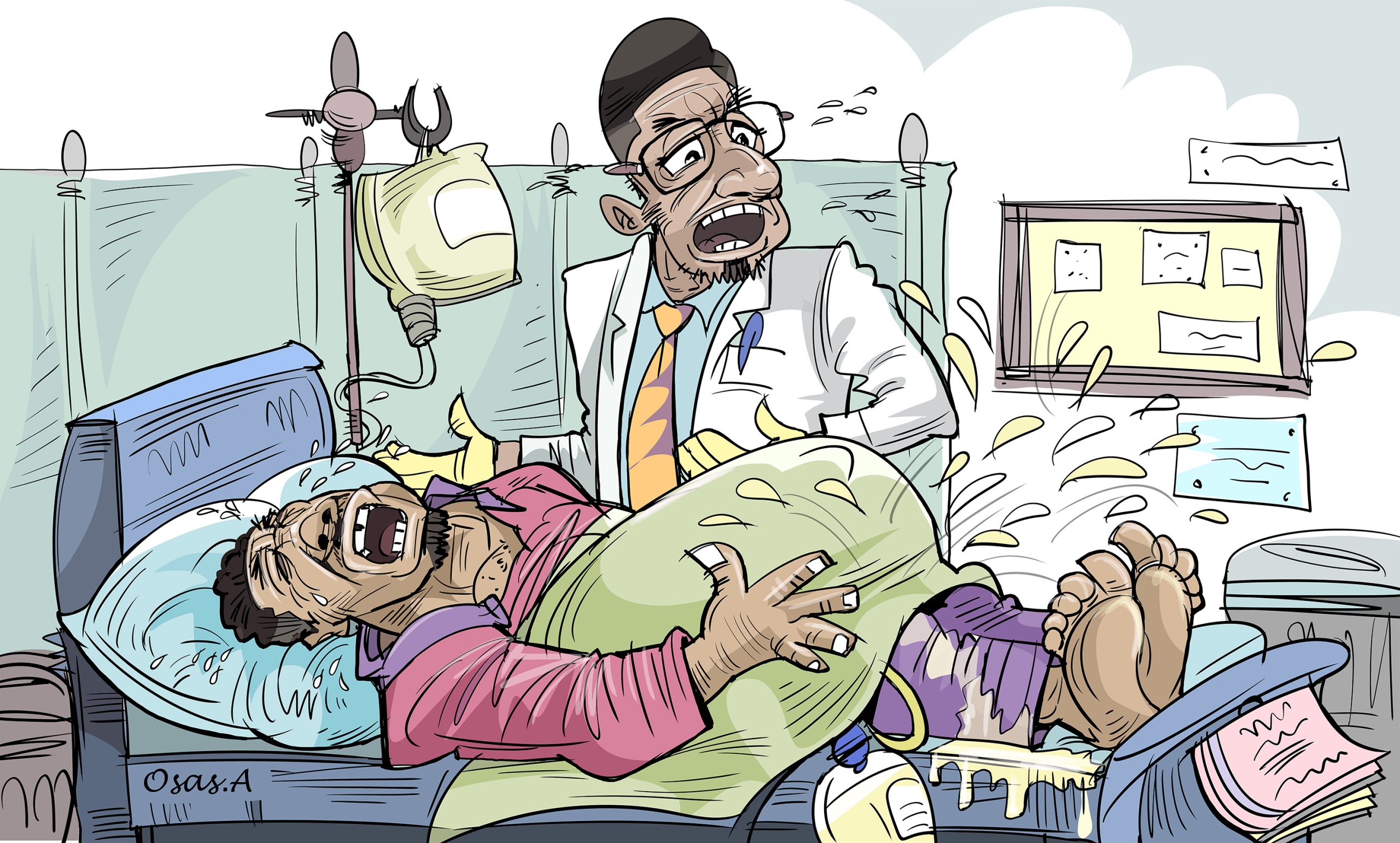
What began as a late-night medical emergency for Alfred Ogene has turned into weeks of pain, confusion and lasting injury, following what he alleges was a mishandled medical procedure at a private hospital in Lagos.
Ogene, a cleric and consultant architect, told The Guardian that he was admitted to R-Jolad Hospital Gbagada, Lagos, on November 15, 2025, after suddenly losing movement in his right arm and leg, a condition later diagnosed as stroke.
Narrating the events, Ogene said he had gone to bed that Friday night when he noticed unusual sensations in his body. “I noticed my body felt puffy and strange. When I tried to move, I couldn’t lift my right hand or leg; that was when I tapped my wife to wake her up.”
With public hospitals reportedly on strike at the time, the family rushed him to R-Jolad Hospital’s emergency unit, where scans were conducted and doctors confirmed he had suffered stroke.
Owing to his immobility and inability to walk unaided, he requested a urinary catheter to help him pass urine. “They fixed the catheter because I couldn’t move at all. At that point, it was just to help me urinate,” he said.
After initial treatment and diagnostic tests, he was transferred to the Intensive Care Unit (ICU), following an advance payment of about N1.4 million, part of a larger bill presented to his family. However, complications soon emerged.

According to him, he noticed that while some urine flowed into the catheter bag, a significant amount spilled onto his body and bed. He reported the issue to medical staff, who decided to change the catheter.
“I was worried because I rarely see nurses changing catheters, but I didn’t want to complain,” he said. After the replacement, Ogene said he began experiencing persistent and worsening pain in his groin area. Despite repeatedly alerting the nurse on duty, whom he later identified as Nurse Elizabeth, he said his complaints were dismissed.
“She kept telling me it was normal. I called her four times. By the fourth time, I had to shout because my stomach and groin had swollen badly. I felt my life was slipping away,” he said.
Ogene said his abdomen became visibly bloated and hard, and he was unable to move. It was only after his cries drew attention that two doctors on duty came to his bedside.
When the catheter was removed, he said blood spilled onto his body and bed, alarming both staff and other ICU patients. The doctors, neither of whom were urologists, attempted to manage the situation for some time before resorting to piercing his lower abdomen to drain urine directly from his bladder using syringes.
“It was an experience I have never had in my life. They were using syringes to drain urine from my abdomen just so I could get relief,” Ogene said.
He said the procedure temporarily eased the pain, but questions soon arose about the absence of a specialist. Ogene told The Guardian that it took about three days before a urologist was available to review his condition. By then, his abdomen had been bypassed through a suprapubic catheter, a procedure that diverts urine directly from the bladder when the urethra is damaged.
“That was when I realised the injury was serious. They told me my urethra had been damaged,” he said. Medical bills continued to rise during this period. Ogene said he was charged about N750,000 for the urological procedure, a cost he found shocking, especially since the complication arose from errors during his care. By the time he was moved out of the ICU, he had paid over N4 million in hospital bills.
Despite the complications, Ogene said no clear explanation was offered by hospital management. He said he later learned from medical consultations that the catheter balloon may have been inflated in the wrong position, causing injury to his urinary tract.
“The damage they caused was worse than the stroke I came in with,” he said. According to him, the injury has left him dependent on a permanent catheter, unable to urinate normally, move freely, or participate fully in physiotherapy required for stroke recovery.
Ogene said the condition has also affected his personal and professional life, as he has been unable to resume his pastoral duties, architectural consultancy work owing to ongoing pain and discomfort.
Following his discharge on November 27, 2025, Ogene said neither hospital management nor medical staff reached out to him. He said his family later wrote a formal letter requesting a meeting and explanation, which prompted brief expressions of sympathy but no concrete engagement.
He subsequently sought care at another tertiary hospital, where an independent consultant urologist reportedly confirmed damage to his bladder and urethra.

Medical findings raise red flags
Medical documents sighted by The Guardian show that following his discharge, Ogene underwent further investigations outside R-Jolad Hospital.
A scan conducted at Broad Places Radiology, Surulere, Lagos and reviewed by consultant radiologist, Ezekiel Akande, confirmed that the patient suffered a rupture of the bulbar urethra, a serious injury often linked to traumatic or poorly executed catheterisation.
The report, dated December 1, 2025, titled MCUG/RCUG, stated that contrast studies showed extra-luminal contrast pooling at the bulbar urethra, consistent with urethral rupture. The conclusion was that the bladder neck opened inadequately into a narrowed posterior urethra, with findings “consistent with rupture of the bulbar urethra.”
The radiology investigation followed earlier complications the patient reportedly developed while on admission at R-Jolad Hospital, Lagos, where he was being managed for a left hemispheric stroke with right-sided hemiparesis, according to a referral form from Erom Healthcare Diagnostics dated November 27, 2025.
The referral form, signed by the attending physician, Obi Meshack, requested a brain MRI and 48-hour ECG Holter monitoring, underscoring the seriousness of the patient’s neurological condition before the catheter-related injury occurred.
Hospital bills sighted by The Guardian show that the family had paid approximately N4.4 million for treatment before discharge. Speaking with The Guardian, the patient’s wife, Mrs Ogene, described the ordeal as humiliating, exhausting and spiritually distressing for the family.
According to her, the financial strain has compounded their distress. Mrs Ogene disclosed that when she attempted to pay the outstanding balance from the hospital bill bringing the total cost to about N4.4 million, she was surprisingly told not to make the payment but she later made the payment.
“I asked them why we were not allowed to complete the payment, but no clear explanation was given,” she said. She further alleged that after the couple left the hospital on November 27, 2025, there was no follow-up communication from the hospital until a routine automated reminder message was sent days later.
She quoted the message as reading: “Dear Ogene, this is a reminder for Neurology consultation at R-Jolad Standard on 04/12/2025 at 5:15pm. Please arrive 15 minutes prior to your appointment time. Best, R-Jolad Hospital Limited.”
Mrs Ogene said the message left her confused and hurt, given the unresolved complications her husband was battling at home. Efforts to obtain official clarification from R-Jolad Hospital are yet to yield fruits. The hospital requested that enquiries be submitted via email. As of the time of filing this report, the hospital had yet to provide a detailed response to questions sent by The Guardian regarding the incident.
A medical practitioner, Dr Martins, said urinary catheterisation, though generally considered a safe procedure, could cause serious complications if not properly carried out, particularly in male patients.
According to him, the risk of injury is higher in males because the male urethral tract is longer than that of females. “Because the urethral tract in females is not as long as in males, there is usually less injury compared to males,” he said.
Martins explained that one common cause of injury during catheterisation is poor lubrication. “When catheterisation is not properly lubricated, it can cause injury along the tract when the catheter is being inserted. That injury, like a bruise, can cause bleeding,” he said.
He added that such injury could also result in blockage of urine flow, especially in patients who are repeatedly catheterised, such as men with prostate enlargement who rely on long-term catheter use. Martins also said infections could occur depending on how long a catheter is left in place.
“For male patients on constant catheterisation, if the catheter is not changed every two to three weeks, depending on the patient’s hygiene, it could lead to infection, which we call urinary tract infection,” he said. Another complication, he noted, arises when the catheter balloon is inflated prematurely.
“If the catheter does not get properly into the bladder and the balloon is inflated along the tract, it could cause injury and bleeding because the urethra is narrow. Inflating the balloon before it enters the bladder could rupture the surrounding cells,” he explained.
Martins further stated that injuries could also occur during catheter removal if the balloon is not fully deflated before withdrawal.
He added that in female patients, improper catheter removal could damage the urethral sphincter, leading to urine leakage that may last for weeks or months, depending on the extent of the damage.
Despite these risks, Martins stressed that catheterisation remains a safe medical procedure when performed correctly, adding that the catheter should remain sealed in its packaging until insertion is complete, after which the urine bag is attached.
Martins added that catheterisation is primarily a medical procedure and not a routine nursing task, except in cases where nurses have received specific training and have been authorised to carry it out. He explained that under normal conditions, and where adequate staffing is available, catheter insertion should be performed by a doctor.
According to him, when difficulties arise during the procedure, especially in settings with limited personnel, nurses are expected to stop immediately and call for medical assistance to prevent further harm.
He noted that continuing catheter insertion in such situations could worsen injury rather than resolve it. He further explained that even minor trauma to the urethra during catheterisation could have serious consequences.
He said such injuries may later result in urinary retention due to narrowing of the urethral tract, underscoring the need for timely escalation and specialist intervention whenever complications are suspected.
The Chairman of the National Association of Nurses, Jama Medan, also explained that urinary catheter insertion serves multiple medical purposes and follows established clinical protocols aimed at patient safety.
According to him, catheterisation has different indications, depending on a patient’s condition. “There are so many reasons why you put in a catheter. You can put it when somebody has acute urinary retention and cannot pass urine, just to relieve that retention,” he said.
Medan explained that catheterisation may also be required to monitor a patient’s fluid balance. “Sometimes you put a catheter to monitor the patient’s input and output, especially during acute illnesses or surgery, so you can be sure the patient is passing out what is being given,” he said.
He added that catheters are often inserted during long surgical procedures, in critically ill patients who cannot move, or in admitted patients for whom frequent movement would be difficult. “You can also put it for the convenience of the patient, especially when moving in and out will be a problem,” he said.
He noted that catheter insertion is typically a sterile nursing procedure once it has been established that the patient needs it. “The protocol demands that the patient must first be informed. The nurse has to explain why the catheter is needed, whether it is to relieve retention, monitor output, or keep the patient on bed rest,” he said.
According to him, patient understanding and consent are key before the procedure is carried out. “By the time the patient understands and agrees, then the nurse gathers all the necessary equipment, such as the appropriate size of catheter, syringes, sterile gloves, lubricants, and ensures privacy.” He explained that strict sterile procedures must be followed during insertion, after which the catheter is connected to the urine drainage bag. Medan further stated that when a catheter is left in place, it requires regular cleaning and timely replacement to prevent infection.
“The catheter can become a source of infection if not properly cleaned. Nurses must know the duration it can stay and when it should be changed so it does not become a problem for the patient,” he said.
Responding to questions about situations where catheter insertion leads to bleeding or internal injury, he explained that difficulty is more common in patients with conditions such as an enlarged prostate.
“In patients with prostate enlargement, passing a catheter can be very difficult because the prostate may have narrowed the entrance to the bladder,” he said.
He noted that in such cases, alternative procedures such as guided catheterisation or suprapubic catheterisation may be required, and a doctor must be informed immediately.
“When there is difficulty or bleeding, the doctor must be notified to decide what to do next, including whether the procedure should be done under local anaesthesia or whether a urologist should be involved,” he said.
Medan emphasised that in cases of complete obstruction, specialist urologic intervention is required. Addressing concerns about whether bleeding during catheter insertion amounts to a nursing error, he said catheterisation is performed blindly, meaning the healthcare worker cannot see the internal pathway.
“The tube is passed blindly. You don’t know what is on the way. It can bruise a small area and cause bleeding,” he explained. He stressed that minor bleeding does not automatically mean a mistake was made. “Bleeding is a possible complication. It does not necessarily mean someone made a mistake. Perforating the entire bladder is very rare. But the possibility of bleeding exists for anyone performing catheterisation,” he said. He added that such outcomes are recognised complications of the procedure rather than evidence of negligence.
A nurse at Isolo General Hospital, Elizabeth Adeosun, outlined standard nursing protocols for urinary catheterisation, stressing that patients must be fully carried along during the procedure if conscious.
Adeosun said this includes obtaining consent, checking the patient’s vital signs, ensuring the appropriate size of catheter is used, monitoring the catheterisation site, observing the patient’s comfort and assessing for pain, educating the patient on the procedure, and ensuring the catheter is functioning properly.
Speaking on signs that a catheter may be causing harm or internal injury, she said symptoms could include a burning sensation or feeling of hotness at the insertion site, blood in the urine, discomfort or pain, redness, swelling and fever.
She added that when such symptoms are observed, a nurse is expected to assess the catheter and the insertion site, remove, refix or change the catheter where necessary, ensure the patient’s comfort and further educate the patient.
On the duty of escalation when a patient repeatedly complains of pain or distress linked to catheterisation, she said nurses must pay close attention and not ignore patient complaints. She explained that the first step is to carefully assess the catheter and the insertion site to determine if adjustments such as refixing, changing or removing the catheter are required.
Adeosun added that the nurse must also take steps to ensure the patient is comfortable and free from pain, noting that patient comfort is a key priority in catheter care.
According to her, if a patient continues to complain of severe pain or distress despite these interventions, the nurse is required to escalate the matter to the physician who prescribed the catheterisation and that the nurse should formally notify the doctor that the catheter has been inserted, the patient is experiencing persistent discomfort, and all nursing interventions to assess, adjust and reassure the patient have been exhausted.
She added that escalation allows the prescribing physician to reassess the patient, review the catheter placement and determine if further medical intervention is required.
Adeosun stressed that nurses are not expected to overlook patient complaints or act as though they did not hear them, noting that early detection of complications remains a priority in nursing care, regardless of shift changes, as continuity of care should be maintained when one shift hands over to another.
While acknowledging that workload and staffing pressures exist, she said these factors should not significantly affect early detection of patient complications except in rare cases, such challenges do not usually prevent nurses from identifying catheter-related problems.
She noted that only in isolated instances, estimated at a very small percentage, might heavy workload contribute to delayed detection, but maintained that nurses are still expected to remain vigilant and responsive to patient complaints at all times.

