GDN SIDEBAR
Ali Baba didn’t just build a comedy career; he built an industry. Long before stand-up became mainstream, he treated laughter like labour, comedy like service, and entertainment like serious business.
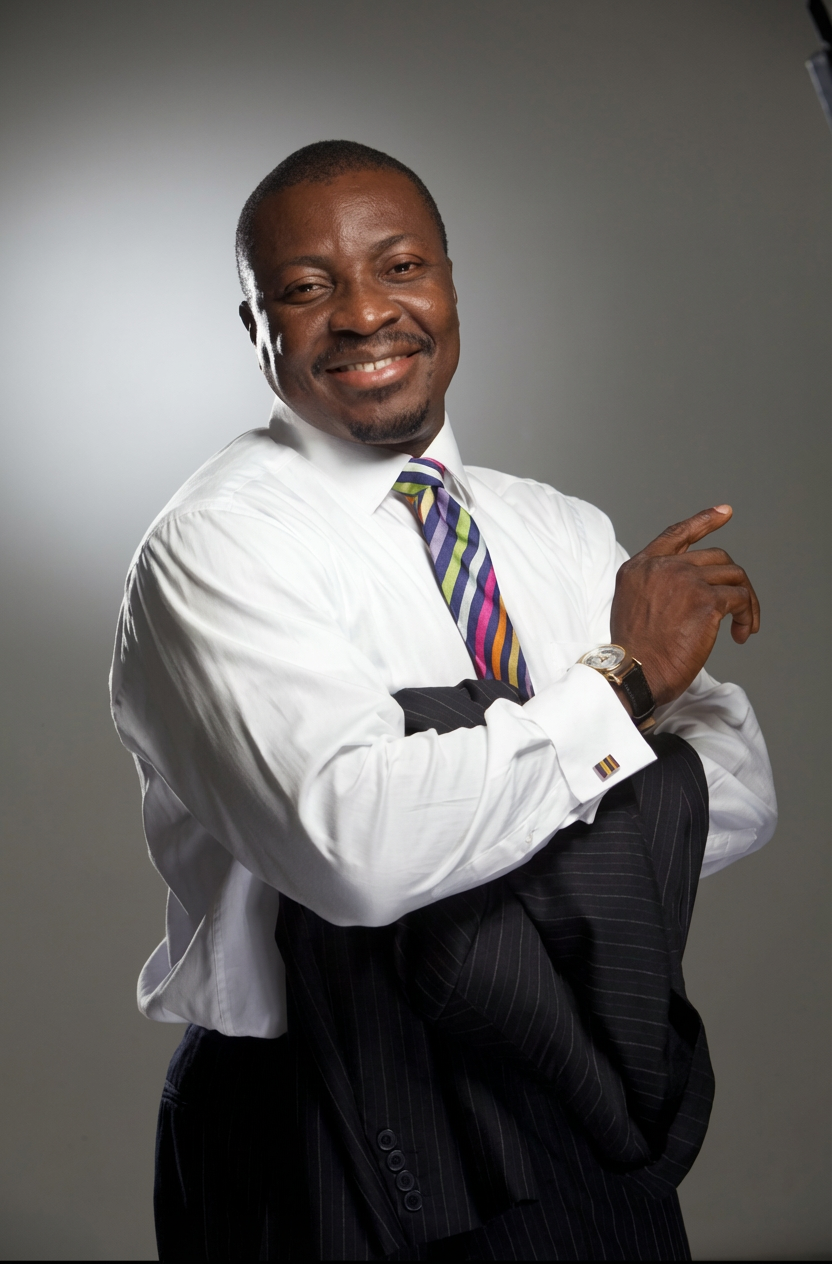
Atunyota Alleluya Akpobome hardly rings a bell in Nigeria. Not because the bearer is an inconsequential nobody. He’s far from that. But millions of Nigerians — even his fans — know him as Ali Baba. And for decades with that moniker, he dominated the Nigerian standup comedy space, cracked jokes that got him in trouble, made the profession lucrative, mentored and lit the path for many who came after him, and ultimately built an enviable career through hard work and constant reinvention.
Today, Ali Baba does not speak like a man who stumbled into success. He talks like someone who had to invent the road before he could walk it.
When he talks about comedy, his language is unmistakably corporate. Payment structures. Value propositions. Market education. He remembers a time when stand-up comedy in Nigeria was not considered a profession, something you didn’t pay for, and certainly not something you planned an event around. When he started out, comedians were expendable; they were the first to be cut when budgets tightened, the last to be taken seriously.
Ali Baba stayed long enough to change that.

‘A VIRGIN SECTOR’
Long before comedy clubs, streaming specials, skit economies, and viral fame, stand-up comedy was a “virgin sector”, as he puts it. There were performers before him — John Chukwu, Baba Sala, Papi Luwe, Tunji Sotimirin. But stand-up as a structured, paid service did not exist. What existed was slapstick, novelty acts, and labour of love. Laughter was free, and payment was optional.

That was the gap Ali Baba walked into, deliberately.
He did not dress like a clown. He did not play exaggerated characters. Instead, he stepped on stage looking like someone who could just as easily be a lawyer, like his father wanted, or a corporate executive. That was intentional. Comedy, to him, was not silliness; it was service delivery. He wanted clients to see that what he offered was no different from any other professional engagement: you booked him, he delivered, and he left an impression that justified the fee.
That mindset would go on to define his entire career.
The idea that comedy is ever “just entertainment” was a misnomer to him. He thought he could do much more than just elicit laughter. He aligned himself with writers and thinkers who use their craft to reflect society to itself: figures like Chinua Achebe and Wole Soyinka, filmmakers, and playwrights of note. For Ali Baba, the tools may differ, but the intent remains the same.
“Comedians are social critics,” he says. “You create laughter, and while people are laughing, you insert the truth.”
From his university days, his jokes were rooted in observation: student union politics, vice-chancellors, authority figures, power dynamics. As he moved into the public space, the targets expanded to include military rulers, civilian presidents, social class, tribal tensions, and religion. Very little was off-limits, except where humour crossed into harm. Sensitive subjects like rape or tribalism, he says, required caution and delicate balancing because the thin line between being funny and being offensive can easily be crossed.
CHOOSING COMEDY OVER LAW
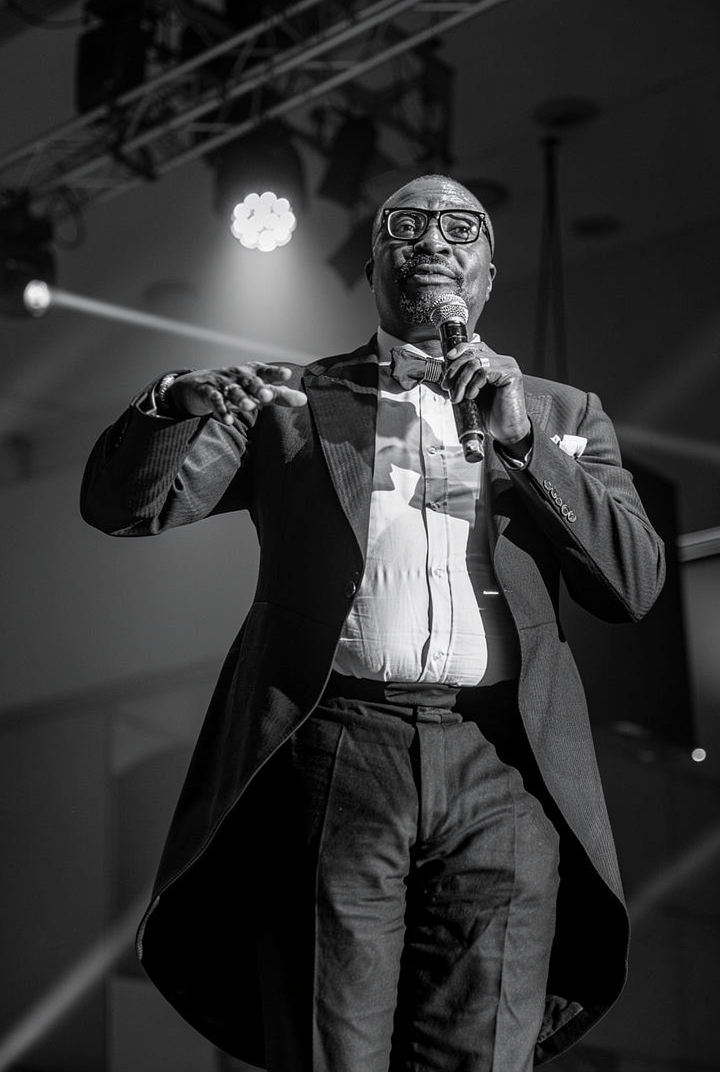
Ali Baba was meant to be a lawyer. That was what his father wanted. The path was respectable, stable, and clearly defined. Comedy was none of those things.
What changed his mind was not rebellion, but evidence.
After protests by university students erupted following the implementation of the controversial IMF-backed Structural Adjustment Programme (SAP) in the late 1980s by the Ibrahim Babangida junta, students were grounded at home. As they waited for schools to reopen, Alibaba discovered that his spontaneous remarks could command attention and generate laughter. That ability, once noticed, quickly became currency. He began to earn money performing, sometimes in a single night, what would have taken months to receive from home.
In 1987 and 1988, ₦100 a month was considered substantial. But comedy offered more: popularity, independence, comfort, dignity, and choice. It paid bills. It put food on the table. And it created options.
His father’s definition of work was simple: it should provide food, shelter, respect, security for dependents, personal satisfaction, and moral alignment, something you could defend before God. Comedy, Ali Baba realised, checked all those boxes faster and more honestly than law ever could.
That realisation made the decision straightforward.
BUILDING SOMETHING FROM NOTHING
What followed was not overnight success, but patient, sustained groundwork.
There were no event planners. No managers. No mobile phones. Communication moved through message centres, payphones, and notebooks kept by intermediaries. Sometimes, a single woman with a phone line controlled all your bookings. Travel was by road, by newspaper distribution vans, by whatever means were available.
More importantly, there was no pricing model.
Convincing organisations to pay ₦10,000 or ₦20,000 for a few hours of comedy was a constant struggle, especially when salaried workers earned the same amount in a month. Comedians were often dismissed as frivolous, overpaid, and unnecessary. And when budgets were cut, they were the first to go.
Ali Baba responded by doing what the industry had never done: branding, marketing and corporate positioning.
He placed billboards. He ran print adverts. And he insisted on professional negotiations. Alongside another notable comedian, the late Mohammed Danjuma, he formalised comedy and MC services, making them central and not optional to events. Gradually, clients stopped seeing comedy as filler and began seeing it as an anchor.
Eventually, companies planned programmes around him rather than squeezing him in. And then the breakthrough came.
Looking back, Ali Baba identifies four turning points.
The first came unexpectedly, when a chaotic crowd needed calming, and he was pushed on stage to restore order.
The second was being introduced to Lagos by Eddie Lawani, who connected him to influential circles and larger platforms.
The third was touring with major brands from 7Up to Coca-Cola, using comedy as a marketing tool long before influencer culture existed. Instead of spending his earnings on lifestyle upgrades, he invested in books, tapes, and personal development.
The fourth, and most defining, was a nationwide beer tour in 1996. The fee of ₦1.6 million was unprecedented. After tax, he walked away with ₦1.5 million. It was not just success, but validation: comedy had become a serious business.
EXPANSION AND EVOLUTION

As audiences grew, the material evolved. Early Nigerian stand-up leaned heavily on ethnic and cultural stereotypes. Then came class divides: rich versus poor, Ajebo versus Ajepako. Later, education, language, and urban experience. Each phase mirrored a society in motion.
Ali Baba adapted without surrendering control of his narrative.
Platforms like Night of a Thousand Laughs accelerated this growth, creating space for new comedians and solidifying stand-up as a viable career. Figures like Basorge Tariah Jr, Okey Bakassi, Basketmouth, and others emerged, not as replacements but as extensions of a growing ecosystem.
Ali Baba rejects the idea that newer generations “pushed out” the older ones. In his view, the market simply expanded. Demand grew faster than any single performer could meet it. The industry needed more voices, not fewer. Many of those who rose did so on the foundations laid earlier, consciously or otherwise.
THE INDUSTRY TODAY
Today’s comedy landscape is unrecognisable from the one Ali Baba entered. Social media has collapsed time and distance. A joke told today circulates nationwide tomorrow. Virality can manufacture visibility overnight.
But he is careful not to romanticise the past or dismiss the present.
Yes, entry barriers are lower. Anyone can declare themselves a comedian. But sustainability, he insists, still depends on the same principles: discipline, relevance, adaptability, and understanding value. Platforms change; fundamentals do not. What worries him is not competition, but dilution — when speed replaces craft, and attention replaces substance.
LEGACY, NOT NOSTALGIA
Ali Baba does not speak like a man trying to protect his place. He sounds like someone documenting a process, so it isn’t misunderstood.
Comedy, in his telling, was not gifted to Nigeria fully formed. It was negotiated into existence gig by gig, rejection by rejection, and invoice by invoice. The industry younger comedians enjoy today was built deliberately, often without applause.
That, more than the laughs, may be his real legacy.