 Follow Us on Google News


 Follow Us on Google Discover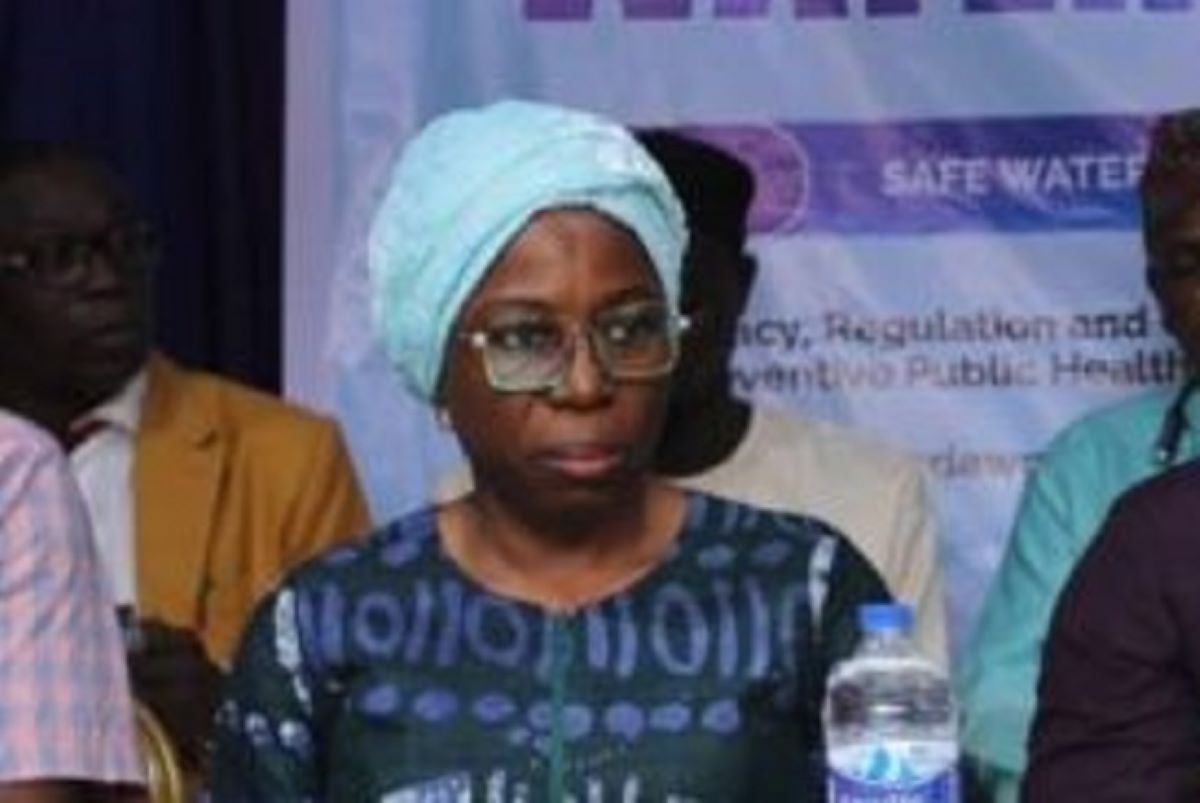
The Lagos State Government has moved to tighten water production and distribution regulation as part of efforts to promote water security, while warning against unsafe water practices that pose increasing threats to public health and the environment.
The Executive Secretary of the Lagos State Water Regulatory Commission (LASWARCO), Oluwabukola Adeyemo, issued the warning at a one-day community sensitisation and public engagement with water service stakeholders held in Epe.
Adeyemo said the engagement was aimed at addressing the dangers associated with untreated water, indiscriminate borehole drilling and poor hygiene practices, stressing that effective regulation and stakeholder cooperation have become critical in a rapidly growing megacity like Lagos.
According to her, the programme was not merely a regulatory exercise but a collaborative platform designed to strengthen partnerships, deepen understanding and promote responsible practices across the entire water value chain.
She noted that despite being surrounded by water, most available water sources in Lagos are not fit for consumption without proper treatment due to salt content, contaminants and the presence of heavy metals. She added that increasing reliance on poorly sited boreholes has heightened the risk of waterborne diseases.
“The physical appearance of water does not guarantee its safety or potability, and poor handling and inadequate treatment expose citizens to diseases such as cholera, typhoid fever and diarrhoea,” Adeyemo said.

She emphasised that ensuring access to safe water would not only protect public health but also ease pressure on already overstretched healthcare facilities, noting that Lagos’ daily water requirement is estimated at 135 litres per person.
Adeyemo also warned of the environmental consequences of unregulated groundwater extraction, including land subsidence and damage to roads and buildings.
“Excessive and unregulated abstraction of groundwater can lead to land subsidence, increased flooding risks and permanent damage to our aquifers. Once an aquifer is damaged, it cannot easily be restored,” she said.
She disclosed that LASWARCO regulates the activities of borehole drillers, sachet and bottled water producers, tanker operators and other water service providers to safeguard public health, urging stakeholders to view quality and compliance as a responsibility rather than an option.
Adeyemo further revealed that the state government, through the Ministry of the Environment and Water Resources, is expanding access to pipe-borne water through the rehabilitation and expansion of waterworks across the state.
She listed recent and ongoing projects to include the commissioning of the Akilo Water Works in Ogba, the rehabilitation of Adiyan Phase 1, the near completion of Adiyan Phase 2, and plans to rehabilitate Epe water facilities, all aimed at closing critical infrastructure gaps.
“Ensuring water safety and sustainability is a shared task. The government cannot do it alone. We need ethical practices, voluntary compliance and strong partnerships to ensure that water in Lagos is safe to drink, responsibly produced and sustainably managed,” she said.

