 Follow Us on Google News
 Follow Us on Google Discover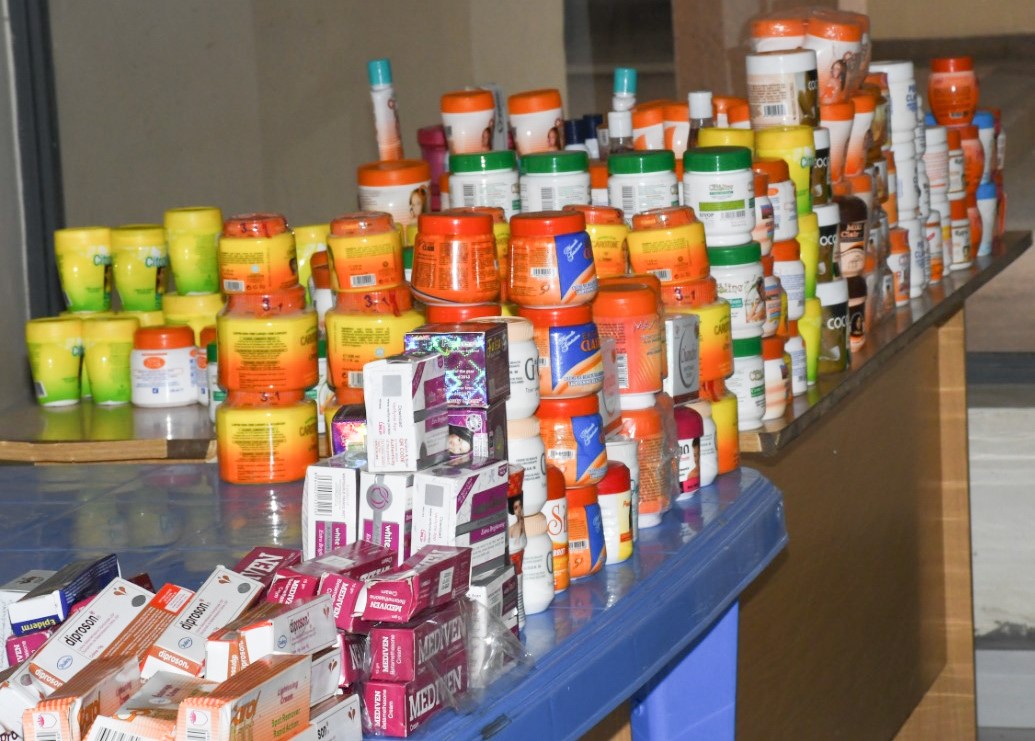
The Federal Government has announced plans to protect consumers from the risks associated with cosmetic products, reduce exposure to toxic substances such as lead, and strengthen cosmetic safety standards across the country.
Speaking at the inaugural meeting of the National Cosmetics Safety Management Technical Working Group (NCSM-TWG) in Abuja, the Permanent Secretary, Federal Ministry of Health and Social Welfare, Daju Kachollom, said unsafe cosmetics represent one of the greatest public health threats of the 21st century globally.
She expressed concern that some cosmetic products contain formaldehyde, a substance capable of causing cancer, as well as heavy metals that can damage the kidneys, eyes, heart and other organs. According to her, the health consequences range from immediate to long-term effects, including skin diseases, skin discolouration, hormonal disorders, cancer and kidney ailments.
Kachollom said in view of these risks, the ministry decided to put in place a comprehensive policy to ensure that cosmetic products used in Nigeria are safe for everyone. She noted that the National Policy on Cosmetics Safety and Health (NPCSH) was approved and launched.
During the 66th National Council on Health meeting held in Calabar in November 2025.
She explained that the policy established the National Council on Cosmetics Safety and Management to enhance the regulation and safety of cosmetic products in Nigeria. According to her, the newly inaugurated Technical Working Group is expected to provide technical direction, as well as strategic guidance, for the effective implementation of the national policy.

“The TWG will serve as the national coordinating platform for cosmetic safety initiatives and translate directives from the national multi-sectoral ministerial advisory committee on cosmetics,” she said. “You are to support and review the implementation of the national policy on cosmetics, facilitate multi-sectoral collaboration and initiate other activities that will contribute to cosmetic safety in Nigeria. This committee will serve for five years and has the mandate to co-opt other members where necessary.”
Also speaking, the Director and Head of the Cosmetics Safety Management Programme, Dr Paul Okhakhu, described cosmetic safety as not merely a regulatory or industry issue, but a critical public health concern requiring coordinated, evidence-based and multi-sectoral action.
He explained that poorly formulated cosmetic products often lead to adverse cosmetic events, stressing that there are established guidelines and procedures for producing safe cosmetics. According to him, failure to adhere to these standards results in substandard products that pose health risks to users.
Okhakhu said the new policy would lead to improved regulation and the availability of standard cosmetic products that are safe for human use. He noted that the establishment of the Technical Working Group under the policy was a deliberate effort to bring together relevant expertise, institutions and perspectives to ensure effective implementation.
“This meeting marks the transition from policy development to practical action. It provides a shared understanding of the policy, its implementation strategy and the expectations placed on this Technical Working Group, while fostering collaboration and shared ownership of the task ahead,” he said.
In his remarks, the World Health Organisation (WHO) Country Representative, Dr Pavel Ursu, described the policy as a bold initiative and commended the Federal Government for developing a national cosmetics safety and health framework that is pro-health, pro-industry and pro-Africa. Represented by Dr Edwin Edeh, Ursu said the policy was not intended to witch-hunt stakeholders, but to ensure that systems involved in the formulation of cosmetic products are properly regulated.
Similarly, the Executive Director of Resolve to Save Life, Mrs NanlopOgbureke, said the inauguration of the Technical Working Group laid a solid foundation for progress in the cosmetics safety space. She noted that the intersection of public health considerations and the economic value chain of cosmetics presents significant opportunities for the country.
Highlighting the dangers of substandard cosmetic products, the Desk Officer for Imported and Locally Made Cosmetics at NAFDAC, Ikenna Nsofor, warned that frequent exposure to poorly formulated products poses serious health risks. “The human body is the largest organ. Every time you use toothpaste, you may be exposed to fluoride toxins, and each time you use soap that is not well formulated, you are poisoning your body. These are products people use almost every day,” he said.
Members of the Technical Working Group were drawn from academia, the Federal Ministry of Health, the Federal Ministry of Environment, the Federal Ministry of Industry, Trade and Investment, the National Agency for Food and Drug Administration and Control (NAFDAC), the Federal Competition and Consumer Protection Commission (FCCPC), the National Orientation Agency (NOA) and other relevant bodies.

