 Follow Us on Google News


 Follow Us on Google Discover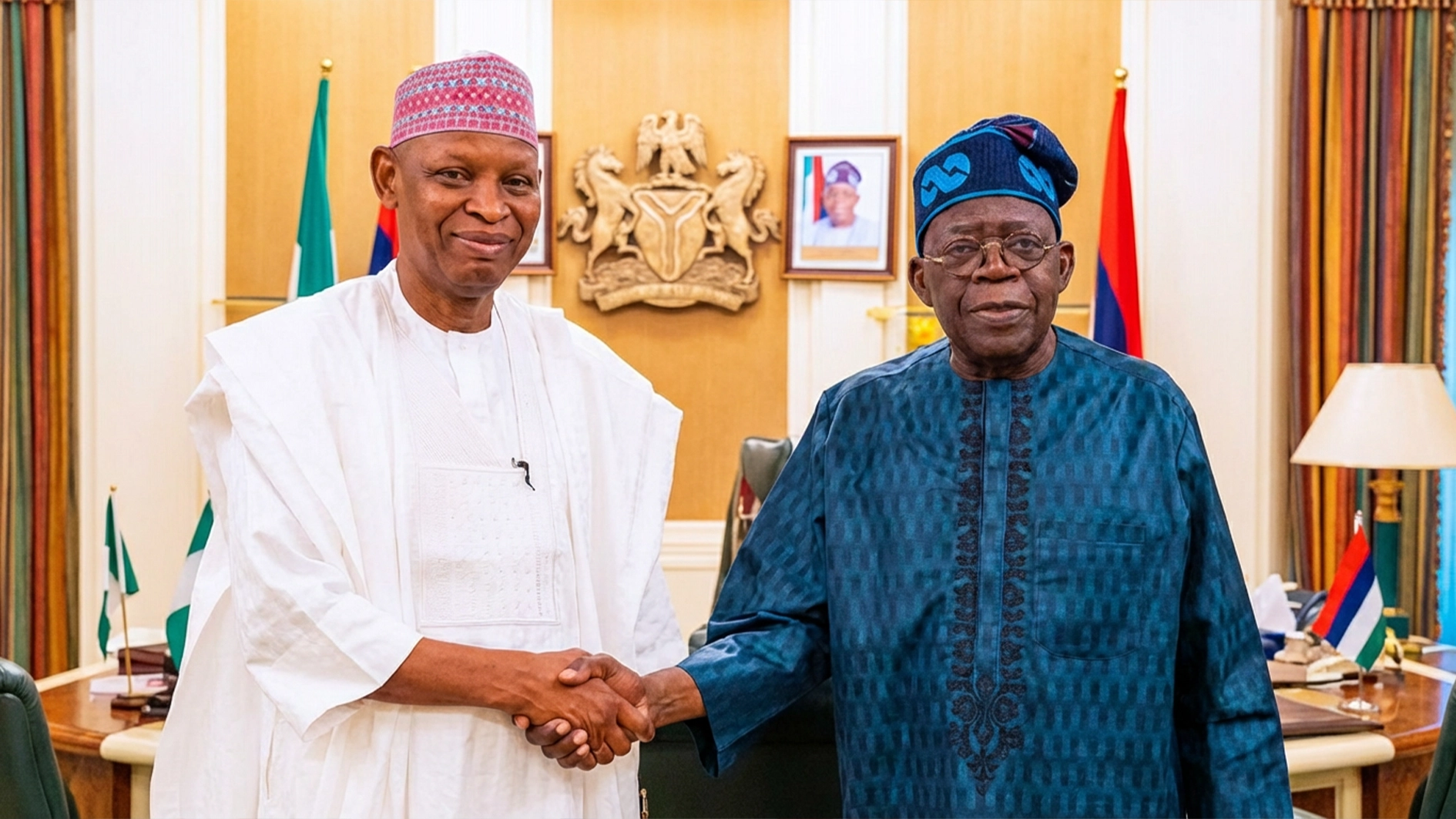
AS defections and coalition intrigues intensify ahead of 2027, the fallout between Governor Abba Yusuf of Kano State and his political benefactor, Rabiu Kwankwaso, has erupted into a defining test of loyalty and power. But beyond the seen gladiators is an ‘unseen’ hand and the ultimate beneficiary of the implosion, LEO SOBECHI and MURTALA ADEWALE report.
The battle for the soul of Kano State, which propelled the recent developments in the state, notably the defection of Governor Abba Kabir Yusuf from the New Nigeria Peoples Party (NNPP) back to the All Progressives Congress (APC), was not about the governor or his political future.
Keen watchers of Kano politics, spanning the Second through the Fourth republics, could situate what happened between Governor Yusuf and Senator Kwankwaso, around the various schemes and concentric convergences for the 2027 presidential election.
Governor Yusuf’s political face, which his former acolytes in the Kwankwasiyya Movement now describe as a great betrayal, is not really an isolated case. The development, apart from being episodic, connects similar realignments that shook Kano, even as it revolves around the pathway to the wider Nigerian leadership recruitment process.
In Nigeria’s presidential election arithmetic, it is generally held that whichever candidate and political party wins the presidential contest must, of constitutional necessity, control the majority of the ballots in Lagos, Rivers, the Federal Capital Territory, and Kano states.
During the 2023 edition, the presence of homeboy, Senator Kwankwaso, on the ballot as the standard bearer for NNPP, displaced President Bola Ahmed Tinubu to the position of first runner-up in the state’s votes. While Kwankwaso and NNPP garnered a total of 997,279 valid votes, the Tinubu-led APC received 506,412, or 29 per cent of the total.

It was perhaps against the background of the tricky statistics that President Tinubu and APC started showing serious interest in dragging Kano State to its corner, in a strong bid to ensure that they not only enhance their vote tally, but also consolidate in the good showing which netted them more than the required 25 per cent for the two third national spread among the 36 states and FCT.
So, the troubled waters in NNPP, which became the basis for Governor Yusuf’s decision to jump ship, and the inconclusive conversation about bringing back Kwankwaso and, therefore, the Kano Kwankwasiyya, which he leads, were corollaries of the ruling party’s determination to dominate Kano State politics.
Many observers had posited that Tinubu/APC’s score of 506,412 votes in the 2023 presidential poll was traceable to the fact that the former APC national chairman and core Tinubu supporter, Dr Abdullahi Ganduje, was the governor. Therefore, in the calculations of APC strategists, it was necessary for the party to have an incumbent state chief executive in order to sustain or better the record in 2027.
So, while the Presidency continued the affected conversation with Kwankwaso to explore the possibility of his return to APC, the former NNPP flag bearer did not have to second-guess the ruling party’s motivations, which is interest in capturing a significant chunk of the Kano State’s 5,594,193 eligible voters (Permanent Voter Card holders).
APC insiders maintain that even in the event that Kwankwaso returns on the presidential ballot either as a contender or running mate, such positioning would not be formidable enough to reduce its (APC’s) share of the state’s ballots.
So, Governor Yusuf’s defection to APC could be seen as the culmination of intrigues between his benefactor, Kwankwaso, and President Tinubu over which direction the vote-rich North West state should go in the 2027 presidential poll. But, given Kwankwaso’s desire to maintain leadership of the state and therefore prepare grounds for his eventual repeat contest for the Presidency in 2031, the attempt to retain the state under the NNPP or use that leverage to maximise his political bragging rights, brought the governor to a crossroads.
Echo of the past
When Kwankwaso declared that “I am not for sale; what keeps me grounded is our political conviction. If this struggle were about personal benefit, I would have taken the easy route long ago, and you would be looking for me somewhere else, not here,” it was an echo of the second republic scenario.
Although he did not use the exact words, it was Aminu Kano’s stance when, in the buildup to the 1983 election, former Kano State governor, Muhammed Abubakar Rimi, hurried to join the Nigeria Peoples Party (NPP). As the leader of the Talakawas, the Peoples Redemption Party (PRP) boss, refused to enter into a political alliance with either the ruling National Party of Nigeria (NPN) or the winning Southern opposition platforms, the Unity Party of Nigeria (UPN) and NPP.
As the incumbent Kano State governor, Rimi, elected on the PRP ticket, recorded significant achievements in governance through populist projects and programmes he pursued. However, despite his popularity, the then-governor felt that PRP was no longer a formidable platform for securing a second term.
And, following the impeachment of his counterpart, Abdulkadir Balarabe Musa, who had the unenviable fortune of being governor with a majority of state lawmakers from the ruling NPN, Rimi decided to join the NPP, whose accord with the NPN had floundered.
However, unlike Rimi, Yusuf announced that the situation in NNPP has made it too risky for him to consider seeking re-election on the beleaguered platform, even after he tried his best to improve relations with his godfather.
Recall that Governor Yusuf was actually the Commissioner for Works in Kwankwaso’s second term, at the tail of which the Kwankwasiyya leader switched from the Peoples Democratic Party (PDP) to the then inchoate APC, in response to the northern political inclination that power should return to the region.
Some politicians in Kano have been pointing to Kwankwaso’s 2014 defection to justify Governor Yusuf’s desire to chart his own political future as the state chief executive, maintaining that if the former NNPP presidential contender insists that the governor’s defection is an instance of betrayal, he (Kwankwaso) wrote the book.
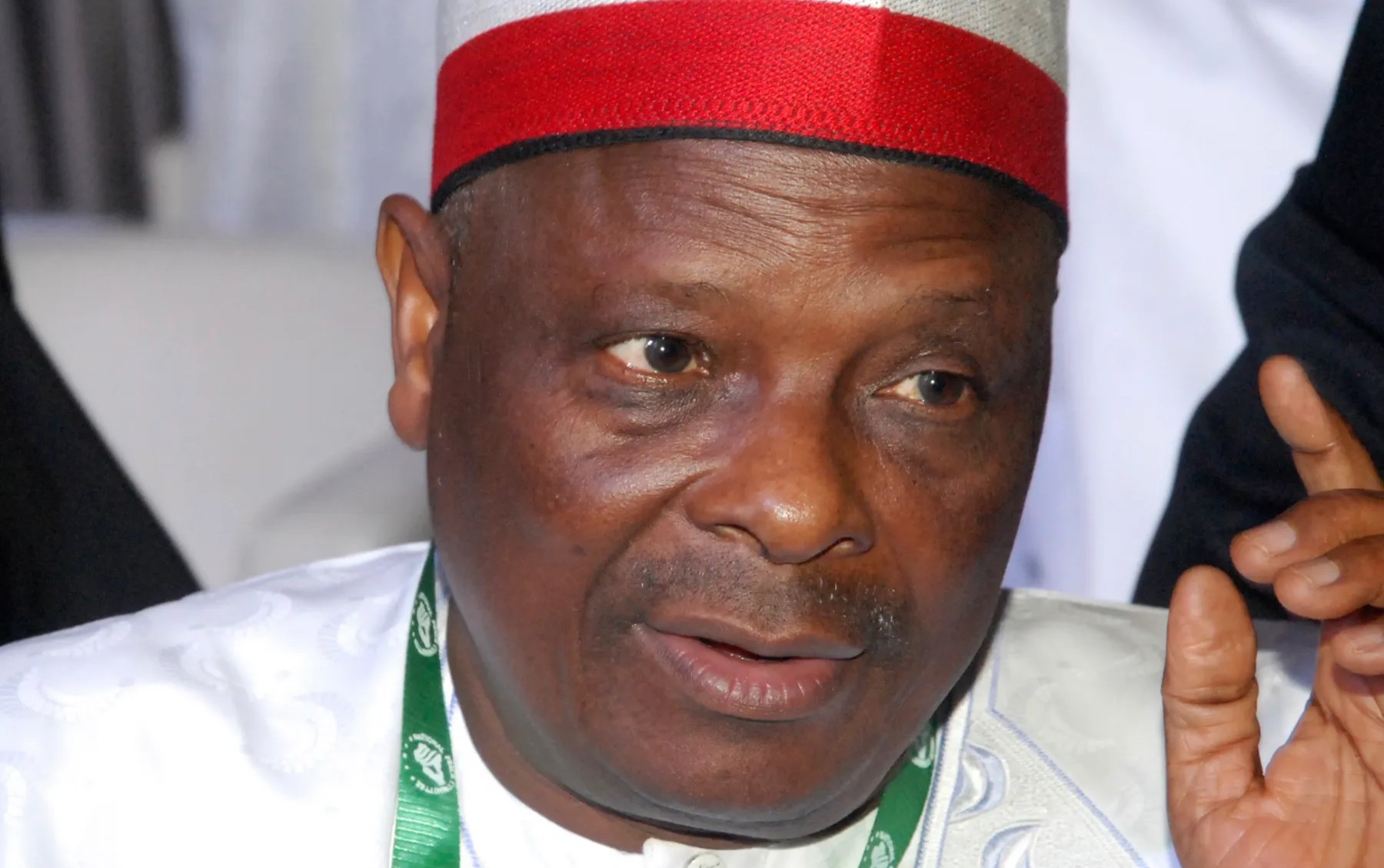
With Governor Yusuf set to launch his own Yusufiyya Movement, just as his immediate predecessor, Ganduje, did when he separated from the mainstream Kwankwasiyya, the battle for Kano votes could be said to have turned a crucial corner. And, as the political godson amasses forces to confront the political godfather, President Tinubu must have hit a bull’s eye by raising stalwart ground troops to warn his significant opponents from the North, Kwankwaso.
In the emerging show of political supremacy and clout, Madugu, as Kwankwaso is called by associates, would have to fight on three fronts: First, by sweeping the entire chairmen of the 44 Local Government Councils in the state, 22 members of the Kano State House of Assembly and eight Federal lawmakers, he (Kwankwaso) has to started raising new grassroots structure.
Secondly, the Kwankwasiyya leader has much work to do to convince the coalition of opposition leaders, either the African Democratic Congress (ADC) or the Social Democratic Party (SDP), to give him the presidential or vice-presidential ticket as his bargaining chip in the 2027 showdown.
Thirdly, as an experienced politician, the former Kano State governor knows that confronting an incumbent and the federal might at the same time requires not only political skills but also a major war chest to fund structures both at home and nationwide. In light of the foregoing, where will the victory or the majority of Kanawa votes go in 2027?
Vote prospects
Political watchers and analysts have been airing their views on how voter preferences in Kano State will pan out following Governor Yusuf’s (Abba Gida-Gida) switch to the ruling party.
For instance, the co-convener of the League of Northern Democrats, Dr Umar Ardo, said Governor Yusuf may have made a wrong decision in paving the way with Kwankwaso.
He stated: “The resignation of Governor Yusuf from the NNPP leading towards the 2027 general elections is a big mistake, to have eventually joined the APC. The reason is simple: it means he does not understand the evolutionary history of Kano politics!
“If he had, he would have known that Kano politics has always essentially aligned with opposition politics, and never purposefully leaned toward the centre. The pattern of its politics since independence validates this assertion.
“In the First Republic, while the North and the nation formed NPC governments, Kano overwhelmingly voted for an opposition party, the Northern Elements Progressive Union NEPU). Likewise, in the Second Republic, while the North and the nation voted NPN, Kano still tilted toward the opposition and voted for the PRP.
“Under the present dispensation, as well as in 1999, Kano rejected the perceived Conservative Party, the ANPP, and overwhelmingly voted for the perceived liberal PDP. But when it turned out that PDP formed the national government as well, Kano promptly voted it out after only one term in 2003 and voted in the opposition party, the ANPP.
“To this end, therefore, by now moving out of the opposition NNPP party and joining the APC, the ruling party at the centre, Governor Yusuf, and the APC are automatically courting defeat in 2027. Either the APC wins the national government and loses Kano state, or it wins Kano state and loses the national election. But they cannot win both as Kano’s election pattern over the years doesn’t support that.”
Return of Ganduje
Already, in the manifest split of the otherwise close-knit Kwankwasiyya Movement, indicators have emerged that the APC seems to be enjoying the upper hand as the powerplay between godfather and godson unfolds.
The attempt by the Special Adviser to the Governor on Political Matters, Sunusi Surajo, a former Chairman of Madobi local council and a strong ally of Senator Kwankwaso, to submit his resignation was shot down immediately.
Instead of resignation, he was handed an instant sack, just as Surajo Buhari Bakona, a former Special Adviser to former APC National Chairman, Ganduje, was promptly announced as his replacement.
It was obvious that what Kwankwaso feared most had begun to happen in the state. The Kwankwasiyya leader, while efforts to dissuade Governor Yusuf from rejoining the APC were underway, lamented that the defection would automatically hand over the hard-won governorship prize to his detractors.
With the change of flags and caps in the Kano State Government House, the immediate past APC national leader, Ganduje, another estranged Kwankwasiyya disciple, bounced back. In the hotly contested March 18 governorship poll, Ganduje’s candidate, Gawuna Nasiru Yusuf, trailed Kwankwaso/NNPP’s Yusuf Abba Kabir by 38,952 to 53,434 votes.
The 16,000 ballots that separated the winner and loser could now be said to have been turned over to APC owing to Governor Yusuf’s change of flag.
Waxing triumphant, it was an exultant Ganduje that announced during Yusuf’s official crossover to APC that all governorship aspirants, including the Deputy Senate President, Barau Jibrin, should surrender their ambition in the incumbent’s second term chase.
And, with that proclamation of the new APC godfather, it would be seen how far Governor Yusuf can go to defend his mandate against his Deputy, Aminu Abdulsalaam Gwarzo, Kwankwasiyya’s presumptive gubernatorial choice for the 2027 governorship poll in Kano State.
Barely 12 months to the 2027 governorship poll, it would be seen whether the January 23 Betrayal Day, as the Kwankwaso described Yusuf’s defection, would culminate in a restitution of the governorship mandate to Kwankwasiyya or a revision of old politics in favour of the emergent forces.

