 Follow Us on Google News


 Follow Us on Google Discover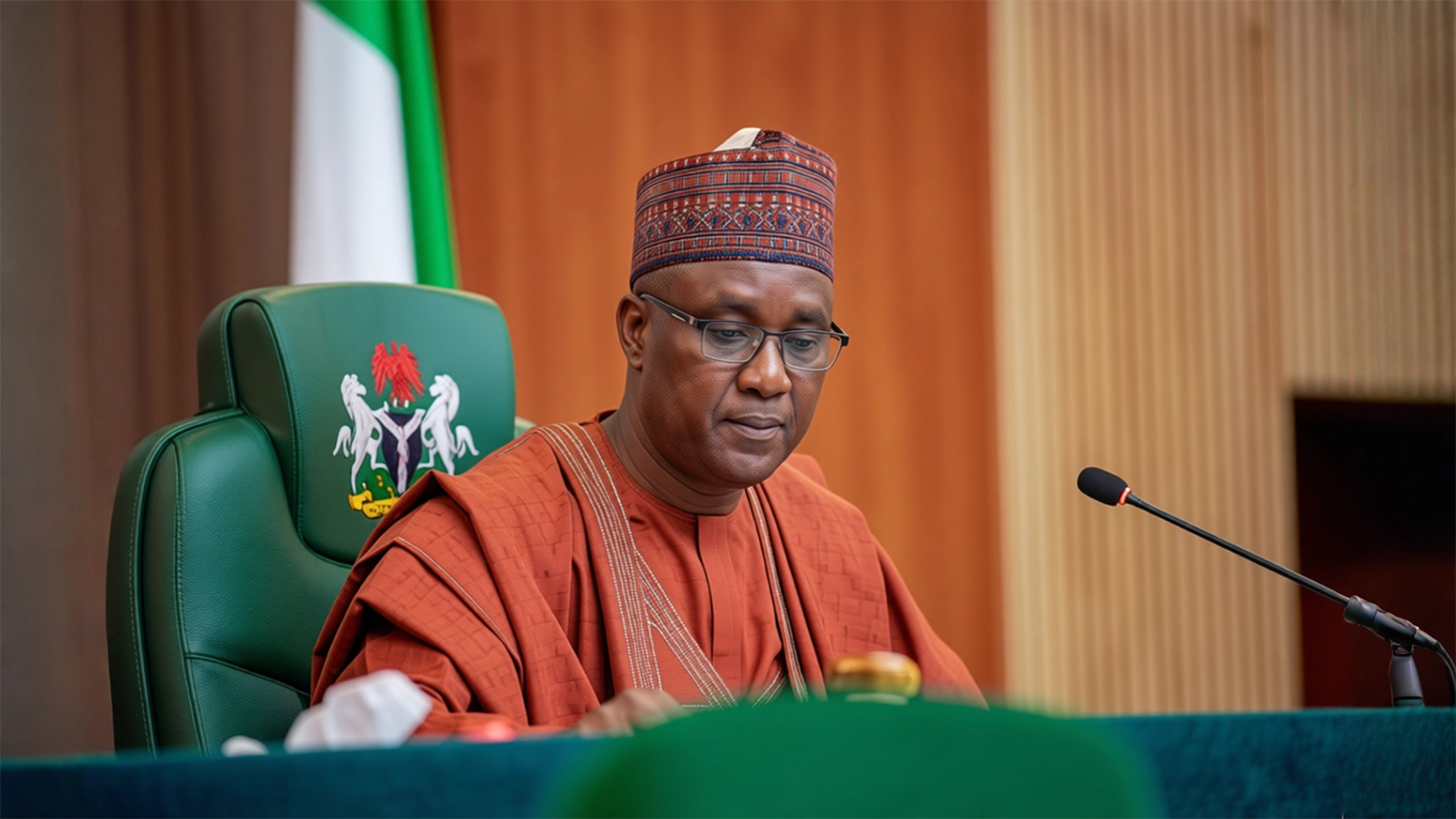
• Senate sets up committee to harmonise Electoral Act amendments
• Ex-INEC director accuses Senate of stalling Electoral Act reforms
• Group raises alarm over Electoral Act review, demands transparency
• MURIC seeks INEC chair’s removal as Christian clerics defend appointment
The House of Representatives yesterday passed President Bola Tinubu’s N58.4 trillion 2026 appropriation bill through second reading without debate, a move that could raise questions over whether legislative oversight is giving way to executive dominance ahead of 2027.
The plenary was presided over by Speaker Tajudeen Abbas.
The bill, christened the ‘Budget of Consolidation, Renewed Resilience and Shared Prosperity,’ was presented by President Bola Tinubu to a joint session of the National Assembly in December. It seeks authorisation to withdraw N58.4 trillion from the Consolidated Revenue Fund of the Federation for the 2026 fiscal year.
Despite the scale of the proposal, lawmakers did not debate the general principles of the bill after an earlier closed-door meeting that lasted nearly an hour.
Only the Leader of the House, Prof Julius Ihonvbere, spoke.

He highlighted government achievements in economic management, saying the economy grew by 3.98 per cent before the budget presentation, while inflation had declined and foreign investments and exports expanded.
Ihonvbere said the budget was designed to consolidate macroeconomic stability, improve revenue performance, strengthen human capital development and manage existing debts. He added that the government had not printed “a single naira” since taking office, a move he said contributed to economic stability, while external reserves had reached a seven-year high of $47 billion.
Urging lawmakers to support the proposal, he described the budget as an opportunity for the legislature to partner with the executive in achieving sustainable development and shared prosperity.
“I believe that this administration is committed to ensuring that if we all work together, put ideas together, recommit to a better Nigeria, we build a kind of social, political, economic environment that will ensure Nigerians in their respective constituencies and communities reach the highest points of their creative and productive abilities.
“When we are able to do this, Nigeria will be a better place, not just for us, but for generations to come. It will also encourage those that will come into power, well into the future, to build on the achievements of the present government and prioritise the welfare, women and children.”
After his remarks, the Speaker invited contributions from the floor, but none followed. He then put the motion to a voice vote, with the ayes prevailing.
The bill was subsequently referred to the Appropriation Committee, while the House adjourned for two weeks to allow relevant committees to carry out detailed work on the budget.
Senate sets up seven-member committee to harmonise Electoral Act amendments
Meanwhile, the Senate has constituted a seven-member ad hoc committee to harmonise and streamline lawmakers’ contributions to the proposed amendment of the Electoral Act.
The decision followed a three-hour closed-door executive session held yesterday, during which senators conducted a deeper review of the far-reaching electoral reforms.
Announcing the outcome of the session, Senate President Godswill Akpabio said the committee was mandated to “contribute, galvanise and distil the opinions of senators on the bill.”
The committee, to be chaired by Senator Niyi Adegbonmire, Chairman of the Senate Committee on Judiciary, Human Rights and Legal Matters, also includes Senators Adamu Aliero, Aminu Tambuwal, Adams Oshiomhole, Danjuma Goje, Tony Nwoye and Titus Zam.
Akpabio said the panel has a maximum of three days to complete its assignment and report back to the Senate by Tuesday.
The Senate had earlier, on Wednesday, stepped down consideration of the report on the Electoral Act, 2022 (Repeal and Enactment) Bill to allow for an executive session and more rigorous scrutiny of the proposed amendments.
The decision followed plenary deliberations on the report of the Senate Committee on Electoral Matters, which was presented in the absence of its chairman, Senator Simon Lalong.
Lawmakers agreed that further debate should be deferred to give senators adequate time to study the bill, citing its significant implications for Nigeria’s electoral process.
Although the House of Representatives has already passed the bill, Mr Akpabio stressed that the Senate must exercise due diligence.
“This is a very important bill, especially as we approach another election cycle. We must take our time to ensure justice is done to all, so that we do not end up at the tribunal,” he said.
According to the committee’s report, a clause-by-clause review indicates that the bill would strengthen electoral integrity, enhance transparency and boost public confidence in the electoral system.
The committee recommended the passage of the Electoral Act (Repeal and Enactment) Bill, 2025, as amended, noting that the reforms would expand voter participation, curb electoral malpractice and strengthen the institutional capacity of the Independent National Electoral Commission (INEC).
Earlier, Senate Leader Opeyemi Bamidele outlined key highlights of the proposed amendments, saying the review would significantly improve electoral credibility and institutional independence.
He said the bill introduces stiffer sanctions for electoral offences such as vote-buying, including fines of up to N5 million, a two-year jail term and a 10-year ban from contesting elections.
The proposed law also prescribes tougher penalties for result falsification and obstruction of election officials, mandates electronic transmission of polling unit results, and introduces electronically generated voter identification, including a downloadable voter card embedded with a unique QR code.
Bamidele added that the bill recognises the voting rights of prisoners, mandates INEC to register eligible inmates, standardises delegates for indirect party primaries, and requires the release of election funds at least one year before polling day.
According to him, the reforms are aimed at guaranteeing credible, transparent and secure elections beginning with the 2027 general elections, subject to approval by at least two-thirds of state Houses of Assembly in line with constitutional provisions.
“At the end of it all, good governance, enhanced security and the welfare of our constituents shall remain our cardinal objectives,” Bamidele said.
Ex-INEC director accuses Senate of stalling Electoral Act reforms
This came as a former director of voter education and publicity at the Independent National Electoral Commission (INEC), Oluwole Osaze-Uzzi, accused the Senate of deliberately delaying the passage of amendments to the Electoral Act.
He made the allegation while appearing as a guest on an Arise Television programme.
According to Osaze-Uzzi, there is circumstantial evidence to support claims that lawmakers are intentionally stalling the reforms, warning that the delay could force Nigeria to rely on the Electoral Act 2022, which he said contains significant flaws.
He added that, with the 2027 general elections approaching, such anomalies should be corrected well ahead of the polls.
Speaking during the interview, he said: “Evidence shows the Senate is deliberately delaying the passage of the Electoral Act.
“I think the circumstantial evidence suggests that it is a deliberate ploy.
“When you see all these things happening—how they unfold—what is the reason? For the same reason that was referenced yesterday: that it would be part of the legislative agenda and a top priority.
“But what is disturbing to those of us who observe these matters is that there are two or three major issues. I think the agricultural issue is there; there was talk of the budget, which is still being considered.
“But don’t forget that many commentators, lawyers, civil society members, and the media have said that Nigerians saw the flaws in the Electoral Act 2022. We saw the issues.
“Even the National Assembly recalled that when it passed the Act, they then found they had excluded certain statutory delegates who ought to have been delegates at national conventions; they tried to send it back to then-President Muhammadu Buhari for an amendment. We are so close to elections—we shouldn’t be doing this.”
Group raises alarm over Electoral Act review, demands transparency
Also, the Movement for the Transformation of Nigeria (MOT!ON) raised concerns over the ongoing review of the Electoral Act 2022, questioning whether the exercise is aimed at strengthening democratic governance or serving as a power play for politicians.
The group also called for transparency and inclusivity in the process, warning that any amendments must advance Nigeria’s democratic journey rather than benefit a select few.
In a statement signed by Hauwa Mustapha, Convener; Christopher Isiguzo and Blessing Alims, Co-Conveners; and Dr Otive Igbuzor, a member of MOT!ON’s steering committee, the movement described the review as a critical crossroads for Nigeria’s 26 years of democratic governance since 1999.
It said: “As stakeholders await the outcome of review being undertaken by the 10th National Assembly, led by Senate President Godswill Akpabio, and the Speaker of the House of Representatives Rt Hon Tajudeen Abbas, a fundamental question lingers, whose interests are truly being served?”
The group further asked: “Will the proposed amendments prioritise transparency, accountability, and the will of the people, or will they further entrench power and protect vested interests?”
MOT!ON said it stood firmly with Nigerians in demanding that the Electoral Act 2022 review be transparent, inclusive and reflective of a genuine commitment by the National Assembly to strengthen the country’s electoral framework.
The movement said such reforms were essential to deepening a democracy that delivers for all citizens, noting that credible and inclusive elections were central to democratic values.
It added that elections confer legitimacy on governments and provide a clear mandate to govern effectively, stressing that when polls reflect the will of the people, leaders are held accountable to citizens rather than a privileged few.
The statement said: “Fair elections also reduce tensions and promote peaceful transitions of power, thereby ensuring national stability. Inclusive elections guarantee diverse voices are heard, fostering a sense of representation among all citizens. Transparent electoral processes, in turn, build trust in institutions and strengthen democratic governance.”
MURIC seeks INEC chair’s removal as Christian clerics defend appointment
In a related development, the Muslim Rights Concern (MURIC) has urged President Bola Tinubu to immediately remove the Chairman of the Independent National Electoral Commission (INEC), Prof Josiah Amupitan, citing concerns over the credibility of future elections, even as Christian clerics rejected the demand as undemocratic and ill-advised.
The call was contained in a statement signed yesterday by MURIC’s Kano State chapter chairman, Malam Hassan Indabawa.
MURIC said Amupitan’s removal was necessary to safeguard the integrity of the 2027 general elections, alleging that his past actions justified his removal, resignation or prosecution.
The group drew attention to a legal brief authored by Amupitan in 2020, titled Legal Brief: Genocide in Nigeria: The Implications for the International Community, which it described as “hate-filled” and addressed to the United States over alleged Christian genocide in Nigeria.
The statement said: “In 2020, Professor Joash Amupitan (SAN) published an 80-page Legal Brief titled ‘Legal Brief: Genocide in Nigeria: The Implications for the International Community’.
“The document was commissioned by the International Committee on Nigeria (ICON) and the International Organisation on Peace-building and Social Justice (PSJ), and was later highlighted in the Religious Freedom in the World 2025 report.
“Amupitan’s Legal Brief argued that attacks by Boko Haram and Fulani herdsmen were not merely localised conflicts but formed a ‘coordinated anti-Christian campaign’.
“He clearly stated that crimes against humanity, war crimes, and genocide were being perpetrated in Nigeria.
“Our position, therefore, is that the demand for Amupitan’s immediate removal, resignation, or prosecution is to protect and safeguard the credibility of the 2027 general elections.
“We therefore demand the immediate removal of Amupitan for his glaring partisanship and apparent bias against Nigerian Muslims.”
However, Christian clerics under the umbrella of the National Christian Alliance for Good Governance in Nigeria rejected the call, describing it as undemocratic and capable of undermining public confidence in the electoral process.
In a statement signed by the Alliance’s national president, Dean Rev Ozumba Emmanuel Nicodemus, the group faulted the Supreme Council for Shari’ah in Nigeria, warning that such pressure could deepen divisions ahead of the 2027 polls.
Responding directly to the Shari’ah Council, the Alliance cautioned against using religious platforms to demand the removal of the INEC chairman.
“We view this position as undemocratic and lacking a substantive basis,” the Alliance said.
The clerics added: “Utilizing your esteemed platform to call for such drastic measures can create unnecessary division among the peace-loving citizens of our nation.”
The Alliance also expressed support for President Bola Tinubu’s decision to appoint Amupitan as INEC chairman, describing the move as timely and beneficial to the country’s electoral system.
“We firmly believe that his wealth of experience as a constitutional lawyer will significantly contribute to strengthening our electoral processes,” the clerics said.

