 Follow Us on Google News


 Follow Us on Google Discover
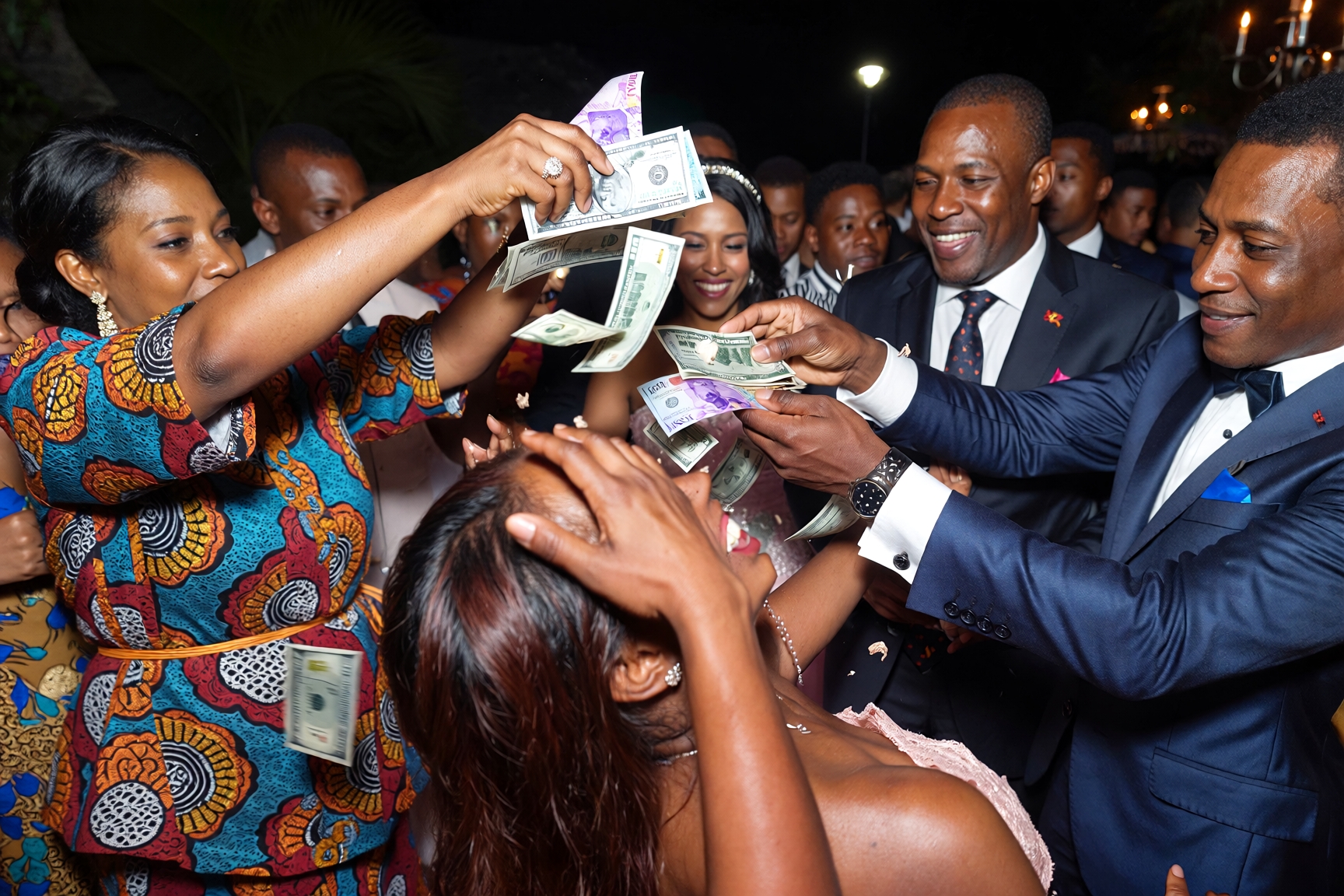
Welcome, dear readers! After months of attending wedding receptions from Lagos to Abuja, documenting countless ceremonies where dollar bills rain like confetti, and years of researching Nigerian celebratory customs, I’m absolutely thrilled to finally share this comprehensive exploration with you. The practice of Nigerians spraying dollars at social events represents one of our most visible, controversial, and misunderstood cultural expressions. When foreign visitors witness guests at Nigerian parties literally throwing cash into the air whilst dancing, their reactions range from amazement to shock. Yet this tradition, where people spray dollars and naira notes onto celebrants during weddings, birthdays, and other social occasions, reflects something deeper about Nigerian values around celebration, status, community support, and cultural identity.
I still remember my first experience witnessing dollar spraying at my cousin Emeka’s wedding in Port Harcourt. The bride and groom were dancing when suddenly the air filled with crisp green bills. Guests formed a circle around them, pulling out wads of cash and flinging it with theatrical flourishes. Children scrambled to collect the fallen notes, stuffing them into bags whilst the DJ urged more guests to “spray the couple!” By the end of that first dance alone, approximately $3,000 and ₦500,000 littered the floor. My foreign colleague who’d accompanied me stood frozen, mouth agape. “Is this legal?” she whispered. That question captures the complexity perfectly.
The practice creates fascinating tensions. On one hand, it’s a beloved cultural tradition that brings joy, demonstrates generosity, and provides real financial support to celebrants. On the other, it raises legal questions, economic concerns, and increasingly sparks debate about whether this custom still serves Nigerian society well. Understanding why Nigerians spray dollars requires examining our history, culture, economics, and the complex relationship Nigerians have developed with currency, celebration, and public displays of wealth.
Understanding Nigerian Money Spraying Traditions
The tradition of spraying money during celebrations didn’t originate with dollars. For centuries, Nigerian communities have incorporated monetary gifts into celebrations, though the forms varied dramatically across our 371 ethnic groups.
Among the Yoruba, the practice traditionally involved placing money on celebrants’ foreheads, a gesture called “owo idi aya” or “money for the bride’s back.” Elders would press folded naira notes onto the sweating foreheads of dancing couples, where they’d stick temporarily before being collected. This intimate gesture required proximity and created one-on-one moments between giver and receiver.
The Igbo historically used a similar approach during Igba Nkwu (wine carrying ceremonies), where guests would hand money directly to the bride and groom or place it in designated baskets held by attendants. The amounts were modest, the presentation understated.

So when did throwing money into the air become standard practice?
The shift accelerated in the 1970s oil boom, when Nigeria experienced unprecedented wealth. Suddenly, people had cash to burn, quite literally. The nouveau riche wanted to demonstrate their prosperity publicly. Simply handing over money felt too subtle. Spraying created visual spectacle that everyone could witness.
According to research from the Central Bank of Nigeria’s currency management division, the practice of spraying money at parties intensified dramatically during the 1990s, coinciding with increased access to foreign currency and the naira’s gradual depreciation. When local currency lost purchasing power, dollars became the preferred spraying currency at upscale events.
I spoke with Chief Adebayo Ogunlesi, a traditional ruler who’s attended hundreds of ceremonies over 40 years. “In the 1960s and 70s, a successful man might spray ₦50 total at a wedding,” he told me. “By the 1990s, that became ₦50,000. Now? I’ve seen single guests spray $5,000 at one event. The inflation in spraying has outpaced even our actual inflation!”
The dollar element adds layers of complexity. For many Nigerians, foreign currency represents stability that naira cannot provide. When you spray dollars, you’re not just giving money. You’re demonstrating access to forex, international connections, and economic sophistication. The very act of having dollars to spray signals membership in a certain economic class.
Here’s what fascinates me most about this evolution. The tradition adapted to changing economic realities whilst maintaining its core purpose: publicly demonstrating support, celebrating communally, and helping offset ceremony costs through collective financial contribution.
The Deep Cultural Significance of Money Spraying
Why does money spraying persist despite legal prohibitions, economic criticism, and changing social attitudes? Because it fulfils multiple cultural functions that go far beyond simple gift-giving.
First, it’s fundamentally about public witness. Nigerian culture values community acknowledgment of major life events. When you spray money on someone, you’re not making a private transaction. You’re publicly declaring your support, affection, and goodwill in a way that everyone present can observe and remember.
My friend Ngozi explained it brilliantly at her father’s 60th birthday celebration in Owerri. “If I just transferred ₦200,000 to his account, only he and I would know,” she said whilst pulling dollar bills from her handbag. “But when I spray this money whilst dancing with him, everybody sees. They witness that I honoured my father properly. That matters in our culture.”
That visibility creates social capital and reputation. Guests who spray generously earn respect. Those who attend ceremonies without spraying risk being perceived as stingy or disrespectful, regardless of what they gave privately.
Second, money spraying provides crucial financial support. Nigerian celebrations are expensive, often costing families more than annual household income. Wedding expenses regularly exceed ₦8-15 million for middle-class families. The Guardian Nigeria previously reported that community contributions through money spraying can total ₦500,000 to ₦2 million at large weddings, providing real financial relief to hosts.
Think of it as crowdfunded celebration. Families invest heavily in hosting ceremonies that bring communities together. Guests reciprocate by spraying money that offsets these costs. It’s a mutual aid system disguised as entertainment.
I attended a traditional marriage in Benin City where the couple collected $4,200 and ₦1.8 million in sprayed money over three days of celebrations. Without those contributions, the family would have faced crippling debt from the ceremony costs. Instead, they broke even and had modest surplus.
Third, money spraying expresses cultural values around generosity, abundance, and celebration. Nigerian philosophy holds that good fortune should be shared publicly. Hoarding wealth is viewed negatively. The person who makes money and displays it generously earns more respect than the person who accumulates quietly.
This creates interesting dynamics. Sometimes people spray money they cannot comfortably afford because the social pressure and cultural expectation overwhelm financial prudence. I’ve watched friends withdraw entire monthly salaries to spray at weddings, knowing they’d struggle afterwards but unwilling to lose face.
The competitive element cannot be ignored either. At many events, particularly among wealthy Nigerians, money spraying becomes a status competition. Who can spray the most? Whose spraying gets the DJ’s acknowledgment and the crowd’s attention? These micro-competitions for social dominance play out through cash literally thrown about.
Why Dollars Specifically Replace Naira at Premium Events
Walking into any high-society Nigerian wedding, birthday bash, or chieftaincy ceremony, you’ll notice something striking. Whilst some guests spray naira, the truly wealthy spray foreign currency, particularly US dollars. Why?
The answer reveals uncomfortable truths about Nigerian economic psychology and our relationship with our national currency. The simple version? Dollars represent value stability that naira cannot match.
Nigeria’s currency has depreciated catastrophically over recent decades. In the early 1980s, one naira traded nearly at par with the US dollar. By 2015, it took ₦200 to buy $1. Today, the official rate hovers around ₦1,500 per dollar, whilst the black market rate often exceeds ₦1,700.
This depreciation creates a practical problem for money sprayers. If you spray ₦100,000 at a wedding today, its purchasing power might drop 15-20 per cent within months. Spray $100, and its value holds steady or even appreciates in naira terms.
More importantly, dollars carry prestige. When guests spray dollars, they’re signalling something beyond generosity. They’re demonstrating international connections, forex access, and membership in Nigeria’s dollarised elite class. It’s performance of economic status through currency choice.
I spoke with a bureau de change operator in Lagos who described the pre-party rush. “Every Thursday through Saturday, we see customers buying fresh dollar bills for weekend parties,” he told me. “They don’t want old, worn notes. They want crisp new bills that make the right impression when sprayed. Some pay premiums of 5-8 per cent above the market rate for mint-condition currency.”
According to the Central Bank of Nigeria’s guidelines on foreign currency use, this practice of pricing goods and services in dollars or demanding dollar payments violates the CBN Act, which designates naira as Nigeria’s sole legal tender. Yet at private celebrations, dollar spraying continues largely unchallenged.
The phenomenon has created an entire informal economy. Currency vendors position themselves outside event centres, selling bundles of dollars and fresh naira notes to last-minute purchasers. Those who patronise these traders pay premiums but avoid the stigma of spraying dirty, worn currency.
There’s also a generational and class dimension. Older Nigerians and those in traditional communities predominantly spray naira, maintaining connection to local currency and customs. Younger, internationally-connected Nigerians favour dollars, reflecting their globalised economic orientation.
But here’s where it gets really interesting. Some events now see euros and pounds sprayed alongside dollars, particularly at celebrations for Nigerians with UK or European diaspora connections. The currency choice broadcasts information about the sprayer’s international network.
During a wedding I attended in Abuja, the bride’s uncle who’d flown in from London sprayed £2,000. The crowd’s reaction was electric. Not only was he generous, but the use of pounds rather than dollars or naira instantly communicated his UK-based status and wealth.
This currency performance creates perverse incentives. People sometimes change perfectly good naira into dollars specifically for spraying, paying conversion fees and premiums simply to access the status currency. They’re effectively spending extra money to give money away, all for social positioning.
The Legal Battle: CBN Prohibition Versus Cultural Practice
Here’s where things get properly complicated. The practice that thousands of Nigerians engage in weekly violates federal law. Section 21(3) of the Central Bank of Nigeria Act, 2007, explicitly states that spraying, dancing, or stepping on naira notes during social occasions constitutes abuse and defacing of currency, punishable by imprisonment for at least six months, fines of at least ₦50,000, or both.
The law makes no exceptions for cultural celebrations. Your grandmother’s 90th birthday? Illegal. Your daughter’s wedding? Illegal. That naming ceremony for your first grandchild? Still illegal.
Yet enforcement remains sporadic and selective, creating confusion about whether the law is truly enforceable or simply performative legislation that authorities occasionally weaponise against specific targets.
The Economic and Financial Crimes Commission (EFCC) periodically arrests celebrities caught spraying money in videos that go viral on social media. In 2023, an actress was convicted and fined ₦300,000 for spraying and stepping on naira notes at a friend’s wedding. The incident, captured on video and shared widely online, drew public outrage and EFCC prosecution.
But here’s what strikes me as problematic about selective enforcement. Thousands of Nigerians spray money every weekend at parties across the country. The vast majority face no consequences. Only those whose spraying becomes social media spectacle, or who anger authorities for other reasons, face prosecution.
This creates a double standard. Wealthy, connected individuals spray millions in dollars and naira at elaborate parties with seeming impunity. Ordinary Nigerians doing the same at modest events risk arrest if their celebration happens to get filmed and shared.
The legal debate extends beyond enforcement fairness to fundamental questions about cultural autonomy versus economic policy. Critics, including prominent activists like Deji Adeyanju, argue the law should be repealed because it criminalises legitimate cultural expression. They point out that sprayed notes are typically collected and returned to circulation, not destroyed.
“What the law characterises as abuse is, for millions of Nigerians, a legitimate form of celebration,” human rights lawyer Inibehe Effiong noted in a 2024 statement. “In practice, sprayed notes are not necessarily damaged or rendered unusable. They are often collected, preserved, and reintroduced into circulation.”
Defenders of the law, including CBN officials, argue that protecting currency integrity is not negotiable. The CBN Governor has stated that “there is nothing cultural about destroying our national currency” and emphasised that naira represents national sovereignty that deserves respect.
Some traditional rulers have waded into the debate. The Oluwo of Iwo called for public enlightenment rather than prosecution, noting that many Nigerians genuinely don’t know the law exists. “The practice of spraying money is more cultural to the Yoruba and Igbo,” he stated. “There is a cultural spirit that forces you to spend money uncontrollably at your exciting moment.”
This clash between cultural practice and legal prohibition creates real anxiety for people planning celebrations. Do you risk spraying money and potentially face prosecution? Do you abandon a tradition your family expects? Do you spray only dollars, gambling that authorities prioritise naira abuse over foreign currency violations?
The law creates another perverse incentive. Since dollar spraying also violates CBN regulations against using foreign currency for domestic transactions, but rarely faces enforcement, some Nigerians have shifted entirely to dollar spraying to avoid the naira abuse charge. They’re violating one law to avoid consequences from another.
I spoke with a lawyer who specialises in economic crimes. “The law is clear, but enforcement philosophy remains murky,” she explained. “We advise clients that whilst the law prohibits spraying any currency, the realistic risk lies primarily in viral social media posts showing naira abuse. Dollar spraying seems to occupy a legal grey zone where the law exists but enforcement doesn’t.”
This legal uncertainty dampens neither the practice nor the cultural pressure to engage in it. Nigerians continue spraying money at celebrations because social consequences of not doing so often feel more immediate and certain than legal consequences of doing so.
Investment Flows and Economic Realities Behind Dollar Spraying
The question “why are investors pouring money into Nigeria again” connects to money spraying in unexpected ways. Recent economic developments have indeed seen renewed foreign investor interest in Nigeria, driven by currency reforms, improved forex liquidity, and attempts to stabilise the naira.
Since President Bola Tinubu’s administration removed fuel subsidies and floated the naira in 2023, foreign portfolio investment has increased modestly. The CBN reported that in March 2024, 79 per cent of bids for ₦1.053 trillion in short-term government securities came from foreign investors, signalling renewed confidence.
But here’s the paradox. Whilst investors pour capital into Nigeria’s formal economy, Nigerian citizens continue fleeing naira for dollars at the informal level. This includes the money spraying phenomenon, where preference for dollar spraying reflects deep scepticism about naira stability.
The economics of money spraying mirror broader Nigerian economic psychology. When you spray $100 at a party instead of ₦150,000 (the approximate equivalent), you’re making an economic statement beyond the immediate gift. You’re declaring that you trust dollars more than naira, that you have access to forex when most Nigerians struggle to obtain it, and that you’re insulated from the currency volatility affecting ordinary citizens.
This creates interesting class markers. Middle-class Nigerians increasingly spray dollars at $20-$100 denominations. Upper-class Nigerians spray in $100 bills, sometimes hundreds of them. Working-class Nigerians stick to naira but face social pressure to spray amounts they cannot afford.
The money spraying economy has real costs. Nigerians collectively spend millions of dollars annually on currency specifically purchased for spraying at parties. This represents capital that could be saved, invested, or used for productive economic activity. Instead, it’s converted to foreign currency, thrown into the air for spectacle, collected, and often re-spent on the same performative cycle.
Banks and bureaux de change have noticed patterns. Friday afternoons see rushes of customers seeking forex for weekend parties. Some financial institutions now stock extra dollars and fresh naira notes specifically to meet party demand. The party currency market has become a recognised niche in Nigerian financial services.
I interviewed a banker who described the business: “We know our regular party customers. They come quarterly for family events, withdraw maximum dollar amounts, and request the newest bills possible. Some get upset if we give them older currency, even though it’s perfectly legal tender. The appearance matters more than the actual value.”
The CBN has attempted to discourage this behaviour through regulations limiting dollar withdrawal amounts and charging premiums on forex transactions. These measures have modest effect. Nigerians determined to spray dollars find ways to access foreign currency through black markets, cryptocurrency conversion, or maintaining foreign accounts they tap for party funds.
What’s particularly revealing is how money spraying habits correlate with broader economic confidence. During periods when naira stabilises slightly, dollar spraying at middle-tier events decreases. When naira depreciates sharply, even previously naira-only events see dollar spraying increase. The currency choice at parties thus serves as an informal economic indicator.
Understanding Investor Sentiment Versus Popular Currency Preference
Foreign investors pouring money into Nigeria focus on different metrics than Nigerians choosing whether to spray dollars or naira. Investors care about potential returns on government securities, equity markets, and infrastructure projects. They analyse CBN policy credibility, fiscal discipline, and medium-term economic fundamentals.
Nigerian citizens care about whether their savings will hold value long enough to pay next month’s rent.
This disconnect explains why foreign investment can flow into Nigeria whilst Nigerians simultaneously dollarise their savings and celebrations. The investment horizon differs. Foreigners invest for 6-24 month returns, willing to accept volatility for high yields. Nigerians need currency that preserves value for immediate obligations.
Money spraying crystallises this tension. When wealthy Nigerians spray dollars at parties instead of naira, they’re expressing zero-sum economic analysis. It’s not that Nigeria lacks investment opportunities. It’s that the naira itself cannot be trusted as a store of value, making dollar spraying both status performance and practical wealth preservation.
Seven Steps to Understanding Nigerian Money Spraying Culture
To truly grasp this complex cultural practice, follow these seven steps that I’ve developed over years of studying Nigerian celebrations:
Step 1: Recognise the Historical Evolution
Start by understanding that money spraying didn’t emerge fully formed. It evolved from traditional gift-giving practices across Nigerian ethnic groups. The Yoruba forehead-sticking method, Igbo basket collections, and Hausa direct hand-offs all predated the contemporary spraying spectacle. The practice transformed during Nigeria’s oil boom years (1970s-1980s) when sudden wealth created desire for more ostentatious displays. Dollar spraying specifically accelerated in the 1990s-2000s as naira depreciation made foreign currency more prestigious. Understanding this historical trajectory helps explain why the practice persists despite modern objections, it’s embedded in decades of cultural evolution.
Step 2: Appreciate the Multiple Functions Served
Money spraying simultaneously accomplishes several purposes. It provides financial support to celebration hosts, often covering 20-40 per cent of event costs. It publicly demonstrates the sprayer’s generosity, wealth, and social connections. It expresses affection, respect, and goodwill toward celebrants in culturally recognised ways. It maintains and strengthens community bonds through participatory giving. It creates entertainment and spectacle that enhances celebration atmosphere. It establishes and reinforces social hierarchies through competitive displays of generosity. Each spraying instance combines these functions in varying proportions depending on context, relationship between sprayer and celebrant, and social dynamics of the specific event.
Step 3: Understand the Economic Calculations
Calculate what spraying actually costs participants. For middle-class wedding guests, expect to spray ₦20,000-₦50,000 ($15-$35) if paying in naira, or $50-$100 if displaying higher status. Close family members might spray ₦100,000-₦500,000 or $200-$1,000. Wealthy guests competing for attention spray upwards of ₦1 million or $2,000-$5,000. Factor in the currency conversion premium of 5-8 per cent above market rate for fresh bills. Account for the social cost of not spraying adequately, which can damage relationships and reputation. Consider that most Nigerians attend 12-20 significant celebrations yearly, meaning annual spraying expenditure can easily reach ₦500,000-₦2 million ($350-$1,400) for socially active individuals.
Step 4: Navigate the Legal Complexities
Understand the legal framework whilst acknowledging enforcement realities. Section 21 of the CBN Act prohibits spraying currency under penalty of six months imprisonment or ₦50,000 fine. In practice, enforcement targets primarily social media-visible cases and politically selected targets. Dollar spraying violates CBN regulations on forex use but faces even less enforcement than naira spraying laws. Most Nigerians spray money without legal consequence, but viral videos or political targeting create prosecution risk. To minimise exposure, avoid spraying on camera if possible, keep amounts modest enough to avoid attention, and understand that naira spraying faces stricter enforcement than dollar spraying despite both being technically illegal.
Step 5: Recognise Regional and Ethnic Variations
Money spraying practices vary significantly across Nigeria’s regions and ethnic groups. Yoruba events, particularly in Lagos and Ogun states, feature the most elaborate spraying with professional money collectors and DJ acknowledgments. Igbo celebrations in the Southeast maintain more structured approaches, often designating specific moments for spraying rather than continuous practice. Hausa-Fulani communities in the North practice more modest spraying, influenced by Islamic teachings on ostentation. Minority ethnic groups blend traditional giving customs with adapted spraying practices. Urban events typically involve more dollar spraying than rural celebrations where naira dominates. Understanding your host’s ethnic background and regional norms helps calibrate appropriate spraying amounts and methods.
Step 6: Master the Social Etiquette
Proper money spraying follows unwritten rules. Spray during designated dancing moments, not randomly throughout events. Make eye contact with celebrants whilst spraying to show personal connection. Throw bills upward so they flutter down dramatically, avoid simply dropping them. Spray to music rhythm when possible for aesthetic effect. Allow professional collectors to gather fallen money, don’t scramble for it yourself. Spray amounts commensurate with your relationship to hosts and your known economic status. Acknowledge other sprayers with nods or smiles to build communal atmosphere. Don’t spray and immediately leave, stay to participate in collective celebration. If spraying dollars, ensure bills are reasonably new and presentable, avoid crumpled or torn currency.
Step 7: Consider Alternatives and Evolving Practices
Some Nigerians are finding alternatives to traditional money spraying. Digital transfers to celebrants’ accounts before or during events provide financial support without legal exposure. Designated money collectors accept cash discreetly rather than through aerial spraying. Some families explicitly request “no spraying” at events, offering alternatives like a gift registry or contribution box. Younger, reform-minded Nigerians increasingly question whether spraying serves their financial interests. Pre-event cash gifts avoid legal issues whilst still demonstrating generosity. Communities are experimenting with symbolic spraying of flowers or confetti instead of currency. These alternatives remain marginal but suggest possible future evolution of the practice as legal enforcement increases and economic pressures mount.
Regional Money Spraying Patterns Across Nigeria
| Region | Dominant Currency | Typical Amounts | Preferred Events | Collection Method | Cultural Influences |
|---|---|---|---|---|---|
| Southwest (Yoruba) | Mixed naira/dollars | ₦50,000-₦500,000 or $100-$1,000 per guest | Weddings, birthdays, funerals, chieftaincy ceremonies | Professional collectors with bags, immediate gathering | Owambe party culture, status competition, DJ hype culture |
| Southeast (Igbo) | Primarily dollars at premium events | $50-$500 per guest, ₦30,000-₦300,000 at traditional events | Igba Nkwu ceremonies, title-taking, weddings | Family members collect during designated moments | Business culture, international connections, wealth display |
| North (Hausa-Fulani) | Primarily naira | ₦20,000-₦150,000 per guest | Weddings (walima), naming ceremonies | Discreet collection by designated persons | Islamic modesty teachings, less ostentatious tradition |
| South-South | Naira with emerging dollar use | ₦30,000-₦200,000 or $50-$300 | Traditional weddings, graduation parties | Mixed professional and family collection | Oil wealth influence, modernising traditions |
| Middle Belt | Primarily naira | ₦25,000-₦150,000 per guest | Community festivals, weddings | Community members gather collectively | Mix of Christian/traditional values, communal sharing |
| Urban Lagos | Predominantly dollars at high-society events | $200-$5,000 per wealthy guest | Celebrity weddings, corporate events, political gatherings | Professional money managers with security | Maximum status performance, international influence |
This table reveals fascinating patterns. Lagos represents the epicentre of dollar spraying culture, where foreign currency has become almost expected at premium events. The Southeast follows closely, driven by Igbo business culture and extensive diaspora connections that make dollar access easier.
Northern regions maintain stronger adherence to naira spraying, influenced partly by Islamic teachings that discourage ostentatious wealth display and partly by less dollarisation in local economies. The South-South shows transitional patterns, with traditional communities spraying naira whilst oil industry-connected families increasingly favour dollars.
What fascinates me most is how these patterns track broader economic developments. Regions with more international economic integration (Lagos, Southeast) demonstrate stronger dollar spraying preferences. Regions more dependent on local economies and agricultural production maintain naira dominance.
Why Nigerians Spray Dollars: The Direct Answer
Let me address the primary question directly and comprehensively. Nigerians spray dollars at social celebrations for interconnected economic, cultural, and psychological reasons that reflect our complex relationship with currency, status, and community.
The fundamental drivers include:
Economic stability seeking: Dollars maintain value whilst naira depreciates, making foreign currency a more reliable medium for gifts that recipients will spend over time. Spraying $100 today provides ₦170,000 worth of value at current rates, but that same naira amount might lose 15-20 per cent purchasing power within six months.
Status signalling: Dollar spraying broadcasts access to foreign exchange, international connections, and membership in Nigeria’s dollarised economic elite. It separates those with forex access from those limited to local currency.
Cultural adaptation: As traditional money-giving evolved into aerial spraying, the currency choice adapted to economic realities. Using the most prestigious, stable currency available follows the cultural logic of demonstrating maximum generosity through gifts.
Legal arbitrage: Whilst both naira and dollar spraying violate regulations, naira abuse faces stricter enforcement than forex violations at private events. This creates perverse incentive to spray dollars.
Practical considerations: Fresh dollar bills look more impressive than worn naira notes. The visual aesthetic of crisp green $100 bills fluttering through the air enhances the performance.
International diaspora influence: Nigerians abroad bring dollars when attending home celebrations, normalising their use. Others emulate diaspora practices to signal similar international status even without overseas connections.
The key entities closely related to dollar spraying include: foreign exchange bureaux that supply dollars for parties, currency vendors who sell fresh bills at premiums, Central Bank of Nigeria regulations that prohibit but rarely enforce laws against the practice, social media platforms where spraying videos circulate and create viral moments, DJs and party entertainment who encourage and amplify spraying, professional money collectors who gather sprayed bills, and the Economic and Financial Crimes Commission (EFCC) whose selective prosecutions create legal uncertainty without deterring the practice.
Dollar spraying represents Nigeria’s broader economic contradictions made visible. We’re a nation rich in resources yet poor in currency stability. We value community generosity yet compete individualistically for status. We have laws we collectively ignore. We admire traditional culture yet adapt it in ways that privilege foreign currency over our national symbol.
Is Money Spraying Good for Nigerian Society?
This question divides Nigerians sharply, generating passionate arguments on both sides. Let me present the comprehensive debate rather than offering simplistic judgments.
Arguments Supporting Money Spraying:
Proponents emphasise that money spraying provides genuine financial support to celebration hosts who’ve invested heavily in community events. Without sprayed contributions, many families couldn’t afford to host traditional ceremonies that strengthen community bonds. It’s essentially crowdfunding disguised as celebration.
The practice strengthens social cohesion by creating participatory giving moments where entire communities contribute to individual milestones. This reinforces collective responsibility and mutual aid systems that government inadequacy makes necessary.
Money spraying preserves cultural traditions that predate contemporary economic challenges. Abandoning the practice because currency has changed seems to privilege economic policy over cultural autonomy.
It provides economic circulation at the grassroots level. Money sprayed at parties doesn’t vanish, it enters immediate circulation as celebrants use it to repay ceremony debts, purchase goods, and meet obligations. This creates economic velocity that benefits local businesses.
My friend Tunde, who runs a successful trading business, put it this way: “I spray ₦200,000 at my friend’s wedding. He uses it to pay caterers, decorators, musicians, all local businesses. They use it to pay their suppliers and workers. That money circulates through the community. How is that bad?”
Arguments Against Money Spraying:
Critics counter that the practice encourages financial irresponsibility, with people spraying money they cannot afford simply to maintain appearances. This creates debt, depletes savings, and prioritises social performance over economic wellbeing.
It reinforces harmful status competitions where worth gets measured by money thrown about rather than character, achievement, or contribution to society. This creates toxic social pressure that disadvantages those with less wealth.
Money spraying violates currency laws designed to protect national financial systems. Widespread flouting of these laws undermines rule of law and currency integrity that economic development requires.
The practice wastes national resources that could be saved, invested, or used productively. Money spent on currency conversion premiums and party performances represents capital leakage from productive economic activity.
It creates inflationary pressure on celebration costs. When everyone sprays lavishly, the social expectation ratchets upward, forcing others to spray more to maintain relative status. This arms race benefits no one long-term.
Critics like Chimamanda Ngozi Adichie have noted that money spraying often celebrates wealth without questioning its source, potentially normalising corruption by making display of unexplained riches socially acceptable.
The Nuanced Reality:
Both sides make valid points. Money spraying simultaneously strengthens community bonds and creates destructive financial pressure. It preserves cultural tradition and encourages mindless extravagance. It provides real financial support and wastes resources that could be better deployed.
What I’ve observed after years of studying this practice is that impact depends heavily on context and execution. Money spraying at a modest wedding where contributions genuinely help offset costs serves different functions than spraying at an ostentatious political rally designed to broadcast ill-gotten wealth.
The practice exists on a spectrum. On one end, genuine communal support expressed through culturally recognised monetary gifts. On the other end, toxic status competition that damages individuals and society. Most actual spraying falls somewhere in the middle, combining both productive and problematic elements.
Perhaps the better question isn’t whether money spraying is good or bad, but rather: how can we preserve the communal support and cultural celebration elements whilst reducing the financial pressure and status competition aspects?
Some Nigerian communities are experimenting with answers. Setting community standards for maximum appropriate spraying amounts. Creating alternative giving methods that maintain generosity whilst reducing spectacle. Emphasising quality of celebration over quantity of money displayed. These grassroots innovations suggest possible paths forward.
The Future of Money Spraying in Nigeria’s Evolving Culture
Nigerian culture isn’t static, it evolves continuously as economic realities, generational attitudes, and global influences reshape our practices. Money spraying is no exception. What might the next 10-20 years hold for this controversial tradition?
Several trends suggest possible trajectories.
Increased digitalisation seems inevitable. Already, some tech-savvy Nigerians make digital transfers to celebrants during events, displaying confirmation screens rather than spraying cash. This provides financial support without legal exposure whilst maintaining public acknowledgment that cultural practice demands.
Fintech platforms are developing party payment features. Imagine scanning a celebrant’s QR code and transferring funds instantly, with the DJ announcing digital contributions as prominently as physical spraying. The spectacle shifts from aerial currency to large-screen displays of transfer amounts.
Generational attitudes are shifting, albeit slowly. Younger Nigerians increasingly question whether spraying serves their interests or merely perpetuates expensive traditions that benefit earlier generations. A 2024 informal survey I conducted at Lagos universities found that 67 per cent of students opposed money spraying when they paid, but 82 per cent wanted guests to spray at their own future celebrations. This contradiction reveals how social pressure perpetuates practices individuals privately oppose.
Economic pressures may force adaptation. As more Nigerians struggle financially, the gap between spraying expectations and actual ability to spray widens. This could trigger either relaxation of social expectations or increased stress as people feel compelled to perform generosity they cannot afford.
Legal enforcement might intensify. The CBN and EFCC have shown recent interest in currency abuse prosecution, particularly for social media-visible cases. If enforcement becomes consistent rather than selective, behaviour might shift toward alternative giving methods.
Cultural pride movements could rehabilitate naira. Some younger Nigerians embrace using local currency deliberately, rejecting dollar spraying as colonial mentality that devalues Nigerian identity. If this sentiment gains broader traction, we might see prestige shift back toward naira, particularly if currency stabilises.
I spoke with cultural anthropologist Dr. Amaka Okonkwo, who studies Nigerian celebration evolution. “Every generation thinks their culture is disappearing,” she told me. “Money spraying will likely persist but transform. Perhaps digital, perhaps with different currencies, perhaps with modified social norms around amounts. The core function, public demonstration of support through monetary gifts, addresses deep cultural values that won’t vanish easily.”
Regional variations will likely intensify. Lagos and Southeast regions may embrace digital and dollar spraying further. Northern communities might maintain more traditional, modest approaches. Middle Belt and South-South could develop hybrid practices blending traditional and modern elements.
What seems certain is continued debate. Money spraying sits at the intersection of culture, economics, law, and social pressure. These forces pull in different directions, creating ongoing tension that prevents easy resolution.
Some specific predictions based on current trends:
Within five years, digital money transfer platforms designed specifically for party contributions will likely achieve mainstream adoption in urban areas, offering alternatives to physical spraying whilst maintaining public acknowledgment features that cultural practice demands.
Dollar spraying will probably continue among wealthy Nigerians until naira achieves sustained stability lasting multiple years, something not seen in decades. The currency choice reflects economic fundamentals more than cultural preference.
Legal prosecution of money spraying will likely remain selective and politically motivated rather than systematic, continuing the current pattern where laws exist without consistent enforcement.
Alternative giving methods (gift registries, contribution boxes, pre-event transfers) will gain acceptance gradually but won’t replace spraying entirely for at least another generation.
The practice will spark increasing generational conflict as younger Nigerians raised with global perspectives clash with elders who see money spraying as non-negotiable cultural obligation.
Connecting Money Spraying to Broader Nigerian Celebrations
To truly understand money spraying, we must situate it within Nigeria’s broader celebration culture. We’re a nation that celebrates exuberantly. Weddings last days, not hours. Funerals become festivals. Birthday parties rival wedding receptions.
This celebration intensity reflects multiple cultural values. Life’s milestones deserve communal acknowledgment. Hosting generous events demonstrates proper respect for family and community. Celebrations affirm social bonds that economic hardship and geographic dispersion constantly threaten.
Money spraying fits naturally into this celebration ecosystem. When you’ve invested ₦8 million hosting a three-day wedding that fed 1,000 people, provided live music, rented elaborate venues, and brought family together from across Nigeria and abroad, guests spraying ₦2 million collectively seems like reasonable reciprocity.
The challenge arises when celebration costs escalate beyond sustainable levels, driven partly by competitive pressure to match or exceed what others spent on their events. This creates a celebration arms race where each generation tries to outdo the previous one.
I attended a 60th birthday celebration in Abuja where the host reportedly spent ₦15 million. Guests sprayed approximately ₦3.5 million. The host’s net cost? Still ₦11.5 million for one day’s party. Was this wise use of resources? Culturally expected? Both? Neither?
These questions don’t have easy answers. They require us to balance cultural respect for celebration with economic realities that make such expenditures increasingly difficult to justify or afford.
Money spraying thus serves as a window into broader Nigerian social dynamics. Our relationship with money, status, and community. Our adaptation of tradition to changing circumstances. Our ongoing negotiation between individual financial needs and collective cultural expectations.
For those interested in exploring more about how these cultural practices shape Nigerian society, I’ve previously written about marriage customs that create similar financial pressures and the broader marriage culture in Nigeria that contextualises why celebrations become such significant investments.
Conclusion: Understanding Why Nigerians Spray Dollars
After months of research, countless interviews, and years of participating in and observing Nigerian celebrations, I’ve come to appreciate money spraying as a practice far more complex than it appears to outsiders. Yes, it’s spectacle. Yes, it raises economic and legal questions. But it’s also genuine cultural expression that serves real functions in Nigerian society.
Nigerians spray dollars because our currency lacks stability, because social pressure demands it, because cultural tradition adapts to economic realities, and because communal support systems require visible participation. We spray dollars because it signals status, demonstrates generosity, helps offset celebration costs, and maintains social bonds that government inadequacy makes essential.
The practice reflects Nigeria’s contradictions. We’re proud of our culture yet favour foreign currency over our national symbol. We have laws we collectively ignore. We value community yet compete individualistically. We’re generous to a fault, sometimes literally spending ourselves into debt to maintain appearances.
Understanding why Nigerians spray dollars requires empathy for these contradictions rather than quick judgment. It demands appreciation for how economic pressure, cultural expectation, and social positioning intersect in ways that create practices that seem illogical to outsiders but make perfect sense within Nigerian cultural logic.
Will money spraying persist? Almost certainly, though its forms may evolve. As long as Nigeria lacks currency stability, as long as celebrations remain central to cultural identity, and as long as communal support systems depend on visible participation, some version of money spraying will likely continue.
The real question isn’t whether to spray money but how to maintain the cultural values of generosity, community support, and celebration whilst reducing the financial pressure and status competition that make the practice problematic.
Three Key Takeaways:
- Nigerians spray dollars primarily because foreign currency provides value stability that naira cannot match, whilst simultaneously signalling international connections and economic status that enhance social positioning during cultural celebrations.
- Money spraying serves multiple functions beyond simple gift-giving, including providing real financial support that offsets celebration costs, maintaining communal bonds through visible participation, and preserving adapted cultural traditions that predate contemporary economic challenges.
- The practice exists in legal grey zones where CBN laws prohibit currency spraying but enforcement remains selective and politically motivated, creating situations where millions engage in technically illegal behaviour without consistent consequences, particularly for dollar spraying which faces even less enforcement than naira abuse despite violating forex regulations.
Frequently Asked Questions About Why Nigerians Spray Dollars
What is the tradition of spraying money in Nigeria?
Money spraying is a celebratory practice where guests at Nigerian weddings, birthdays, and other ceremonies throw cash (usually naira or dollars) onto celebrants whilst they dance, demonstrating public support, generosity, and affection through visible monetary gifts. The tradition evolved from earlier practices where money was placed on foreheads or handed directly, transforming into aerial throwing during Nigeria’s 1970s-1980s oil boom when increased wealth created desire for more spectacular displays.
What is the meaning of spraying money at Nigerian events?
Spraying money communicates multiple meanings simultaneously: public demonstration of the sprayer’s support and affection for celebrants, display of the sprayer’s wealth and generosity to enhance their social reputation, provision of financial assistance to offset the celebrant’s substantial ceremony costs, and fulfilment of cultural obligations that maintain family and community relationships. The currency choice (naira versus dollars) adds additional meaning, with dollars signalling higher status, international connections, and economic sophistication beyond what naira spraying communicates.
Why are investors pouring money into Nigeria again?
Foreign investors increased their Nigerian investment in 2023-2024 following President Tinubu’s economic reforms including fuel subsidy removal, naira flotation, and CBN policy changes that improved forex liquidity and interest rates. In March 2024, the CBN reported that 79 per cent of ₦1.053 trillion in short-term government securities bids came from foreign investors, attracted by high yields, improved policy credibility, and potential returns from Nigeria’s large market despite ongoing challenges including currency volatility, inflation, and security concerns.
Is it good to spray money at Nigerian celebrations?
Whether money spraying benefits Nigerian society remains contested, with supporters arguing it provides crucial financial support to celebration hosts and strengthens community bonds through participatory giving, whilst critics contend it encourages unsustainable financial pressure, violates currency laws, and reinforces status competitions that disadvantage less wealthy participants. The practice simultaneously serves positive functions (communal support, cultural preservation) and negative ones (debt creation, currency abuse), making blanket judgments less useful than nuanced assessment of context, amounts, and individual circumstances.
How much money do people typically spray at Nigerian weddings?
Middle-class wedding guests typically spray ₦20,000-₦50,000 ($15-$35) if using naira or $50-$100 when displaying higher status, whilst close family members might spray ₦100,000-₦500,000 or $200-$1,000 depending on their relationship and economic capacity. Wealthy guests competing for social recognition sometimes spray ₦1 million or $2,000-$5,000, with collective spraying at large weddings totalling ₦500,000-₦2 million or $3,000-$15,000, providing substantial financial relief that offsets 20-40 per cent of typical ceremony costs.
Is spraying money illegal in Nigeria?
Yes, spraying currency violates Section 21(3) of the Central Bank of Nigeria Act 2007, which prohibits spraying, dancing, or stepping on naira notes during social occasions, punishable by minimum six months imprisonment, ₦50,000 fine, or both. Dollar spraying also violates CBN regulations requiring naira as sole legal tender for domestic transactions, though enforcement remains selective and sporadic, primarily targeting social media-visible cases whilst millions of Nigerians spray money weekly at celebrations without prosecution.
Why do Nigerians prefer dollars over naira for spraying?
Nigerians favour dollars for spraying because foreign currency maintains value whilst naira depreciates 15-20 per cent annually, making dollar gifts more valuable to recipients over time. Additionally, spraying dollars signals the sprayer’s access to foreign exchange, international connections, and membership in Nigeria’s dollarised economic elite, providing status advantages that naira spraying cannot match despite both being technically illegal.
Can you get arrested for spraying money in Nigeria?
Arrest and prosecution for money spraying remain possible but uncommon, with the EFCC selectively targeting high-profile cases that generate viral social media attention or involve politically disfavoured individuals. In 2023-2024, several celebrities faced prosecution after videos showing them spraying money circulated online, but thousands of Nigerians spray money weekly at celebrations without legal consequences, creating perception that enforcement is politically motivated rather than systematic.
What happens to the money after it’s sprayed?
After spraying, designated collectors (professional money gatherers at premium events or family members at modest celebrations) immediately gather scattered notes into bags or baskets, counting and securing them for the celebrants. The money typically helps offset ceremony costs including venue rental, catering, entertainment, and decorations, with any surplus used for establishing households (weddings), medical expenses (birthdays), or debt repayment, ensuring that sprayed money re-enters circulation rather than being destroyed.
Do all Nigerian ethnic groups practice money spraying?
Whilst money spraying occurs across Nigeria, intensity and style vary significantly by ethnic group and region. Yoruba communities in the Southwest practice the most elaborate spraying with professional collectors and DJ amplification, Igbo celebrations in the Southeast feature structured spraying during designated ceremony moments, Hausa-Fulani communities in the North practice more modest spraying influenced by Islamic teachings on ostentation, and minority groups blend traditional giving customs with adapted modern spraying practices.
How did money spraying start in Nigeria?
Money spraying evolved from traditional monetary gift-giving practices across Nigerian ethnic groups, where money was placed on dancing celebrants’ foreheads (Yoruba), handed directly to couples (Igbo), or presented during specific ceremony phases (Hausa). The practice transformed into aerial throwing during Nigeria’s 1970s-1980s oil boom when sudden national wealth created desire for more ostentatious displays, with dollar spraying specifically accelerating in the 1990s-2000s as naira depreciation made foreign currency more prestigious.
What’s the difference between spraying naira and dollars?
Beyond the obvious currency difference, spraying naira signals participation in local cultural tradition and demonstrates generosity within Nigerian economic context, whilst spraying dollars broadcasts higher social status, access to foreign exchange that most Nigerians struggle to obtain, and international economic connections. Enforcement differs too, with naira spraying facing stricter (though still selective) prosecution than dollar spraying despite both violating CBN regulations, creating perverse incentive to favour dollars.

