 Follow Us on Google News
 Follow Us on Google Discover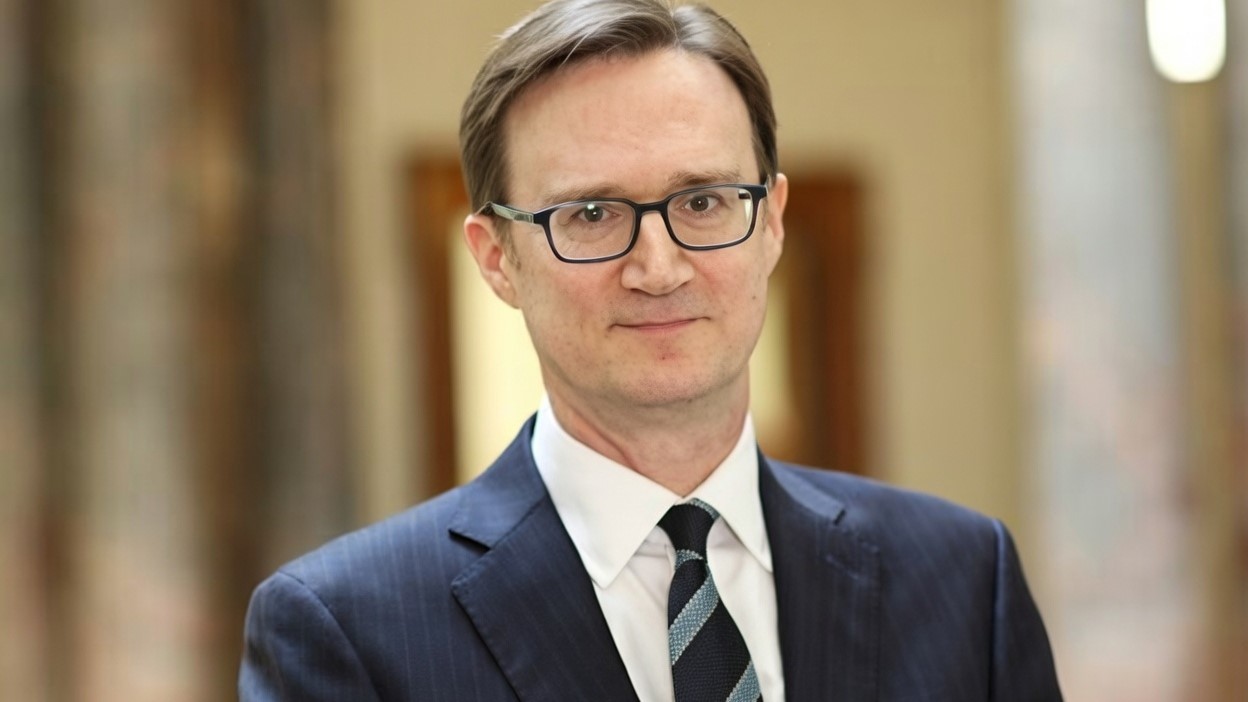
The British High Commissioner to Nigeria, Dr Richard Montgomery, has challenged Nigeria to take its place in the emerging Fourth Industrial Revolution (4IR) to drive its transition into a new era of economic growth fueled by science and technology.
Montgomery also challenged Nigerian journalists to take advantage of the emerging revolution, especially the 4IR, in pushing for faster development.
Speaking at the conclusion of an intensive science and technology journalism workshop in Abuja, the High Commissioner highlighted the critical role of the media not just as reporters, but as “shapers of public opinion” essential to Nigeria’s Fourth Republic.
The High Commissioner emphasised that the U.K. is pivoting its partnership with Nigeria to focus heavily on emerging sectors. While acknowledging that the current economic reforms in Nigeria are tough, the envoy expressed optimism that these changes are paving the way for sustainable growth.
The envoy noted that the U.K.-Nigeria relationship is evolving beyond traditional diplomacy into deep technological and economic integration, citing several key areas of focus, including renewable energy, where it is advancing affordable and accessible energy through new tech.
There is also Artificial Intelligence. He said there is a need to harness AI as a platform for the next industrial wave.

He described the rapidly growing fintech and creative sectors, noting that U.K.-Nigeria trade is hitting record highs.
Addressing the competitive global landscape, the High Commissioner positioned the United Kingdom as Nigeria’s most accessible partner in the tech space.
“We have a huge tech ecosystem… that is possibly the second or third best in the world,” the envoy stated. “It is much smaller than the U.S., but we’re much more accessible to Nigeria. We have an offer which is quite special.”
The workshop featured contributions from several U.K.-funded development programmes, including Propcom, Pace, and Nigeria HealthWatch. These partnerships aimed to inject “real-world examples” into the public discourse, showcasing how technology can solve local challenges.
The High Commissioner concluded by noting that British trade and investment in Nigeria are currently at an all-time high, spurred by recent monetary and macroeconomic reforms. The goal now is to ensure this growth is sustained by “harnessing new science and technology” through mutually beneficial partnerships.
Earlier, the British Deputy High Commissioner in Lagos, Jonny Baxter, said that science, technology, and innovation must be deliberately positioned at the centre of Nigeria’s economic growth agenda.
Baxter, who outlined how stronger collaboration in innovation, research and investment could unlock sustainable growth, job creation and global competitiveness for both countries, described the U.K.–Nigeria Strategic Partnership signed in 2024 as a decisive shift from historic ties to a forward-looking partnership of equals, anchored on economic prosperity and innovation.
“Science and technology are central to our daily lives, our businesses and our prosperity. In the U.K., we place them deliberately at the heart of our economy to drive innovation, create jobs and ensure ideas move into the real economy,” Baxter said.
According to him, the U.K.’s engagement with Nigeria spans the entire innovation and investment pipeline from early-stage grants and technical support for startups, through concessional financing via British International Investment (BII), to fully commercial investments.
Baxter explained that the objective is to help Nigerian businesses move from ideas and research into profitable, scalable enterprises capable of competing globally.
He cited examples of companies that initially received small grants, later accessed concessional loans, and have since grown into large businesses expanding across Africa.
“The end goal is companies that make money, provide services people want, create jobs and pull the wider economy forward,” he said.

