 Follow Us on Google News
 Follow Us on Google Discover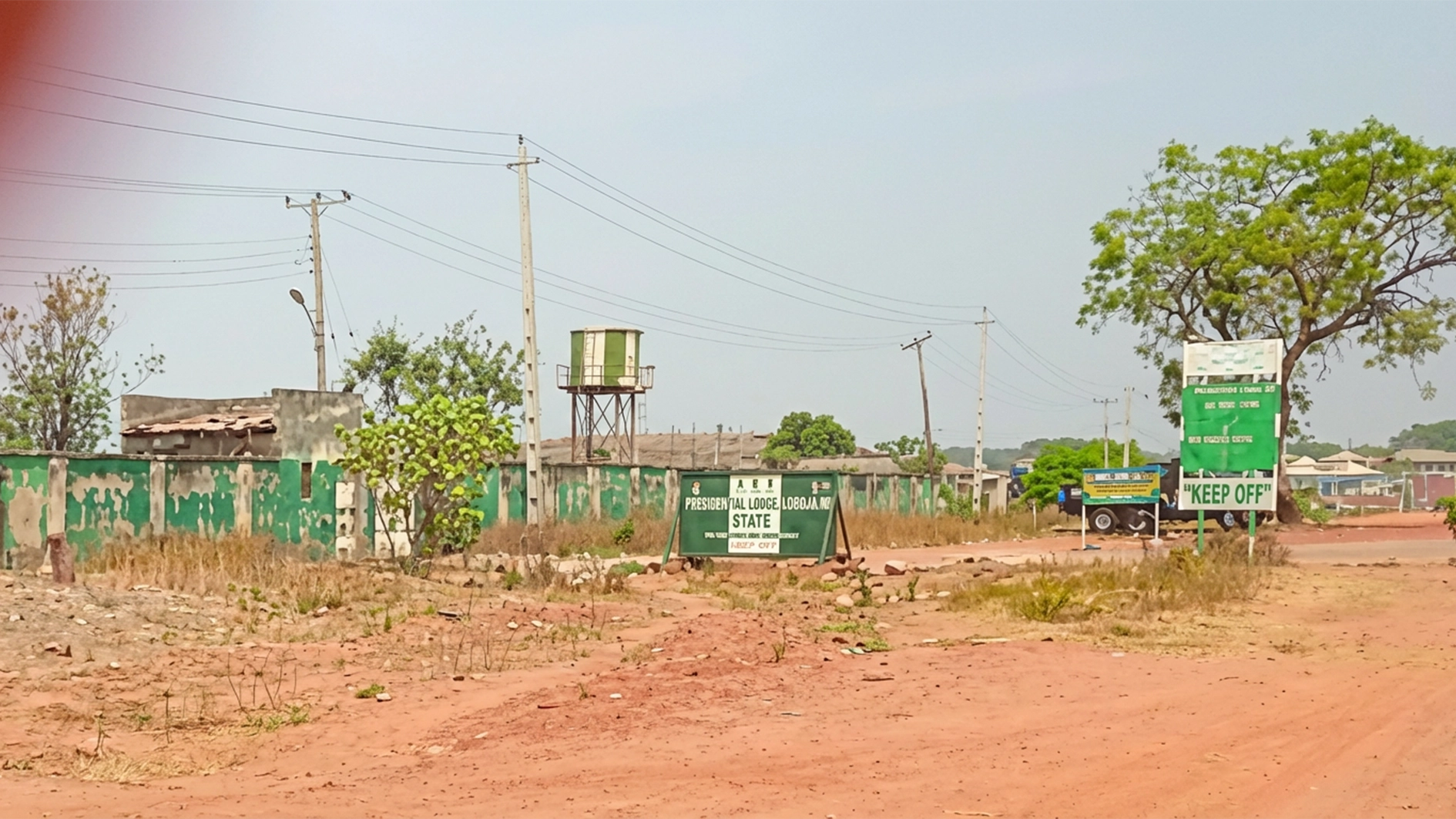
Among other things, the Federal Capital Territory’s Vocational Rehabilitation Centre, Kuchiko, Bwari, was set up to provide vocational training for individuals with disabilities and repentant sex workers, and to address social issues such as street begging by offering rehabilitation and support services to affected individuals.
Today, it lies in ruins, with equipment nowhere in sight, while would-be beneficiaries roam the streets of Abuja, JOSEPH CHIBUEZE reports.
The Federal Capital Territory’s Vocational Rehabilitation Centre, Kuchiko, Bwari, was established in 1982, but became functional during Nasir el-Rufai’s tenure as minister of the FCT.
Originally designed to cater for physically challenged and mentally unstable persons, by equipping them with skills for economic sustainability and self-reliance, the centre in 2014 produced many physically challenged persons, who are not only independent, but have also provided employment for others.
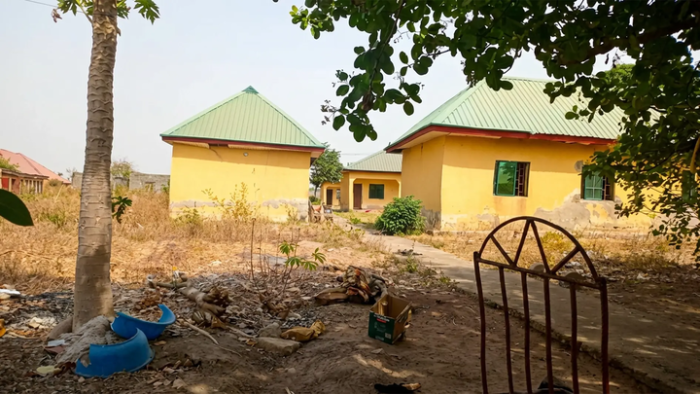
Unfortunately, about a decade after that, it is not only dilapidated, but a greater part of the structure and training facilities have been left to rot, with people of questionable character and rodents replacing the intended beneficiaries.
Late last year, the Social Development Secretariat of the Federal Capital Territory Administration (FCTA) arrested hundreds of beggars over suspected criminal activities in the nation’s capital.
The acting Director of the Social Welfare Department, Gloria Onwuka, while making the disclosure, said that out of those arrested in continuation of its ‘Operation Weep Abuja Clean,’ 58 are women, 72 children, and 80 men.

“Every day you receive complaints about one thing or the other; one-chance operators, kidnapping, and all manner of crime and criminality in the FCT. So, the minister has directed us to do away with all those things.”
While reacting to the arrests, Senator Ali Ndume charged the Minister of the Federal Capital Territory (FCT), Nyesom Wike, to adopt a more compassionate and sustainable approach in addressing the issue of street begging and homelessness in the FCT, rather than resorting to arrests and forced removals.
Ndume, who spoke when Wike presented a N1.7 trillion 2025 statutory budget to the National Assembly on behalf of President Bola Tinubu, said: “The FCT is also about the indigent… For the displaced people roaming around Abuja, it is not enough just to arrest them. What you need to do is what the Kano State Government did in the 1970s — identify the indigent and establish camps where they can be fed and trained so they can be taken off the streets.”
Under el-Rufai’s administration and to a large extent, the administration of Bala Mohammed, the centre performed its roles efficiently, providing training and empowerment opportunities for hundreds of persons with disabilities and street beggars; assisting vulnerable people, especially those affected by social vices, to regain self-esteem and confidence.
In fact, to ensure the smooth running of the centre, Senator Mohammed in 2011, handed it over to a Charity Organisation – Society Against Prostitution and Child Labour in Nigeria (SAPCLN) – on a contract basis.
That era can unequivocally be described as the Golden Era in the centre’s history, as it is currently a shadow of itself, deserted, except for a few members of staff who still hang around, optimistic that their over 30 months’ salary arrears will someday be paid.
The entire environment is effectively covered by weeds, while reptiles and rodents inhabit many dilapidated structures across the expansive compound.
Worse still, no single piece of equipment remains as they have either been stolen, completely vandalised, or rotted.
Most of the hostel accommodations constructed or renovated with funding from the Subsidy Reinvestment and Empowerment Programme (SURE-P) scheme of the former President Goodluck Jonathan’s administration are now in a state of disrepair. Presently, portions of the fence have given way years ago, and the condition remains the same.
Part of the tragedy that befell the centre also includes the gruesome murder of its principal, Bala Tsoho Musa, in front of his residence within the facility in October 2024, by some unknown assailants believed to have accessed the compound through the broken fence.
No new principal has been appointed to take over the running of the place since Musa’s death.
Although the centre has, over the years, suffered gross underfunding, which seriously affected its operations at one point, the final straw that broke the camel’s back was the termination of the SAPCLN’s contract in 2015, under Muhammad Musa Bello as the FCT Minister, citing heavy financial burden on the administration.
“Following the cancellation of the SAPCLN contract, the instructors were no longer paid for upwards of 24 months, and they left,” a former member of staff of the centre, Felicia, told The Guardian.
She added that, since training activities had stopped and feeding had become irregular, trainees had no option but to return to their former lives to survive.
She explained that it got to a point when the rehabilitation centre became just a transit camp, where beggars arrested on the streets of Abuja were kept briefly before they were deported to their various states.
“Within the period they were kept in the centre, their state governments were expected to be providing for their feeding until they are moved,” Felicia revealed.
When The Guardian visited the facility yesterday, a worker at the centre, who spoke on condition of anonymity, said the situation has remained unchanged for years.
He said: “At present, we have 50 beggars who are just awaiting repatriation to their states. Nobody is talking about training them again. Also, as workers, we are just fighting to see that our salaries, which are now going up to six years in arrears, are paid. If you look at the environment, you will see that nothing is happening.”
Once upon a time…
Adama Ibro, a 40-year-old physically challenged person, who lost both limbs to polio as a toddler, was fortunate to be introduced to the centre where he received training in metal works.
Today, Ibro lives in his own house, is married and has four children. He also owns a welding workshop, where over 20 people, both physically challenged and able-bodied, have received training in metalwork.
Although he is confined to the wheelchair he personally constructed, he has four apprentices still under his tutelage.
Efficient in his trade, Ibro has become a household name in the neighbourhood, handling major metal works such as iron gates, window protectors, metal doors and constructing wheelchairs for others like him. In fact, he is living comfortably.
Ibro is just one out of the several physically challenged persons who would have ended up as destitute and constituting a social nuisance but for the timely empowerment intervention provided by the rehabilitation centre.
The vision behind its establishment was to provide vocational training for individuals with disabilities as well as repentant sex workers. It was also to address social issues such as street begging by offering rehabilitation and support services to affected individuals.
More importantly, the centre was meant to develop the capacities of special-needs learners, enabling them to contribute to national development.
Consequently, it has trained several people in various skills, metal fabrication, tailoring, electronics, and shoe and leather production. To ensure a smooth take-off, starter packs and some cash were usually made available to the trainees on completion of their training.
“We were more than 100 that graduated in my set in 2004, and each of us got a starter pack,” Ibro told The Guardian.
Adding: “I got a welding machine, a filing machine and N100,000 cash to enable me to rent a shop and start my small-scale business. We had good instructors, training equipment and a very conducive environment for learning. I felt like I was in a technical school,” he recalled with nostalgia.
“I weep each time I pass by the centre, seeing it in its present state. I weep because I know that if not for that centre, I would have been on the street begging. Many physically challenged persons would have been empowered like me or even surpassed my achievements if the centre had been functioning as before.”
He wondered why the government would spend money to set up a place like the centre with very good intentions, only to later abandon it.
“Why would there not be crime in society? Why are we complaining that there is unemployment when a place like this exists, and we fail to make it functional? In fact, I think the government is simply not serious about fighting crime and youth unemployment. If they are, they should have a place like this in every state of the federation.”
Attempts to elicit comments from the only senior member of staff left at the centre failed, as he was said to have travelled out of town because nothing was happening there.
Many believe that the FCT administration’s war against street begging would not have been born if it had not been allowed to collapse. The lack of facilities to keep beggars arrested during the exercise has ensured that they gradually trickle back into the streets of Abuja, and it appears the government is at a loss on what to do with them.
The situation prompted the House of Representatives to direct its Committee on People with Disabilities to investigate the centre’s state of affairs with a view to repositioning it.
Leading debate on the issue, the sponsor of the motion, Bashiru Dawodu, described the centre as semi-functional due to chronic underfunding, stressing that, as a result, the centre, which provided suboptimal services, has left a significant gap in addressing the long-term needs of street beggars, especially persons with disabilities.
He acknowledged the great role the centre played in the past towards empowering people with disabilities and vulnerable persons, and insisted on the need to put it back in shape if the government was desirous of checking street begging and empowering people with disabilities.
Benjamin Sule, a resident of the area, lamented that the area poses a security risk, given the precarious security situation in Bwari, especially around Kuchiko, a border community with Niger State.
He decried that, as the place is deserted and overgrown with weeds, criminals can sneak in through the fallen fence, hide in the abandoned buildings and launch operations from there at night.
Sule also expressed surprise that since Wike became the FCT minister, he has not thought it wise to visit the rehabilitation centre, at least, to find out its current state before launching his war against beggars.
Now that the Federal Government is harping on the need for vocational skills education, it is imperative that, in addition to setting up new vocational training centres, existing centres, such as the FCT Vocational Rehabilitation Centre, be revived and put to good use.

