GDN SIDEBAR
At the helm of Zenith Bank, one of Nigeria’s most powerful financial institutions, Dame Dr Adaora Umeoji, OON, has built a career shaped by discipline, judgment, and service. In this special edition of Guardian Life magazine, she reflects on the habits, values, and hard choices that carried her from preparation to stewardship, and continue to define what it takes to lead with clarity at the highest level.

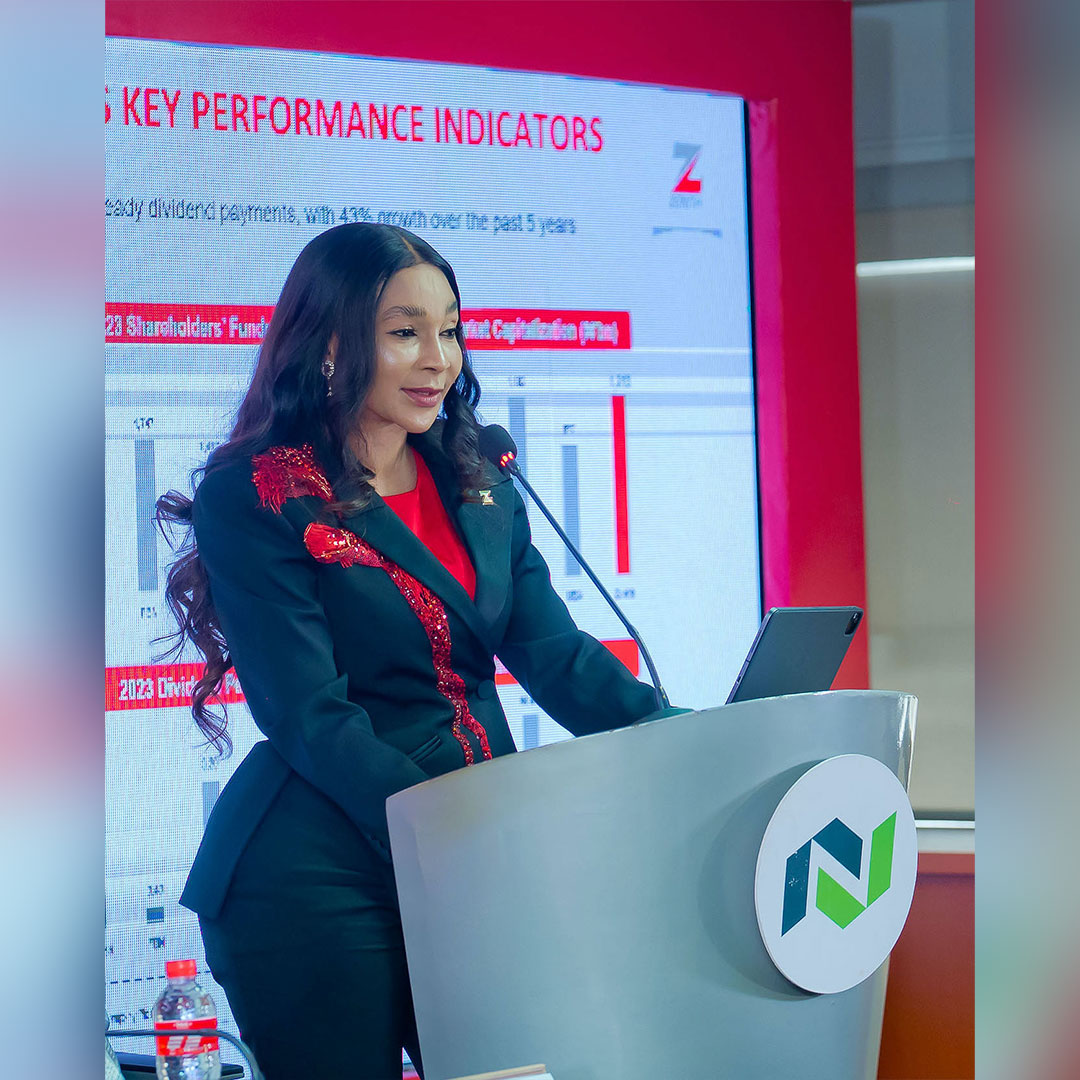
Dame Dr Adaora Umeoji, OON, leads Zenith Bank at a time when banking leadership in Nigeria requires far more than financial expertise. It demands judgment under pressure, credibility with regulators, trust from customers, and the discipline to hold steady in an environment where errors carry systemic consequences.
She arrives at this role with nearly three decades of cognate banking experience and over 20 years in extensive executive management. Still, she does not speak about leadership as conquest or arrival. There is no rhetoric of breaking ceilings or outrunning peers. Instead, she frames leadership as responsibility, earned gradually, carried carefully, and exercised with restraint.
Now one of the most influential figures in Nigeria’s financial sector, her career reflects depth rather than display. In addition to her role as Group Managing Director and Chief Executive Officer of Zenith Bank, she serves as the chairperson of Zenith Bank UK and Zenith Nominees Limited, and sits on the board of Zenith Bank Ghana as a non-executive director. Her authority is quiet but unmistakable.
PREPARATION BEFORE POWER

Her academic journey mirrors the same seriousness with which she approaches leadership. Trained across sociology, accounting, and law, she holds advanced degrees in business administration and law from institutions in Nigeria (the universities of Jos and Calabar, and Baze University, Abuja), the United Kingdom (the University of Salford), and the United States, alongside advanced executive education from the prestigious Harvard Business School, Columbia Business School, MIT Sloan, and Wharton. Her doctoral research in Business Administration from Apollos University, USA, focused on inspirational leadership, a subject which has been recognised for its significant contribution to leadership and people management.
In addition, Dame Dr Adaora Umeoji is a Certificated Professional Banker of the Chartered Banker Institute, London, and a distinguished fellow of numerous professional bodies, including the Chartered Institute of Bankers of Nigeria.

Yet, when asked what has sustained her growth through increasingly demanding seasons, she does not begin with credentials or milestones.
“Three values have kept me steady,” she tells Guardian Life. “Purpose, discipline, and service.”
It is a simple answer, but it explains the tone of her leadership. Purpose gives direction. Discipline supplies structure. Service keeps power in check. Together, they form the framework through which she has learned not just how to rise, but how to remain effective once there.
This understanding, that leadership is stewardship, has shaped every stage of her journey. It is also the principle that continues to guide her as she leads one of Nigeria’s most consequential financial institutions into its next phase.
TREATING WORK AS A CALLING

From the earliest stages of her career, Dame Umeoji learned to treat work not as a transaction, but as responsibility. Every role, she believed, carried an obligation to build people and deliver results. This mindset has shaped her long before executive titles entered the picture.
“From the early stages of my career, I learned to treat every role as a call to build people and deliver results,” she tells Guardian Life. “That mindset kept me grounded when the responsibilities became heavier.”
That grounding would prove essential as her responsibilities expanded. Rather than relying on talent or momentum, she leaned into structure. Purpose anchored her. Discipline ordered her days. Service shaped her decisions.
“Discipline matters because talent alone does not carry you through pressure,” she reflects. “You can be gifted, but without structure, without consistency, pressure will expose gaps.”
For her, discipline is practical, not performative. It shows up in protected mornings, simplified priorities, and a commitment to doing basic things well, even when the agenda is overwhelming. These habits, repeated quietly over time, became her defence against burnout and distraction.
“I try to protect my mornings, keep my priorities simple, and do the basic things well,” she says, “even when the agenda looks overwhelming.”
Service, she insists, completes the picture.
“Leadership is not self-expression. It is stewardship,” she explains. “When I focus on helping others grow, I also grow. It keeps me humble, and it keeps me accountable.”
LESSONS FROM LEADERSHIP

Over the course of her career, Dame Dr Adaora Umeoji has participated in conversations that shape the banking industry, from academic conferences and high-level policy discussions to mentoring engagements with young professionals preparing to enter the sector. Yet, it is in leading Zenith Bank that her understanding of leadership has deepened most fully.
“Leading Zenith Bank has reminded me that leadership is, above all, about people, trust, and consistency.”
The role, she explains, has sharpened her appreciation for collective intelligence. No leader, regardless of experience, sees everything. Sustainable outcomes depend on creating space for others to contribute insight, challenge assumptions, and strengthen decisions.
“I have learned to listen more deeply and to respect the power of collective intelligence. No leader sees everything. The best outcomes come when you create room for others to contribute their best thinking.”
In her industry, which is highly regulated, this openness must coexist with discipline. Listening, humility, and respect for process are not optional; they are safeguards. Authority, in her view, does not override the need for teachability.
“You can carry authority and still remain teachable,” she notes. “In a regulated industry, you must respect risk, process, and the disciplines that protect depositors and the system.”
Ultimately, these lessons have reinforced her definition of leadership itself: one that resists abstraction and insists on consequence.
“Most importantly,” she admits, “it has strengthened my conviction that leadership is measured in outcomes and in the quality of lives you improve along the way.”
THE INNER DISCIPLINES THAT SUSTAIN POWER

High-level leadership is demanding not only because of public visibility, but because life continues privately, largely unseen. Decisions are constant. Pressure is cumulative. Without deliberate systems, even the most capable leaders lose clarity over time. Dame Umeoji is candid about the personal disciplines that help her preserve judgment and stamina.
She resets with two habits: reading and exercise.
“Reading slows my mind down,” she says. “It helps me step back from daily noise and think clearly again.”
She gravitates towards books that stretch her thinking and restore perspective, reminders that intensity is not permanent, and no phase, however demanding, is eternal.
Exercise, she notes, is not about aesthetics or routine perfection. “Even a short session helps me release stress and return to work with better judgement. These are not grand routines.”
Repeated quietly over time, they form a personal infrastructure that protects her capacity to lead well. Not rituals for display, but tools for endurance.
“They are small disciplines,” she explains, “but they protect my stamina and my judgement.”
WOMEN, AMBITION, AND THE COST OF PERFECTION

As one of the few women at the very top of Nigeria’s banking sector, Adaora Umeoji does not romanticise the journey. She is clear-eyed about its demands and its costs.
“Success comes with its prices,” she says plainly.
She acknowledges the progress women have made across the industry, from entry-level roles to the highest offices, noting that their presence is the result of focus, professionalism, and sustained excellence over time, often in spite of cultural and structural constraints.
“Many women are blazing the trail in the Nigerian banking industry, from the base of the pyramid to the highest echelon,” she observes. “This is testament to focus, hard work, professionalism and tenacity.”
Yet, she is equally alert to the patterns that slow women down as they rise. Chief among them is perfectionism, a drive that, left unchecked, becomes paralysing.
“It never comes,” she says.
She describes how many ambitious women internalise pressure so deeply that they become risk-averse, delaying action in pursuit of an ideal moment. Her metaphor is precise.
“A lawn will be perfectly smooth if cleared with a shaver,” she reflects, “But it is not efficient to do so. The best is to start with what you have.”
Progress, in her view, comes from starting with what you have, adjusting, and improving deliberately. It’s more about movement than flawlessness.
Another habit she believes women must unlearn is saying yes to everything.
“Ambition without boundaries becomes exhaustion,” she warns. “Because we are great at multitasking, we often spread ourselves too thin. You grow faster when you choose fewer priorities and execute them well.”
Focus, she suggests, is not a limitation, but leverage.
Her final counsel is about voice. Women, she insists, must resist the instinct to shrink or soften their authority. Leadership does not require loudness, but it does require conviction.
“Be unapologetic about your voice. Speak with clarity. Own your expertise. The world needs women who can lead with conviction and calm.”
BUILDING LONGEVITY WITHOUT LOSING ONESELF

Longevity, for Dame Dr Adaora Umeoji, is not accidental. It is the product of alignment between values, responsibilities, and seasons of life.
“Longevity comes from intentional choices and honest alignment,” she says.
She is clear that balance is not static. “There will be seasons when work demands more, and seasons when family or personal needs come first,” she says. “The key is to strike a balance and decide consciously, not to drift.”
Support systems are essential to sustaining leadership over time. Relationships at home and at work must be nurtured. Rest and reflection must be protected. Health and judgement, she notes, are inseparable.
“Build support around you,” she says. “Invest in relationships at home and at work. Protect time for rest and reflection. Your health and judgement depend on it.”
She credits her family for providing steady, unconditional support through demanding seasons, and acknowledges the role of mentorship in helping her remain grounded. In particular, she points to the counsel of the Founder and Chairman of Zenith Bank, Jim Ovia, CFR, whose guidance helped during critical moments in her journey at the bank. “His counsel has helped all of us in Zenith to stay disciplined and grounded through demanding seasons.”
Yet beyond mentors and structures, she returns to identity.
“As ladies, we need to protect our identity beyond the title,” she says. “When leadership comes from self-awareness and values, it becomes sustainable and fulfilling.”
GIVING BACK: LEADERSHIP BEYOND PROFIT

Beyond her corporate responsibilities, Dame Dr Adaora Umeoji is deeply committed to philanthropy and service to the community
She founded the Pink Breath Cancer Care Foundation, which educates, supports cancer patients, and promotes healthcare programmes across Nigeria. She also established the Adorable Foundation to support indigent children, with particular attention to the education and welfare of the girl-child. These initiatives reflect a long-standing belief that institutions cannot thrive in isolation from the societies they serve.
Her humanitarian efforts have garnered recognition from esteemed organisations, including the Nigerian Red Cross and the Sun Newspaper, which recently honoured her with the Humanitarian Service Icon Award for 2023.
For her, philanthropy is not a side project. It is leadership in practice.
“Philanthropy is part of leadership, not an add-on,” she says. “I care deeply about initiatives that strengthen education, health, and opportunity, especially for women and young people.”
Her view is pragmatic. Banking relies on public confidence, stable communities, and shared progress. Supporting education and healthcare is not separate from institutional success; it reinforces the very foundations on which it stands.
“When people gain skills, confidence, and access to opportunity, the entire economy benefits,” she explains.
Her commitment to ethical banking informed her role in instituting the Catholic Bankers Association of Nigeria (CBAN) and underpins her advocacy for peace and ethical conduct. Her commitment to service has earned recognition from humanitarian organisations, religious institutions, and the Nigerian state.
She is recognised as a Peace Advocate of the United Nations (UNPOLAC) and a Lady of the Order of Knights of St. John International (KSJI). Her advocacy efforts were further acknowledged by His Holiness Pope Francis, who conferred on her the Papal Knight of the Order of St. Sylvester.
In 2022, the Federal Government of Nigeria honoured her with the Officer of the Order of the Niger (OON), as a recognition of her contributions to national development.
Yet, she speaks of impact not in accolades, but in lives redirected by timely intervention.
“I have seen how timely support can change the direction of a life,” she says. “That reality keeps me committed.”
THE FUTURE: STEWARDSHIP IN MOTION

Looking ahead to 2026, Umeoji is clear-eyed about the operating environment. Customer needs are evolving. Regulatory reforms continue to reshape the sector. Economic realities remain complex.
“The operating environment is shifting,” she says, “driven by dynamic changes in customer needs, regulatory reforms and emerging realities in the broader economic direction of the country.”
Her response is not reinvention for its own sake, but renewal built on a solid foundation. The focus, she explains, will remain on superior service delivery, financial inclusion, strong capital and liquidity positions, and enhanced risk management.
“To remain the toast of our customers, in 2026, we would harness the solid foundation that our Founder and Chairman has established with renewed focus, vigour, and a positive mindset,” she says.
Under her leadership, the emphasis is clear: disciplined execution, people-led innovation, and governance that does not bend under pressure.
“Our team remains dedicated to delivering superior stakeholder value through excellent service, driving financial inclusion, maintaining stronger capital and liquidity positions, as well as enhancing risk management,” she explains. “Our resolve is to continue to provide appropriate support for the productive sectors of the economy and build on the innovative capacity and leadership of our staff to drive exceptional performance.”
Innovation, in her view, will always be driven by people. Governance, however, remains non-negotiable.
“Our goal is to position Zenith Bank as a global institution anchored on strong corporate governance,” she says, “one that sets the standard for excellence, innovation, and service.”
Her confidence is not loud, but assured. It rests on people, clarity, and discipline: the same values that have shaped her journey so far.
“We have made Zenith Bank a positive and happy work environment where ideas thrive,” Dame Umeoji says.
“I am confident that with the strength of our people and the clarity of our strategy, we will deliver even greater accomplishments in 2026, building a lasting legacy to ensure that the bank outlives many generations, emerging as a global financial powerhouse.”
Zenith Bank under Dame Umeoji
- Unprecedented salary increases and promotion exercise covering 50% of Zenith Bank’s workforce.
- Digital transformation of the bank’s core application and key IT systems.
- 160% subscription achieved in the 2024 public offer and rights issue under the CBN recapitalisation exercise.
- Multiple awards from reputable international organisations.