 Follow Us on Google News
 Follow Us on Google Discover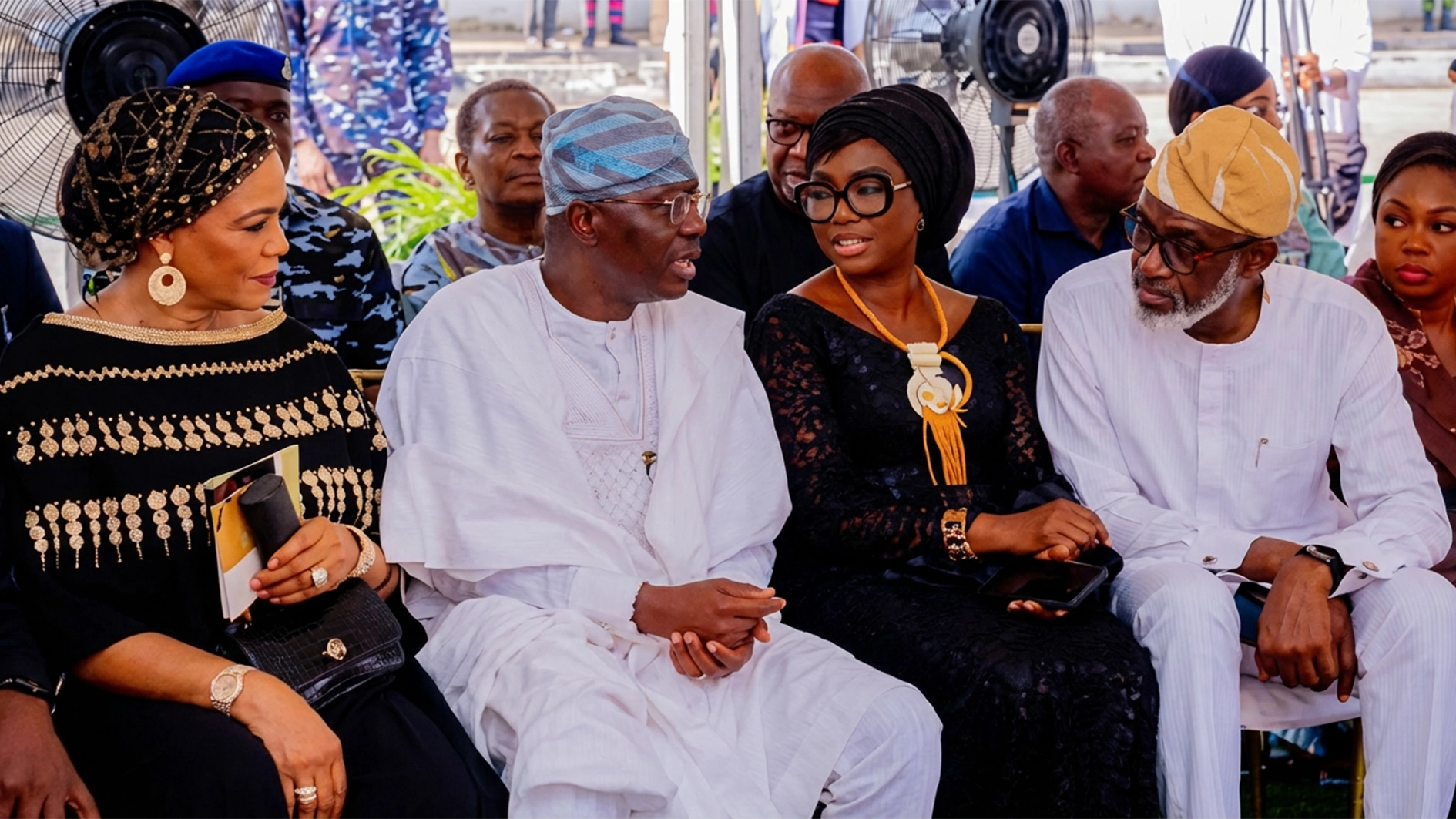
It was a moment of national reflection as the Governor of Lagos State, Babajide Sanwo-Olu and family members of the late General Murtala Mohammed reflected on his legacies 50 years after he was assassinated in a coup d’état.
The memorial event brought together representatives of the Nigerian Army and foreign diplomats who witnessed the official wreath-laying ceremony in honour of the late General where he was killed in a traffic ambush in his black Mercedes Benz on George Street, Ikoyi, Lagos.
Reflecting on his father’s legacy, Aisha Muhammed-Oyebode said that despite losing her father at the age of 12, the pain of that moment still resurfaces, describing his death as deeply personal.
“We stand here not to lay a wreath, but to lay down our gratitude. Fifty years is a long time in the life of a nation. And it also has been a long time in the life of all of us, the children who lost our fathers on that day. So, it’s really about gratitude,” she said.
She said that the greatest legacy his father left behind was his resolve to ensure that all his children are educated, noting that he prioritised the needs of his children despite the demands of public office.
Turning to his public life, Muhammed-Oyebode said that despite his brief time in office, he still governed with urgency and a strong sense of duty, believing that leadership was a responsibility.

Beyond Nigeria, she highlighted her father’s influence across Africa, particularly in Angola, where Nigeria, under General Mohammed’s leadership, supported Angola’s independence struggle, including standing up to multinational oil companies that threatened to withdraw operations.
She said: “There is a beautiful island of Luanda. The longest street that spans that island is called Murtala Mohammed Avenue. The day I went there, I was in tears.”
Sanwo-Olu, in his tribute, described the late General as a rare pan-Africanist whose policies helped reshape Nigeria.
He noted that within six months of assuming office in 1975, Mohammed created seven new states, expanding the federation from 12 to 19 states, noting that Nigeria has since struggled to create even a single state after decades.
He said: “He was a leader that led with fear, compassion, dignity, sense of purpose, and with Nigeria first.”
A retired Major General, Ahmed Taiwo, described Mohammed (his uncle) as a brave man, who, even when the incident that led to his death was foretold, dismissed it with a wave of hand.
He said: “When they told the late General that some people were planning, he said ‘let them plan, let them do what they want to do. Good luck if they can run the country.”
Also speaking at the event, representatives of the Nigerian Armed Forces, the Garrison Commander, 81 Division, Lagos, Brig. Gen. A.I Getso and Brig. Gen. Clement Iyere of Signal Corps, described him as an exceptional leader whose legacy continues to inspire generations 50 years after his assassination.

