 Follow Us on Google News


 Follow Us on Google Discover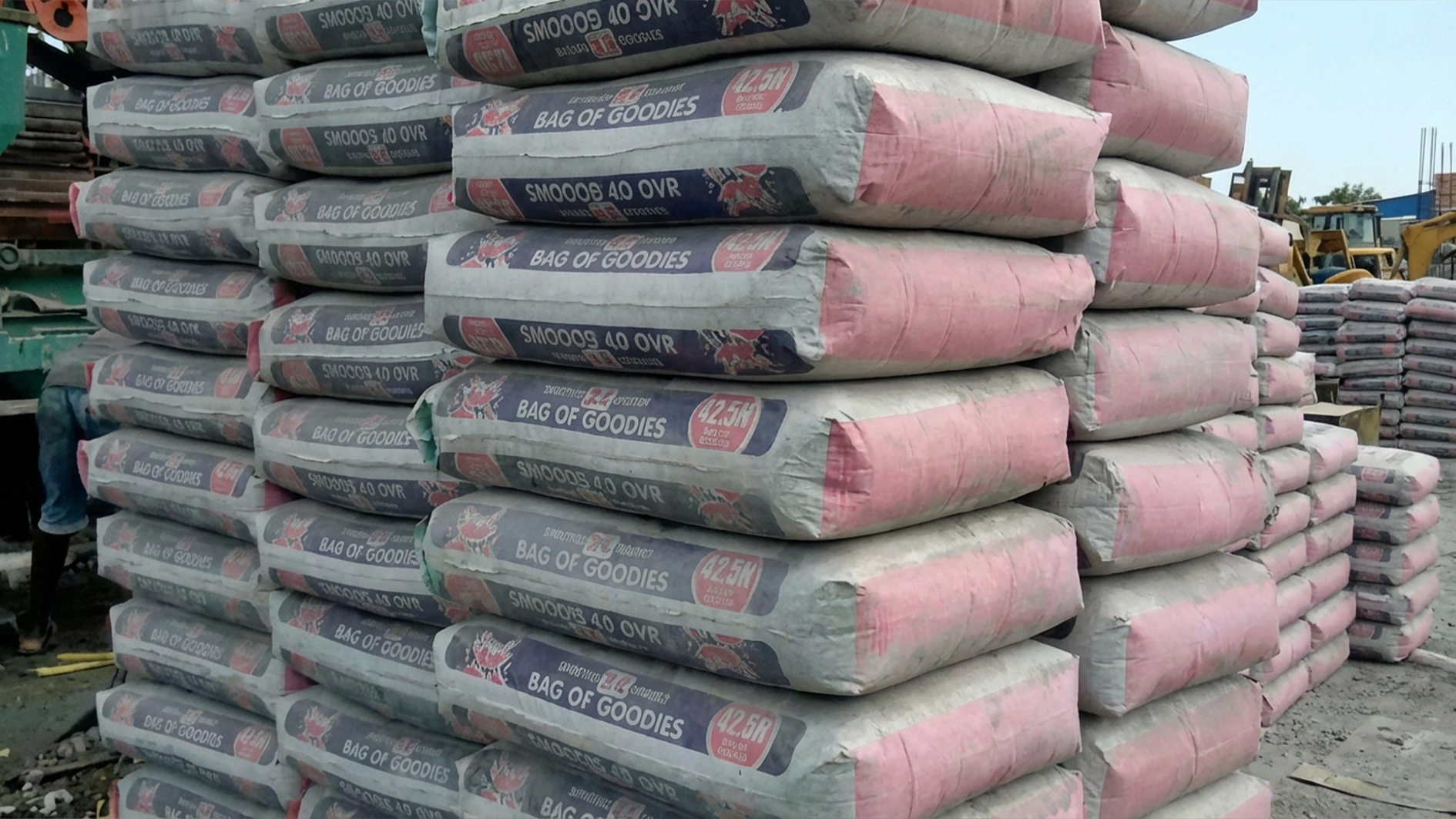
The recent increase in cement prices has been linked to the new tax regime, rising logistics costs and dependence on imported inputs. Industry leaders warn that the trend will have short, medium, and long-term consequences for housing delivery nationwide, affecting both private developers and government-funded projects, CHINEDUM UWAEGBULAM reports.
Nigeria’s new tax regime is emerging as a major pressure point for the cement industry, further compounding challenges around foreign exchange volatility and rising logistics costs.
Industry operators said the widening tax net, higher effective tax rates and multiple levies imposed across federal and state levels have significantly increased operating costs for cement manufacturers—costs that are ultimately passed on to builders, developers and end-users.
Cement manufacturing is one of the most capital-intensive industries in Nigeria, requiring heavy upfront investment in production plants, energy systems, haulage fleets and ongoing maintenance. Under the government’s new tax framework, cement producers face higher corporate tax exposure, stricter compliance requirements and multiple statutory charges spanning customs duties, value-added tax (VAT), education tax and a range of regulatory and administrative levies.
Executives in the sector explained that the cumulative tax burden has risen sharply in the past year, even as operating conditions remain difficult. The effect is particularly pronounced for firms that still rely on imported inputs such as gypsum, spare parts and specialised equipment, which are priced in foreign currency before taxes are applied.
As tax obligations rise, cement manufacturers said they have limited room to absorb the additional costs. The result has been steady upward price increases in cement across major markets, with builders and developers bearing the brunt.

The Guardian learnt that cement manufacturers added N500 to the price of a 50kg bag in January, when the new government tax measures took effect. The increase has affected all major brands, pushing prices sharply higher. A bag of cement has been selling between N11,000 and N11,500 in early 2026, up from about N10,000 to N10,500 in late 2025.
In Abuja, Lagos and Ogun States, prices have climbed to as high as N11,500 per bag, while in parts of the eastern region, cement sells for around N11,000, depending on brand and proximity to production plants.
With cement accounting for one of the largest material costs in construction, developers now face tighter budgets and increased uncertainty. Many lamented that rising material prices are forcing them to slow project starts, adjust designs or phase construction more cautiously.
Built environment professionals noted that slow housing supply growth in Nigeria’s urban markets means fewer new homes are available relative to demand, keeping house prices and rents elevated. Rising construction material costs, particularly cement, have therefore become a major contributor to worsening affordability challenges.
Beyond taxation, higher cement prices are also being blamed on sustained demand from roadworks and infrastructure projects, currency volatility and the continued cost of imported inputs, even though Nigeria has abundant local limestone. The knock-on effects include higher rents and construction costs, as developers and landlords pass on higher material costs to buyers and tenants.
With cement prices stubbornly high nationwide, experts warn that unless fiscal policies are recalibrated, construction activity could slow further, worsening Nigeria’s housing deficit and infrastructure gap.
The Guardian gathered that shrinking housing supply due to rising construction costs is creating a self-reinforcing cycle, while producers raise cement prices to cover costs, developers slow or delay new builds, and the shortage of new homes keeps prices and rents high.
Developers noted that cement, already one of the largest inputs in construction, has become increasingly unpredictable in pricing, making project budgeting difficult. Many have slowed new projects, redesigned developments or shifted focus to smaller housing units to remain viable.
The Federal Government has repeatedly appealed to cement producers to reduce prices in the interest of national development, but industry players insist that prices cannot fall sustainably unless structural cost drivers, including taxation, are addressed.
Tax regime meets weak demand fundamentals
The timing of the tax changes has raised further concern among experts. The construction sector is still recovering from macroeconomic shocks, high inflation and weakened consumer purchasing power. Economists warn that higher taxes imposed during such a fragile recovery period risk suppressing output rather than expanding it.
While the government’s objective is to boost revenue and improve tax compliance, experts caution that taxing production-heavy sectors too aggressively can have unintended consequences such as reducing supply, raising prices and shrinking employment across construction and allied value chains.
In the cement sector, this dynamic is already visible. Higher taxes feed into higher prices, which reduce demand, slow construction activity, and ultimately limit the sector’s growth potential.
Experts agreed the government still has significant policy room to help moderate cement prices without undermining revenue goals. One option is targeted tax relief for critical building materials. Temporary tax holidays, reduced VAT on cement or rebates linked to local sourcing could lower production costs while encouraging expansion and compliance.
Another key area is tax harmonisation, which can be achieved by streamlining taxes and eliminating duplication to reduce inefficiencies. A clearer, more harmonised tax framework, especially between federal and state agencies, would lower compliance costs and reduce uncertainty for manufacturers.
In addition, incentivising local input development could yield long-term benefits. Supporting large-scale gypsum mining and processing through tax credits, infrastructure support and public-private partnerships would reduce import dependence and foreign exchange exposure, easing cost pressures over time.
Experts also said logistics and energy reforms could amplify any fiscal gains. Investments in alternative-fuel infrastructure, such as compressed natural gas (CNG) corridors, expanded rail freight capacity, and improved road networks, would reduce distribution costs and complement tax reforms. Stronger competition oversight is also seen as critical to ensure that, where achieved, cost reductions are reflected in prices rather than absorbed entirely as margins.
Pressure on housing budgets
According to experts, with cement accounting for a large share of construction costs, higher prices may mean existing government budget allocations are no longer sufficient to deliver the planned housing units.
Governments may be forced to choose between building fewer housing units or seeking supplementary funding, both options carrying political and fiscal implications. At the federal level, ambitious affordable housing targets could be revised downward as per-unit construction costs rise.
At the state level, housing agencies may delay new project launches, prioritise completion of existing sites or scale back estate sizes. Higher material costs also affect social and mass housing schemes, where price controls or affordability targets limit the amount of the cost that can be passed on to beneficiaries.
Wider ripple effects
Beyond direct housing delivery, higher cement prices also affect infrastructure-linked components within estates, such as roads, drainage systems, and utilities. As infrastructure costs rise, the overall cost of delivering habitable housing increases, even when the building shell itself is completed. In major urban centres, experts warn that this could worsen affordability pressures, pushing more households into informal settlements or peripheral locations with limited services.
If cement prices remain elevated, governments may be forced to reallocate housing budgets, diverting funds from new projects to complete ongoing ones. Authorities may also revise unit cost benchmarks, effectively acknowledging higher housing prices, or extend project timelines, delaying the social and economic benefits of housing delivery.
Experts argue that to protect housing delivery, the government must focus on addressing cost drivers rather than symptoms. This includes tax relief for building materials, support for local sourcing of inputs, faster approval of contract variations tied to genuine cost increases, and better coordination between fiscal and housing authorities. Without such interventions, rising cement prices risk turning ongoing housing projects into stalled assets and converting housing budgets into shrinking delivery pipelines.
Industry leaders react
A former president of the Nigerian Institute of Builders (NIOB), Mr Kunle Awobodu, linked the recent increases in cement prices to the new federal tax regime. “We have begun to see the impact within the real estate industry,” he said.
According to Awobodu, uncertainty has grown within the market regarding how deeply the new taxes will affect ongoing and future projects. “Any project we have before now will also be affected by the new tax,” he noted.
A property developer and Chief Executive Officer of NISH Affordable Housing Limited, Dr Yemi Adelakun, said developers with ongoing projects are unlikely to abandon their sites. “Time is also money. Every delay adds to the costs. We will find a way to meet consumers’ needs,” he said.
Adelakun added that where developers have not locked in prices under earlier contracts, there would be room for price adjustments. He noted that developers with existing cement stock would not feel the immediate impact but warned that sustained price increases would affect both property development and contractors handling roads and bridges.
He urged the Federal Government to take urgent steps to halt further increases and address the impediments driving higher prices. Adelakun also suggested structured engagements between cement manufacturers and developers, similar to arrangements around the Dangote Refinery, where contractors could buy directly from producers.
He further encouraged developers to invest in inventories and cooperate by pooling resources to buy cement in bulk from manufacturers, thereby reducing exposure to price volatility.
Competition concerns
Meanwhile, a new policy brief by Nigerian think tank, Agora Policy, stated that persistently high cement prices are driven less by production costs and more by market power and weak competition.
The Waziri Adio-led organisation warned that current outcomes undermine housing delivery, infrastructure development and long-term economic growth.
In the memo titled: Market Power and Failure of Competition Policy in Nigeria’s Cement Industry, Agora Policy stated that Nigeria has already achieved what its industrial policy set out to accomplish more than a decade ago, self-sufficiency in cement production, but has failed to translate that success into affordable prices.
According to the report, Nigeria attained formal cement self-sufficiency as early as 2012, and its installed capacity now exceeds domestic demand by a wide margin. Yet prices remain elevated, while the industry’s three dominant producers continue to post exceptionally high profit margins. As of the end of September 2025, Nigeria’s cement producers recorded average core operating profit margins of about 49 per cent, up from roughly 34 per cent in 2024.
Drawing on international evidence, Agora Policy noted that cement typically accounts for about eight per cent of construction costs globally, but this share can rise to 15–20 per cent in lower-income countries. Price increases, therefore, pass directly through to higher housing and infrastructure costs.
The think tank dismissed import liberalisation as a durable solution, arguing that cement is poorly suited to sustained import competition due to high transport costs, limited global spare capacity and Nigeria’s large inland market.
Instead, it called for a shift in policy focus from capacity expansion to competition restoration.
Agora Policy urged regulators to address regional dominance directly, including restrictions on further capacity expansion by dominant firms, measures to prevent domestic prices from exceeding export prices, and predefined policy triggers that activate corrective measures when capacity utilisation falls too low.
It also recommended mandatory disclosure of plant-level utilisation rates, ex-factory prices and regional sales data to strengthen oversight and transparency. The group called on the Federal Competition and Consumer Protection Commission (FCCPC) to prioritise cement as a strategic sector and conduct regular market studies focused on dominance and conduct.

