 Follow Us on Google News
 Follow Us on Google Discover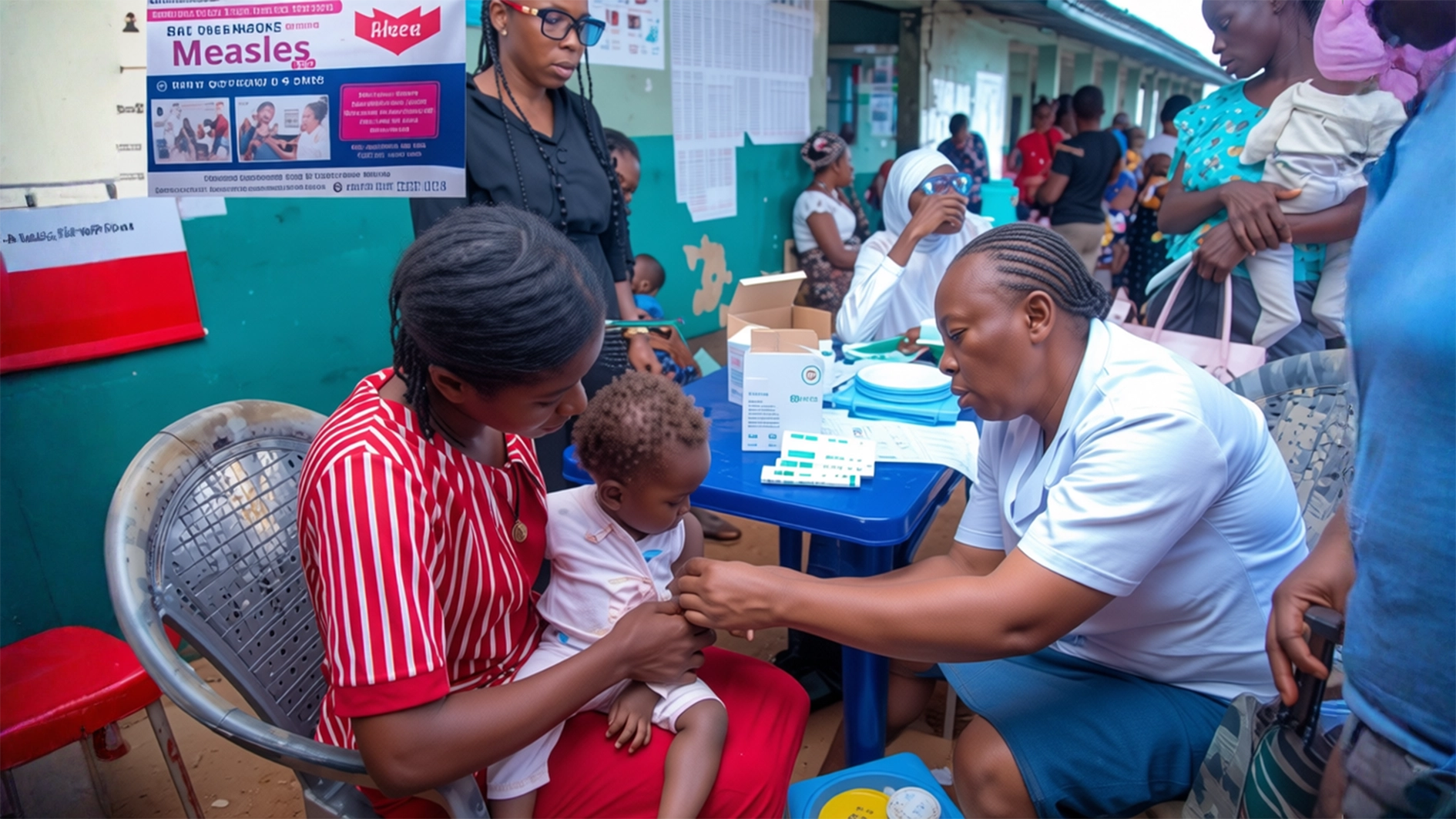
The ongoing integrated measles–rubella vaccination exercise in Anambra State on Monday recorded a large turnout of children, mostly from schools, signalling a gradual return to normal activities following the sit-at-home order observed every Monday in the state over the past five years.
The two-week integrated measles–rubella vaccination campaign targets more than 2.7 million children aged between nine months and 14 years across the state.
The exercise is being implemented by the National Primary Health Care Development Agency (NPHCDA) in collaboration with the World Health Organization (WHO), the United Nations Children’s Fund (UNICEF) and other key partners.
A visit to several vaccination centres in Awka, the state capital, showed a hitch-free exercise with a high turnout of pupils accompanied by their teachers to vaccination points, including school premises.
At the Primary Health Centre, Okpuno, in Awka South Local Government Area, over 120 children were vaccinated, while more than 240 pupils received the vaccine at Redeemers International High School, Ezinifite-Okpuno, Awka.
Speaking with The Guardian, the Officer-in-Charge of the Primary Health Centre, Okpuno, and Ward Focal Person for Ukpuno Ward, Mrs Stella Okeke, described the exercise as highly successful, noting that about 5,000 children in the ward had been vaccinated since the campaign began.
She said eight vaccination teams were deployed to schools, churches and village squares, with fixed posts established in health facilities and two supplementary teams supporting the exercise.
Okeke attributed the high uptake of the measles–rubella vaccine to extensive mobilisation and sensitisation efforts targeting schools, market women, religious leaders and traditional rulers, which began more than two months before the campaign was launched.
“The turnout is great. Unlike other vaccination campaigns, there is much more sensitisation this time,” she said. “The sensitisation started about two months before the exercise, involving religious leaders, community leaders, Ward Development Committee members and schools. As a result, there is little or no non-compliance.”
However, she lamented the low uptake of the Human Papilloma Virus (HPV) vaccine, attributing it to misinformation and misconceptions surrounding the vaccine since its introduction.
“They are accepting the HPV vaccine, but the turnout is very low,” Okeke said. “Some parents say they will return with their daughters but never do. But for the measles–rubella vaccine, parents are taking it very seriously.”
A parent who spoke with The Guardian said he brought his two-year-old son for vaccination due to the importance of protecting children against preventable diseases.
“Vaccination is very important. Parents should bring out their children to protect them from measles, chickenpox and rubella,” he said. “The acceptance of the measles–rubella vaccine is very high compared to the HPV vaccine, perhaps because measles has been around for a long time and people know how deadly it can be.”
He commended the Anambra State Government for sustained public awareness efforts, noting that sensitisation had been ongoing since December.
At Redeemers International High School, Ezinifite-Okpuno, the Head Teacher, Mrs Stella Oramalu, told The Guardian that the school recorded a high level of attendance despite it being a Monday.
She said the school complied with the state government’s directive that schools should remain open every Monday.
According to her, 196 pupils in the primary section and 52 students in the secondary section were vaccinated after consent letters were sent to parents.
“Almost all the parents consented, except for one,” she said. “We are grateful to the government because this vaccine will protect our children, especially during this season.”
She appealed for additional incentives for schools participating in the campaign, noting that similar incentives were being distributed in parts of northern Nigeria.

