 Follow Us on Google News
 Follow Us on Google Discover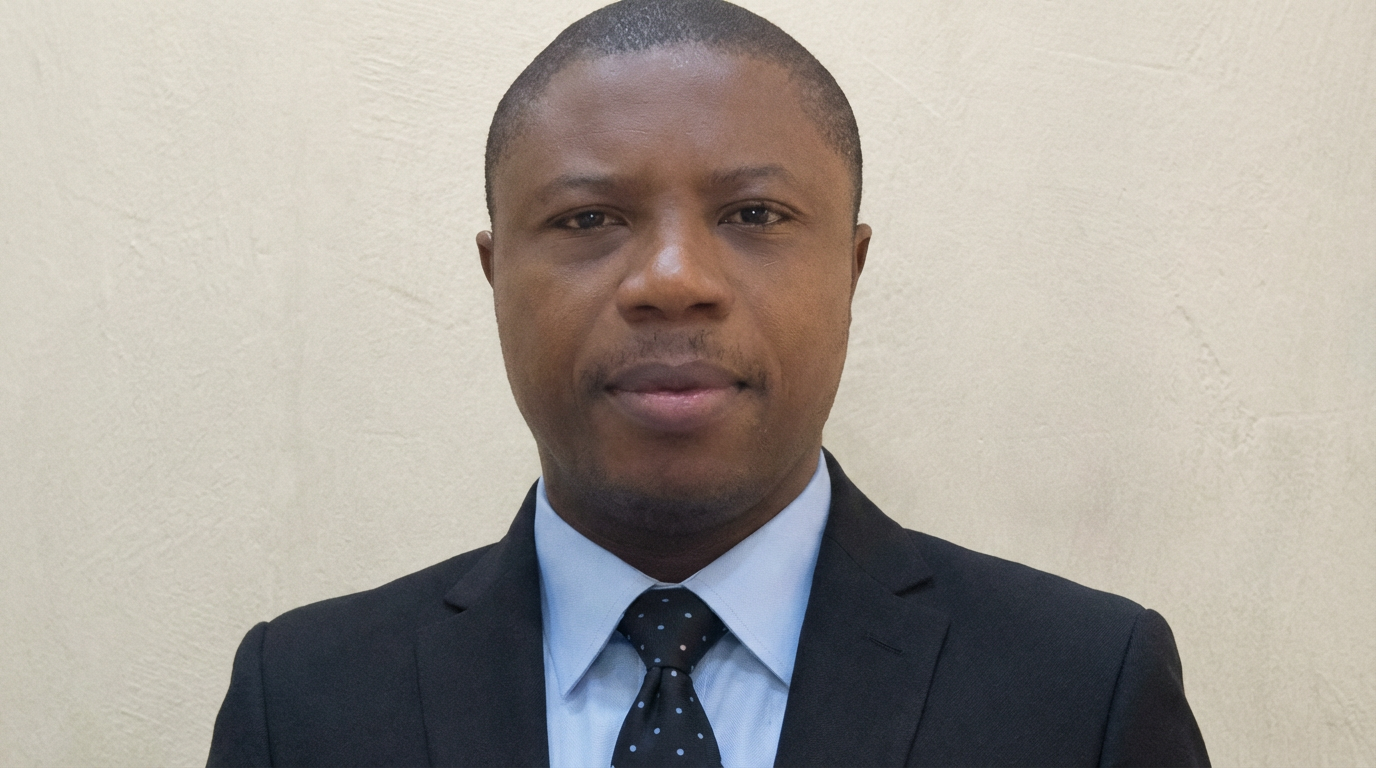
Nigeria’s economic fragility is often discussed in sweeping political terms; exchange rates, subsidies, debt, inflation. Yet beneath these macroeconomic narratives lies a more consequential reality: economies rise or fall on the strength of their institutions, and institutions are only as sound as the professionals who design, finance, and govern them.
One of the finance professionals whose career illustrates this institutional dimension is Omololu Oduyoye, a Fellow of the Institute of Chartered Accountants of Nigeria (ICAN), private-equity finance executive, and corporate chief financial officer whose work has spanned auditing, capital markets, infrastructure finance, and public-sector financial systems for more than two decades.
Oduyoye’s professional journey reflects a pattern rarely sustained in Nigeria’s volatile business environment: long-term stewardship across multiple economic cycles, guided by technical rigour rather than opportunism. His early career at KPMG placed him at the intersection of audit discipline and financial regulation, where he worked on banking integrations, public offerings, and IFRS advisory engagements that shaped compliance culture within Nigeria’s financial system.
His subsequent tenure at African Capital Alliance (ACA), one of West Africa’s most influential private-equity firms marked a transition from oversight to capital formation. As Financial Controller, he helped manage a US$160 million private-equity and real-estate fund operating across Nigeria, Ghana, Mauritius, and the Cayman Islands. During this period, he played key roles in transactions that have since become landmarks in Nigeria’s capital-market history, including the listing of MTN Nigeria and the expansion of several nationally significant portfolio companies.
What distinguishes Oduyoye’s career, however, is not deal volume but institutional continuity. In an economy where short-term gains often override governance, he has remained consistently engaged in financial control, risk management, audit oversight, and long-horizon capital planning. This continuity has followed him into his current role as Executive Director and Chief Financial Officer of NQB8 Ltd., where he oversees the financial architecture of technology platforms serving public institutions, universities, and regulatory bodies.
At a time when Nigeria’s public sector struggles with transparency and revenue leakage, his work on financially compliant digital systems serving institutions such as NIPOST and the Courier and Logistics Regulatory Department, illustrates how private technical expertise is increasingly filling governance gaps. These are not abstract innovations; they involve revenue modelling, audit readiness, capital allocation, and sustainability planning within nationally deployed systems.
Equally notable is Oduyoye’s role in evaluating the work of others, a responsibility reserved for professionals whose judgment is trusted beyond their organisations. In 2011, he served as a judge for the Federal Government’s YouWin! National Entrepreneurship Competition, assessing business proposals and financial models submitted by entrepreneurs across Nigeria. He later adjudicated the NQB8 National Entrepreneurship Competition in 2014, further reinforcing his standing as a financial expert capable of evaluating enterprise viability and governance readiness.
That Oduyoye complements professional practice with academic inquiry is consistent with this profile. His ongoing postgraduate research on exchange-rate fluctuations and financial-sector development in Nigeria interrogates one of the country’s most persistent macroeconomic challenges. The research is not detached from practice; it draws on empirical data to examine how currency volatility affects banking depth, capital markets, and financial intermediation issues that directly intersect with his professional work.
Nigeria’s development challenge is not a shortage of ambition but a shortage of institutional memory and technical stewardship. Professionals like Omololu Oduyoye represent a class of experts whose careers demonstrate that sustainable growth is built not through rhetoric, but through disciplined financial systems, governed capital, and the quiet competence required to keep institutions functioning when policy winds shift.

