 Follow Us on Google News
 Follow Us on Google Discover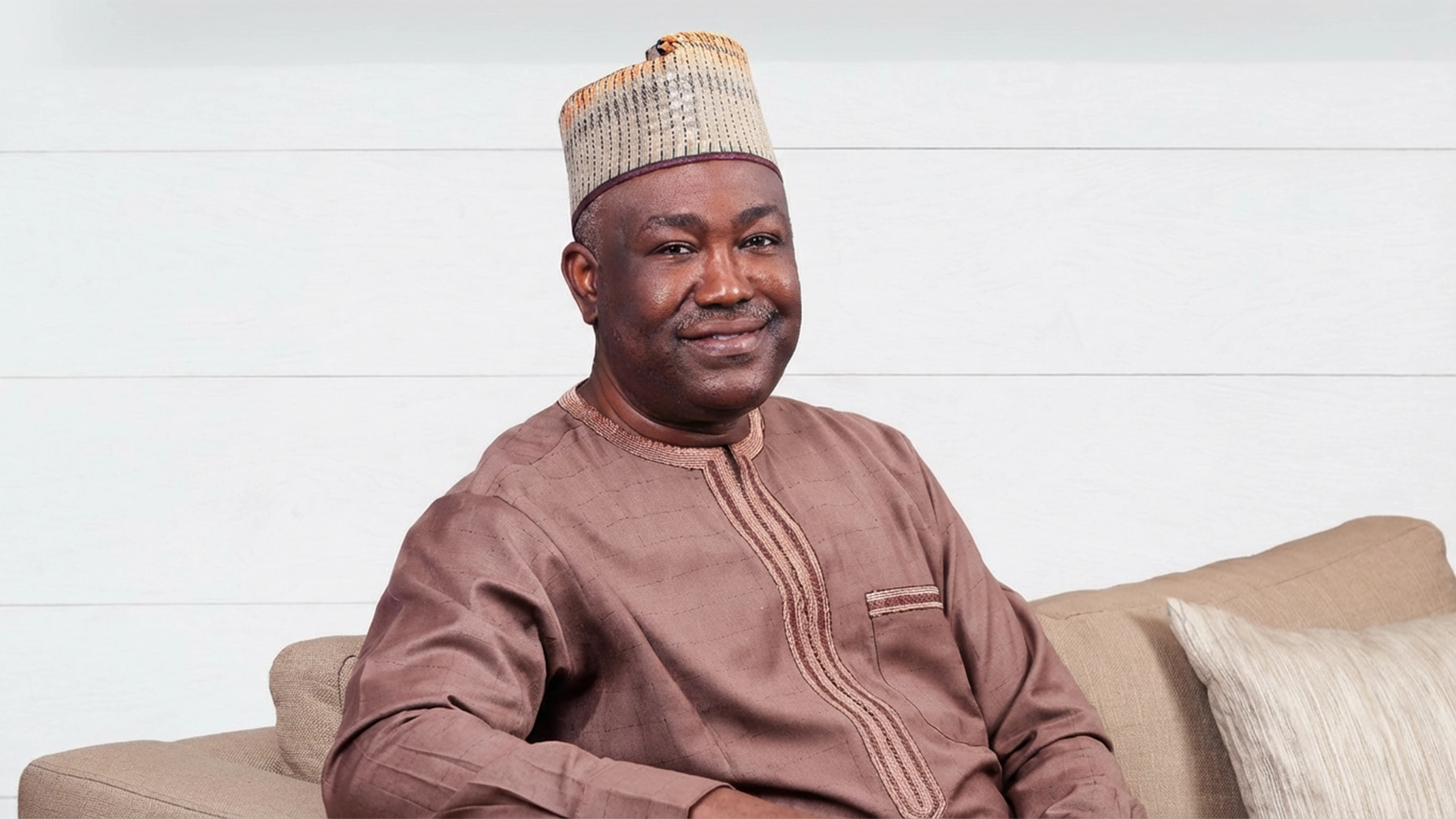
Former presidential aspirant of the Peoples Democratic Party (PDP), Gbenga Hashim, has faulted Nigeria’s long-standing dependence on the economic prescriptions of the International Monetary Fund (IMF), arguing that the country’s economic decline is rooted in policy choices driven by external institutions rather than domestic priorities.
Hashim spoke during an appearance on Arise Television’s Prime Time, where he assessed Nigeria’s economic trajectory and outlined his proposed $4 trillion economic recovery plan.
According to him, Nigeria recorded stronger economic performance when it pursued independent development strategies, particularly in the 1960s and 1970s.
“When Nigeria was not listening to the IMF hook, line and sinker, our GDP per capita in 1976 was three times that of China, and in 1966 our GDP was double that of Malaysia,” he said.
According to him, no serious country adopts IMF prescriptions wholesale, stressing that the Fund is neither an investor nor a development partner and that its projections should not be the primary benchmark for national progress.
Hashim maintained that economic performance should be measured by improvements in citizens’ living conditions rather than headline growth figures, dismissing the Federal Government’s celebration of a four per cent GDP growth rate as insufficient.
“After losing about 50 per cent of the GDP, a four per cent growth rate still represents a net decline. Nigeria’s GDP fell from about $574 billion in 2014 to roughly $230 billion today,” he said, adding that the All Progressives Congress (APC)-led administration could not credibly claim economic progress until the economy surpassed the level it inherited in 2015.
Drawing a comparison with the administration of former President Olusegun Obasanjo, Hashim noted that Nigeria recorded sustained economic expansion between 1999 and 2003.
“In 2000, Nigeria grew by 5.5 per cent, and by 2003 growth had risen to 9.5 per cent,” he said, insisting that despite its shortcomings, the PDP performed better across key sectors than the APC.”
He also criticised the APC’s record in the power sector, alleging that the government had failed to significantly expand electricity generation over the past decade.
“In 10 years, APC has not added one megawatt of electricity,” he claimed.
Hashim further alleged that the current administration had presided over an economic contraction rather than expansion.
On agriculture, Hashim claimed that Nigeria lost nearly $4 billion in productive capital within two years under President Bola Tinubu, attributing the decline to policies aimed at artificially crashing food prices, which he said weakened farmers and disrupted value chains.
He argued that the economy requires double-digit growth to recover, dismissing current reforms as inadequate.
Commenting on the recent killings in Woro community, Kaiama Local Government Area of Kwara State, where nearly 200 people were reportedly killed, Hashim described the incident as a grave national security failure.

