 Follow Us on Google News
 Follow Us on Google Discover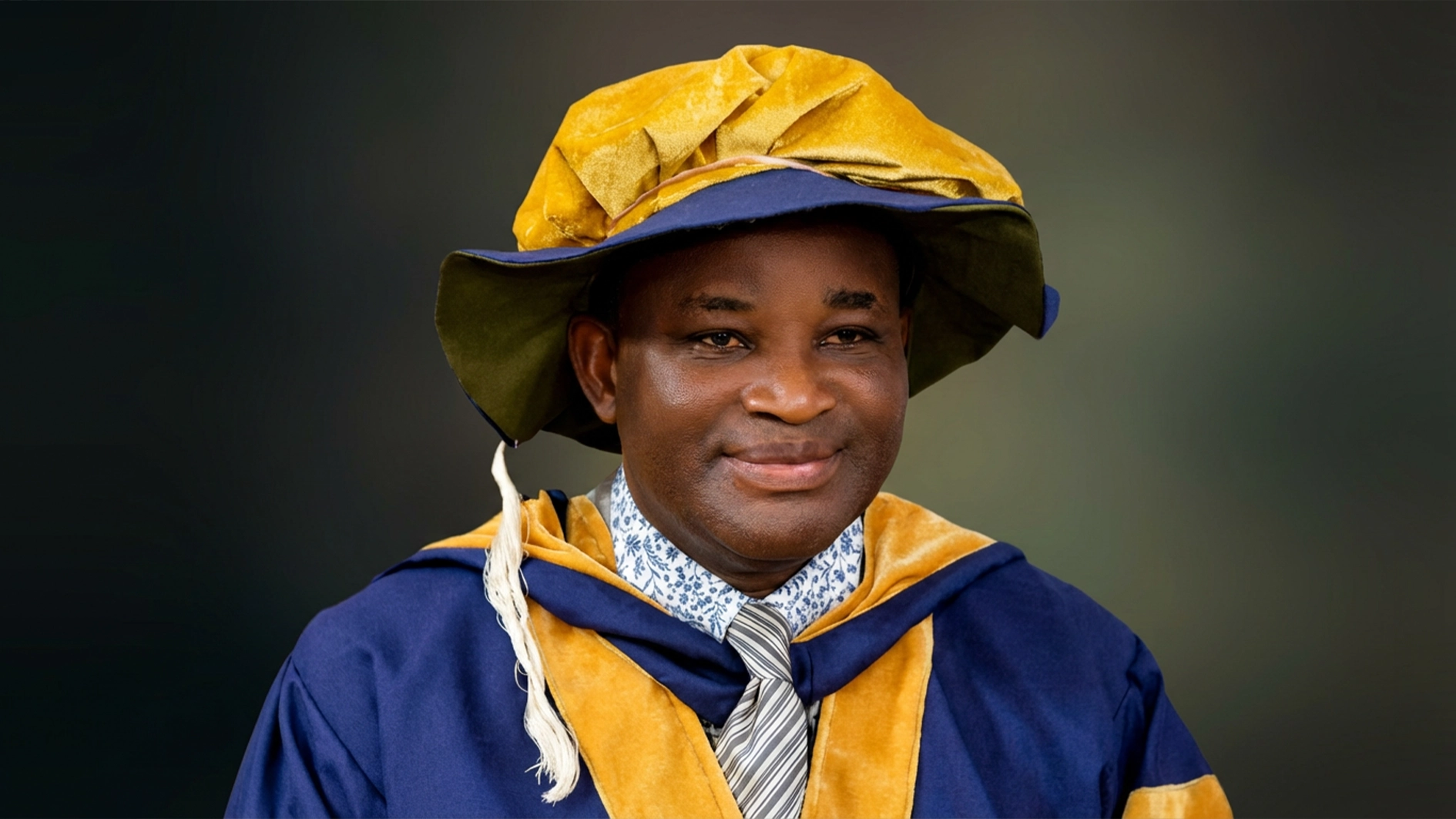
Professor Theophilus Ugah is the Vice Chancellor of Highstone Global University (HGU). In this interview with IYABO LAWAL, he shares views on how Nigeria’s education system can address the challenges of a rapidly evolving job market, brain drain, demand for globally competitive graduates, and the role of universities in driving sustainable development.
What motivated your transition into academia, and how does your industry experience shape your approach to university leadership in Nigeria?
My transition into academia wasn’t a departure from industry, but rather a continuation of purpose. After spending decades in the oil and gas sector, working across operations, Health, Environment and Safety (HES), project execution, and leadership, I became increasingly aware that many of Africa’s persistent development challenges are fundamentally rooted in knowledge, governance, and capacity gaps.
In Nigeria, I observed that brilliant graduates were entering the industry without sufficient exposure to applied problem-solving, ethics, systems thinking, or sustainability frameworks.
For me, academia presents a platform to institutionalise the lessons learned from real-life engineering failures, safety successes, climate risks, and organisational leadership, allowing me to make a more meaningful impact.
How does the institution differentiate itself within Nigeria’s higher education sector, and what unique features does it offer to students and stakeholders?
The university is intentionally designed to be a globally networked, digitally native, and industry-aligned institution. Unlike traditional universities that often prioritise physical infrastructure over learning outcomes, HGU places strong emphasis on access, relevance, and future-readiness.
Our academic programmes are structured to integrate critical themes such as climate change, sustainability, entrepreneurship, AI literacy, and global competencies across various disciplines, ensuring that our graduates are well-equipped to navigate the complexities of a rapidly changing world.

What strategies do you employ to cultivate partnerships between your institution and industry leaders, and how does your corporate background inform your approach to collaboration?
We engage Nigerian industries through a multifaceted approach that includes designing programmes tailored to their specific needs, creating pathways for professional certification, and fostering applied research collaborations.
Our industry partners are actively involved in curriculum review, delivering guest lectures, and participating in student assessments. Furthermore, we work closely with students to help them build professional portfolios, develop consulting reports, create data dashboards, and conduct sustainability audits – all of which are designed to be immediately valuable and evaluable by potential employers.
How do you view the issue of brain drain in Nigeria, and what strategies can be employed to mitigate its impact and foster talent retention?
Brain drain is a symptom of deeper issues, rather than the primary problem itself. The underlying challenges are the scarcity of opportunities, a weak research ecosystem, and inadequate institutional support. It is evident that Nigerians thrive and excel globally due to their resilience, capacity, and adaptability, rather than simply because they have left their home country.
At Highstone Global University, we leverage online and hybrid models to engage Nigerian professionals in the diaspora, inviting them to serve as faculty members, mentors, and collaborators without requiring them to relocate permanently.
What roles do international partnerships play in enhancing visibility, and how do you cultivate these collaborations?
International partnerships are viewed as functional collaborations rather than mere formalities. At HGU, these partnerships are centred on tangible outcomes, including co-developing curricula, facilitating faculty exchange, driving joint research initiatives, and establishing dual certification pathways.
In light of Nigeria’s challenging job market, how do you advise students on the relevance of pursuing university education, and what strategies can they adopt to derive maximum value from their academic experience?
University education remains a vital pursuit, but it is crucial that students approach it with a strategic mindset. The notion that a degree automatically guarantees employment is a thing of the past, not just in Nigeria, but globally. In today’s landscape, education must focus on building capability, fostering adaptability, and cultivating value creation.
To maximise the value of their academic experience, students should combine traditional academic learning with the acquisition of digital skills, entrepreneurial training, internships, and participation in projects that emphasise problem-solving.
How does your institution cultivate partnerships with Nigerian industries to create job opportunities and facilitate student employability?
We engage Nigerian industries through a multifaceted approach that includes designing programmes tailored to their specific needs, creating pathways for professional certification, and fostering applied research collaborations. Our industry partners are actively involved in curriculum review, delivering guest lectures, and participating in student assessments. Furthermore, we work closely with students to help them build professional portfolios, develop consulting reports, create data dashboards, and conduct sustainability audits – all of which are designed to be immediately.
What strategies can students employ to harness the benefits of AI tools while maintaining a strong foundation in critical thinking and genuine subject matter comprehension?
Artificial Intelligence (AI) should be viewed as a tool that amplifies intellectual capabilities, rather than a substitute for cognitive abilities. It is essential for students to grasp underlying concepts before leveraging AI to refine, test, or broaden their thinking.
The rapid evolution of AI is transforming the educational landscape, effectively creating a global campus that transcends geographical boundaries. Through AI-powered platforms, knowledge is delivered directly to learners, revolutionising how they access information and making traditional methods of seeking out analogue information databases increasingly obsolete.
How does the institution integrate climate change considerations into its academic curriculum and research initiatives, and what specific approaches are being taken to address this critical global challenge?
In terms of curriculum development, we incorporate climate change content and themes into a range of academic disciplines, including engineering, environmental management, public policy, health sciences, entrepreneurship, and data analytics, ensuring that students across various fields of study are equipped to address this critical global challenge.
How do these efforts contribute to the country’s sustainability goals?
Key initiatives include offering climate literacy and professional training programmes tailored for diverse stakeholders such as students, public servants, faith-based organisations, and community leaders. These programmes focus on adaptation strategies, mitigation techniques, and disaster risk reduction measures.
Through academic collaborations and outreach efforts, Highstone Global University supports the development and implementation of community-based adaptation strategies, with a particular emphasis on flood-prone and environmentally stressed regions. Additionally, our research outputs are designed to be policy-relevant, providing actionable insights that can inform government agencies, NGOs, and development partners, thereby contributing to more effective climate governance and sustainable development practices.
In what ways has your extensive background in the oil industry shaped your approach to leading Highstone Global University, and how do you leverage those skills in your current role?
My experience in the oil industry has instilled in me a strong discipline in systems thinking, data-driven decision-making, stakeholder management, and regulatory compliance. These competencies have proven to be highly transferable to university leadership. For instance, the process safety principles I’ve applied in managing complex energy projects now inform our institutional risk management and quality assurance systems at Highstone Global University (HGU).
Similarly, the project management skills I honed while overseeing multi-million-dollar energy projects are being applied to curriculum development, digital infrastructure deployment, and international partnership development.

