 Follow Us on Google News
 Follow Us on Google Discover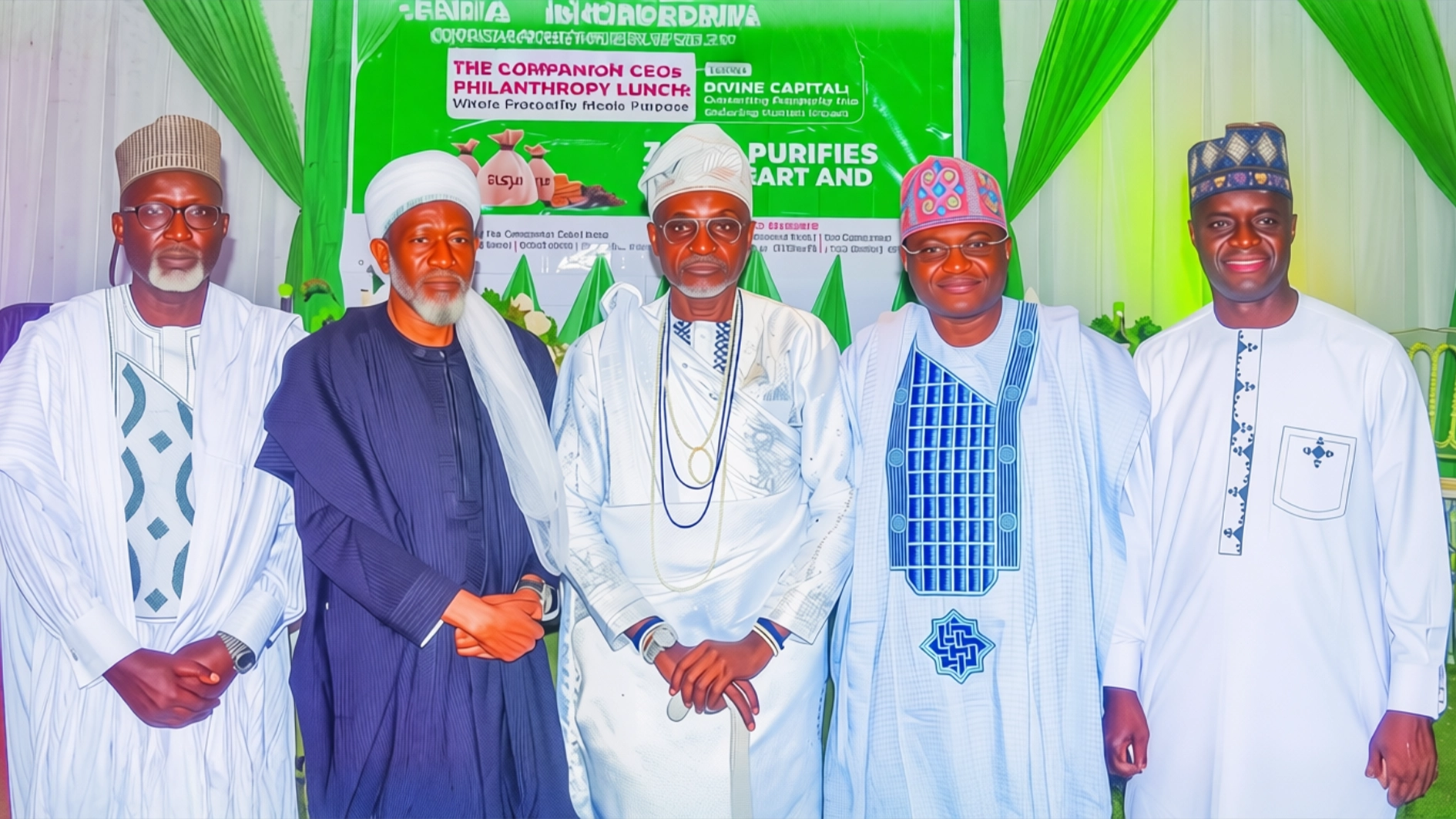
The Companion, an association of Muslim men in business and the professions established in 1984, has officially transitioned its charitable activities into a fully incorporated entity: The Companion Zakat & Sadaqah Foundation.
The move marks a departure from traditional, informal giving toward a model of divine capital, a strategic effort to institutionalise the third pillar of Islam as a tool for modern poverty alleviation.
Addressing an audience of industry leaders and traditional rulers at the CEOs Philanthropy Launch, themed ‘Divine Capital: Converting Prosperity into Enduring Human Impact’, the National Amir of The Companion, Imam Nojeem Jimoh, revealed that Zakat collections for 2025 had surged to N119 million.
He assured the public that the new standalone status would bolster the transparency and proper auditing required to maintain public trust.
The newly appointed Chairman of the Foundation’s Board of Trustees, Alhaji Thabit Wale Sonaike, said that The Companion Zakat and Sadaqah Foundation did not begin as a grand institution. It started humbly as an ad-hoc zakat committee.
“Through discipline, consultation and trust in Allah, that small committee transformed first into a structured body, and today, into a fully incorporated, registered foundation with a clear mandate, to serve humanity, uplift the Ummah and restore dignity through faith-compliant social finance.”

He argued that such unstructured methods, while well-intentioned, cannot deliver sustainable justice.
“This foundation exists to move obligatory charity from ad-hoc giving to structured social justice, where wealth is purified, dignity is restored and lives are sustainably transformed. Governance is not ceremonial; it is strategic,” Sonaike told the gathering.
He noted that the foundation’s roadmap is built on three non-negotiable pillars, Shari’ah compliance, integrity and measurable impact.
“Under this disciplined model, the organisation reported that in 2025 alone, it empowered over 270 beneficiaries across Nigeria, targeting specific interventions in debt relief, healthcare, and business startups.”
The Olowu of Owu Kingdom, Oba Prof. Saka Matemilola, who chaired the occasion, noted that the foundation’s success was visible in the tripling of its recent collections. He emphasised that managing Zakat through formal organisations is the only way to ensure the scale of impact matches the depth of the need.
In his remarks, Dr. Almaroof Williams, set a bold target for the coming years. “What we are doing today will one day be recorded in history,” he said, suggesting that the foundation is on a trajectory to record billions in Zakat proceeds within two years.
The guest lecturer, Chief Imam of Lagos State University, Prof. AbdulQudus Amuni, mentioned that the potential for such growth lies in the Waqf system, an Islamic endowment model, illustrated this by citing the historical example of Uthman Ibn Affan, the third Caliph, whose centuries-old endowment of a well in Medina still generates profits today, currently invested in a five-star hotel.
A poignant moment in the launch came from Prof. Jamilah Yakub, former Ameerah of The Criterion. She challenged the misconception that Zakat is only for the ultra-wealthy, citing prophetic traditions that encourage giving even before reaching the Nisab (the minimum wealth threshold).
“A goal of one billion is achievable if we commit to it,” she stated, noting that properly prioritised funds could build industries and solve the chronic unemployment facing Nigerian graduates.

