 Follow Us on Google News
 Follow Us on Google Discover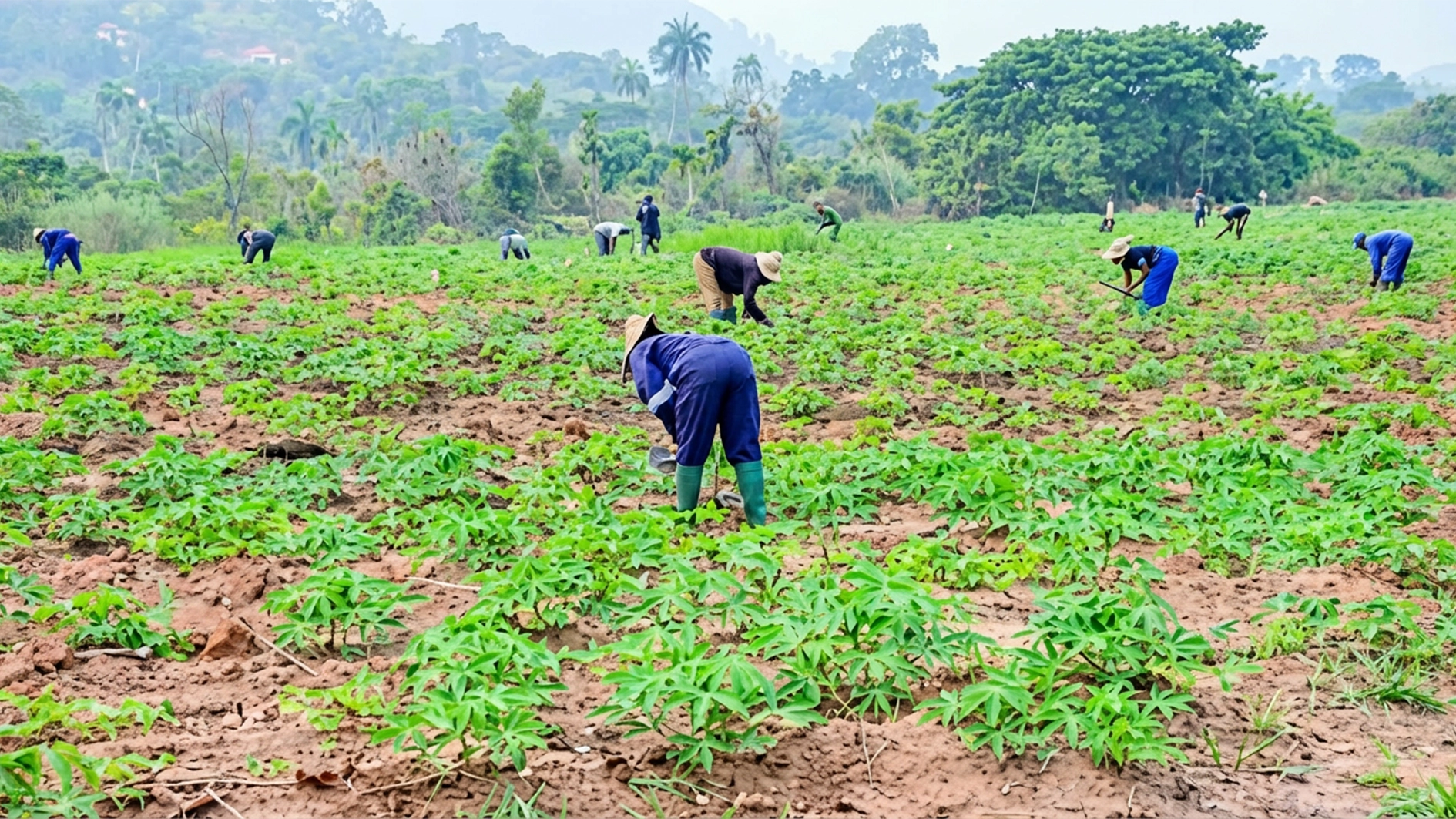
The combination of rapidly falling prices of farm produce and high cost of inputs like fertilisers and herbicides have been fingered for the decline of dry season farming in the entire North East region, a development that has heightened fears of impending hunger, JOY DENNIS reports.
Across the North East the geopolitical zone, the lamentation is loud and the same – dry season farmers across states of Adamawa, Bauchi, Borno, Gombe, Taraba and Yobe are complaining of drastic fall in price of grains, including, maize, rice and wheat.
They are also lamenting the high cost of production, particularly farm inputs and other expenses incurred on land preparations that are responsible for the lack of enthusiasm by farmers towards dry season farming, especially irrigational farming.
Based on this general apathy towards dry season farming, The Guardian investigation revealed that the situation is the same across the six states. Recall that in 2024 many farmers in the region took to irrigational farming to augment the yields from the rainy season.
However, this year, many of the farmlands that were covered by farmers in the last two years, are now left fallow, while the farmers allowed the fields to be overgrown with dry foliage. They are pained by the very drastic fall in the prices of maize, rice, wheat, and other crops.
As they counted their losses, many of the farmers who spoke to The Guardian expressed regrets that they could not recoup their investment, saying they resolved to slow down and watch the situation. “If the gloomy situation persists,” they claimed, “we would either farm in small quantity or shun farming entirely.”

It was gathered that the Minister of State for Agriculture and Food Security, Dr Aliyu Sabi Abdullahi, promised that the Federal Government is targeting about 500, 000 hectares of land to boost dry season farming programme to enhance food production.
“We are implementing a dry season initiative for all year-round farming on 500,000 hectares. The first phase started with focus on wheat in 15 wheat producing states, while the second phase covers rice, maize and cassava,” he had assured.
But, The Guardian learned that farmers were yet to cover half of the hectares that could have been used for the dry season farming, especially in the Northeastern states due majorly to the current fall in the prices of grain and exorbitant prices of farm inputs, such as herbicides, fertiliser, high cost of labour and even petrol.
Facts On Dry Season Farming
Dry season farming is one stone aid that provide food security to Nigeria. According to the National Bureau of Statistic (NBS), it is a pertinent intervention that provides food security in Nigeria; help mitigate the lean season and further boost farmers’ income.
Based on findings, dry season farmers are reported to have improved standard of living, increased income, and food availability by up to 85 per cent.
In 2024/2025 season, the dry season programme focused on crops like rice, wheat and maize, which were aimed at boosting production, the programme involved 279,207 farmers with an output value of over N893b. It further enhances income, provides a significant and consistent income, bridging the gap in the lean season when food is scarce.
Considering the significant support irrigational farming provides to Nigeria’s economy, stakeholders believe that the fall in prices of crops and high cost of farm inputs could ultimately discourage farmers from irrigational farming in the northeast region.
For instance, Amos Wilberforce, a farmer and grains trader, said that in the last six months, prices of rice, maize and wheat remained low, pointing out that farm inputs continued to rise such that the price of a bag of maize could not buy a bag of Urea fertiliser.
He said the reverse became the case around October 2025, when the prices of grain began to drop so low, leaving many farmers with much loss than gains.
According to Amos: “Prices of grains such as maize and rice were around N80,000 and even N100,000 plus as at early 2025, then gradually it dropped to N50, 000, then N40, 000 and by January 2026 it came to around N25, 000, although rice is now N30, 000.00.”
YOBE STATE
In Yobe, Yunusa Abubakar Dachia – a dry and wet season farmer, from Jakusko Local Council, who spoke to The Guardian, explained that farmers recorded huge losses last year as a result of the fall in price of grain, which discouraged lots of farmers from engaging in the irrigational farming.
“We harvested our crops around October/November and recorded lots of losses. We learnt that the government imported rice, which brought about the fall. A bag of rice as at last year November was about N22,000, though it has increased a little to N30,000 but farmers are still selling at a loss because Urea fertiliser is between N40,000 and N41,000 and a bag of maize or rice cannot buy one bag of fertiliser. We need petrol to pump water into the farms and one bag of rice or maize can only buy 30 litres of petrol, which is equivalent to one jerry can. After all these spending, we compared the expenditure with the income, we recover losses not profits, which is discouraging to any farmer, Yunusa said.
“Many farmers didn’t engage in the dry season farming, while those that did reduce the scale of the farming, due to low food price and exorbitant farm inputs. He added, “Farmers need government support to provide food to the nation, the government should help reduce the cost of petrol, provide fertiliser to encourage farming and /or solar panels to help us pump water successful on the farms.”
BORNO STATE
Tanimu Alkali, a commercial rice farmer for over 10 years, from Hawul local council explained the critical nature of dry season farming in the area.
He said, “I couldn’t farm this year because of the fall in the price of crops, many farmers like me were also discouraged. This has serious effect on farmers this year, as the farming itself is demanding a lot of things such as, petrol, herbicides, pesticides, fertiliser, and labour, which cost much and completely result to losses at the end because farmers don’t get what they spend on the farm. The price of rice now is around N25, 000 to N30, 000 and all the farm inputs are costly.
“If this situation persists, many farmers might be discouraged, which may consequently affect food security, rainy season cannot provide the food we need in this country. We hope government will do something like reducing the cost of petrol, provide fertilisers and other farm inputs at a lesser price to balance the prices, because to me if I don’t buy farm inputs at a higher price, and I sell my produce at a lower price, I think it will not affect my resources,” he said.
To Audu Jangura, another farmer from Borno State, “the drop in price of grain has reduced farm engagement due to high cost of inputs and low cost of output in the market, which can certainly affect food security, if care is not taken.
“Six to seven months ago, a bag of maize could buy two bags of fertiliser, at least it was a sort of encouragement to us, but now, reverse is the case.”
He added “we need government to come up with strategic policies to maintain stable price, government should work on the security aspect in Borno State because we have lot of issues concerning smuggling of fertiliser out of the country, which I think contribute to the cost and affordability.’’
TARABA STATE
Danjuma Nicodemus, a commercial and subsistence rice and maize farmer from Karim Lamido local council of Taraba State described the situation as threatening to farmers.
He said, “Farmers are really threatened by low price of grain and high cost of petrol, cost of labour and other farm inputs. During the previous regime of President Mohammadu Buahri, farmers reap gains, but as it is now, we are just managing. In fact, from about 10 per cent of farmers, about seven per cent are out of farming currently, which I know will affect the economy, many farmlands used for dry season farming years ago are left dry this year.
“Government should do something to help farmers, especially those in the rural areas who depend solely on farming.”
ADAMAWA STATE
The situation is not different Adamawa State, as farmers who spoke to The Guardian on their farms in Mubi South and Yola North local councils spilled out their plight.
Abubakar Garba a commercial and subsistence rice, maize and tomato farmer, who has been in the business of dry season farming for over 30 years noted that the ugly side of the situation, is that while price of grains decline, while farm inputs price toss higher.
“We sold some of the grains we harvested from the rainy season farming to enable us buy what we need for the dry season farming, some of us took loans to farm and repaid after harvest. With this low price of grain in the market , one cannot take the risk of selling farm produce to engage in dry season farming or even take loan, because at the end, it is certainly going to be at a loss. It is so disheartening that it is only the price of grain that has fallen, while fertilisers, herbicides and petrol are at an increase. Farmers are left to suffer always.
“Years ago, even in 2024, there were farmers here who usually harvest around 300 to 400 bags of grain, that was when rice and maize were N80, 000 per bag, but with the current decline in price of grains and high cost of petrol many have backed-out.”
Nura Dauda from Mubi South LG, a rice dry season farmer stated: “We are affected terribly because we use to sell the same farm produce to empower us in the dry season and now a bag of rice or maize cannot buy enough farm inputs such as fertilisers, chemicals and petrol to make it easy for the farming.
“Many farmers that we cultivate together have reduced the scale and others did not even dare to do the farming. We call on the government to come to our aid, government should balance the price of farm inputs and that of farm produce to lessen our pain as farmers.”
GOMBE STATE
Bala Garba from Gombe local council of Gombe State, a commercial and subsistence rice farmer noted that over 70 per cent of dry season farmers backed-out of farming this year as prices of grains dropped.
“Last year, many farmers travelled both within and outside Gombe State to search for for farmlands for dry season farming because the farmlands here were not enough, but this year, more than half of the land in Gombe here are not in use. Over 70 per cent of farmers couldn’t go into the dry season farming because they are discouraged by the low price of grain and high cost of petrol, fertiliser, herbicides, seedling and transportation.
“If only the prices of the grain and farm inputs are balanced equally, even at a higher cost, it would be better for farmers. I have been into dry season and wet season farming since childhood, but this year, I could not go into the irrigational farming because of the situation at hand.
“We hope the government will take necessary action, by providing these farm inputs at a lesser cost, at least it will encourage farmers,” he said.

