 Follow Us on Google News
 Follow Us on Google Discover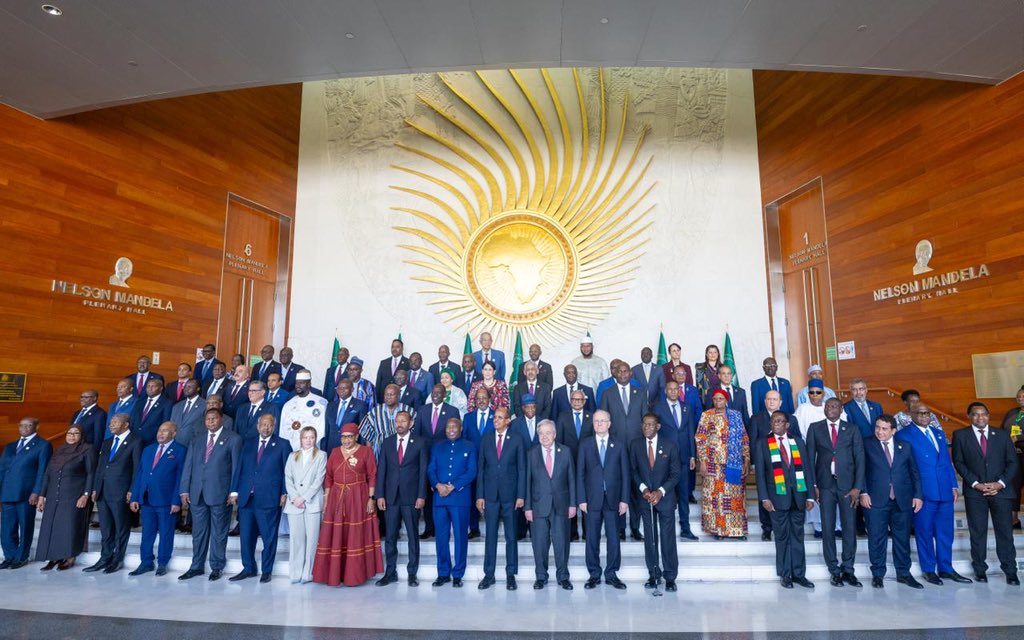
Nigeria has endorsed the African Union’s institutional reform agenda, pledging full implementation of measures designed to strengthen peace and security, deepen democratic governance, and enhance cooperation with international financial institutions and the private sector.
The commitment was conveyed by President Bola Tinubu through Vice President Kashim Shettima at a closed session of the 39th Ordinary Session of the Assembly of Heads of State and Government of the African Union in Addis Ababa, Ethiopia.
Aligning with proposals before the summit, Nigeria endorsed reforms aimed at improving domestic and regional resource mobilisation for development financing, and the adoption of a continental framework to reduce inequality through credible data systems, social protection mechanisms, productive employment, and inclusive industrial policies.
On regional security, Shettima commended the AU Peace and Security Council for approving the Combined Maritime Task Force for the Gulf of Guinea as a standby force to deliver rapid, coordinated maritime responses to regional threats. He assured that Nigeria, as host of the task force headquarters, would provide critical infrastructure—including office facilities, vessels, helicopters, and personnel—to ensure operational effectiveness.
Highlighting security challenges, Shettima stressed that the proliferation of small arms and light weapons remains a major driver of conflict and violent extremism in Africa, urging renewed continental focus on curbing the trend.
On governance, Nigeria supported proposals to refine the criteria for membership of the AU Peace and Security Council, advocating clearer cooperation between the continental body and Regional Economic Communities to improve predictability and effectiveness in peace management.

Shettima also emphasized coordination between the Peace and Security Council and the Committee of Ten Heads of State on United Nations Security Council reform.
Regarding democracy and constitutional order, Nigeria reaffirmed its backing for reforms to strengthen democratic institutions, commending AU efforts to confront unconstitutional changes of government and promote accountable leadership. The country also applauded the lifting of AU suspensions on Gabon and Guinea following political transitions, urging other nations undergoing prolonged transitions to pursue similar reintegration.
On economic transformation, Shettima reiterated that Africa’s critical mineral resources must drive industrialisation and structural development. He called for coordinated continental policies prioritising local processing, manufacturing, technology development, and transparency through regular briefings by African mining ministers.
Nigeria has endorsed the African Union’s institutional reform agenda, pledging full implementation of measures designed to strengthen peace and security
Welcoming the G20 Ubuntu approach to food security, Shettima encouraged responsible private sector participation in agriculture, as well as investments in storage, logistics, research, climate-resilient farming, and targeted support for smallholder farmers, particularly women and youth.

