 Follow Us on Google News
 Follow Us on Google Discover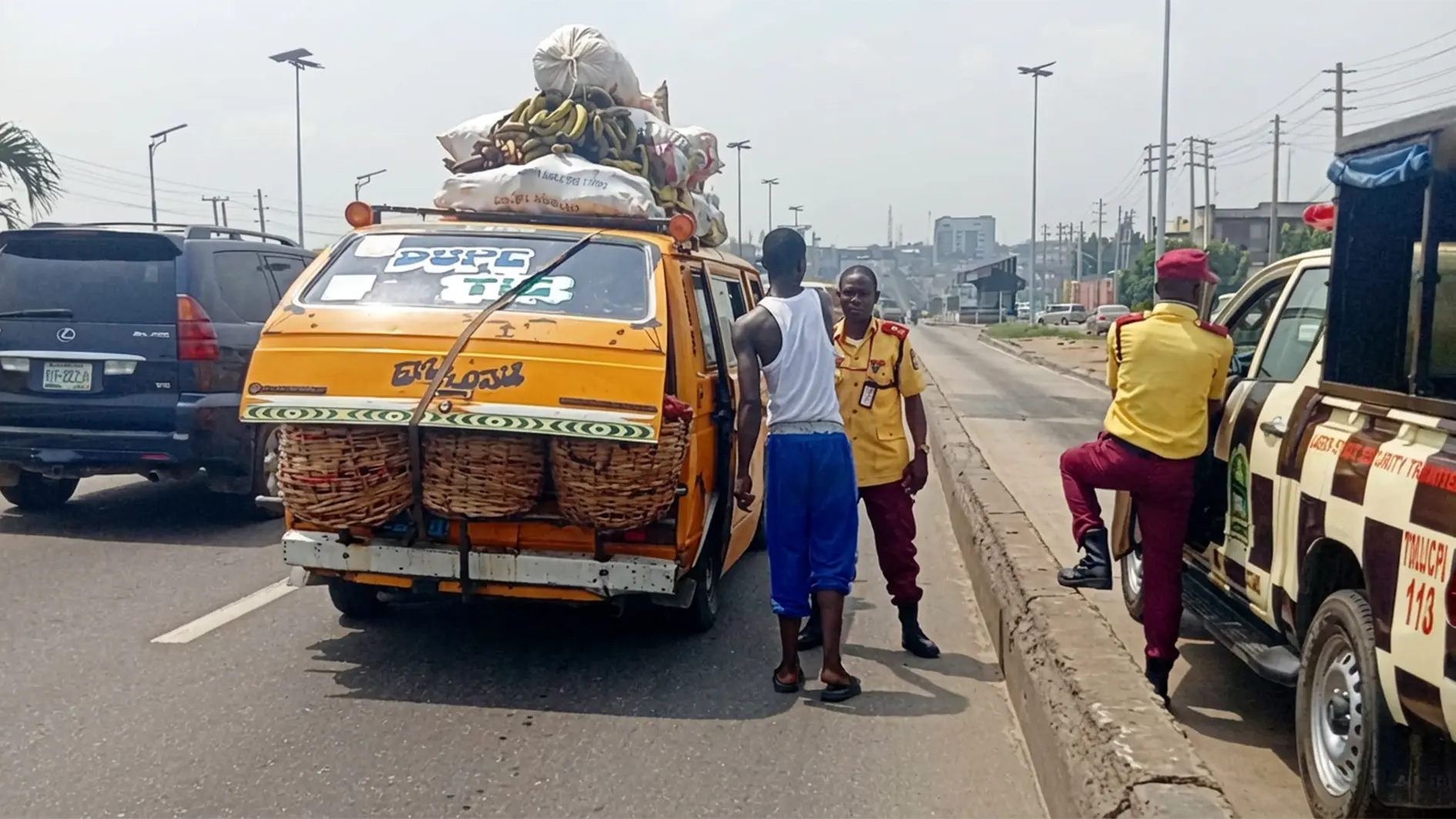
Since the removal of fuel subsidy on May 29, 2023, which triggered a hike in petrol prices, transport fares have surged by over 100 per cent. The increase has pushed many transporters and commercial vehicle owners to either bend or openly flout road safety regulations, while the state of most commercial vehicles is poor, thereby endangering the lives of Nigerians. AYODELE AFOLABI, ROTIMI AGBOLUAJE, ADEWALE MOMOH, AZEEZ OLORUNLOMERU and OLUWOLE IGE report the impacts across the South-West zone.
THE removal of fuel subsidy by the President Bola Tinubu-led government in May 2023 subjected transporters and the transportation sector to severe strain and pressure.
Not only that, the increased fuel prices and transport costs have forced commercial vehicle operators to flout road safety rules and Federal Road Safety Corps (FRSC) regulations, thereby endangering the lives of the commuting public.
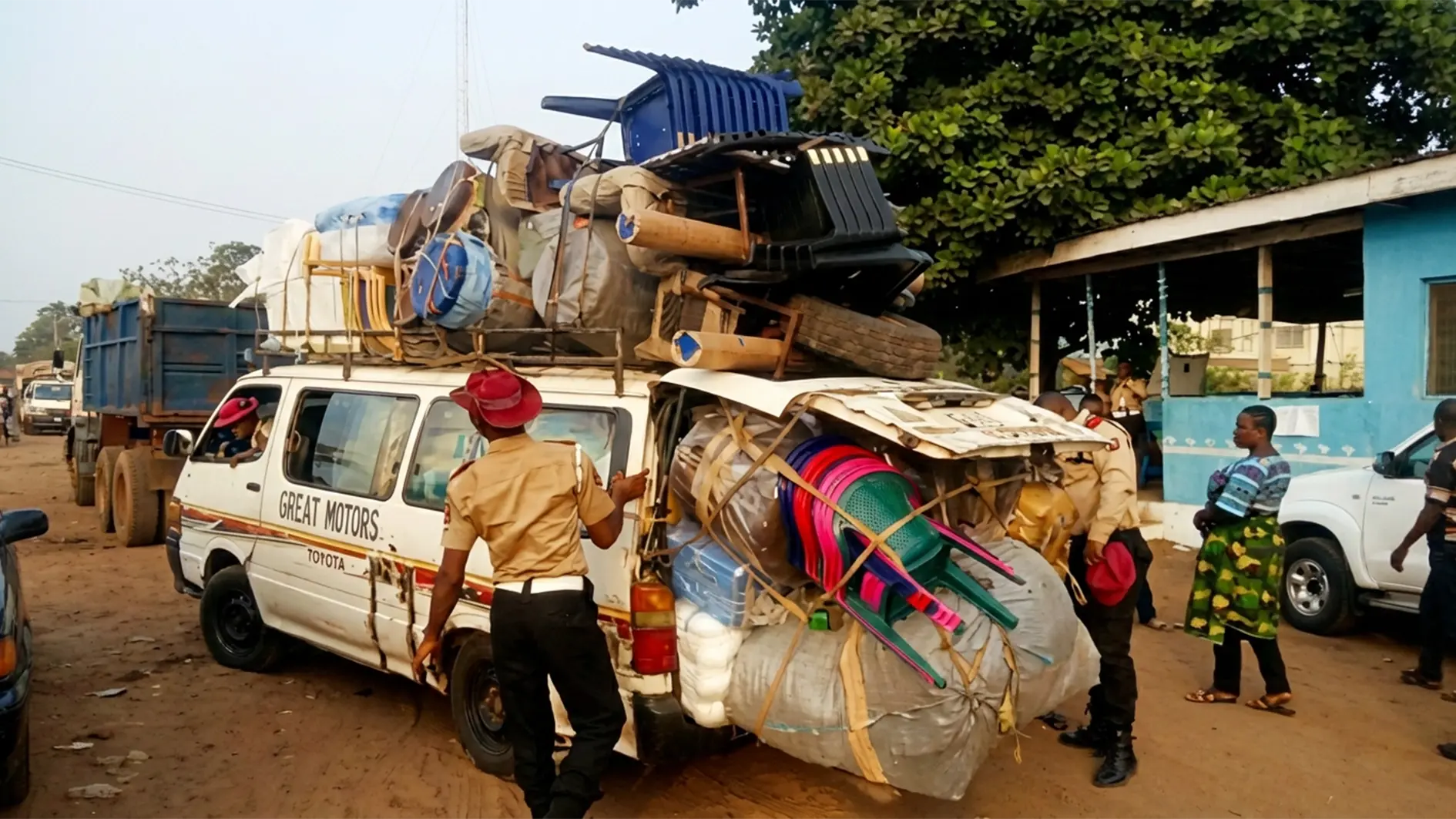
Additionally, many commercial drivers deliberately overlook the need for regular vehicle maintenance, leaving their vehicles in rickety condition. In an effort to offset rising fuel costs, they often overload their vehicles with passengers and cargo.
While these and sundry underhand tactics predispose motorists to increased road accidents and cause passengers’ immense discomfort, overcrowding and overloading of commercial buses to maximise profits are increasingly major concerns in the South-West.
The FRSC laws forbid commercial vehicles from carrying excessive loads and also provide for load securement, unlike the current practice, where loads not only protrude but also routinely shift during transit, causing accidents.
Provisions on speed and weight limits are brazenly disregarded, despite traffic regulations and manufacturers outlining specific weight limits for both private and commercial carriers; exceeding these limits results in fines and penalties.
Although officials of the FRSC seldom conduct weight enforcement checks on commercial vehicles to ensure compliance with extant laws, most commercial bus operators hardly adhere to them, especially since the subsidy was removed in 2023.
While the subsidy removal policy has worsened transportation in the zone, other factors compounding commuters’ woes include deplorable roads, unchecked exploitation by operatives of the National Union of Road Transport Workers (NURTW) at motor parks, and rampant police extortion at multiple checkpoints.
All these factors have contributed to doubling transport fares, and in some instances, tripling.
For instance, before subsidy removal, a trip from Lagos to Ibadan cost between N1,300 and N1,500. It now ranges from N3,500 to N6,000, depending on the vehicle type.
For buses, the fares range from N3,500 to N4,000 and more, while cars charge between N5,500 and N6,000. Similarly, Lagos to Ogun State costs between N3,000 and N4,000 by bus and N5,000 by car.
In Ondo State, commuters travelling to Lagos or Ibadan are grappling with exorbitant fares and poor vehicle conditions as well.
A visit to major parks in Akure, the state capital, revealed deep frustration among passengers and drivers alike.
At Sunshine Motor Park near Cathedral Junction, fares to Ojota, Lagos, stood at N10,100 at press time.
At the Ibadan Motor Park along Road Block Junction, fares were N5,000 for buses and N8,000 for cars. Passengers, especially frequent business travellers, decried the steep increases.
A commuter, Nike Adewale, lamented: “Just a few months ago, we paid around N6,500 to N7,000 to Lagos. Now, it’s over N10,000. It is too much.”
A fabric trader, Jumoke Yomola Akinseye, said the combined fare and load charges were taking a toll on her business.
While Lagos-bound buses generally maintain a three-passenger-per-row seating arrangement, buses heading to Ibadan often cram four passengers into each row, worsening the level of discomfort on the 3-4 hour journey.
A commuter, Goke Owolabi, described the condition of Ibadan-bound buses as “terrible,” drawing attention to broken seats and minimal legroom. Car fares to Ibadan stood at N8,000, while buses cost N5,000.
Drivers blamed the fare hike on the rising cost of fuel and declining passenger turnout.
A driver at Road Block, Kabiru Elewe, who said that the cost of petrol and vehicle maintenance had escalated significantly, defended the four-passenger-per-row arrangement, claiming that it had long been in practice even before the subsidy removal.
In Ekiti State, the story remains the same. Motorists and passengers at various parks, including Terminus, Ilesa Garage and Basiri, noted that transport fares had more than doubled. A trip from Ado Ekiti to Akure now costs N4,500, up from N2,000; fares to Osogbo have increased from N3,000 to N6,000.
The most affected routes include Ado Ekiti to Lagos and Abuja. A trip to Abuja now costs N22,000, up from N7,000, while Lagos-bound passengers pay up to N12,000, compared to the previous N5,000.
Gbenga Adeleye, a civil servant en route to Lagos, said travel should now be reserved for critical assignments only. He urged the Ekiti State government to revive the now-defunct Ekiti Kete Transport Company.
Pa Adeleye Joshua, a retired civil servant travelling to Ogbomoso, in Oyo State, called on the government to strictly regulate petrol prices, and also reintroduce commodity boards to control the cost of essential goods and services.
But debunking the notion that drivers were making abnormal profits from the increased fare, Ojo Adedara, a driver on the Ado–Abuja route, decried the high price of fuel.
Adedara said that filling a 14-seater bus now costs between N120,000 and N140,000 per trip, not including spare parts and maintenance, which have also doubled.
Mr Fatai Alaba, a driver plying the Ado Ekiti–Osogbo route, said that of late, fewer people are travelling due to the cost. “Many now prefer to send parcels through us,” he said. “Some of us have gone into farming to support our families.”
When contacted, the FRSC spokesperson in Ekiti State, Obinna Egesie, acknowledged the issue of overloading. “We carry out mobile court operations to sanction erring drivers,” he said. “Enforcement has to be balanced with security and contextual realities,” he said.
In Ogun State, the situation is similarly dire. Apart from the Lagos-Abeokuta Expressway, most roads linking Abeokuta to neighbouring states are in terrible condition.
Transport fare from Abeokuta to Lagos, which used to be N1,500 before the subsidy removal, has now climbed to between N3,500 and N4,000 and as high as N5,000 during festive seasons.
At the Kuto Motor Park, passengers expressed concern about the dilapidated condition of most transport vehicles, with one of them alleging that over 60 per cent of commercial vehicles in the South-West were “practically off-road.”
Mr Isikilu Alani, a driver at Osin Motor Park, explained that high fuel costs, poor roads and expensive spare parts were forcing drivers into questionable practices. “If you load an 18-seater bus at N4,000 per head, motor park officials will collect about N16,000, and police will demand theirs on the road. Where’s the gain?” he asked.
Also, the cost of maintenance of those vehicles is out of hand at present. A five-litre oil for servicing a car engine now costs between N27,000 and N30,000, whereas an oil filter is about N2,500 to N3,000. Before, oil sold for N9,300 to N10,00 while an oil filter went for about N1000.
To blame the operators without taking cognisance of other contributing factors is like leaving the substance to chance in the shadows.
In Osun State, commercial drivers also linked the increase in transport fares to the high fuel prices. At Old Garage Motor Park in Osogbo, Sikiru Adetona, a driver, said fares on the Osogbo–Lagos route rose from N5,000 for buses and N6,500 for cars to N7,000 and N8,000, respectively.
Similarly, fares from Osogbo to Ibadan rose from N2,000 to N4,000 for cars, while the Osogbo–Abeokuta trip now costs N6,000, up from N4,000.
At Aregbe Motor Park, bus fare from Osogbo to Lagos is now N7,000, up from N5,000. Buses on the Osogbo–Ibadan route charge N3,500 instead of the previous N2,000. Most buses observed had four passengers per row, despite FRSC guidelines.
Coupled with the high fares, many of the buses are still in poor condition. But the FRSC Public Relations Officer in Osun, Mrs Agnes Ogungbemi, described overloading as one of the 10 critical traffic offences. “It contributes significantly to crashes and fatalities,” she said. The agency is combining advocacy and enforcement to tackle the issue.
In Oyo State, the experience mirrors that of neighbouring states. At Iwo Road Park, fares to Lagos range from N3,000 to N5,000, depending on the park section. During peak periods, fares from Ketu to Ibadan rise to N4,000.
From Iwo Road–Gbagi to Ilesa, drivers charge between N4,000 and N5,000. Most buses have four passengers per row, and many travellers complain about the tight seating.
At Sawmill Park, one passenger lamented: “Why can’t they carry three per row? We’re just punishing ourselves.”
Meanwhile, road accidents appear to have worsened in recent times. While official reports of the Nigeria Bureau of Statistics and that of the FRSC on road crashes for the first quarter of 2025 are awaited, available data from both organisations for 2023 and 2024 showed that a total of 5,421 people were killed in road traffic crashes across the nation in 2024, representing a seven per cent increase from the 5,081 fatalities recorded in 2023.
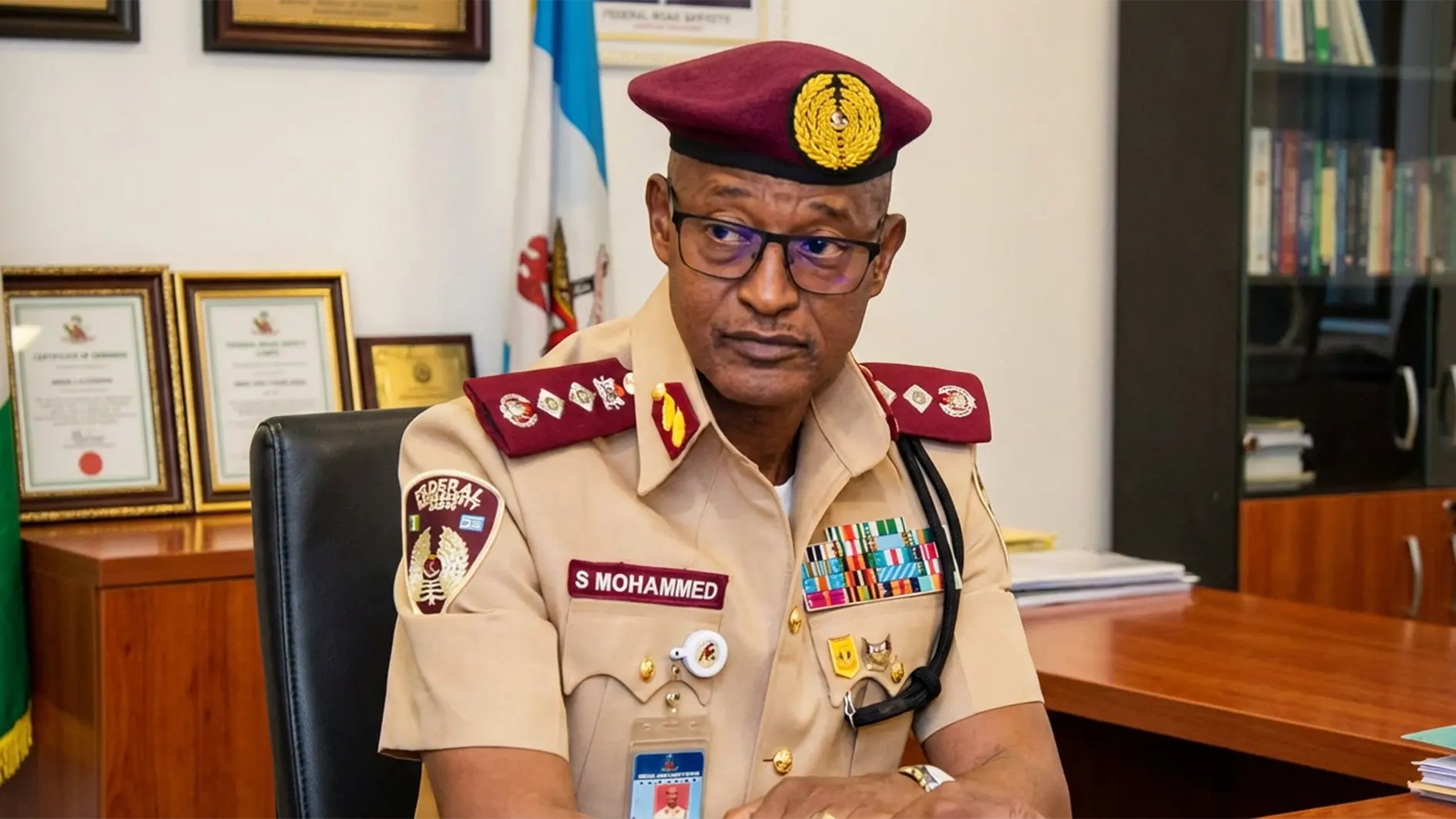
The Corps Marshal, Shehu Mohammed, who made the disclosure not long ago, noted that the commission will implement a special patrol campaign – “Operation Zero Tolerance,” to address the rising fatalities.
Mohammed stated that the increase in deaths occurred despite a 10 per cent reduction in the total number of road crashes nationwide, from 10,617 incidents in 2023 to 9,570 in 2024.
The Corps’ data also revealed that while road crashes and injuries saw a slight decline in 2024, the total number of people involved in accidents rose by one per cent, from 70,092 in 2023 to 70,530 in 2024.
While the corps marshal attributed the rise in deaths to human factors such as reckless driving, overloading, and driver fatigue, data also showed that a significant portion of these accidents involved commercial bus operators.
In a telephone conversation with The Guardian, the national spokesman of FRSC, Ogungbemidele Olusegun, dismissed claims that the commission is inactive regarding overloading and the poor condition of commercial vehicles.
He revealed that the commission has arrested over 50,070 rickety vehicles on highways across Nigeria in recent years. “Imagine these numbers of vehicles on our roads, what would the rate of road crashes look like?” he asked.
According to him, the FRSC was making significant progress against rickety commercial buses until 2020, when over 150 to 200 BRT buses were burnt down. “Due to the resulting scarcity of commercial vehicles, many people who had previously abandoned unfit vehicles returned them to the roads,” he said.
Responding to complaints of policemen extorting drivers, the spokesperson of the Nigerian Police Force (NPF), Benjamin Hundeyin, urged Nigerians to report police officers extorting commercial drivers on highways, noting that, beyond other factors that encourage overloading and violations by bus operators, public cooperation is crucial.
Hundeyin said the Police Act 2020 introduced reforms, including strengthening the Public Complaints Response Unit (PCRU), which is now backed by law. According to him, the Act mandates the establishment of the PCRU in every state command and at the Force Headquarters.
“The duty of the unit is to receive complaints of professional misconduct from members of the public. Such complaints are investigated, and officers found guilty are dealt with in accordance with the law. I can confirm that all complaints received by the Complaint Response Unit (CRU) have been looked into; none have been disregarded.
“We encourage drivers who are victims to file complaints. We also have a monitoring unit tasked with arresting erring officers. The Force does not condone indiscipline or misconduct. Nigerians must play their part by reporting incidents of extortion,” he said.
Speaking for the National Union of Road Transport Workers (NURTW), senior official Usman Teslim said the fuel price hike affected not only pump prices but also vehicle spare parts and other operational costs.
He added that one of the challenges facing road transportation is the absence of a central coordinating agency to regulate the sector, unlike other modes of transport.
Similarly, President of the Yoruba Ronu Leadership Forum, Akin Malaolu, lamented that while the aviation, maritime and railway sectors have central regulatory bodies, Nigeria’s road transport system operates without a centralised, independent authority, a gap he said has contributed to persistent disorder and weak enforcement.
He noted that the Nigerian Civil Aviation Authority (NCAA) regulates aviation, the Nigerian Maritime Administration and Safety Agency (NIMASA) oversees the maritime sector, and the Nigerian Railway Corporation (NRC) supervises rail transport, whereas road transport remains under a fragmented framework shared by multiple agencies.


