 Follow Us on Google News
 Follow Us on Google Discover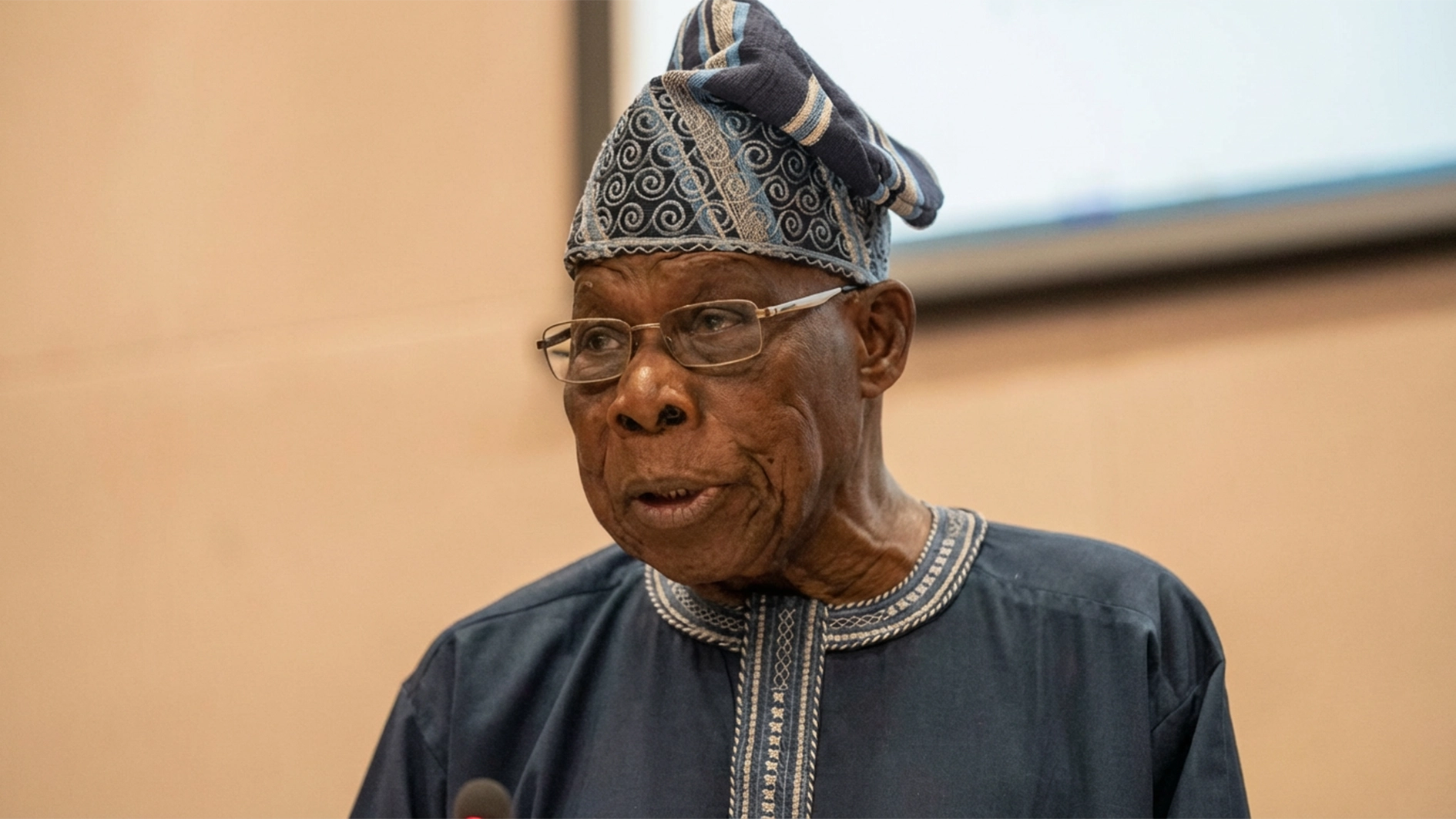
FORMER President Olusegun Obasanjo has issued a passionate call to Nigerian youths, urging them to rise, unite, and seize the reins of national leadership. His message is stirring: that Nigeria has suffered enough, that the older generation has done its part, and that the future now belongs to the young.
He frames the moment as a generational turning point – “Eyin Lokan,” (it is your turn) “Awa Lokan” (it is our turn) – a rallying cry for youthful takeover.
As compelling as this emotional appeal may be, it must be weighed against a more rigorous yardstick: the leadership philosophy of Chief Obafemi Awolowo.
Awolowo never reduced leadership to age, sentiment, or generational entitlement. His standards were scientific, moral, intellectual, and administrative.
For him, leadership was not a matter of who is young or old, but who is adequately prepared, phenomenally competent, mentally fortified, unwaveringly focused, morally anchored, puritanically disciplined, strategically minded, and courageously steadfast for the burden of national stewardship.
When Obasanjo argues that septuagenarians lack the vigour, agility, and dynamism required for leadership, Awolowo’s philosophy offers a counterweight. Age, by itself, is neither a qualification nor a disqualification. Competence is.
For example, I am reminded of a lecturer who taught me in the early 1980s – a man whose life demolishes the myth that age diminishes excellence. He is Emeritus Professor Michael Abiola Omolewa, now 85, still lecturing extempore at Babcock University, Ilisan, Nigeria.
This same man once served as the 32nd President of UNESCO, and even today he travels more widely, more tirelessly, and more purposefully than any contemporary Nigerian president – delivering papers, shaping minds, and illuminating global platforms with undimmed brilliance.
In the story of this extraordinary scholar, where is the place of chronological age in achievement? What stands out is not the number of his years but the sharpness of his intellect, the discipline of his mind, the constancy of his competence, the steadiness of his judgment, the clarity of his vision, the resilience of his spirit, and the unwavering fidelity of his service.
This is where Awolowo’s standards rise above generational slogans. He insisted on: competence before sentiment, preparation before passion, reason before emotion, discipline before ambition, substance before slogans, integrity before charisma, vision before volume, knowledge before noise, principle before popularity, courage before convenience, and nationhood before narrowness.
These are the values that build nations. These are the criteria that prevent democracies from collapsing under the weight of emotion. These are the standards that separate leadership from mere enthusiasm.
Obasanjo’s call to the youth is not without merit – youthful energy, creativity, and numbers are undeniable assets. But Awolowo would caution that leadership is not a turn by turn affair. It is not “your turn because you are young,” just as it is not “your turn because you are old.” Leadership is a responsibility earned through competence, discipline, and demonstrable capacity.
Even Obasanjo’s own life complicates his argument. If he can still crisscross Nigeria at 88 (some people even say Baba is over 90); if he can still walk unaided; if he can still mount a podium with the acrobatic confidence that makes his aides panic lest he stumble – only for him to laugh and declare, “I dey kampey” (I am agile); if he can manage his ailments without public drama; if he can still traverse continents delivering speeches and attending global engagements, then the paradox reaches its crescendo. For it is this same Obasanjo – whose life stands as a testament to the irrelevance of chronological age – who now turns around to undermine age itself and blur the line between the number of years and the sharpness of one’s mental agility. Thus, Obasanjo’s own example shows that age alone does not define capability. His vitality underscores Awolowo’s point: what matters is not the number of years but the quality of mind and the strength of character.
Nigeria’s challenges – economic fragility, insecurity, institutional decay, social fragmentation – require more than youthful enthusiasm. They require the intellectual depth, administrative competence, and disciplined preparation that Awolowo insisted upon.
Youths have a role – an essential one. But the summons before them must rise far above the thin cry of ‘it is your turn.’ It must thunder as a call to capacity, demanding the strength to build. It must echo as a solicitation for character, insisting on integrity that does not bend. It must sound as a plea for clarity, requiring vision that sees beyond the moment. It must stand as a proposal for competence, asking for skill worthy of the future.
It must strike as a subpoena for conscience, compelling moral courage in the face of compromise. It must ring as a command for consistency, calling for steadiness when the winds shift. And above all, it must blaze as a summons for conviction – the inner fire that refuses to bow, refuses to break, and refuses to betray the destiny of a generation.
I am talking about a call to rise not by age, but by ability – a call to meet Awolowo’s standards, not merely Obasanjo’s sentiment.
For in the end, nations are not saved by the youngest generation or the oldest generation. They are saved by the most prepared minds, the clearest thinkers, and the most disciplined hearts.

Dr Babatunde, a legal practitioner, lectures at London South Bank University, London, UK. He can be reached via: [email protected]

