 Follow Us on Google News
 Follow Us on Google Discover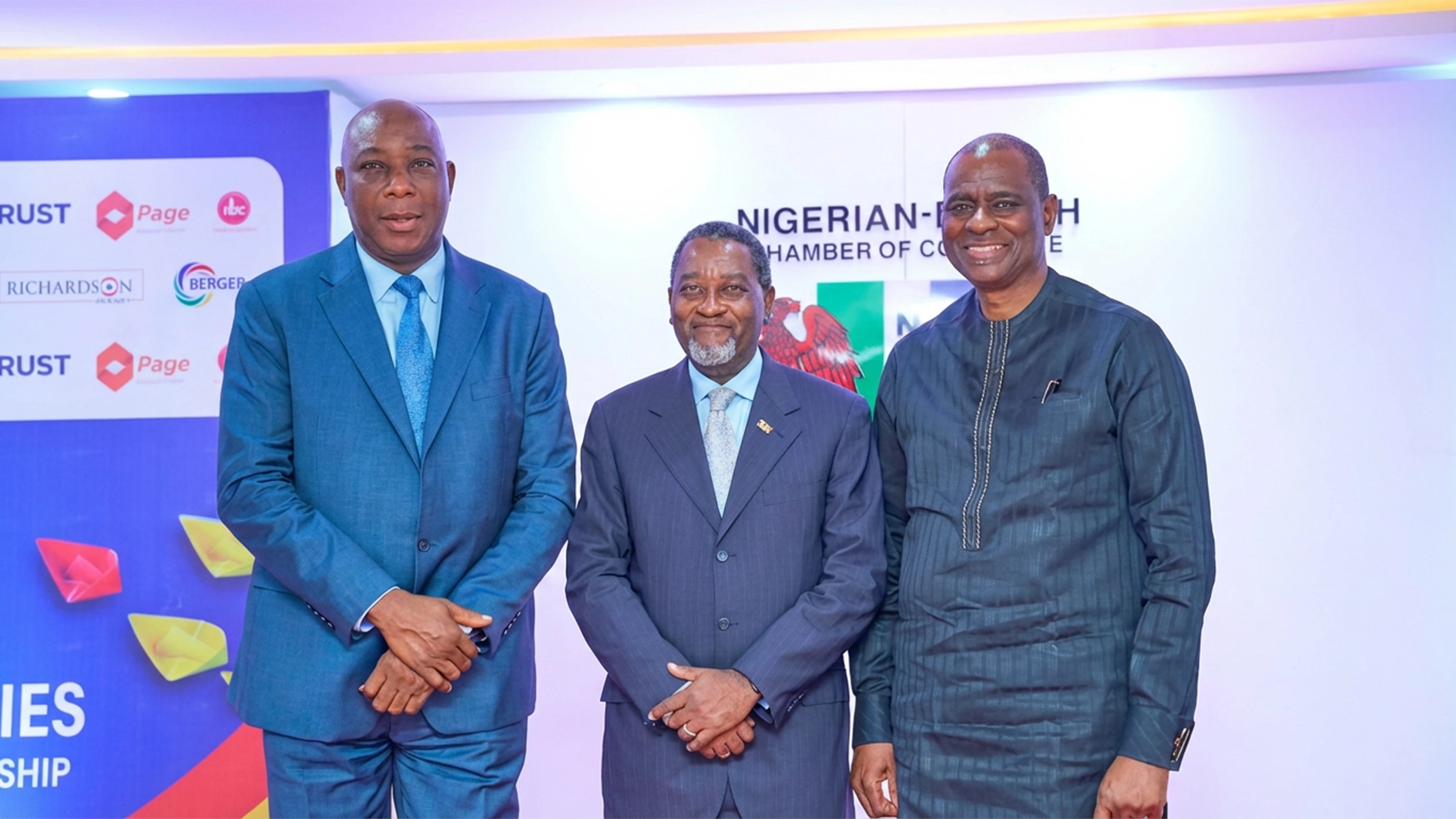
Leadership that fails to demand accountability, plan for uncertainty, and enforce consequences will struggle to deliver lasting transformation, Chairman, Nigeria Sovereign Investment Authority (NSIA), Dr Segun Ogunsanya has said.
Speaking on the theme ‘Transformational Leadership’, at this year’s Sharing Experience Series, organised by the Nigerian-British Chamber of Commerce (NBCC), Ogunsanya said that as Nigeria and other African economies undergo rapid policy shifts, currency adjustments and structural reforms, the need for leaders to enhance their leadership practice and respond to constant change should take on renewed urgency.
He argued that transformational leadership is not about rhetoric or positional authority but about the discipline to imagine a better future, mobilise resources ethically, and execute consistently across institutions.
The NSIA boss stressed that weak accountability culture, both from leaders and citizens, has limited Africa’s ability to convert ideas into durable systems, warning that disengagement from governance often produces the very leadership outcomes people complain about.
He defined leadership beyond geography or sector, noting that a leader must be able to “look at what is and imagine what should be.”
He said that leadership was not prophetic but enabling, while emphasising ethical grounding, often shaped by early professional training, plays a decisive role in judgment and decision-making, particularly when mistakes occur.

On governance, he noted that accountability mechanisms, such as performance scorecards, measurable outcomes, and regular reviews, are critical to improving institutional behaviour.
Addressing corruption, Ogunsanya described digitisation as one of the most effective tools for reducing unethical practices, arguing that limiting human discretion in systems helps close avenues for abuse.
Drawing from his experience in multinational companies and public institutions, Ogunsanya said organisations navigating reform periods must invest in scenario planning, strong teams, and execution speed.
Leaders, he noted, cannot rely on vision alone but must translate strategy into action while preparing for multiple economic and geopolitical outcomes.
He also pointed to public-private collaboration as a necessary driver of national development, arguing that governments lack the fiscal capacity to deliver large-scale infrastructure alone and must create policy conditions that allow private capital to participate sustainably.
Speaking on institutional sustainability, he highlighted the importance of succession planning, noting that leadership continuity in quasi-public and corporate institutions reduces disruption and strengthens long-term performance.
NBCC president, Abimbola Olashore, who said that transformational leadership was no longer optional but essential, said that leadership required vision, adaptability, and the ability to inspire meaningful change while sustaining growth.

