 Follow Us on Google News
 Follow Us on Google Discover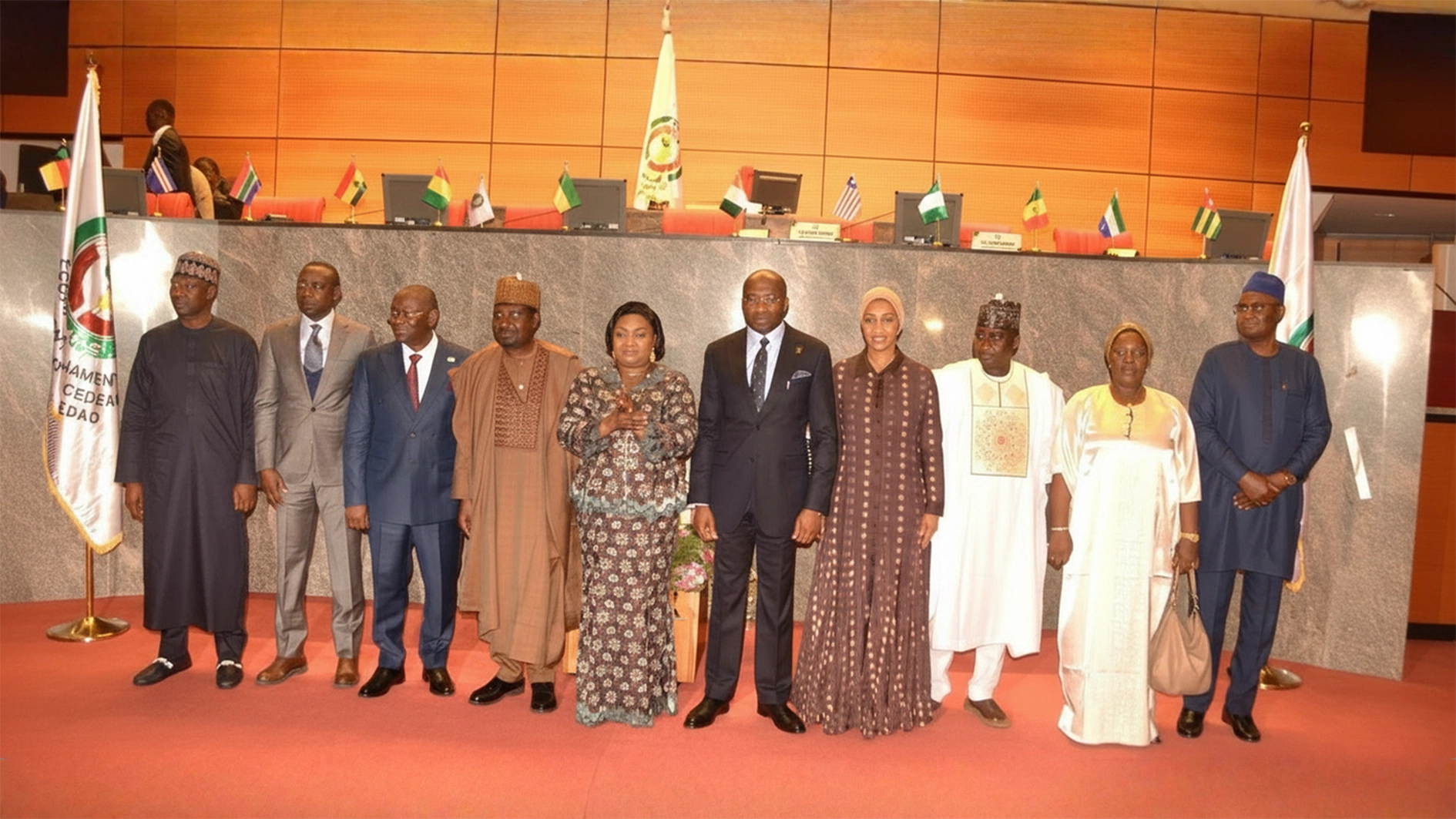
STAKEHOLDERS at the opening of 2026 extraordinary session and seminar of the Parliament of Economic Community of West African States (ECOWAS Parliament), have called for strategic actions towards expansion of intra-community trade through the African Continental Free Trade Area (AfCFTA).
Speaking yesterday in Abuja under the theme, ‘Deepening Regional Integration Through the African Continental Free Trade Area (AfCFTA): Opportunities and Challenges for Expanding Intra-Community Trade Within the ECOWAS Region’
participants decried that several years after takeoff, the policy is confronted by challenges.
AfCFTA came into force in 2019 with the aim of creating a single market and facilitate free movement of persons and goods to deepen intra-community trade. But several years after, stakeholders decried deluge of challenges arising from the policy. According to the parliament, the seminar will serve to bridge the implementation gaps through awareness creation and harmonization of policies at the national levels.
Declaring the session opened, the Speaker, ECOWAS Parliament, Hadja Mémounatou Ibrahima, said that with nearly 50 years of integration experience, ECOWAS cannot just accompany AfCFTA process but lead, coordinate and harmonize it.
To achieve this, she said the region’s strategy must be grounded in a clear assessment of both AfCFTA strengths and challenges.
“ECOWAS is one of Africa’s most dynamic regional economic communities. Over the past decade, our average growth rate of about five per cent has been the highest on the continent. We have a harmonized macro-economic framework, a common external tariff and experience in trade liberalization.
“Innovative tools such as the Pan-African Payment and Settlement System (PAPSS) and the ECOWAS Brown Card are already operational. Our youthful and entrepreneurial population represents one-third of Africa’s total population – a major demographic asset.”
The speaker however frowned that in spite of immense opportunities, intra-regional trade accounted for less than 10 per cent of the total trade.
“Our industrial base remains underdeveloped and we continue to export mainly raw materials – cotton, palm oil and timber with little local processing. In global value chains, we largely occupy low value-added segments.”
She also blamed member states yet to ratify the AfCFTA Agreement or define national strategies for slowing coordinated implementation and reducing the bloc’s global influence.
“In this context, the AfCFTA represents a historic opportunity to make our region an integrated, prosperous and resilient economic power. But it will only succeed if embraced by all – governments, private sector, civil society, women, youth and technical partners.
“As parliamentarians, we must harmonize legal frameworks, remove non-tariff barriers and obstacles to free movement, oversee the use of community resources and ensure that integration remains inclusive, equitable, and socially progressive.”
Some of the strategies in achieving such, she said, include, consolidating democracy and the rule of law, preserving peace and security and promoting women’s leadership.
While the region had achieved a 30 per cent quota for women in parliamentary delegations and several national laws, she canvased more meaningful and transformative participation.
Nigeria’s Senate President, Godswill Akpabio, represented by his deputy, who is also the First Deputy Speaker of ECOWAS Parliament, Barau Jibrin, warned that
If the parliament fails in legislative coherence or neglect oversight, the trade agreements will remain mere parchment and various declarations dissolve into bureaucratic dust.
He therefore tasked the parliament to enact enabling legislation that will eliminating barriers and promote regional trade, noting that over-dependence on foreign aids breeds vulnerability.
“When we lean excessively upon distant supply chains, we surrender our resilience. When intra-African trade languishes, we abandon prosperity at the threshold. The answer, my friends, is not retreat. The answer is deeper cooperation. AfCFTA must not linger in the realm of protocol. It must march into productivity.
“If AfCFTA does not grant goods access from Lagos to Accra, from Dakar to Abidjan, from Banjul to Cotonou without hindrance, then we have not yet fulfilled our charge. If traders remain stranded at borders by administrative confusion, then
integration remains an aspiration rather than a fact. If the small entrepreneur cannot navigate our regulatory thickets, then reform remains unfinished.
“Integration shall not be measured by eloquence. It shall be measured by reduced costs, harmonized standards, swift ports, transparent customs and interoperable digital systems.
Akpabio also admonished that national laws must not contradict regional commitments, charging the Parliament strengthen oversight and accelerate reform.
He also reiterated the nexus between economic integration and political stability, stressing that they complete each other.
“If AfCFTA remains confined to conference halls, then we shall have failed. It must unlock digital commerce, fintech innovation and agro-processing clusters. Let us cease exporting raw potential and importing finished dependency. Let us refine our minerals here, process our cocoa here and assemble our machinery here. If we do not industrialize together, we shall remain suppliers of raw hope to the factories of
Others”, he said.
Also peaking, Nigeria’s Minister of Foreign Affairs, Ambassador Yusuf Maitama Tuggar, represented by his Minister of State’s counterpart, Ambassador Bianca Odumegwu-Ojukwu, commended the time of the session, noting it came at a time the region needed urgent consolidation of its integration agenda, strengthen institutional coherence and respond collectively to emerging political, socio-economic and security challenges.
Given the theme of the seminar, the Minister believed it will assist in confronting the troubling decline in regional economic integration occasioned by insecurity, unconstitutional change of government, adverse impact of climate change and other emerging transnational challenges that have continued to impede intra-African trade cooperation within the ECOWAS sub-region.
“In essence, ACFTA grants ECOWAS an opportunity to upskill its existing integration achievement, transform regional trade, attract investment and renew its leadership role in advancing Africa’s collective economic prosperity.”
She recalled the decision reached at the 68th Annual Session of the Authority of Head of State and Government of the ECOWAS convened in Abuja last year, that all members should accelerate the implementation of the free trade agreements strengthening relevant institutional structures and fully operationalizing both regional and national after strategies.
“To achieve this objective, there is no doubt that the Parliament has a pivotal role to play as a democratic arm of ECOWAS. It has served as a critical bridge between regional commitment and national implementation and uniquely positioned to interface with representatives’ national governments and parliaments to advocate for the improved domestication, alignment and effective integration of national trade policies into ACFTA framework.
“In practical terms, this entails promoting the ratification and harmonization of trade-related legislation, ensuring budgeting allocation for ACFTA implementation, excising oversight over executive compliance and fostering stakeholders’ engagement, including the private sector, customs and civil society”, Odumegwu-Ojukwu said.
She added that through legislative advocacy, policies review and parliamentary diplomacy, the Parliament can help eliminate regulatory bottlenecks, encourage the removal of non-tariff barriers and ensure that member states fully integrate the opportunity presented by ACFTA.
T
he President, ECOWAS Commission, Dr Omar Touray, noted that AfCTA offered a unique framework for transparency and social inclusion in the integration process of West Africa. According to him, regional trade must be at the heart of the industrialization drive of West Africa for shared prosperity.

