 Follow Us on Google News
 Follow Us on Google Discover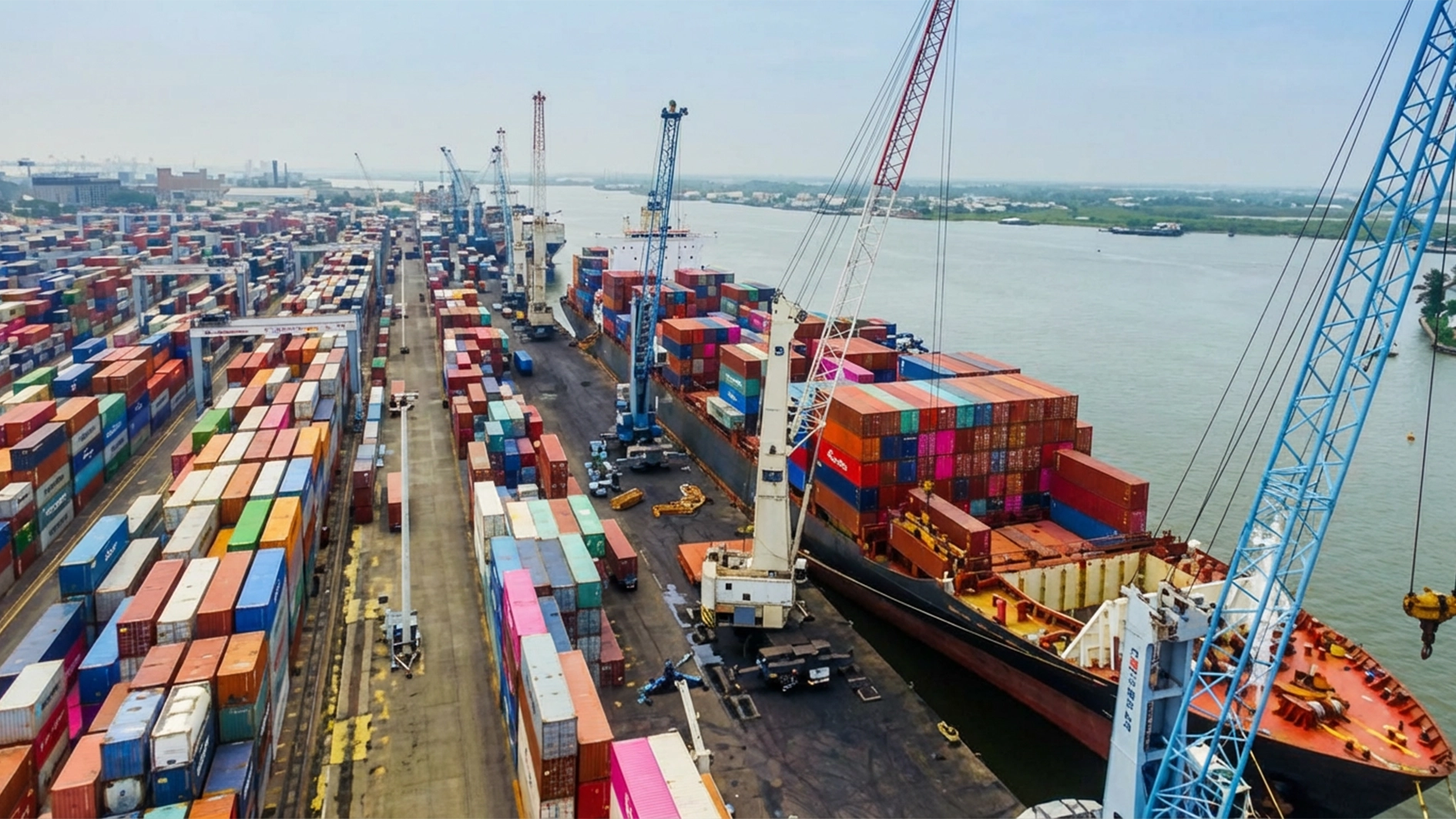
For Nigeria, an import-dependent maritime country without sufficient vessels to lift its trade, the United States’ proposed port fees for foreign-built vessels could create significant pressure for citizens and businesses as rising freight rates and landing costs are expected to increase overall import expenses, ADAKU ONYENUCHEYA reports.
The United States’ (U.S.) proposed maritime port fees on foreign-built vessels have raised concerns over potential macroeconomic pressures for Nigeria, driven by rising import costs, freight rates and landed expenses that could affect households, industrial growth trajectory, inflation dynamics and strain the stability of foreign exchange markets.
The policy could also disrupt global liner shipping networks and generate measurable cost inflation across major trade corridors, with both direct and indirect consequences for Nigeria, including reduced real income for citizens, according to the Sea Empowerment and Research Centre (SEREC).
Maritime experts noted that the additional fees are likely to be passed on to shippers through freight rate adjustments or surcharges. Industry estimates indicate that potential freight increases of between six and 10 per cent on affected routes could translate to an additional cost of between $150 and $600 per container, depending on vessel deployment and routing structures.
According to SEREC, a one per cent increase in the landed cost of Nigeria’s estimated $40 billion yearly import bill could impose hundreds of millions of dollars in additional expenses on businesses and consumers.
President Donald Trump, last week, released a 36-page Maritime Action Plan proposing port fees on foreign-built vessels calling at U.S. ports.

The charges, based on the weight of imported tonnage, are expected to range between one and 25 per cent per kilogramme, aimed at funding shipyard revitalisation.
The International Chamber of Shipping (ICS) and other trade experts have criticised the policy, warning that the proposed fees could constitute a significant additional cost burden on maritime transport.
They cautioned that the measure may distort trade patterns, increase business costs, disrupt the smooth flow of global commerce and potentially trigger retaliatory measures.
In its position paper submitted to The Guardian, the SEREC stated that vessels deployed on U.S. routes are part of broader global service networks.
As a result, rate adjustments are likely to extend beyond the United States to other regions, creating ripple shock across trans-Atlantic routes, Asia–U.S. services and interconnected African trade corridors.
Head of Research at SEREC, Dr Eugene Nweke, said the proposed fees would introduce structural distortions in maritime competition, potentially encouraging cargo rerouting to alternative ports, reciprocal measures by other maritime nations, reduced service frequency or capacity adjustments by global carriers and increased volatility in freight markets.
He explained that the development could create systemic instability within an already fragile global logistics environment.
Nigeria, structurally import-dependent, with over 90 per cent of its trade volume transported by sea – largely on foreign-built and foreign-flagged vessels – is expected to bear the brunt of the policy shock.
Experts argue that the country lacks sufficient indigenous deep-sea tonnage to shield itself from external shipping policy disruptions.
Key imports vulnerable to freight inflation include food staples such as wheat and grains, industrial machinery and capital goods, electrical equipment, vehicles and spare parts, as well as refined petroleum products.
According to the National Bureau of Statistics (NBS) Foreign Trade Statistics Report, the United States ranked as Nigeria’s second-largest source of imports in the third quarter of 2025.
Also, Nigeria imported goods valued at N3.22 trillion from the United States, representing 19.96 per cent of the country’s total imports, which stood at N16.12 trillion during the period.
Major goods that dominated the import categories included petroleum products, machinery and transport equipment, chemicals and related products, as well as agricultural commodities – particularly durum wheat, which featured prominently among Nigeria’s most imported food items within the quarter.
Nweke explained that although Nigeria’s direct trade volume with the United States is smaller compared to trade with China or Europe, the globalised nature of vessel deployment means freight rate increases triggered by U.S. policy would inevitably transmit indirect cost pressures to Nigeria’s trade routes.
Policy implications
The policy’s modelled microeconomic impact on Nigerian imports indicates that freight accounts for approximately eight to 12 per cent of the landed cost of bulk food imports, according to estimates by the research centre.
Nweke stated that an estimated six to 10 per cent increase in freight rates could add between $132 and $220 per 20-foot container on average, translating to a 0.5 to 1.2 per cent rise in total landed costs.
The research expert explained that, given the thin margins in staple food distribution, such increases are highly likely to be passed on to consumers, thereby worsening food inflation.
For industrial machinery and capital goods shipments, freight rate increases of six to 10 per cent could add between $240 and $400 per container, while landed costs may rise by between one and 1.6 per cent.
Using macroeconomic modelling, the research group identified several national-level implications, noting that consumer inflation, measured by the Consumer Price Index (CPI), could increase by between 0.5 and one percentage point, while slower capital formation may weaken industrial growth momentum.
SEREC also noted that overall Gross Domestic Product (GDP) growth could experience a mild drag due to reduced real demand and rising production costs.
The research centre further highlighted external sector pressures, explaining that higher import Cost, Insurance and Freight (CIF) values could increase foreign exchange outflows and intensify demand for the dollar, potentially exerting depreciation pressure on the naira.
However, household welfare may also be negatively affected as real purchasing power diminishes under elevated import and consumer costs.
Beyond immediate economic indicators, SEREC warned of broader strategic risks for Nigeria.
These include the transmission of imported inflation, declining industrial competitiveness resulting from more expensive capital goods, which could discourage investment and slow local production expansion.
Others include heightened sensitivity within the foreign exchange market and increased exposure to food security challenges if freight-driven food price increases worsen vulnerabilities in an already food-inflation-sensitive economy.
President, Africa Association of Professional Freight Forwarders and Logistics of Nigeria (APFFLON), Frank Ogunojemite, said the policy would increase shipping costs on U.S.-bound and U.S.-origin cargo.
Speaking from a freight forwarding perspective, Ogunojemite said any additional cost imposed on maritime transport will ultimately be reflected in freight rates, which are typically passed down the supply chain to importers and eventually the consumers.
He said Nigeria maintains strong trade relations with the United States – importing machinery, agricultural products, vehicles, pharmaceuticals, and industrial equipment, noting that an increase in freight charges on these routes will likely raise the landed cost of such goods.
He said that as an import-dependent economy already facing currency and inflationary pressures, Nigeria could experience further upward pressure on prices,
Ogunojemite said global shipping operates as an interconnected network, noting that as major trade routes become more expensive, carriers may adjust pricing structures worldwide, which could indirectly affect freight costs into Nigerian ports.
He urged Nigerian trade authorities to closely monitor developments and engage diplomatically to safeguard national trade interests.
He said policies that distort maritime trade flows risk triggering retaliatory measures, supply chain disruptions and higher consumer prices globally.
Options for government
SEREC submitted that maritime policy measures aimed at national industrial revival should avoid mechanisms capable of destabilising global trade, warning that port-based vessel discrimination risks undermining free and fair maritime commerce.
Nweke noted that emerging economies such as Nigeria disproportionately bear the secondary costs arising from distortions in global shipping systems.
SEREC, however, urged policymakers, both domestically and internationally, to consider diplomatic engagement through multilateral maritime forums.
He urged the government to strengthen Nigeria’s indigenous shipping capacity and maritime financing architecture, and accelerate port efficiency reforms to cushion the impact of external freight shocks.
The research body also recommended expanding export diversification to buffer external cost pressures, alongside the development of strategic food security and industrial self-reliance frameworks aimed at reducing long-term vulnerability to global supply chain disruptions.
“In an era where supply chain resilience and economic recovery remain fragile, policy measures that introduce new cost distortions into global shipping must be evaluated through a broader multilateral lens,” he said.
Director of International Trade, Maritime Researchers and Authors Association of Nigeria (MARASSON), Sunday Ademuyiwa, called for urgent and proactive data-driven action to protect the country from the impact of the proposed global shipping fees.
He also called for proactive research to guide actionable policies and business strategies in response, highlighting the need for sector-specific analysis.
Ademuyiwa noted that critical areas such as food, pharmaceuticals, machinery and consumer goods could be disproportionately affected, adding that breaking down the impact by sector will help identify the most vulnerable areas and allow for targeted mitigation strategies.
Speaking on the need for timely interventions, Ademuyiwa stressed the importance of public awareness, advising that clear and concise information on potential price changes would help Nigerians prepare, adapt and manage expectations across the economy.
Also, Ademuyiwa emphasised monitoring global shipping trends, while the country explores alternative routes and transshipment hubs that could bypass U.S. ports or reduce reliance on vessels heavily affected by the proposed fees.
According to him, potential strategies include routing goods through Europe, Asia, or other African ports more efficiently.
Ademuyiwa also highlighted the need for detailed analysis of shipping carriers, stressing that identifying which lines and vessel types are most exposed to the fees will be key in shaping Nigeria’s trade strategy and safeguarding economic resilience.
The MARASSON Director called for a detailed carrier analysis to determine which shipping lines and vessel types are predominantly used for Nigerian imports, assessing whether these carriers would absorb some of the costs or pass them entirely to Nigerian importers.
He stressed that understanding the exposure of these carriers to the proposed U.S. fee is critical for effective policy and business planning.

