 Follow Us on Google News
 Follow Us on Google Discover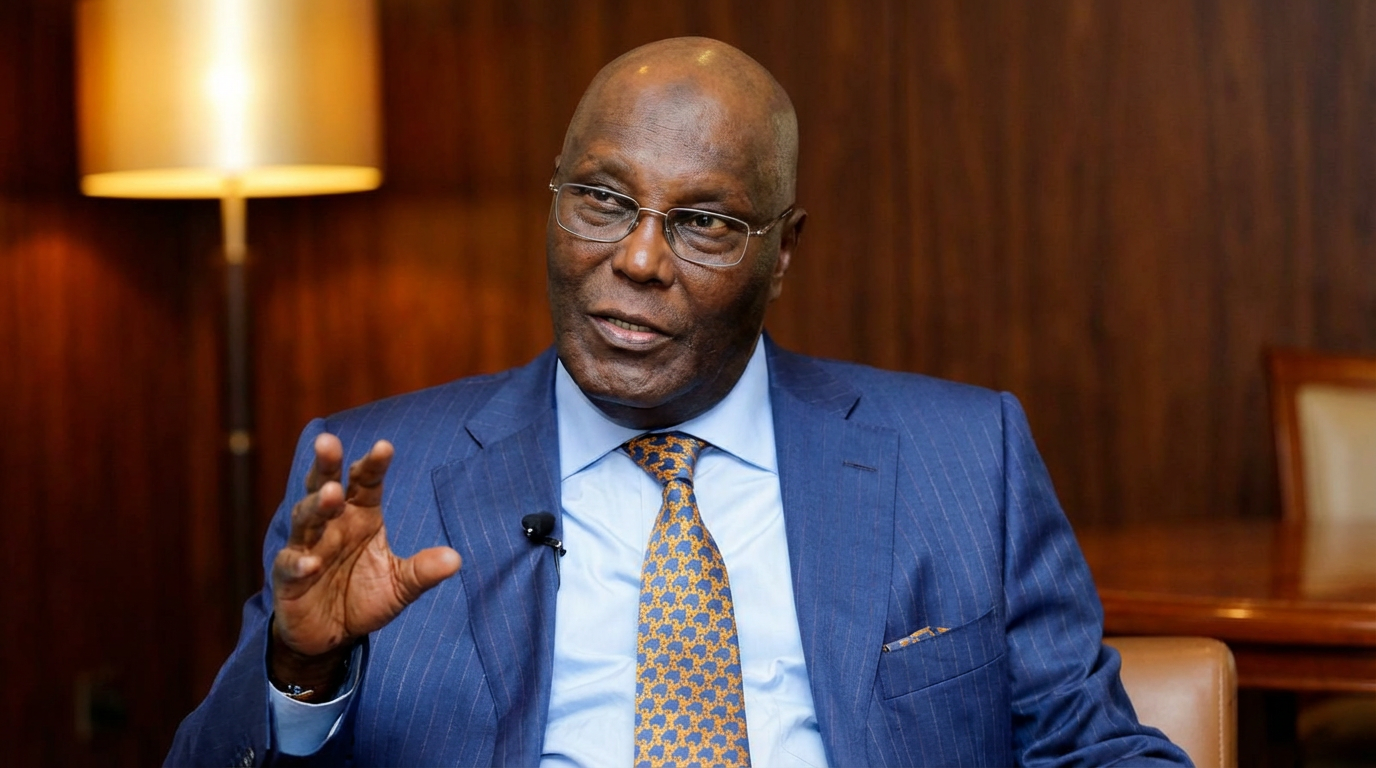
Sir: The trajectory of the ruling All Progressives Congress (APC) since 2015 is not merely a story of political atrophy. It is the forensic record of a governing party that betrayed an entire nation.
From the thunderous wave of manufactured hope upon which it ascended to power, the APC has since collapsed inward, consumed by incompetence, division and the irreversible corrosion of public trust.
However, standing at the vanguard of Nigeria’s redemption with the clarity of purpose that only experience and conviction can produce, is Alhaji Atiku Abubakar who is now marching under the bold and untainted standard of the African Democratic Congress.
The numbers are not merely instructive, they are devastating. In 2015, the APC under the late former President Muhammadu Buhari secured 15,424,921 votes, sweeping to power on promises of integrity, security, and economic transformation.
The North delivered over 12 million of those votes, a show of regional faith that was, in the fullness of time, catastrophically misplaced. By 2019, despite the overwhelming advantages of incumbency, former President Buhari’s vote count had already shed over 300,000 votes. The cracks were visible. The disillusionment had quietly taken root.
Then came 2023, and the house of cards imploded with the Bola Tinubu candidature on the banner of the APC, which could muster only 8,794,726 votes, a staggering collapse of 6.4 million votes from four years prior. Northern support, once the party’s indomitable electoral fortress, crashed from 12.3 million to just 5.6 million, a loss of more than half its core base in a single cycle.

The combined opposition polled over 13 million votes, more than four million above Tinubu’s tally. The verdict of the Nigerian electorate could not have been clearer. The APC was rejected. What was missing in 2023 was not the will to change. It was a singular, credible platform to channel that will. In 2027, that platform exists. It is the ADC. That candidate exists. He is Atiku Abubakar.
The APC’s decline is not an abstraction confined to electoral tallies. It is written in the hunger stretching across Nigerian markets. It is inscribed in the collapsed savings of a middle class that watched a lifetime of modest prosperity obliterated within months. It is etched into the faces of market traders in Onitsha whose working capital evaporated with the Naira, and into the sleepless nights of Lagos businessmen whose import costs have become mathematically impossible to sustain.
The removal of fuel subsidies, executed without safety nets, or transitional architecture to absorb the shock, unleashed an inflationary spiral that the Central Bank has been powerless to arrest. Inflation surged beyond 30 per cent. The Naira lost more than 60 per cent of its value against the dollar within the administration’s first year alone.
The purchasing power of ordinary Nigerians was not merely reduced. It was gutted.
Insecurity remains a national emergency that shames every press conference held in its name. Communities in Plateau State have been massacred with a regularity that has, horrifyingly, ceased to shock. Farmers in Borno cannot reach their fields. Parents in Kaduna send their children to school uncertain whether they will return. The APC that promised in 2015 to extirpate Boko Haram has presided, across two administrations, over the metastasisation of insecurity into an existential national crisis.
Even within its own ranks, the party is visibly disintegrating.
Atiku Abubakar’s decision to carry the ADC flag into 2027 is not the act of a perennial contestant clinging to relevance. It is the considered choice of a statesman who has assessed the wreckage around him and concluded, with clear eyes and unbroken resolve, that Nigeria cannot afford another cycle of experimentation at the expense of its people. The African Democratic Congress offers precisely what this moment demands: a clean platform, unencumbered by the accumulated failures and factional exhaustions of parties that have had their turn and squandered it. It is a party of democratic principle and genuine national ambition, providing the ideal framework within which to build the broad, cross-regional coalition that Nigeria’s redemption requires.
Atiku’s record speaks with an authority that no campaign rhetoric can manufacture. As Vice President from 1999 to 2007, he was not a ceremonial figurehead. He was the engine of Nigeria’s most consequential economic modernisation. Under his stewardship, Nigeria attracted unprecedented foreign direct investment, consolidated a fragmented banking sector into a robust industry capable of supporting national development, and privatised moribund state enterprises that had consumed public resources for decades without producing value. GDP growth averaged 6 per cent yearly during that period. That prosperity was not accidental. It was architected.
He is a Northerner who has built genuine alliances across the South, rather a Muslim who has earned the authentic trust of Christian communities through decades of consistent conduct rather than electoral calculation. A businessman who has employed thousands of Nigerians, built universities, and invested in human capital at a time when the state abdicated that responsibility. Against a consolidated opposition anchored by Atiku’s proven national appeal and the ADC’s fresh mandate, the governing party has no persuasive answer and no reliable refuge.
Nigeria does not need another experiment. It does not need another administration that discovers the complexity of governance after the inauguration. It needs leadership tested under pressure, a platform carrying no inherited liabilities, and a vision grounded in the practical wisdom of a man who has governed before and knows what governing actually demands. The winds of change are not merely blowing. They are gathering into a storm that will, in 2027, sweep the APC from power and deliver Nigeria into the capable, experienced, and unifying hands it has long deserved.
The numbers have spoken. The markets, the farms, the classrooms, and the communities living under the shadow of insecurity have all spoken. Now it is time for the ballot box to translate that collective voice into democratic verdict, and for Nigeria to finally, irrevocably, choose its redemption.
Donald Amerijoye, director general, The Narrative Force, wrote from Lagos.

