 Follow Us on Google News
 Follow Us on Google Discover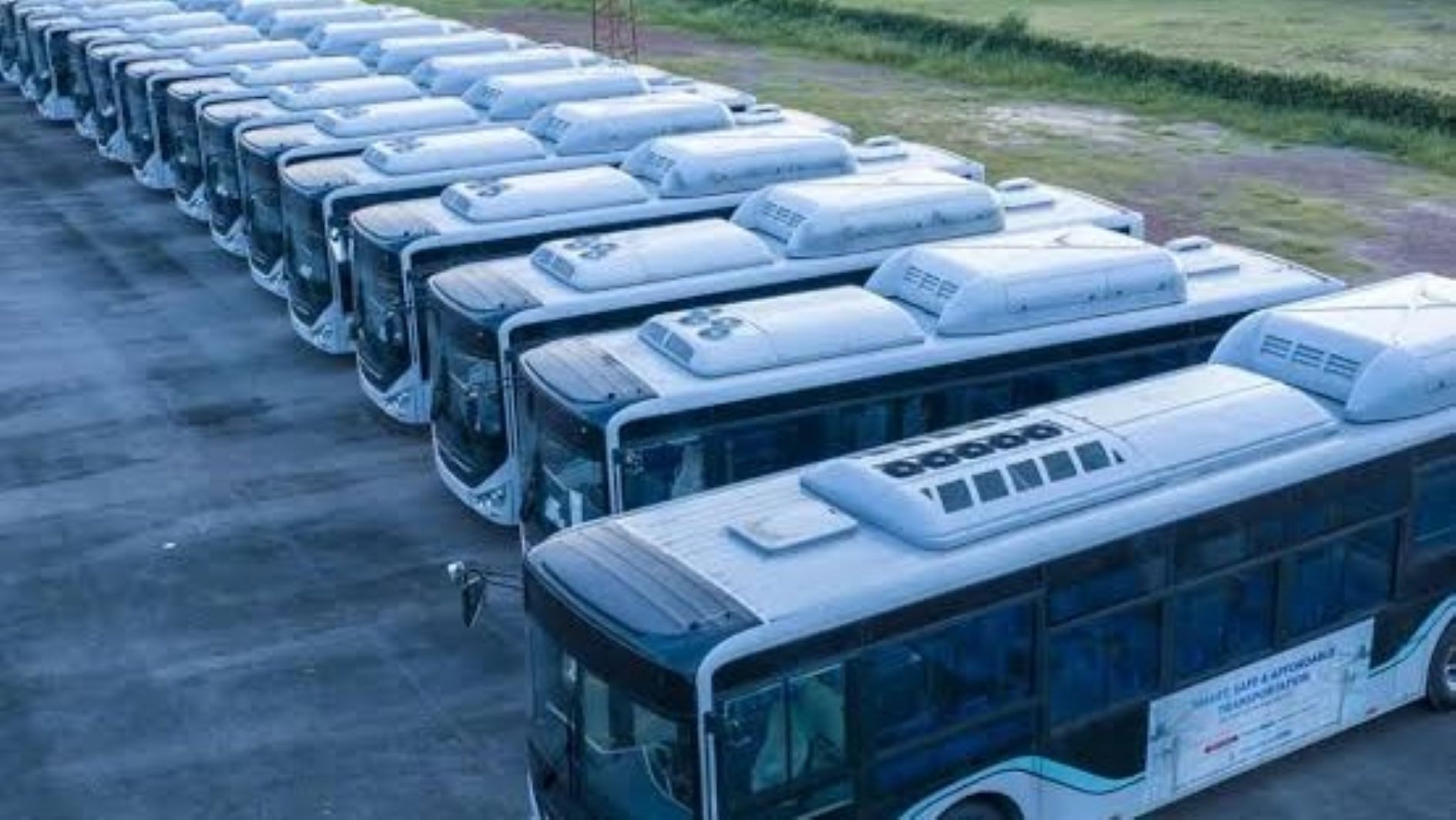
The Enugu State government has continued to implement initiatives to expand and boost the state’s economy. One such initiative is the multimodal transport scheme started over the last three years, LAWRENCE NJOKU reports.
Enugu State’s transport sector is undergoing a revolution. Those who knew the state, especially since the return of democracy in 1999, would readily agree that the sector had never received the level of support and deliberate attention it is receiving from any government at the moment.
From the road-based transport system, the state has launched multimodal transport schemes, operating on the air and vigorously pursuing the realisation of a monorail.
The only time the state government had attempted to invest in the transport sector was when it established the Enugu State Transport Company (ENTRACO). The interstate transport
scheme was intended to compete with other private transport companies at affordable rates for commuters and, at the same time, raise revenue for the state.
ENTRACO soon became unviable as it could not compete with other private transport companies to raise funds for its operations. This defeated the state government’s aim for the venture. With its premises at the works road in GRA turned into all manner of activities, the state government repossessed the land and turned it into a housing estate.
Interestingly, the sector is now getting all the attention. It seems to be receiving a fresh push as the state government is investing heavily in the sector to sustain it. It would not only create jobs but also significantly contribute to the state’s revenue base.

From road transport, attention has shifted to Air and Monorail. The recent concession and modernisation framework for the Akanu Ibiam International Airport is a critical pillar of Enugu State’s aviation strategy for cargo expansion and regional fleet acquisition.
Checks by The Guardian showed that the transport sector in the state now ranks 4th in the log of budgetary allocations, coming behind Education, Agriculture and Housing, respectively. From about N47 billion it got in 2025, the sector this year (2026) received over N76 billion from the over one trillion naira budget. This is about five per cent of the entire budget envelope for the year. Added to this is a separate N10 billion expected to be invested in a monorail project.
Governor Peter Mbah began disrupting the transport sector in 2024, when he proposed modern bus terminals to replace existing motor parks in the state.
He had pulled down several structures at four key locations, including Holy Ghost Park, Gariki Park, Abakpa Park, and Nsukka Park, to set up modern bus terminals.
In August last year, Mbah commissioned the modernised parks and rolled out 100 Compressed Natural Gas (CNG) transit buses, which he said were aimed at boosting the State’s economy.
He had explained that alongside the CNG buses and the bus terminals were “central pillarsof our transport agenda – a multimodal highway to the future – integrated road, rail, air, and waterways into one seamless, safe, and efficient ecosystem. He stressed that the projects are already creating jobs across the state.
Done with the bus terminals, the government ventured into air transport, partnering with Xejet Airline to launch Enugu Air with three Embraer aircraft to connect Enugu to Lagos and Abuja. The government had told those who cared to listen that its entry would revolutionise the air transport sector, adding that it would introduce more aircraft to the fleet.
In February this year, the state government acquired three additional Embraer aircraft, bringing its total fleet to six, with plans to increase it to 20 by the end of 2026. It said the aim was to enhance regional connectivity and economic development.
While presenting the 2026 budget in December last year, Governor Mbah announced his intention to invest in a monorail, with an initial equity contribution of N10 billion for the first phase of the 135.5-kilometre rail project. He said the rail project was part of his campaign promise to develop a multimodal transport system that includes rail and inland waterway services to complement road transportation across the state and the southeast region.
Although the Monorail is yet to come, those who reacted to the recent rise in the Internally Generated Revenue (IGR) of the state said the transport sector has contributed substantially to it.
Chairman of the Enugu Board of Internal Revenue, Ekene Nnamani, recently announced a significant increase in the state’s IGR to N406 billion for 2025. He had attributed the growth to the deployment of technology.
Governor Mbah has set an ambitious GDP target, rising from approximately $4.4 billion to $30 billion by 2030. Sources believe that achieving this amount will depend on ensuring the viability of every sector, including the transport sector.
Commissioner for Transport, Dr Obi Ozor, told The Guardian that the government sees transport as an economic multiplier that goes beyond the movement of people or goods, to unlocking value by connecting production to markets, labour to opportunity, ideas to capital, and regions to global supply chains.
“Our strategy in Enugu is, therefore, not an incremental reform but a systemic
transformation. The governor is building a multimodal transport ecosystem designed to open up Enugu State and integrate the entire South-East as a unified economic bloc.
“The region hosts some of Nigeria’s most dynamic industrial and commercial clusters — Aba’s manufacturing base, Nnewi’s industrial ingenuity, Onitsha’s commercial scale, Ebonyi’s agricultural and mineral resources, Owerri’s service economy, and Enugu’s administrative and educational strength.
“Yet, historically, these centres have functioned as parallel markets rather than an interconnected system. Transportation is the bridge that turns proximity into productivity.
“By leveraging air, rail, and road networks in a coordinated framework, Enugu will serve as a receiving and redistribution centre for goods from Asia into Nigeria and onward to other African markets, while local manufacturers gain structured export pathways that reduce delays and inefficiencies,” he said.
He added that reliable, predictable transportation networks attract investment, stressing that when expansion occurs across multiple sectors simultaneously, GDP growth follows.
“By deliberately connecting air, rail, road, and logistics systems, we are creating an ecosystem in which commerce flows naturally and opportunity multiplies. The journey from a $4 billion economy to a $30 billion economy will not be driven by aspiration alone. It will be driven by connection — deliberate, multimodal, and regionally integrated.
“That is the path Enugu State has chosen. And through disciplined execution and strategic partnership, that path will not only redefine the state’s economy, but help position the entire South-East as a unified and competitive economic block within Nigeria and beyond,” he stated.
However, investments in the transport sector have not come without a cost to the state. While it has displaced certain people who originally occupied their current locations and led to the loss of opportunities, there are also concerns that other sectors are lagging behind due to insufficient attention.
To construct the modern bus terminals, no fewer than 10,000 traders were affected by the demolition of their shops, an educational institution, private motor parks and residential buildings. The demolitions centred on Holy Ghost Park, Gariki market, Abakpa market, and Nsukka market. The majority of shop owners were allegedly not compensated and were not restored to their areas after construction.
In this year’s budget of about N1.6 trillion, there is a proposal to acquire 14 additional aircraft, bringing Enugu’s Air fleet to 20. Already, three out of the 14 had arrived and joined the fleet.
Some stakeholders believe that the attention being given to the transport sector is affecting other sectors. For instance, they had noted that while the promise of water to every household in the state for 180 days had not been realised, the investments in the transport sector are still incubating.
They pointed at the bus terminals, stressing that the state government forced intracity bus and tricycle operators to start using the parks after the big transporters avoided it. It was said that these buses pay about N500 anytime they enter the terminals to drop off or pick up passengers.
Opinion has it that the development negates the potential expected of facilities of such magnitude, and that this is compounded by the number of people displaced during construction.
While it is expected that the government might be spending several billions to purchase 14 new aircraft for Enugu Air in one year, only about N20 billion (1.24 per cent of the budget) was allocated to water this year. Stakeholders said that if the same level of zeal and resources had been devoted to the water sector over the last 33 months, water problems in the state would have been resolved.
Six months into Mbah’s administration in 2023, he made good his campaign promise by commissioning a plant that increased water generation from an occasional 2 million litres to about 120 million litres, powered by a 4.4-megawatt power station. The feat came with the construction of about 96 water galleries in Enugu urban.
At the moment, the hope elicited by that commissioning is becoming forlorn. While many of the galleries had not seen water since their commissioning, a few areas occasionally receive a supply. Many residents still patronise water vendors who charge exorbitantly to meet their daily water needs.
An Economist, Dr Ruby Agbarakwe, told The Guardian that, like it was in every other endeavour of life, interests would always guide human choices, adding that leaders have always given priority to areas and issues they deemed necessary.
Agbarakwe, a director in a Digital Firm, Fintech Investments, stated that there is no genuine economic investment without a cost, adding that while some investments would begin to yield at a short period, others would take longer with much resources.
“In some states, residents will suffer economic losses, exorbitant taxes, dislocations, and what have you. These are prices to pay for economic development and expansion. Today, Enugu is expanding transportation. This must come at a cost, which may not be good for the ordinary person.
“In this instance, something must give way for something to happen. There are projects that may suffer as a result of the Enugu transport sector; there are Ministries that may not get their complete release from the budget; there may be neglect here and there. They are normal. But what is important is that the government realises that the welfare of the people is paramount in siting any project in any part of the state,” she said.
Also, an Estate Surveyor, Eze Emmanuel, shared similar thoughts with her. Emmanuel added that dialogue and consultation with the people should always guide the government’s developmental efforts.
He stressed, however, that there was a need to develop the transport sector in the southeast region to complement the volume of commerce and other activities within the region.
He called on other states in the region to emulate Enugu state government and begin to pay attention to transport infrastructure, stressing that, “when fully developed, it may become another revenue avenue for the region outside agriculture.”
He, however, agreed that other sectors would suffer from the massive attention, adding that the first casualty may be the commercial bus and tricycle operators who had earlier been issued an ultimatum to relocate from the city centre by next month for the government- operated taxi scheme.

