 Follow Us on Google News
 Follow Us on Google Discover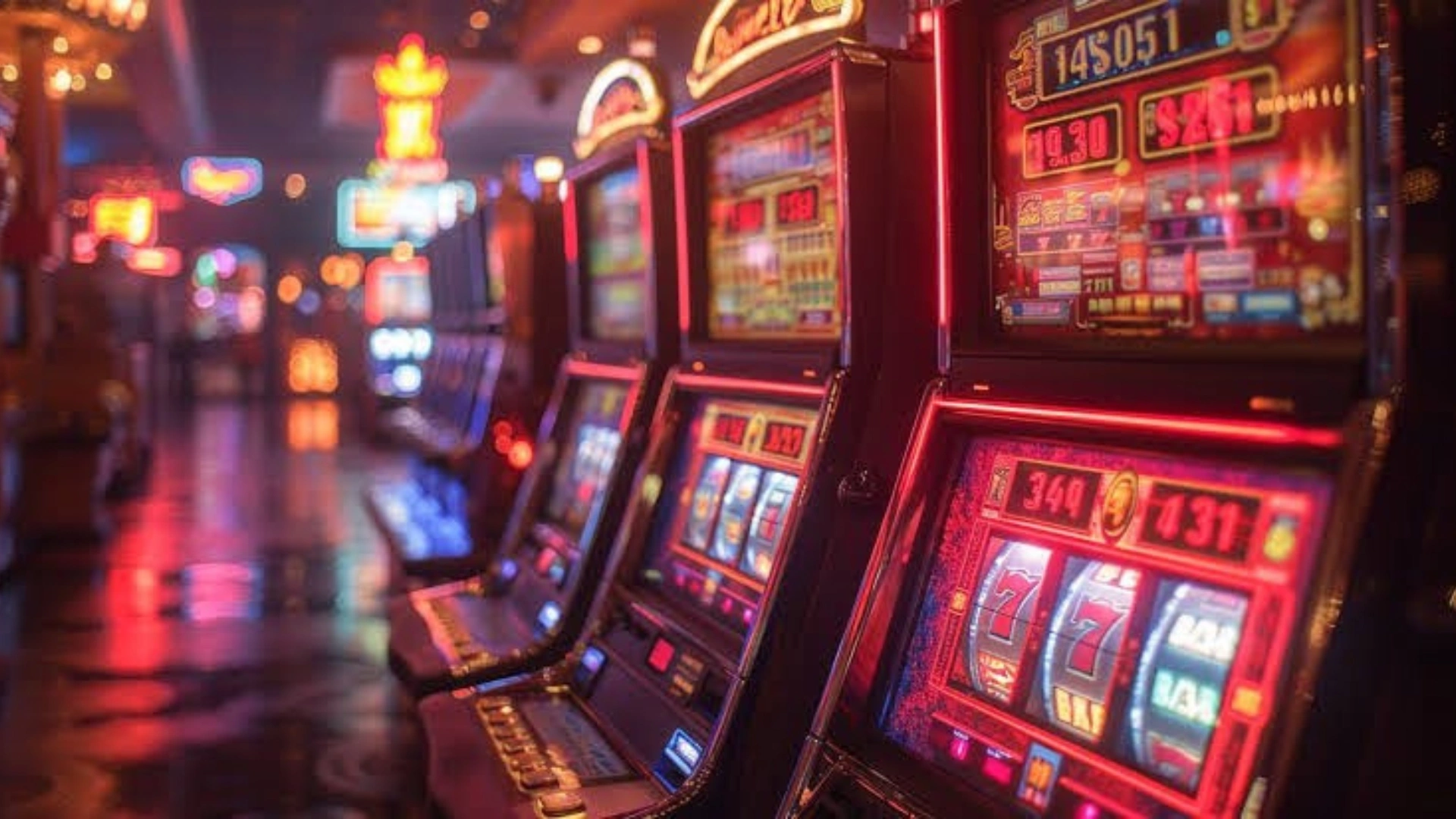
On a humid Tuesday afternoon in Mumbai, a boy named Rishabh spun the Aviator slot game for the fourth time. He hadn’t won yet. But he knew the fifth try would be lucky. Why? It just feels like it should be, he said — echoing the anthem of every hopeful night owl convinced the algorithm has a heart.
Spoiler: it doesn’t. A decade later, researchers in Copenhagen studying perceived randomness in online slots would use that exact quote as a thesis opener — and probably giggle at how universal that delusion is.
This isn’t a story about luck. It’s about control. Specifically, how modern games and betting platforms simulate randomness with surgically precise formulas. You think it’s a dice roll, but it’s a story — already half-written — by a machine.
Welcome to the age of digital chance, where random is just another word for scheduled surprise.
The Illusionists: How Machines Fake Randomness
Let’s get one thing straight: your favorite online slot, that flashy roulette app, or even the slick sports odds spinner on your phone isn’t running on some cosmic dice roll. It’s running on a cold, hard algorithm — the kind with zero chill.
Enter the Pseudo-Random Number Generator (PRNG), a fancy way of saying fake randomness well enough so you won’t notice.

These things don’t roll anything. They calculate outcomes using a seed — usually based on what time it is down to the millisecond — and spit out a number that looks random. But spoiler alert: if you know the seed and the formula? You can literally predict the future. Forget clairvoyance, just get good at math.
| Feature | Physical Randomness (e.g. dice) | Digital Pseudo-Randomness |
| Predictability | Low | High (if seed and algorithm known) |
| Entropy Source | Real-world chaos | Neat little math formula |
| Repeatability | Never the same | Always the same if seeded right |
| True Randomness? | Yep | Nope |
So what’s an RNG, really? Here’s the behind-the-scenes breakdown:
- A chunk of code: Usually written in C++, Java, or something equally robotic — no emotions, just math.
- A timestamp addict: It uses the exact millisecond you clicked spin as fuel. Click one second later? Totally different result.
- A number vomiter: It spits out a number tied to outcomes like reel positions or card flips — before you’ve even blinked.
- A fairness illusionist: You think it’s luck. It’s actually scheduled drama.
Let’s put a real face on this. Ever played Book of Dead by Play’n GO? Yeah, that ancient treasure slot with Rich Wilde pretending to be Indiana Jonest.
When you hit spin, you’re not waking up some magic reels — you’re poking a line of code that calls the PRNG, which instantly coughs up a number. That number decides everything. The Egyptian theme? Just glitter.
The outcome? Already locked in from the moment you clicked, thanks to a calculation done faster than you can blink.
The Luck Curve: How Patterns Are Baked into Chaos
The best online casinos know something most players don’t: perceived fairness matters more than actual randomness. A game that gives you small wins early and makes you think you’re getting close to a big payout? That’s not a fluke — it’s design.
Enter Return to Player (RTP) algorithms. These aren’t simple percentages — they’re deeply engineered experiences. A 98% RTP doesn’t mean you’ll get ₹97 back every ₹100. It means over millions of spins, across all players, that’s the average. Individually, you might crash and burn or hit a miracle.
Here are some common Myths vs. Cold Reality of RTP:
| Player Belief | Reality Check |
| “It’s due for a win” | PRNGs don’t track history. No spin is “due.” |
| “High RTP means frequent wins” | High RTP can mean rare but bigger wins — not frequent ones. |
| “If I play long enough, I’ll break even” | Over time, the house edge always applies. |
| “Games are rigged!” | Not usually — but they are designed to keep you engaged. |
Slot games use event spacing, psychological priming, and intermittent reinforcement. The outcome may be mathematically fair, but the experience is anything but neutral. This is where game design meets behavioral economics. And you’re the data point.
Let’s Talk About Seeds: Invisible Puppet Strings
You might think: “Well, I clicked at a random time, right? That should make it unpredictable.” Here’s the twist: most PRNGs use system clock timestamps as seed values. Millisecond-level timing can — in theory — be predicted or even reverse-engineered.
That’s why some old platforms were hacked by users who reverse-forecasted results in online poker or roulette.
But modern platforms now use Cryptographically Secure PRNGs (CSPRNGs) that layer entropy from multiple sources: mouse movements, server load, internal thermal noise.
Still, these systems must publish fairness proofs via Provably Fair frameworks — especially in blockchain gambling. Today, PRNG seeding comes from the following key sources:
- System Timestamps – classic and still used in weak systems
- Environmental Noise – unpredictable system variables (e.g., RAM fluctuations)
- Hardware RNG Chips – e.g., Intel’s RdRand
- User Behavior Input – mouse movements, keypress timing
- Blockchain Hashes – increasingly used in decentralized games
Still, if the randomness isn’t independently verifiable or the system uses a known seed methodology, you’re not playing chance — you’re playing a script.
In the 1990s, a team of individuals reverse-engineered video poker machines in Las Vegas. By analyzing the predictable patterns of the PRNGs, they could hit a royal flush within a two-minute window with about a 20% success rate.
This exploit highlighted the vulnerabilities in early PRNG implementations, emphasizing the need for more secure and unpredictable random number generation methods in gambling platforms.
Conclusion
Here’s the final act — and it’s a quiet one. Digital randomness is like a magician’s sleight-of-hand: the trick isn’t in the math, it’s in what you’re not looking at. Games feel random, exciting, and uncertain.
That’s by design. But under the hood, they’re choreographed chaos. You’re not flipping a coin; you’re watching a scripted play where the outcome was calculated before the curtains even rose.
If that unnerves you, good. It should. Because knowing the difference between true chance and designed unpredictability is the only way to protect your time, your wallet, and your mind.
And if you still want to gamble? Just don’t chase the fifth spin. The house wrote that chapter a thousand spins ago.

