 Follow Us on Google News
 Follow Us on Google Discover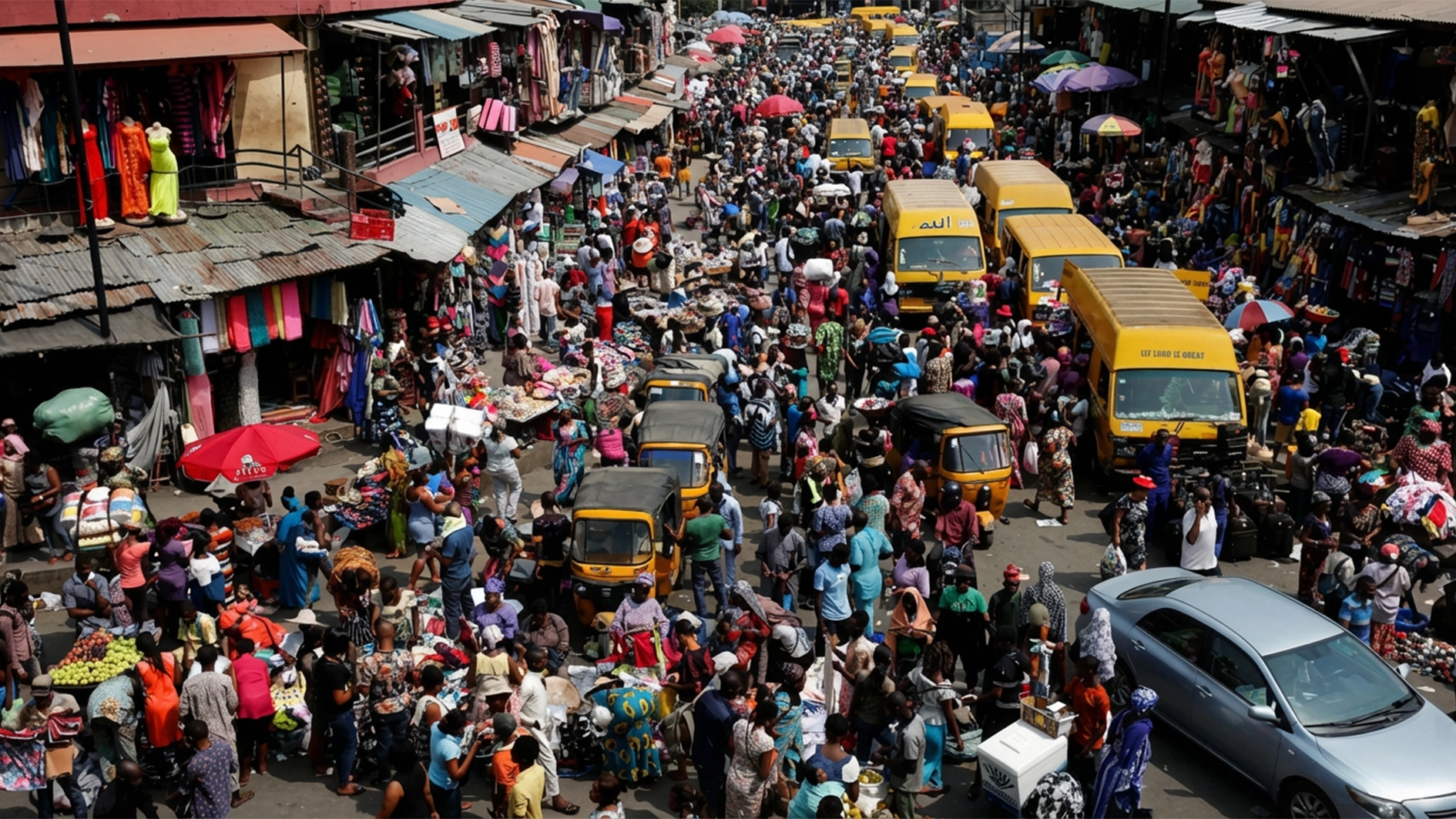
The current report by the World Bank, analysing and projecting the trend of Nigeria’s population, should be worrying to both the authorities and well-meaning citizens, for what it portends. The critical issue is that while population figures rise sharply, particularly in the cities, there is hardly any indication of official preparedness to manage the increase and prevent its probable collateral damage. What this means is that the country may be faced with pressure of housing, crime, health challenges and other social dislocations. This is obviously alarming, considering that these pressures, in varying degrees, are already taking a big toll on the country’s growth and welfare.
Over the next 25 years, Nigerian cities will absorb an additional 140.3 million people, more than twice the country’s current urban population. By 2050, an estimated 264 million Nigerians will live in urban areas, placing cities firmly at the centre of the nation’s economic, social and political future.
This historic shift portends both good and bad omens for Nigeria. Managed wisely, rapid urbanisation could unlock productivity, innovation and shared prosperity. Mismanaged, as current trends suggest, it could deepen poverty, worsen insecurity, strain public finances and turn cities into flashpoints of crisis rather than engines of growth.
Nigeria is projected to become the third most populous country in the world, after China and India. But population growth, without planning, discipline and foresight, is not development. It is pressure on land, infrastructure, jobs, housing and governance.
The World Bank’s latest multi-sector analytical review offers a sobering diagnosis. Nigeria’s urban population has expanded from fewer than seven million people in 1960 to over 128 million in 2024. Nearly half of these urban residents live in slums. By 2050, about 70 per cent of the population is expected to reside in cities. Yet this dramatic expansion has largely occurred without effective urban planning, as master plans are routinely abandoned, ignored or selectively enforced.
The consequences are everywhere. Cities grow outward in chaotic sprawl rather than upward in organised density. Residential, commercial and industrial projects collide without order. Drainage systems are blocked, floodplains are built over, and transport corridors are choked. When the inevitable problems surface, authorities respond not with planning, but with demolitions, often sudden, disruptive and poorly coordinated, destroying homes, markets and livelihoods without providing alternatives.
This cycle has created more confusion than order. Demolitions have become a substitute for governance, reinforcing public distrust and deepening informality. People pushed out today simply resettle elsewhere tomorrow, recreating the same problems in new locations. The underlying issue is not the presence of people, but the absence of planning.
Burgeoning urban poverty is perhaps the most dangerous outcome of this failure. Millions migrate to cities in search of opportunity, only to find inadequate jobs, rising living costs and shrinking space. Employment growth has not kept pace with population increase, leaving a large share of the urban population underemployed or trapped in the informal economy. The result is a growing class of urban poor, crowded into slums, excluded from basic services and increasingly vulnerable to economic shocks.
This economic exclusion feeds directly into Nigeria’s urban security challenges. Youth unemployment, congestion, housing stress and weak policing have combined to make crime and violence persistent threats in many cities. Security is no longer a peripheral issue; it is now central to urban survival. Cities that should symbolise opportunity are increasingly defined by anxiety.
Paradoxically, this is unfolding at a time of cautious economic optimism. The World Bank projects Nigeria’s economy will grow by about 4.4 per cent in 2026 and sustain that pace in 2027, driven largely by services, especially finance and information and communication technology, as well as modest gains in agriculture and Nigeria’s emergence as a net exporter of refined petroleum products. Recent macroeconomic reforms, including fuel subsidy removal, exchange rate unification and tighter monetary policy, have helped stabilise long-standing imbalances.
But macroeconomic stability does not automatically translate into livable cities. Growth that is disconnected from urban planning will only magnify inequality. Without deliberate investments in modern urban amenities, reliable roads, mass transit, water supply, sanitation, power, digital connectivity and effective security, economic recovery will bypass large sections of the population.
Cities are not just centres of production; they are systems. When roads fail, productivity falls. When housing is unaffordable, labour becomes unstable. When security collapses, investment retreats; Nigeria’s urban challenge, therefore, is not merely demographic; it is structural.
One of the most critical failures has been the persistent abandonment of master plans. Many Nigerian cities have well-documented development plans that gather dust while political interests, weak institutions and corruption dictate outcomes. Planning authorities are either sidelined or compromised, leaving cities to grow according to market forces and informal arrangements rather than a coherent vision.
This failure has also undermined equitable development. Lagos, Abuja, Port Harcourt and a few other urban centres continue to absorb disproportionate population pressure, while vast swathes of the country remain underdeveloped. Yet, Nigeria’s urban future does not have to revolve solely around overstretched megacities.
Rapid urbanisation presents a major opportunity for the development of satellite cities and emerging towns, well-planned, well-connected urban nodes that can absorb growth without replicating existing dysfunctions. With the right infrastructure, governance frameworks and incentives, secondary cities can become hubs of manufacturing, logistics, technology, agriculture processing and services.
Equally urgent is the need to halt or reverse the rural–urban drift. Migration to cities is often less about attraction and more about desperation. People leave rural areas because of collapsing infrastructure, insecurity, limited access to markets, poor schools and weak healthcare. Addressing these deficits through even development spread, investing in rural roads, digital connectivity, irrigation, power and agro-industrial value chains, can make smaller towns viable and reduce unsustainable pressure on major cities.
Urban planning must therefore be linked to national economic strategy. Housing policy cannot be separated from employment policy. Transport planning cannot be divorced from land use. Security cannot be treated as an afterthought. Cities require integrated governance that cuts across federal, state and local boundaries.
The fiscal context makes this challenge even more urgent. Nigeria remains heavily exposed to global commodity price cycles. Crude oil prices are projected to decline in the near term, potentially constraining government revenues at a time when massive urban investments are required. This reality demands efficiency, prioritisation and accountability. Wasteful demolitions, duplicated agencies and uncoordinated projects are luxuries Nigeria can no longer afford.
The World Bank’s proposed roadmap integrated urban planning, improved land administration, stronger metropolitan governance and targeted infrastructure investment, offers a credible path forward. What has been missing is sustained political will and institutional discipline.
Nigeria’s urban population boom is inevitable. Urban chaos is not. The choice lies in whether policymakers continue to manage cities reactively, responding only when crises erupt or adopt a proactive, long-term approach that treats urban development as a national priority.
If Nigeria gets it right, its cities can become engines of inclusive growth, innovation and stability. If it fails, the same cities will amplify poverty, insecurity and social tension on an unprecedented scale. The future is already taking shape. The question is whether Nigeria will plan for it or be overwhelmed by it.

