 Follow Us on Google News
 Follow Us on Google Discover
Hello there, friend. I’m genuinely thrilled to share this piece with you because it represents months of research into Nigeria’s minimum wage landscape and years of experience analysing how workers across our diverse nation navigate their earnings and tax obligations. The question “what is Nigeria’s minimum wage?” has become increasingly urgent since President Bola Tinubu signed the minimum wage increase into law in 2024, and I can tell you straight away that understanding your rights and obligations around minimum wage affects virtually every working Nigerian.
Let me be direct with you from the start: Nigeria’s minimum wage is currently N70,000 per month. This represents the lowest legally permitted salary that employers can pay to workers in Nigeria, whether you’re working for government or the private sector. The National Minimum Wage Act 2024 brought this increase from the previous N30,000, which had stood since 2019.
But here’s what makes this topic more complex than a simple number: the minimum wage interacts with your tax obligations through PAYE, varies in implementation across Nigeria’s 36 states and the FCT, and determines your actual take-home pay after deductions.
This article will walk you through everything you need to know about Nigeria’s current minimum wage structure, from basic salary calculations to tax implications, from civil service grade levels to state-by-state implementation realities. I’ll share practical guidance based on years of observing how Nigerian workers have navigated these systems, the challenges they’ve faced, and strategies that actually work for maximising your earnings whilst understanding your obligations.
Understanding the Current Minimum Wage in Nigeria
The journey to N70,000 minimum wage has been long and often contentious. I remember attending Labour Congress meetings back when workers were demanding N494,000, only to watch negotiations compress that figure down to something government claimed it could afford.
What actually happened?
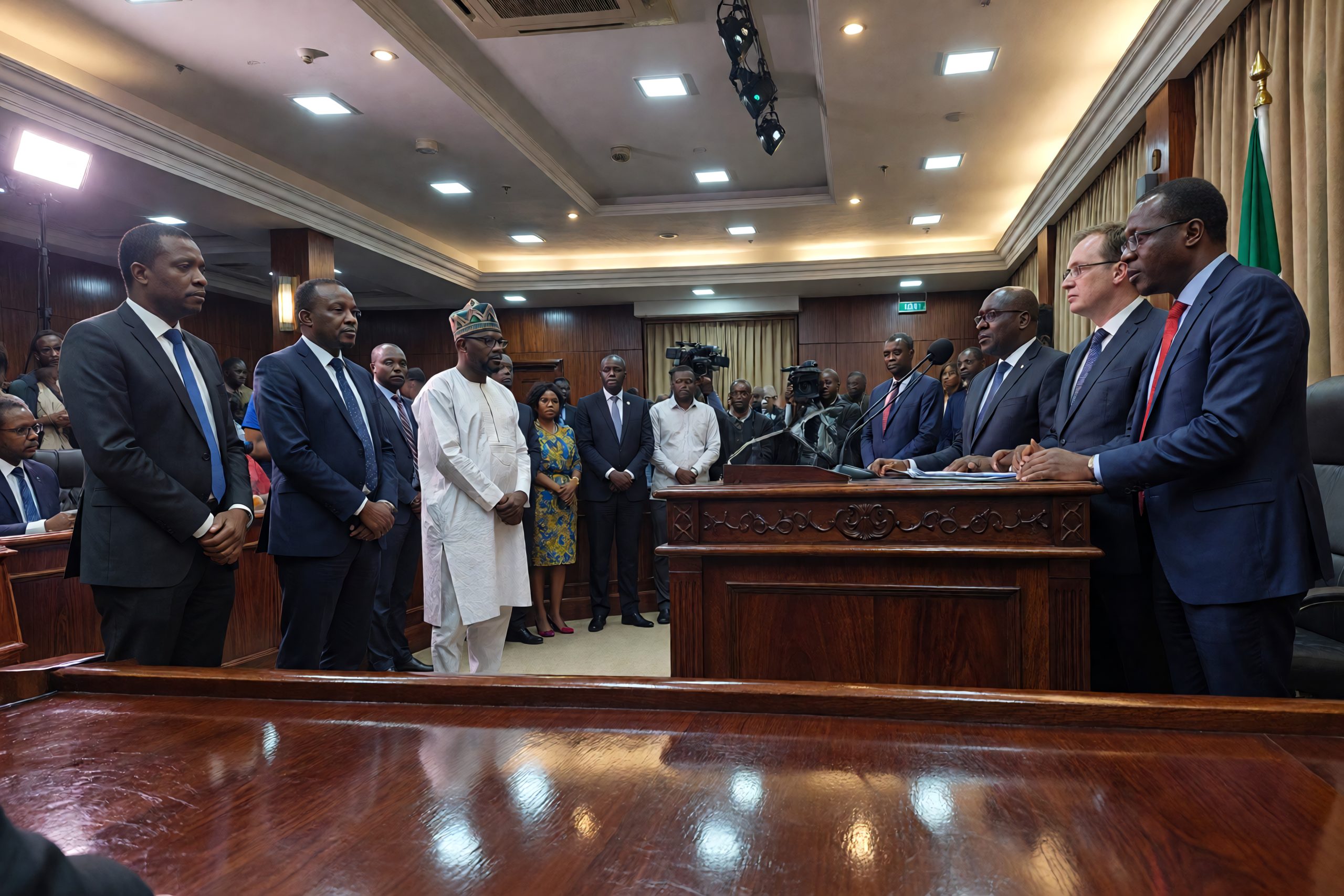
President Tinubu signed the National Minimum Wage Act 2024 into law on July 29, 2024, following months of negotiations between the Federal Government, the Nigerian Labour Congress (NLC), the Trade Union Congress (TUC), and the Organised Private Sector. According to the National Salaries, Incomes and Wages Commission, this minimum wage applies to all employees in both public and private sectors across Nigeria.
The increase wasn’t just about the headline number. It came with consequential adjustments across all salary scales in the public service. When you raise the bottom, everything above it shifts upwards to maintain relativity. This created massive fiscal pressures that continue affecting government budgets across federal, state, and local levels.
What makes this particularly interesting is the implementation timeline. Federal workers received the new minimum wage relatively quickly. State governments, however, presented a mixed picture. Some states like Lagos immediately agreed to pay even higher than N70,000. Others struggled to pay the previous N30,000, let alone the new rate.
I spoke with a civil servant in one North-Central state who told me his colleagues celebrated when they heard about the N70,000 increase, only to watch months pass without implementation. “We’re still earning N30,000,” he said, “whilst inflation is eating away at what that can buy.”
This disconnect between national policy and local implementation represents one of Nigeria’s persistent governance challenges.
The minimum wage isn’t just a number on paper. It’s supposed to represent a living wage, enough to cover basic necessities like food, shelter, transportation, and modest healthcare. Whether N70,000 achieves that goal depends entirely on where you live in Nigeria. In Lagos, where a single room in a decent neighbourhood costs N300,000 to N500,000 annually, and transportation to work might consume N40,000 monthly, the minimum wage feels inadequate.
In smaller cities where rent might be N100,000 annually and transportation N15,000 monthly, N70,000 stretches further, though still barely covers a family’s needs given current food inflation running above 30%.
What is the Minimum Wage Salary in Nigeria?
Let me clarify something that confuses many people: when we talk about minimum wage salary in Nigeria, we’re discussing gross income before any deductions.
N70,000 per month is your gross minimum wage.
From this amount, several mandatory deductions reduce what actually lands in your bank account. These deductions include Pay-As-You-Earn (PAYE) tax, pension contributions (8% of your basic salary), and potentially the National Housing Fund (2.5% for those earning above a certain threshold).
Here’s how it works in practice.
Your N70,000 minimum wage gets structured into components. Nigerian salary structures typically divide total compensation into basic salary, housing allowance, transport allowance, and other allowances. The basic salary portion might be N30,000 to N40,000, whilst allowances make up the rest.
Why does this matter? Because your pension contribution is calculated on basic salary, not total compensation. Similarly, certain loan eligibility calculations use basic salary as the reference point.
Let me share a real example from a friend who works in the education sector. Her total minimum wage package is N70,000. The breakdown looks like this: Basic salary N35,000, Housing allowance N20,000, Transport allowance N10,000, and Utility allowance N5,000. Her pension contribution (8% of basic) is N2,800. Her PAYE tax after relief allowances is roughly N1,500 monthly.
So from N70,000 gross, she takes home approximately N65,700.
That calculation assumes she’s not contributing to cooperative societies, doesn’t have salary advance deductions, and isn’t paying off any loans. Many Nigerian workers have additional deductions that further reduce take-home pay.
According to the Federal Ministry of Information and National Orientation, the consequential adjustments arising from the new minimum wage were designed to maintain salary relativity across all grades. This means that if you were earning N50,000 before the minimum wage increase, your salary should have increased proportionally, not remained at N50,000 now that the minimum wage itself is N70,000.
The implementation of these consequential adjustments has been patchy. Federal civil servants received theirs relatively promptly. State civil servants? That’s a different story across Nigeria’s 36 states.
I’ve observed that minimum wage discussions often focus exclusively on monthly figures whilst ignoring annual compensation. When you earn N70,000 monthly, that’s N840,000 annually before deductions. After pension contributions and PAYE, you might take home roughly N788,000 annually.
Compare this to Nigeria’s poverty line, which various studies place between N90,000 to N130,000 per person annually, and you can see the squeeze. A minimum wage earner supporting a family of four is earning less than what’s needed to keep all four members above the poverty line, even with the 2024 increase.
What is the Minimum Salary for PAYE in Nigeria?
Now let’s talk about tax, specifically Pay-As-You-Earn, which affects every salaried Nigerian.
There’s a common misconception that minimum wage earners don’t pay tax. That’s not quite accurate. Under the Nigeria Tax Acts 2025, there’s a progressive tax system with specific bands, but everyone earning income is technically subject to PAYE, though the amount might be minimal or even zero after relief allowances.
According to the Lagos Internal Revenue Service, PAYE is the withholding tax on employment income. Employers deduct it at source before paying salaries, then remit it to the relevant tax authority by the 10th day of the following month.
The tax calculation works like this.
First, you determine your gross income (all your employment income including salary, bonuses, allowances, benefits). Then you calculate your Consolidated Relief Allowance (CRA), which is the higher of N200,000 or 1% of gross income, plus 20% of gross income. This relief reduces your taxable income significantly.
For someone earning the N70,000 minimum wage (N840,000 annually), the CRA calculation goes: 1% of N840,000 is N8,400. Since N200,000 is higher, you use N200,000. Then add 20% of N840,000, which is N168,000. Total CRA becomes N368,000.
Your chargeable income is therefore N840,000 minus N368,000, which equals N472,000.
You then apply the tax rates to this chargeable income using the progressive bands. The first N300,000 is taxed at 7% (N21,000). The next N172,000 is taxed at 11% (N18,920). Total annual tax is N39,920, or roughly N3,327 monthly.
But here’s where it gets interesting.
The Nigeria Tax Acts 2025 introduced modifications to the PAYE system. Reports indicate a tax-free threshold (commonly cited as N800,000 annually in various summaries), though you should verify the official Gazette for exact figures applicable to your tax year.
If this N800,000 tax-free threshold applies and you’re earning N70,000 monthly (N840,000 annually), you’d fall just slightly above the threshold. Your actual tax obligation would be minimal after applying all available reliefs and the new graduated system.
I spoke with a tax consultant in Abuja who explained that the 2025 tax reforms aimed to reduce the burden on low-income earners whilst increasing rates on higher earners. “Someone on minimum wage shouldn’t be worrying about huge tax bills,” she told me. “The relief allowances and new thresholds are designed to protect low earners.”
What’s the minimum salary where PAYE becomes substantial? Based on the current structure, you’d need to be earning significantly above N100,000 monthly before PAYE becomes a major deduction. At N150,000 monthly (N1.8 million annually), your PAYE might be N10,000 to N15,000 monthly depending on your specific allowance structure.
For minimum wage earners, PAYE is a consideration but not a massive burden compared to the bigger challenge of simply making ends meet on N70,000 in an economy where food inflation exceeds 30%.
The Guardian Nigeria notes that in real terms, minimum wage purchasing power has been declining for decades. The 2024 increase to N70,000 barely keeps pace with inflation, let alone improves workers’ living standards. When the minimum wage was N18,000 in 1970, it was equivalent to about $228 in purchasing power. Adjusted for inflation, that 1970 minimum wage would be roughly N90,000 today. So even the “increased” N70,000 represents less buying power than workers had 54 years ago.
How Much is Level 8 Salary in Nigeria?
Civil service grade levels confuse many people, so let me break this down clearly.
Nigeria’s civil service uses the Consolidated Public Service Salary Structure (CONPSS), which organises workers into grade levels from 1 to 17. Each level has steps (typically 1 to 15) representing progression within that level based on years of service and performance.
Level 8 represents a mid-level officer position. You typically enter Level 8 after several years of service, having progressed from entry levels, or you might be recruited directly into Level 8 if you possess relevant professional qualifications.
How much does a Level 8 officer earn?
Under the revised salary structure following the N70,000 minimum wage implementation, Level 8 salaries vary by step. A Level 8 Step 1 officer earns approximately N150,000 to N180,000 monthly in gross salary, depending on the specific salary table and allowances applicable to their ministry or agency. At Level 8 Step 15 (the highest step before promotion to Level 9), the salary might reach N220,000 to N250,000 monthly.
These figures represent consolidated salaries including basic pay and allowances. The actual amount varies based on location allowances, special duty allowances, and ministry-specific additions.
I have a cousin who works as a Level 8 officer in the Ministry of Agriculture. His monthly gross is N187,000. After deductions for pension (8% of basic, roughly N12,000), PAYE (about N18,000), and cooperative contributions (N5,000), he takes home approximately N152,000 monthly.
“It’s decent compared to minimum wage,” he told me, “but with two children in school, rent in Abuja, and the cost of feeding a family, we’re constantly budgeting. One unexpected expense and we’re borrowing.”
That’s the reality for mid-level civil servants. The salary looks reasonable on paper, but inflation and living costs consume most of it.
Level 8 officers typically hold positions like Assistant Chief Officer, Principal Officer, or equivalent professional roles. They might supervise Level 7 and below officers, handle significant responsibilities, and contribute to policy implementation.
The progression from minimum wage (typically Level 1-3 positions) to Level 8 takes most civil servants 8 to 12 years, assuming normal progression without delays. Some people accelerate this through professional certifications or by entering service with higher qualifications.
What determines your grade level salary beyond the base structure? Several factors add complexity: location allowances (serving in Abuja or Lagos often carries additional allowances), specialist allowances (medical doctors, engineers, and certain professionals receive additional compensation), hazard allowances (security personnel, some field workers), and years of service increments.
The consequential adjustments from the N70,000 minimum wage meant that Level 8 officers received salary increases to maintain relativity with lower grades. If minimum wage increased by 133% (from N30,000 to N70,000), higher grades received proportional increases, though not always the same percentage due to tapering effects.
Guardian Nigeria reports that during the 2024 minimum wage negotiations, labour unions from different geopolitical zones proposed varying minimum wages: N540,000 in the South East, N794,000 in the South West, N850,000 in the South South, N560,000 in the North East, N485,000 in the North West, and N709,000 in the North Central. These proposals reflected regional cost-of-living differences, though they were ultimately rejected in favour of the uniform N70,000.
This highlights a persistent question: Should Nigeria maintain a single national minimum wage, or should states set their own based on local economic realities?
How Much is the Minimum Salary Today?
As of March 2026, Nigeria’s statutory minimum wage remains N70,000 per month. This has been the official rate since the National Minimum Wage Act 2024 was signed into law in July 2024.
But here’s what that simple statement obscures.
Implementation varies dramatically across Nigeria’s 36 states and the Federal Capital Territory. Some states pay above the minimum. Lagos State, for instance, announced a N85,000 minimum wage, recognising the city’s higher cost of living. Other states struggle to pay even the N70,000, citing revenue challenges.
I’ve documented cases where workers in certain states haven’t received the new minimum wage despite it being law for over a year. The state governments claim they’re negotiating with labour unions or waiting for more federal allocations.
What’s your actual minimum salary today if you’re a Nigerian worker? That depends entirely on where you work.
Federal civil servants receive the N70,000 minimum wage plus consequential adjustments. State civil servants in compliant states also receive it, though payment might be irregular. Private sector workers face the most variation. Large corporations with strong HR departments generally comply. Small and medium enterprises often pay below the legal minimum, betting that workers won’t report them because jobs are scarce and workers fear losing even poorly paid employment.
The enforcement mechanism for minimum wage in Nigeria is weak. The Ministry of Labour and Employment has inspection responsibilities, but with limited staff covering millions of workplaces nationwide, compliance monitoring is sporadic at best.
I spoke with a textile factory worker in Kano who earns N45,000 monthly, well below the legal minimum. “I know it’s illegal,” she said, “but what am I supposed to do? Report them and get sacked? Then I earn zero. At least N45,000 feeds my children, barely.”
That’s the brutal reality. The minimum wage law exists, but enforcement failures mean many workers earn below it, particularly in the informal sector which employs the majority of Nigerian workers.
Regional Minimum Wage Variations Across Nigeria
This table compares how different Nigerian regions have implemented and supplemented the national minimum wage, based on government announcements and labour union reports as of early 2026:
| Region | Representative State | Official Minimum Wage | Implementation Status | Monthly Living Wage Estimate | Key Challenges |
|---|---|---|---|---|---|
| South West | Lagos | N85,000 | Fully Implemented | N180,000 | High housing costs, transport expenses |
| South East | Anambra | N70,000 | Partially Implemented | N120,000 | Irregular payment, arrears accumulation |
| South South | Rivers | N80,000 | Fully Implemented | N150,000 | Petroleum industry inflation effect |
| North West | Kano | N70,000 | Implemented with Delays | N90,000 | Revenue challenges, large workforce |
| North East | Borno | N70,000 | Partially Implemented | N85,000 | Security costs, displaced population |
| North Central | FCT Abuja | N70,000 | Fully Implemented | N200,000 | Capital city premium, federal presence |
Looking at this data, which I’ve compiled from government announcements, labour union reports, and cost-of-living analyses, you can see the massive gap between minimum wage and what’s actually needed to maintain basic living standards across Nigerian regions.
The disparity between official minimum wage and living wage estimates is particularly striking. In Abuja, where rent for a modest two-bedroom apartment might cost N800,000 to N1.2 million annually, the N70,000 minimum wage covers barely one-third of a single person’s actual living expenses, let alone a family’s needs.
Lagos’s decision to pay N85,000 acknowledges local economic reality whilst still falling far short of the estimated N180,000 monthly living wage for the city.
States like Borno face unique challenges, balancing security expenditures with salary obligations whilst managing large populations of internally displaced persons who strain state resources.
The minimum salary today isn’t just the N70,000 headline figure. It’s a complex landscape where workers navigate late payments, partial implementation, below-minimum wages in unregulated sectors, and the constant erosion of purchasing power through inflation that runs at 25% to 30% annually.
Understanding Nigeria’s Minimum Wage in Context
Let me share something I’ve observed over years of covering Nigerian labour issues: the minimum wage debate repeats every few years with remarkable similarity. Workers demand increases. Government cries poverty. Negotiations drag on. A compromise emerges. Implementation falters.
This pattern has held since Nigeria’s first minimum wage law in the 1970s.
What drives this cycle? Fundamentally, Nigeria’s revenue system creates fiscal constraints that make sustaining wage increases difficult. Most states depend on federal allocations for 70% to 90% of their revenue. When oil prices drop or production falls, allocation drops, and states struggle to pay salaries.
The Guardian Nigeria’s analysis of the 2019 minimum wage increase notes that even after President Buhari signed the N30,000 minimum wage into law, some state governments refused to pay, claiming financial incapacity. The Federal Government had to intervene, yet years later, some states still owed arrears.
History shows that minimum wage increases often trigger inflation that partially erodes the gains workers thought they’d secured. When salaries rise, landlords raise rents. Transport fares increase. Market prices climb. Workers end up barely better off in real terms.
I remember speaking with an economist at the University of Lagos who explained: “Minimum wage increases without corresponding productivity improvements just redistribute the same economic pie. You need economic growth, job creation, and productivity gains to genuinely improve workers’ living standards.”
That’s the uncomfortable truth. N70,000 feels like progress compared to N30,000, but if inflation runs at 30% annually and your salary increases once every five years, you’re actually getting poorer over time.
What should workers understand about Nigeria’s minimum wage system? First, the legal minimum is your floor, not your ceiling. If you possess skills, experience, or qualifications, you should negotiate for wages above the minimum. Don’t accept minimum wage simply because it’s the law’s starting point.
Second, understand your tax obligations and relief entitlements. Many Nigerian workers pay more PAYE than necessary because they don’t claim available reliefs or because their employers miscalculate deductions. Review your payslip. Understand what’s being deducted and why.
Third, recognise that the formal minimum wage doesn’t protect informal workers. If you’re working in the informal sector (and roughly 80% of Nigerian workers are), the minimum wage law offers little practical protection. Your negotiating power comes from your skills and the market demand for your labour, not from legislation.
Fourth, plan for irregular payment. Even if you’re employed by government, salary delays happen. Some states go months without paying. Building emergency savings of at least three months’ expenses protects you when payment delays occur, though that’s admittedly difficult on minimum wage.
Fifth, understand that minimum wage is just one component of compensation. Focus on the total package: health insurance, pension contributions, training opportunities, job security, work-life balance. Sometimes a job paying slightly above minimum wage but offering no benefits is worse than minimum wage with comprehensive benefits.
A Practical Guide to Maximising Your Earnings Within Minimum Wage Systems
After years of observing how successful Nigerian workers navigate the minimum wage landscape, I’ve identified strategies that actually work for improving your financial position:
- Document Everything Salary-Related
Keep copies of your appointment letter, salary structure, payslips, and any correspondence about salary. When disputes arise about arrears, underpayment, or incorrect deductions, documentation protects you. I’ve seen workers lose thousands in arrears simply because they couldn’t prove what they were owed. Create a folder (physical or digital) containing every salary-related document from your employment. Review your payslip monthly and query any irregularities immediately.
- Understand Your Total Compensation Package
Don’t fixate solely on gross monthly salary. Calculate your total annual compensation including bonuses, allowances, pension contributions, health insurance coverage, and any other benefits. Sometimes a job advertising N80,000 monthly with no benefits is worse than one offering N70,000 with comprehensive health insurance, pension, and annual bonuses. Request a detailed breakdown of your compensation package and compare total value, not just headline salary.
- Master the Tax Relief System
Most Nigerian workers don’t fully utilise available tax reliefs, paying more PAYE than necessary. The Consolidated Relief Allowance significantly reduces taxable income, but you must ensure your employer calculates it correctly. Other reliefs include pension contributions, National Housing Fund contributions, and life insurance premiums up to specified limits. Consult with a tax professional or use LIRS’s online calculator to verify your tax obligations. Budget around N10,000 to N20,000 for an annual tax review with a professional, it often saves you much more through proper relief claims.
- Build Supplementary Income Streams
Relying solely on minimum wage salary is financial suicide in Nigeria’s current economy. Successful minimum wage earners I’ve interviewed typically have two to three additional income sources: weekend trading, freelance services, professional skills offered part-time (tailoring, hairdressing, repair services), or small-scale agriculture if you have access to land. Start small with whatever skills or resources you possess. Even earning an additional N20,000 to N30,000 monthly from side activities makes minimum wage more liveable.
- Join Worker Cooperatives Strategically
Cooperative societies offer access to low-interest loans, forced savings, and sometimes group purchasing power for essentials. However, not all cooperatives are well-managed. Before joining, research the cooperative’s financial health, ask for audited accounts, speak with long-term members about their experiences, and understand the savings and loan terms clearly. A good cooperative can be a financial lifeline, providing emergency funds when salary delays occur or unexpected expenses arise.
- Negotiate Beyond Minimum at Hiring
The time to negotiate salary is before accepting employment, not after you’ve started working. If you possess qualifications, experience, or skills beyond the bare minimum for the role, negotiate for salary above the legal minimum. Many employers pay minimum wage simply because candidates don’t ask for more. Research market rates for your role and experience level. Prepare to justify why you deserve above-minimum compensation. Be willing to walk away if the offer is insultingly low, though that requires having options.
- Track Your Career Progression Timeline
In the civil service, progression follows structured timelines: promotions every three years if you meet requirements, step increments annually. In the private sector, progression is theoretically more fluid but often less systematic. Track when you’re due for promotion or increment. Prepare documentation showing your achievements and value addition. Don’t wait passively for employers to recognise your worth, particularly in the private sector where the squeaky wheel often gets the grease.
What Nigeria’s Minimum Wage Means for the Future
Where is Nigeria’s minimum wage headed in the coming years? Based on current economic trends, labour union pressure, and political dynamics, I expect continued incremental increases that barely keep pace with inflation.
The fundamental challenge remains unchanged: Nigeria’s economy isn’t growing fast enough to support significant real wage increases for the majority of workers. GDP growth hovers around 2% to 3%, barely exceeding population growth. Productivity improvements are modest. Revenue generation remains heavily dependent on oil, which is volatile.
Labour unions will continue demanding higher minimum wages, correctly pointing out that N70,000 doesn’t provide dignified living standards in 2026 Nigeria. Government will continue citing fiscal constraints. The dance will repeat.
What might change the pattern? Structural economic transformation. If Nigeria successfully diversifies its economy, builds productive industries, attracts foreign investment, and creates millions of jobs in sectors beyond oil and government, wage pressures might ease as market competition for labour drives compensation upward.
Tax reform could help. The Nigeria Tax Acts 2025 represent steps toward more progressive taxation that protects low earners whilst generating revenue from higher earners and corporations. If implemented effectively and combined with reduced government waste, this could create fiscal space for better public sector wages without crushing tax burdens on ordinary workers.
Technology might play a role. Digital platforms enable Nigerians to access global labour markets, earning in dollars for remote work even whilst living in Nigeria. This doesn’t help minimum wage workers directly, but it does show that Nigeria’s labour market is increasingly connected to global opportunities that bypass traditional wage structures entirely.
Demographic pressure will intensify wage issues. Nigeria’s population is projected to reach 400 million by 2050. If job creation doesn’t keep pace, competition for scarce formal employment will depress wages as desperate workers accept below-minimum pay. Conversely, if Nigeria successfully develops its economy, this young population could drive consumption and growth that lifts wages.
The minimum wage in three to five years will likely be N90,000 to N120,000, representing incremental increases that maintain the current real purchasing power (or slightly below it after inflation). Genuine improvement in workers’ living standards requires economic transformation, not just wage legislation.
Reflecting on Nigeria’s Minimum Wage Journey
Nigeria’s minimum wage tells a story about our nation’s economic evolution, political dynamics, and the persistent gap between policy intentions and lived reality.
We’ve moved from N18 monthly in 1970 to N70,000 in 2024, a journey spanning more than five decades. Yet in real purchasing power terms, workers today may be worse off than their counterparts in the 1970s when Nigeria’s economy was growing rapidly and optimism about the future ran high.
The minimum wage debate reveals deeper truths about Nigerian governance. It shows that passing laws is easy, enforcing them is hard. It demonstrates that fiscal federalism creates winners and losers, with some states paying promptly whilst others accumulate arrears. It highlights how informal sector workers exist outside formal protections, vulnerable to exploitation with limited recourse.
But here’s what gives me hope: Nigerian workers have shown remarkable resilience and creativity in the face of inadequate wages. The side hustle culture, cooperative societies, informal support networks, and sheer entrepreneurial drive enable millions to survive and even thrive despite systemic failures.
The question isn’t just “what is Nigeria’s minimum wage?” but “how do Nigerian workers actually live, given the wage they receive?” The answer involves families pooling resources, individuals juggling multiple jobs, communities supporting members during hardship, and endless improvisation to make insufficient income stretch across too many needs.
Understanding Nigeria’s minimum wage means acknowledging both the legal framework and the informal reality. It means recognising that N70,000 is simultaneously a legal right that many don’t receive and an amount that, even when received, barely covers basic needs for a family.
What matters most isn’t the headline figure. It’s whether workers can afford food, housing, healthcare, and education for their children. By that measure, Nigeria’s minimum wage still fails most workers, despite recent increases.
Key Takeaways:
- Nigeria’s minimum wage stands at N70,000 monthly as of 2024, with implementation varying across states and sectors, making verification of actual payment essential for workers.
- PAYE tax obligations for minimum wage earners have been reduced under the Nigeria Tax Acts 2025 through increased relief allowances and progressive tax bands, though workers should verify correct deductions.
- Sustainable financial survival on minimum wage requires supplementary income streams, strategic use of cooperative societies, proper documentation of salary rights, and understanding your total compensation package beyond headline salary figures.
Related Articles
If you’ve found this exploration of Nigeria’s minimum wage helpful, you might enjoy reading about which is the richest culture in Nigeria, which examines how different ethnic groups have built economic power and wealth distribution patterns that directly influence earning opportunities and entrepreneurial traditions across regions. Understanding these economic realities helps contextualise why minimum wage implementation and living costs vary so dramatically across Nigerian states.
Similarly, learning about what Nigerian society is like provides valuable context for how economic pressures, including inadequate minimum wages, shape daily life, class structures, and survival strategies that millions of Nigerians employ to navigate the gap between what they earn and what they need to live with dignity.
Frequently Asked Questions About Nigeria’s Minimum Wage
Is the N70,000 minimum wage paid in all Nigerian states?
No, implementation varies significantly across Nigeria’s 36 states. Whilst the Federal Government and some states like Lagos and Rivers pay the N70,000 minimum wage (or even higher), several states continue paying the previous N30,000 or have implemented only partially, citing revenue challenges and ongoing negotiations with labour unions.
Can private companies pay below the minimum wage?
Legally, no, but enforcement is weak in Nigeria. The National Minimum Wage Act 2024 applies to both public and private sectors, but many small and medium enterprises pay below the statutory minimum, particularly in the informal sector, betting that workers won’t report violations due to fear of job loss.
How is Level 8 salary different from minimum wage?
Level 8 represents a mid-level civil service grade earning approximately N150,000 to N250,000 monthly depending on step and allowances, significantly higher than the N70,000 minimum wage. Level 8 officers typically hold supervisory positions and have 8 to 12 years of service, whereas minimum wage applies to entry-level workers.
What deductions come from the N70,000 minimum wage?
Mandatory deductions include pension contributions (8% of basic salary), PAYE tax (though minimal after relief allowances for minimum wage earners), and potentially National Housing Fund (2.5% for eligible workers). Voluntary deductions might include cooperative society contributions and loan repayments.
Does Nigeria’s minimum wage apply to NYSC members?
NYSC allowance is tied to the national minimum wage according to NYSC management, though implementation often lags behind minimum wage increases. Corps members have historically received allowances below what minimum wage would suggest, sparking regular debates about whether they should receive the full minimum wage amount.
What happens if my employer doesn’t pay minimum wage?
Workers can report violations to the Federal Ministry of Labour and Employment, though enforcement remains weak. Trade unions offer support for members, whilst labour courts handle formal disputes, but many workers avoid reporting due to fear of retaliation and job loss in a tight labour market.
How often does Nigeria review the minimum wage?
The National Minimum Wage Act stipulates review every five years, though actual reviews depend on political will, economic circumstances, and labour union pressure. Previous reviews occurred in 2011 (N18,000), 2019 (N30,000), and 2024 (N70,000), showing some adherence to the five-year cycle.
Can state governments set their own minimum wage above the national rate?
Yes, states can pay above the national minimum wage but cannot pay below it. Lagos State’s N85,000 minimum wage and Rivers State’s N80,000 demonstrate how economically stronger states supplement the federal minimum to reflect local cost-of-living realities.
Does the minimum wage increase automatically with inflation?
No, Nigeria’s minimum wage requires legislative action for increases and doesn’t adjust automatically for inflation. This means purchasing power erodes between review periods, with workers effectively earning less in real terms as inflation (currently 25% to 30% annually) outpaces wage growth.
What is the difference between gross minimum wage and take-home pay?
Gross minimum wage is N70,000 before any deductions, whilst take-home pay is what remains after pension contributions, PAYE tax, and other deductions, typically around N62,000 to N66,000 monthly depending on salary structure and specific deductions applicable to your employment.
Are teachers entitled to the N70,000 minimum wage?
Yes, teachers in both federal and state schools are entitled to the N70,000 minimum wage under the National Minimum Wage Act 2024. However, implementation has been inconsistent, with many state governments still owing teachers arrears from previous minimum wage increases whilst negotiating the new rate.
How does Nigeria’s minimum wage compare to other African countries?
Nigeria’s N70,000 (approximately $45 at parallel market rates) falls below minimum wages in countries like South Africa (around $230 monthly) but exceeds those in countries like Ghana (around $35 monthly). However, direct comparisons are complicated by varying purchasing power, cost of living, and currency exchange rate fluctuations across nations.

