 Follow Us on Google News


 Follow Us on Google Discover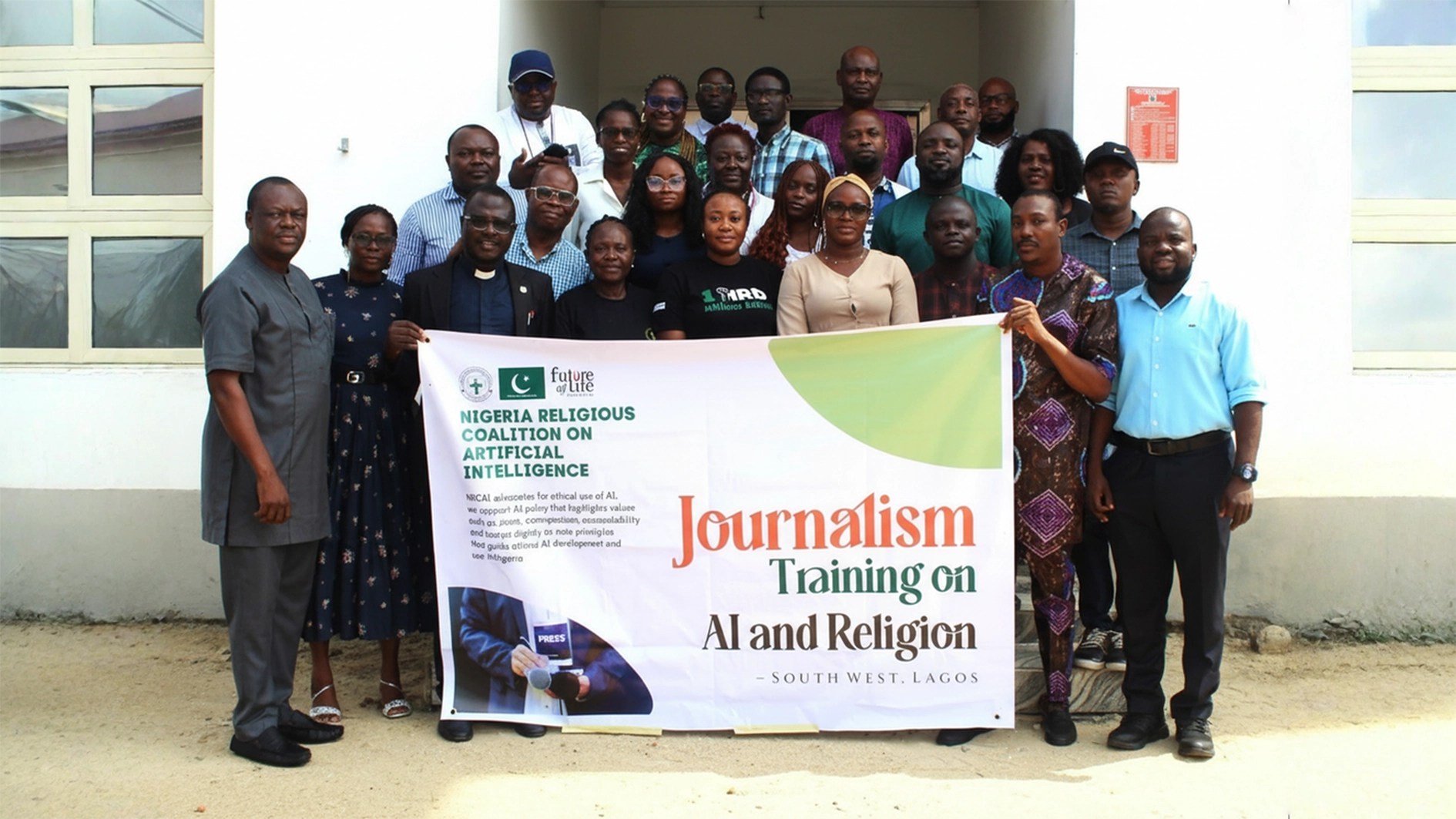
Religious leaders and technology stakeholders have called for stronger ethical standards and regulatory frameworks to guide the growing use of artificial intelligence in Nigeria.
The call was made in Abuja during a symposium organised by the Nigeria Religious Coalition on Artificial Intelligence (NRCAI) where Christian and Islamic scholars met with technology experts to examine the moral, social and governance implications of artificial intelligence in the country.
Participants at the event stressed that while artificial intelligence offers significant opportunities for innovation and development, its deployment must be guided by clear ethical principles to ensure it benefits society and does not create new risks.
Speaking at the gathering, the General Secretary of the Christian Council of Nigeria, Bishop Evans Onyemara, said the increasing influence of artificial intelligence makes it necessary for Nigeria to develop policies and regulations that will guide its use.
Onyemara explained that from the Christian perspective, human beings occupy a unique position in creation and therefore have a responsibility to ensure that technologies such as AI are used in ways that promote the common good.
“Human beings occupy a unique position in creation and must ensure that technologies like artificial intelligence are used in ways that promote the common good,” he said.

According to him, humans were given the responsibility to manage and organise the world, making it important that technological tools are used to support human wellbeing rather than create harm.
The Bishop noted that the country must not allow the rapid expansion of artificial intelligence to occur without proper safeguards.
He added that rather than simply importing technological systems developed elsewhere, Nigeria should also participate in creating artificial intelligence tools that reflect the country’s social and developmental needs.
“Discussions about artificial intelligence should be guided by ethical considerations that are acceptable across religious and cultural divides,” Onyemara noted.
According to him, focusing on ethics allows people of different faiths and beliefs to find common ground on how technology should be used in society.
Also speaking, the Administrative Secretary of the Jama’atu Nasril Islam, Yusuf Ahmed Bida, said in Islamic teachings, the ethical use of technology is anchored on principles collectively known as Al-Akhlaq Al-Islamiyyah, which emphasise moral responsibility and social harmony.
He identified four key foundations that should guide the use of artificial intelligence from an Islamic perspective.
The first, he said, is Taqwa, meaning God-consciousness, which reminds individuals that they are morally accountable for their actions.
The second principle, according to him, is justice and fairness, which requires that technology should not be used in ways that create mistrust or injustice in society.
Bida also highlighted the importance of Amanah, or trustworthiness, explaining that individuals and institutions involved in technology development must act with integrity and responsibility.
The fourth principle, Rahmah, which means compassion, emphasises that technological development should prioritise the wellbeing of people and avoid creating hardship for society.
“Any technological innovation that harms society or undermines social stability cannot be considered ethical,” he said.
Also contributing to the discussion, the Director of the Institute of Church and Society Ibadan, Kolade Fadahunsi, urged Nigerian youths to adopt responsible behaviour in their use of emerging technologies.
“Young people make up the largest group of artificial intelligence and social media users in the country,” Fadahunsi said.
Fadahunsi noted that young people make up the largest group of artificial intelligence and social media users in the country.
Because of this, he said their choices and behaviour online have a significant impact on public discourse and social stability.
He warned that the speed at which information spreads in the digital age means that misuse of technology could easily lead to misinformation and social division.
“Technological advancement must always be accompanied by a strong sense of ethical responsibility,” he added.

