 Follow Us on Google News
 Follow Us on Google Discover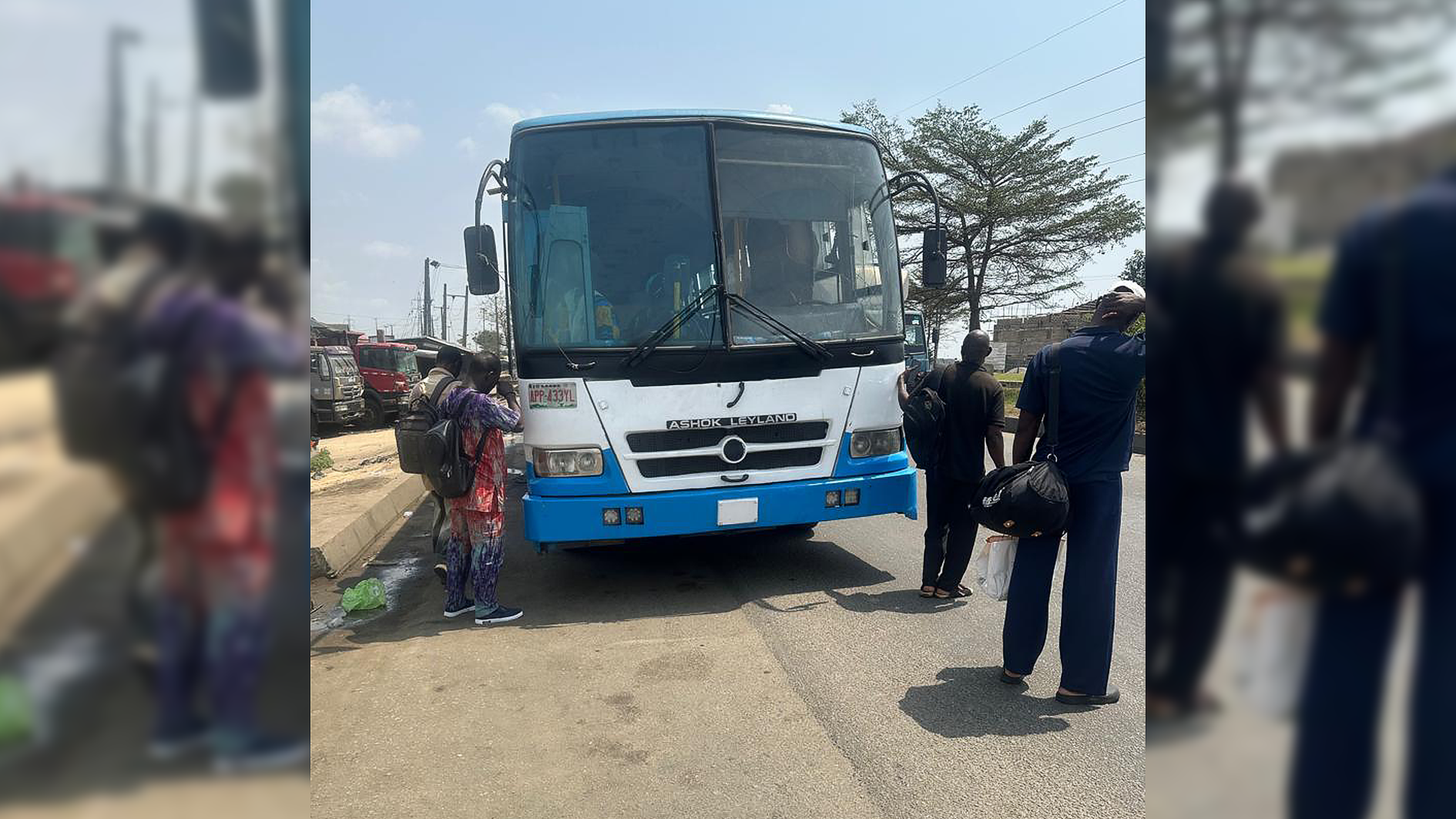
Despite persistent complaints from commuters about overcrowded buses, long waiting times, unreliable service delivery on the Lagos Bus Rapid Transit (BRT) network as well as uncultured attitude of the drivers and attendants at the terminal, the Lagos State government in late February 2026 announced a 13 per cent fare increase on BRT routes. The state government started the implementation on Monday, March 2.
The statement announcing the increment quoted Governor Babajide Sanwo-Olu granting the approval after regulated public transport operators raised concerns about the sustainability of transit services amid mounting economic pressures. According to the state government, the fare adjustment is aimed at cushioning the impact of persistent economic challenges affecting public transport operations. The review is also in line with the previously approved annual fare review mechanism.
The urgency of the review was attributed to persistent inflationary trends, with Nigeria’s inflation rate closing at 15.2 percent in 2025, according to data from the National Bureau of Statistics (NBS). It further stated that Bus Operating Companies (BOCs) have continued to grapple with rising operational costs, including increased expenses for vehicle maintenance, spare parts, and staff salaries, particularly following the implementation of the new national minimum wage.
The statement added that operators are investing in the procurement of new, cleaner, and more fuel-efficient buses to improve passenger comfort and promote environmental sustainability. The government, however, reassured commuters of its commitment to balancing affordability with the need to ensure safe, reliable, and efficient public transportation across the state.
While authorities emphasise that the adjustment aligns with an established annual review mechanism and is intended to sustain public transport operations amid economic pressures, critics argue that the fare rise places additional strain on already stretched commuters without a clear improvement in the quality of service provided.
A resident, Suliat Adebimpe, who sometimes commute around the city using BRT buses, said: “I really do not understand why they are increasing BRT fares. Yes, they now cover more routes, but the buses are very rough and are not even fit to be conveying human beings. Let’s talk about the drivers. They don’t act civilised at all.

“Let me give you an instance: All my years of boarding BRT, I have never heard a bus saying they run out of fuel. On this faithful day, I was rushing to the Island from Ikorodu, our bus stopped at Majidun, the driver said he ran out of fuel. We were so confused, we stood there for hours.
“After the BRT had deducted the full Island fare from my card in Ikorodu, I still had to pay danfo N1000 again to connect Island. No refund, nothing. In fact, if it was danfo that had that same issue, I would have collected my refund without stress, because that is the normal thing to do.
“Then the lady beside me was complaining that same thing happened to her days earlier. She was rushing to work, and the BRT stopped on the road, they said they had issue.
“Now on Tuesday, February 3, we spent more than four hours on the road from Ikorodu to Ketu. When we asked, they said a bus was burning on Mile 12 bridge. When I heard that, my mind told me immediately that it was a BRT bus, when we eventually got there after hours, lo and behold, it was in fact, a Primero BRT bus.
“You see on that particular Mile 12 bridge? Almost every Monday, you will see people going to work stranded on that bridge looking for bus because the BRT they boarded from Ikorodu got to the bridge and developed fault.”
Similarly, Sofiyah Owolabi sharing her experience riding on BRT buses, said: “I remember that day clearly. I had boarded the bus on my way to CDS. The journey was going normally until the bus suddenly stopped midway and all passengers were asked to alight. Just like that, we were left stranded on the road.
“Everyone immediately began chasing other BRT buses. The buses that arrived were already filled, yet people still struggled to squeeze themselves in.
“I tried several times to get on one of the buses, but I could not. Some other passengers and I were also heading towards Oshodi, yet none of us could get in the buses.
“After about thirty to forty minutes, an empty BRT bus that was returning to terminal stopped and carried us. When I eventually arrived at the local council, I was already late for Community Development Service (CDS). I even had to respond to a query explaining the situation.”
Owolabi, however, felt that the increment from N800 to N920 is reasonable given current transport challenges, though it does make the commuting slightly more expensive for her and many others.
On his part, Ebenezer Gbeniga said the increment can easily be described as a sort of extortion by the operators. He maintained that the increment cannot be justified.
“For now, there is absolutely nothing that warrants the 13 per cent fare increase because the buses are in the state of dilapidation. Aside from the fact that the air conditioners are no more functional, it is obvious that the majority of the buses no longer have window glasses, while some of them are experiencing leaking roofs.
“The experience I had a few weeks back was saddening. When we boarded the Oshodi-Abule Egba bus from the Oshodi terminal, the rain suddenly started and within a twinkle of an eye, the floor of the bus was flooded, those who had their bags on the floor were shocked that the bags were soaked. Even from the windows the rain water continued to come in.”
Gbeniga stated that the expectation of many is for all these issues around poor services should have been addressed and the buses put in good condition before any fare increament.
“To make the matter worse is the fact that even the yellow buses are still cheaper than these BRT buses. For now, the small yellow buses sometimes still picking passengers at the rate of between N500 to N600, depending on the time of the day, but the BRT fare has been jerked up to N680.
“For now, there’s no difference between the old Molue and the BRT buses because these buses are already dilapidated. But for the traffic gridlock between Cement bus stop to Oshodi along, many passengers would have abandoned these buses. To me, this is an extortion and it is a wrong move at the wrong time.”
Also speaking, Solomon Adejumoh, maintained that the increment would worsen the economic hardship already faced by the commuters. He noted that the subsidy removal has provided governments more money whether at the state and local council to provide improved services to residents but what they get in return is government looking for additional means to get more money from residents to satisfy their own insatiable luxury living while inflicting pains on the citizens.
“What is Lagos State using its improved revenue as a result of subsidy removal for that would warrant this increment. What are residents benefiting as a result of the pains they are going through because of subsidy removal,” Adejumoh stated.

