 Follow Us on Google News


 Follow Us on Google Discover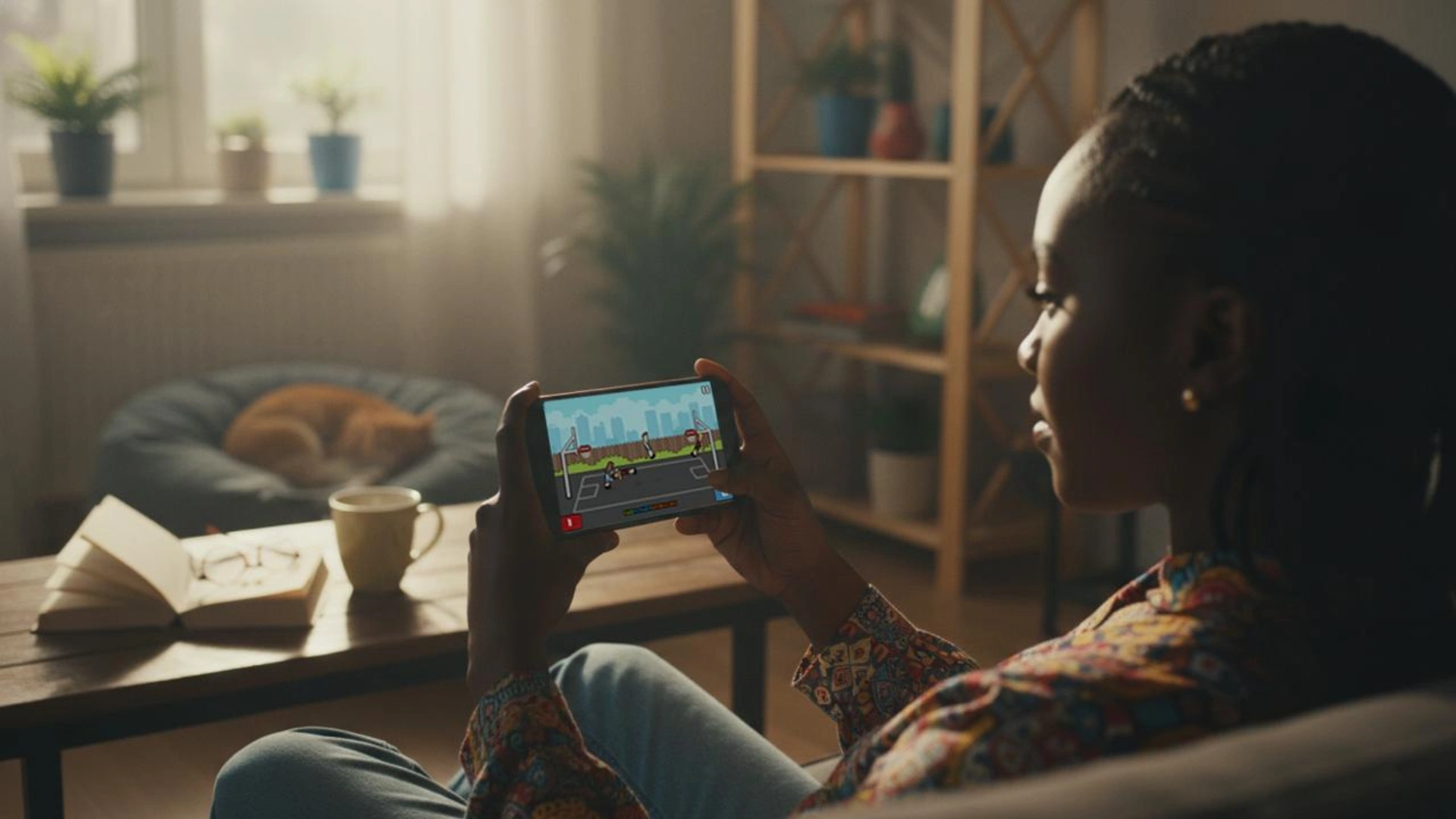
Games once required intention. You set aside time to sit at a desktop computer or console. Playing meant commitment. It meant loading screens, longer sessions, and uninterrupted focus. Games lived at the edge of the day, something you arrived at after work, school, or responsibilities were done.
Mobile phones quietly changed that relationship.
Today, games no longer wait for a scheduled session. They live inside the device people carry everywhere. They appear in short moments, disappear just as easily, and return whenever there is space. Gaming has become something that fits around life rather than interrupting it.
From Dedicated Sessions to Fragmented Play
In Nigeria, where over 90 percent of internet access happens on mobile devices, gaming behaviour has evolved alongside connectivity.
Instead of long, immersive sessions at a desktop, many players now engage in shorter bursts. A few minutes during a commute. A quick round while waiting. A brief distraction between tasks.
Mobile gaming has adapted to this rhythm. It no longer assumes uninterrupted time. It assumes movement, limited data, and shifting attention.

This change did not eliminate deeper games. It simply created a new layer of play that exists alongside daily routines.
The Rise of Instant, Browser-Based Games
As mobile usage expanded, friction became the defining factor.
Large downloads, frequent updates, storage limitations, and account requirements can turn casual play into effort. In contrast, browser-based platforms reduce these barriers. Games open instantly, require no installation, and can be closed without consequence.
Platforms such as y8.com illustrate this shift clearly. By expanding its catalogue of mobile games that run directly in a phone browser, the platform adapted to how people actually use their devices.
No download. No waiting. Just play.
In markets where entry-level smartphones are common and storage space matters, this accessibility becomes more than convenience. It becomes a necessity.
Designed for Short, Repeatable Sessions
Mobile-first gaming has influenced design itself.
Many titles now emphasise:
- Simple controls
- Immediate gameplay
- Fast loading
- Short replay loops
Basket Random reflects this structure. It launches quickly in a browser and delivers chaotic, repeatable rounds that fit naturally into short breaks. There is no heavy onboarding process and no pressure to invest hours at a time. The experience adapts to fragmented attention rather than competing with it.
This kind of design aligns with the broader shift in mobile behaviour. Games are no longer isolated events. They are flexible companions throughout the day.
Accessibility and Its Trade-Offs
The transformation of games into constant companions comes with complexity.
The same accessibility that makes gaming easier also increases exposure. Short sessions can accumulate. Quick rounds can stretch longer than intended. Reward loops and competitive mechanics can blur the line between casual play and habitual behaviour.
Mobile gaming is not simply lighter gaming. It is differently structured gaming.
Understanding that difference matters.
Social Play in the Mobile Era
Mobile games rarely stay private.
Links are shared. Scores are compared. Funny moments are replayed. Short browser games are easy to circulate in messaging apps and group chats, especially in socially connected digital cultures like Nigeria’s.
This shareability reinforces the role of games as daily social touchpoints rather than isolated experiences.
A quick match can spark conversation. A surprising outcome can travel through multiple chats within minutes.
A Platform That Moved With the Shift
The transformation of gaming did not happen because platforms announced a new era. It happened because user behaviour changed.
Y8’s evolution from a desktop-focused Flash portal to a mobile-accessible HTML5 browser platform mirrors that broader behavioural shift. By maintaining instant-play accessibility and expanding its mobile catalogue, the platform aligned itself with the realities of mobile-first internet usage.
It did not attempt to replicate console gaming on smaller screens. It adapted to the rhythm of everyday devices.
Games as Everyday Presence
Gaming is no longer something that waits for a free evening.
It exists between tasks, inside pauses, during commutes, and in small gaps throughout the day. It is lighter, faster, more flexible, and more integrated into daily life than ever before.
Mobile phones did not just change where games are played.
They changed how often, how long, and why they are played.
Games no longer wait to be chosen.
They travel with us.

