 Follow Us on Google News


 Follow Us on Google Discover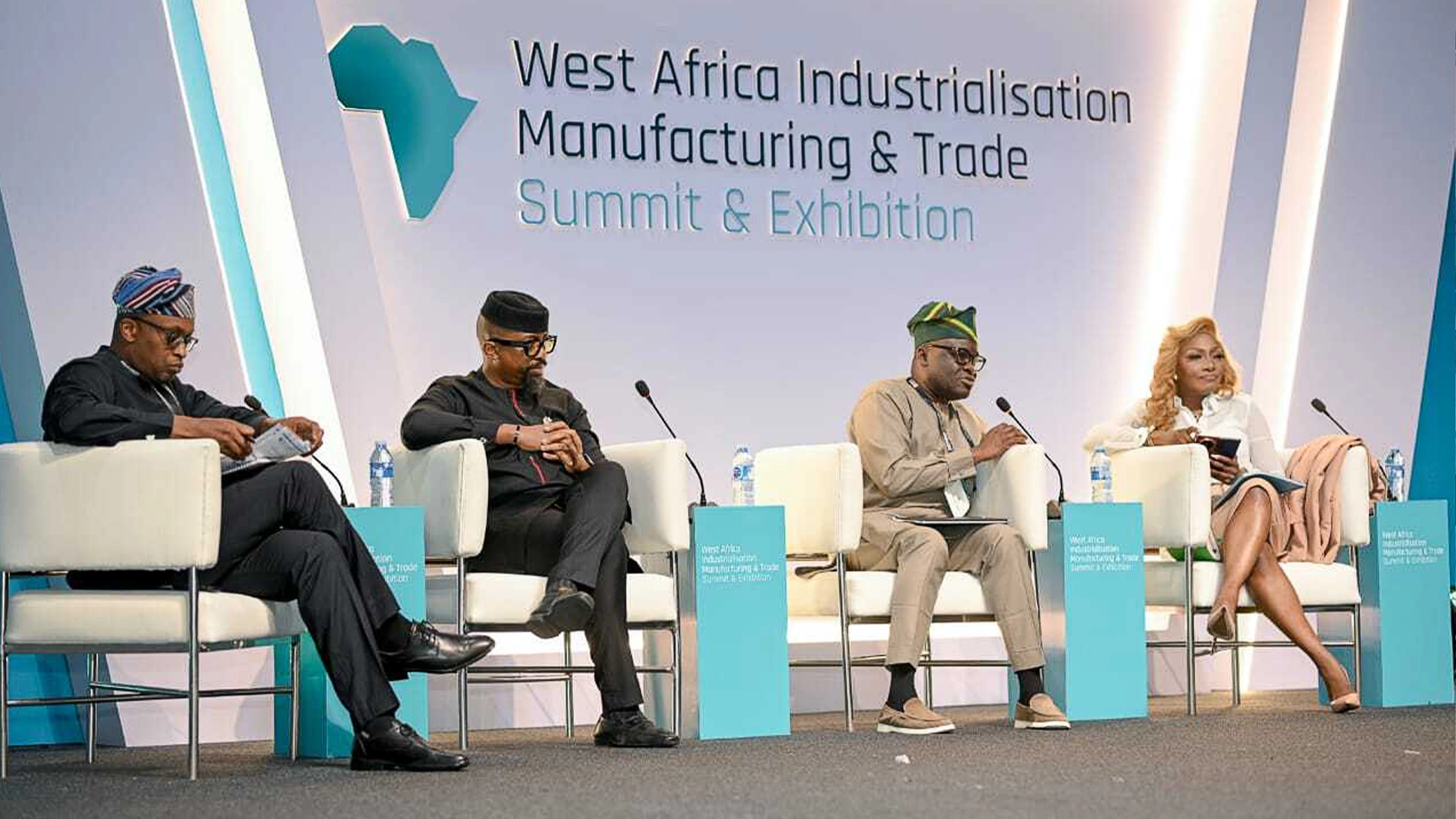
Industry leaders and policymakers have warned that unreliable and costly energy supply is undermining West Africa‘s drive toward industrialisation, with manufacturers across the region forced to bear significant operational costs that weaken competitiveness.
This concern dominated discussions at the West Africa Industrialisation, Manufacturing and Trade (IMT) Summit 2026, where stakeholders examined the major drivers of industrial competitiveness in the region and highlighted energy reliability as a central factor in sustaining manufacturing growth.
Delivering the keynote address, John Uwajumogu, Special Adviser to President Bola Ahmed Tinubu on Industry, Trade and Investment, said many manufacturers in West Africa are burdened by expenses that would not exist in a well-functioning industrial ecosystem.
According to him, factories are often compelled to generate their own electricity and build parallel infrastructure to sustain operations, a situation that erodes investment value and forces many businesses to operate far below their installed capacity.
To address the challenge, Uwajumogu outlined the Federal Government’s commitment to building what he described as an “architecture of scale” under the newly introduced National Industrial Policy (NIP).
The framework prioritises the development of economic clusters aimed at reducing production costs and strengthening industrial capacity across the country.

He said the policy is anchored on a three-pronged strategy that includes demand-side industrialisation, localisation of supply chains and accountable industrial financing.
The magnitude of the energy burden on manufacturers was further highlighted by Ajibola Akindele, Country President of Schneider Electric West Africa, who noted that energy costs account for between 30 and 40 per cent of operational expenses for many firms in the region.
For companies that rely on both grid electricity and diesel or gas generators to maintain production, he said the additional cost premium significantly weakens competitiveness and profit margins.
Speakers at the summit also pointed to deeper structural challenges within the regional power sector. Mohammed Mijindadi, President and Managing Director of GE Vernova for Anglo-West and Francophone Africa, said the problem often lies not in generation capacity but in inefficiencies along the electricity value chain.
He explained that while generation potential exists in many parts of the region, weak transmission and distribution systems prevent electricity from reaching consumers efficiently.
As a result, less than half of West Africa’s population currently enjoys reliable electricity access, creating a significant barrier to industrial development.
Similarly, Chantelle Abdul, Group Managing Director of Mojec International, said only about one-third of transmitted electricity ultimately reaches end users, highlighting major losses within the power system.
Abdul proposed the adoption of Energy-as-a-Service models that would allow manufacturers to pay for reliable electricity as a managed service rather than investing heavily in private power infrastructure.
She also noted that electrifying about 300 million Africans by 2030 represents a multi-billion-dollar opportunity across the power value chain, provided challenges relating to metering and revenue collection are addressed.

