 Follow Us on Google News


 Follow Us on Google Discover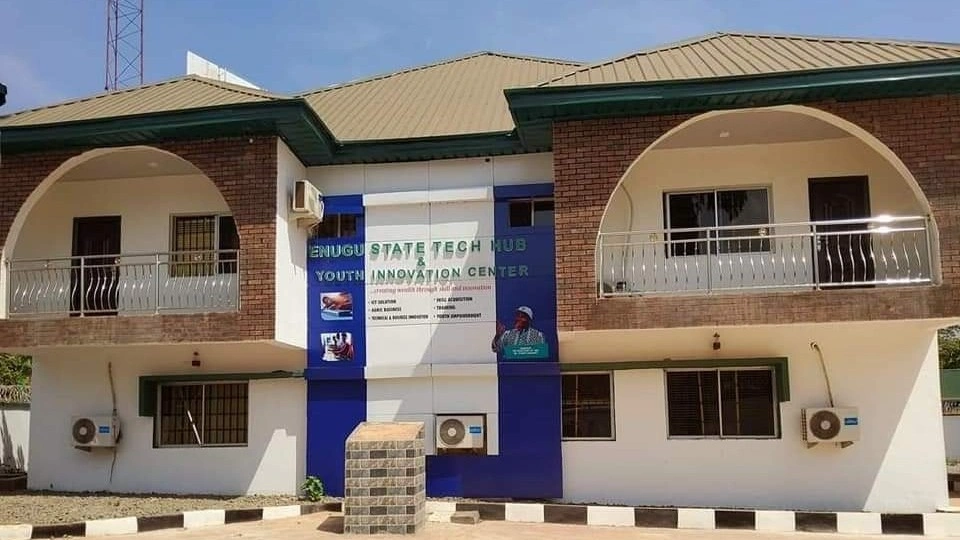
In a rapidly digitising global economy, the countries that dominate are those that build structured ecosystems where ideas are transformed into scalable solutions. For Nigeria, establishing strong technology and innovation hubs is no longer aspirational but strategic.
At its core, a technology and innovation hub serves as a catalyst for economic diversification. For decades, Nigeria’s fiscal stability has been closely tied to crude oil revenues, leaving the economy vulnerable to global price volatility. By contrast, technology-driven sectors such as fintech, edtech, agritech and healthtech offer more sustainable and scalable growth pathways.
Beyond diversification, analysts argue that structured innovation ecosystems enable Nigeria to leverage its demographic strength. With one of the largest youth populations globally and an unemployment rate of about 33 per cent, the country’s vast but underutilised human capital must be channelled into productive ventures and sustainable jobs. Data from the National Bureau of Statistics show that the ICT sector contributes about 15.51 per cent to Nigeria’s GDP, underscoring the growing centrality of the digital economy to national growth.
Nigeria’s rising global profile reinforces this opportunity. In the StartupBlink Global Startup Ecosystem Index, the country climbed to 63rd position worldwide, ranking third in Africa behind South Africa and Kenya, while maintaining its lead in West Africa. Lagos emerged as Africa’s highest-ranked startup city at 122nd globally, overtaking Nairobi and recording strong placements in e-commerce, transportation and education technology.
The growth has translated into capital inflows. In 2021 alone, Nigerian startups secured more than $1 billion in venture funding, with Lagos accounting for the bulk.
Against this backdrop, the Governor of Enugu State, Ifeanyi Ugwuanyi, has drawn commendation for setting up two technology hubs, one located in Enugu Urban, Independence Layout, Enugu (Enugu East Senatorial Zone) and another in Obollo Afor (Enugu North Senatorial Zone), with projections to extend the initiative to Enugu West Senatorial District. The development stemmed from a proposal put forward by Walter Oluchukwu Ugwueze, Technical Assistant to the Enugu State Commissioner for Science and Technology, Obi Kama.

Beyond their physical infrastructure, the hubs are envisioned as integrated innovation clusters designed to provide mentorship, incubation support, digital skills training and access to seed funding for startups across the state. By decentralising access to technology resources beyond the traditional commercial centres, the initiative seeks to democratise opportunity and nurture grassroots innovation. This approach positions Enugu not merely as a consumer of digital solutions but as a producer of homegrown technologies capable of addressing local challenges.
Already, the two hubs are fast emerging as a kind of magnet for young people in the state, drawing aspiring developers, designers and tech entrepreneurs eager to refine their ideas and acquire market-relevant skills. With access to high-speed internet, shared workspaces, mentorship programmes and hands-on training sessions, the centres are nurturing a culture of experimentation and collaboration. Young innovators who once lacked structure and support now have an enabling environment to prototype solutions, test business models and connect with potential investors and partners.
In the process, the hubs are not only building technical capacity but also fostering confidence, networks and entrepreneurial discipline among participants.
Speaking at the 2023 South East/South South Tech Stakeholders’ Summit where he represented his principal, Ugwueze described the gathering as a strategic convergence aimed at shaping the region’s IT future. He noted that Enugu’s hosting of the summit was symbolic, given its historical reputation as the intellectual and administrative capital of the old Eastern Region. According to him, the state is determined to reposition itself as a nucleus for digital innovation, artificial intelligence and technology-driven economic growth across the South-East and South-South.
Ugwueze revealed that the summit aligned with broader plans to establish additional tech facilities across the state, deepening access to digital infrastructure beyond the current locations. He appealed for stronger collaboration from public institutions, private investors and development partners, stressing that the gains from the existing hubs are already becoming evident, particularly in the areas of digital skills acquisition, startup incubation and youth empowerment.
According to him, the centres have provided structured training programmes in coding, product development, digital marketing and data analytics, equipping young people with competencies that are increasingly in demand within the global knowledge economy. Beyond technical instruction, the hubs also serve as collaborative workspaces where innovators can refine their ideas, receive mentorship and connect with industry professionals. This ecosystem approach, he noted, reduces the isolation many young entrepreneurs face and accelerates the journey from concept to market-ready solution.
He further stressed the need for deeper regional collaboration, arguing that coordinated innovation efforts could establish the largest technology cluster in Nigeria, overtaking Lagos. He highlighted Enugu’s strategic advantages, including its security architecture, infrastructure and international airport connectivity, inviting investors and ecosystem players to see the state as a long-term innovation partner.
“This summit is a convergence of leaders who must think beyond individual gains toward collective regional prosperity. We must share best practices, support one another’s ventures, and deliberately build a collaborative AI-powered ecosystem,” he said..”If we harness our Tech Hubs strategically, empower our youth with advanced AI capabilities, and strengthen regional cooperation, the South-East and South-South can emerge as a formidable technology-driven economic powerhouse”.
Experts say that by enabling participants to secure remote work opportunities, launch startups and provide digital services to clients within and outside Nigeria, the hub could potentially reduce the unemployment rate in the state by 15 to 20 per cent over the medium term.
In an interview with journalists on the sidelines of the summit, Ugwueze urged stakeholders to rally behind the sweeping transformation by the Governor in the ICT sector. He stressed that the success of the state’s digital agenda would depend not only on government commitment but also on the active participation of private investors, development partners, academic institutions and industry leaders.
According to him, the administration’s ongoing push to reposition the ICT ecosystem reflects a deliberate strategy to modernise the economy, expand opportunities for young people and attract technology-focused investments. He noted that policy reforms, infrastructure upgrades and establishment of more innovation hubs are laying the groundwork for a more competitive and knowledge-based economy.

Industry experts have also weighed in on the matter. To the Managing Director, Digital Dreams ICT Hub, Enugu, Chukwudi Edoga, the state’s deliberate investment in technology infrastructure signals a forward-thinking shift from consumption to creation.
He noted that while Nigeria’s digital economy continues to expand, subnational governments must take ownership of building ecosystems that can compete nationally and globally. According to him, the establishment of hubs across senatorial zones reflects an understanding that innovation thrives where there is access, structure and sustained policy backing.
Also, the CEO of DanObj Limited, Jonathan Agufenwa, described the initiative as timely and economically strategic, particularly at a period when digital skills are becoming a global currency. He stressed that beyond training, the real value of the hubs lies in their capacity to nurture problem-solvers who can design scalable solutions for sectors such as agriculture, healthcare, logistics and education.
Agufenwa pointed out that with structured incubation, access to seed funding and stronger private-sector collaboration, Enugu could produce startups capable of attracting both local and international investment.
While commending Ugwueze for his yeoman’s efforts in proposing the hubs, he urged stakeholders to sustain the momentum through policy consistency, improved broadband penetration and stronger industry-academia linkages to ensure that the state’s innovation drive translates into measurable economic growth and long-term job creation.
In the final analysis, the Enugu Tech Hub represent far more than brick-and-mortar projects; they are strategic instruments for economic renewal. By equipping young people with cutting-edge digital skills, fostering startup incubation and expanding access to global remote work opportunities, the centres are directly addressing unemployment while stimulating enterprise creation. Their multiplier effect through job creation, increased digital exports and the attraction of private investment positions Enugu to compete within Nigeria’s rapidly evolving innovation landscape.
At the heart of this momentum is the intervention and advocacy of Walter Oluchukwu Ugwueze, whose proposal and sustained engagement have helped translate policy ambition into actionable programmes. Championing collaboration, regional integration and AI-driven innovation, he has framed the hubs not as isolated projects but as foundational pillars of a broader knowledge economy strategy. His push for stakeholder alignment underscores a recognition that sustainable transformation requires shared ownership and coordinated execution.
The ICT intervention under the administration of Ifeanyi Ugwuanyi signals a decisive shift toward a future anchored on innovation, talent and technology.

