 Follow Us on Google News


 Follow Us on Google Discover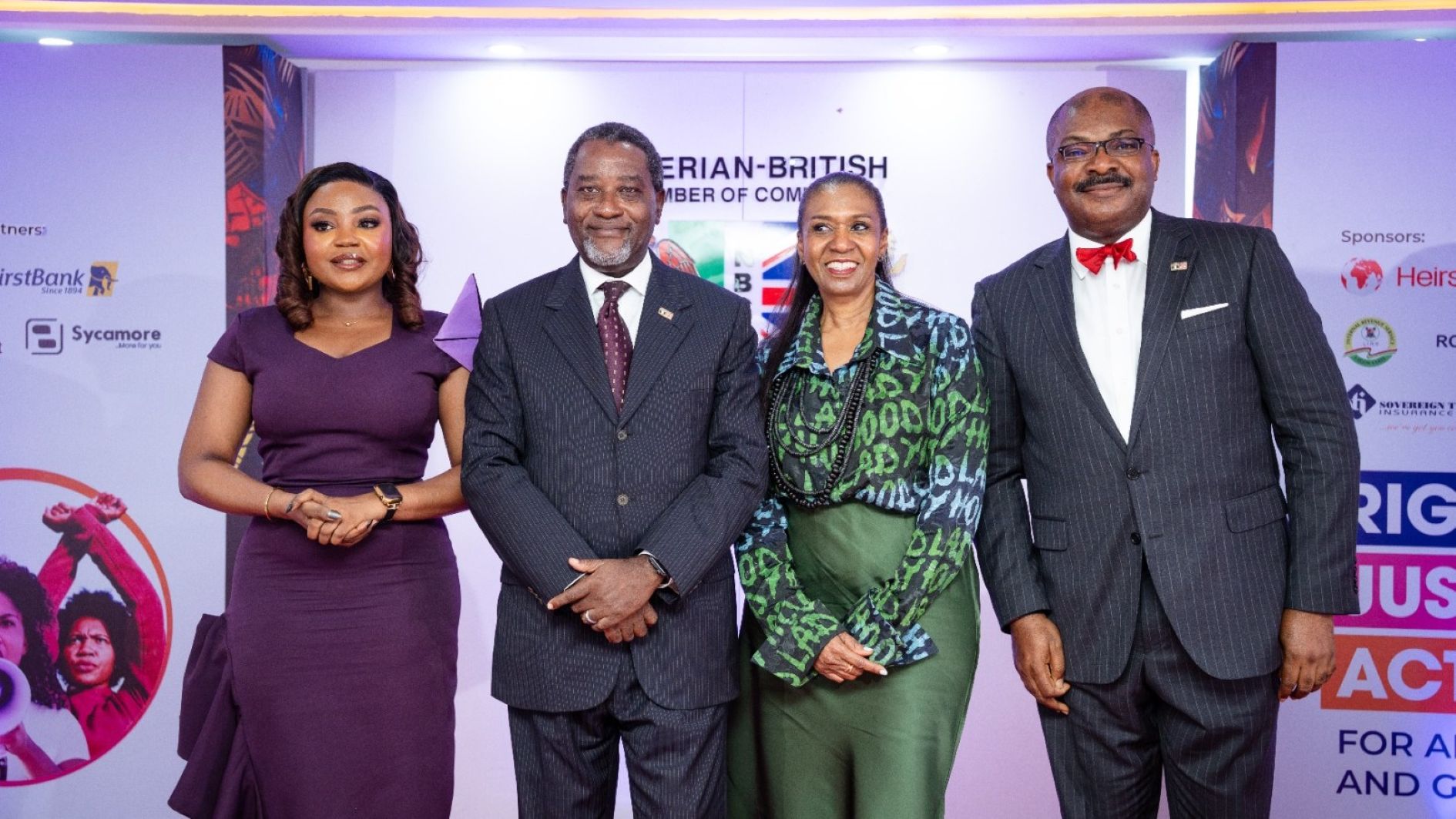
For Nigeria to achieve gender parity, it must constitute a deliberate legal and institutional framework, including the Revised National Gender Policy, enabling equal inheritance laws and land access rights.
Speaking on ‘Rights. Justice. Action. For All Women and Girls’, Founder and Executive Vice Chairman, SecureID Group, Kofo Akinkugbe, at this year’s International Women’s Day, celebrated by the Nigerian-British Chamber of Commerce (NBCC), said that in achieving gender parity, nothing will change if laws and policies are not enacted to support it.
She cited Rwanda, which broke the jinx, where the country embedded gender parity directly into its Constitution, mandating that at least 30 per cent of lawmakers in the lower house be women.
Talking about transformative change in policy making, she said Rwanda’s 2024 elections exceeded the mandate with women taking 63.8 per cent of seats in the Chamber of Deputies.
“We are not here to ask for ‘handouts’ or ‘entitlements’ for women. Nothing will change if laws and policies are not enacted to support it. While laws alone cannot erase every systemic bias, they determine who is invited to sit at the decision-making table and whose voice carries the weight of authority. We should look at our neighbours to see what is possible when policy moves from rhetoric to action,” she said.
In a fireside chat, Akinkugbe urged women to make economically viable decisions, irrespective of the risks involved.

Noting that the real shift was to have a legacy mindset, she said it drives one to make good decisions that are logical.
Acknowledging that women are blessed with so much strength, Akinkugbe called for collective responsibility to create impact.
According to her, the equality should be broader and spread to those in rural areas.
She urged young women in their plans to attain leadership level, never to give up, urging them that they could reach their peak with the potential within them.
Sharing her experience on how her leadership role has played a part in the lives of women in her organisation, she said: “It was deliberate. It is a KPI given to me by the board.
On the senior management level, we have a ratio of 60 per cent male to 40 per cent female, while on the bottom level, it is 68 per cent male to 38 per cent female. It is a work in progress and we want to see this grow.”
In his welcome address, President and Chairman of Council, NBCC, Abimbola Olashore, noted that the theme speaks directly to the urgency of the nation’s time, reminding that conversations and advocacy alone are not enough, but progress embedded with deliberate action.
The NBCC boss said that with the Chamber committed to promoting bilateral trade, sustainable enterprise and inclusive economic growth, it recognised that no economy could truly thrive without the full participation of women.
According to him, empowering women is not a social gesture; it is an economic imperative. “When women succeed, businesses grow. When businesses grow, nations prosper.
“International Women’s Day is both a celebration and a call to responsibility. It is a celebration of strength, of the extraordinary contributions of women across business, governance, entrepreneurship, technology, and community leadership. But more importantly, it is a call to accelerate equality, remove systemic barriers, and create equitable opportunities for all women and girls.

