 Follow Us on Google News


 Follow Us on Google Discover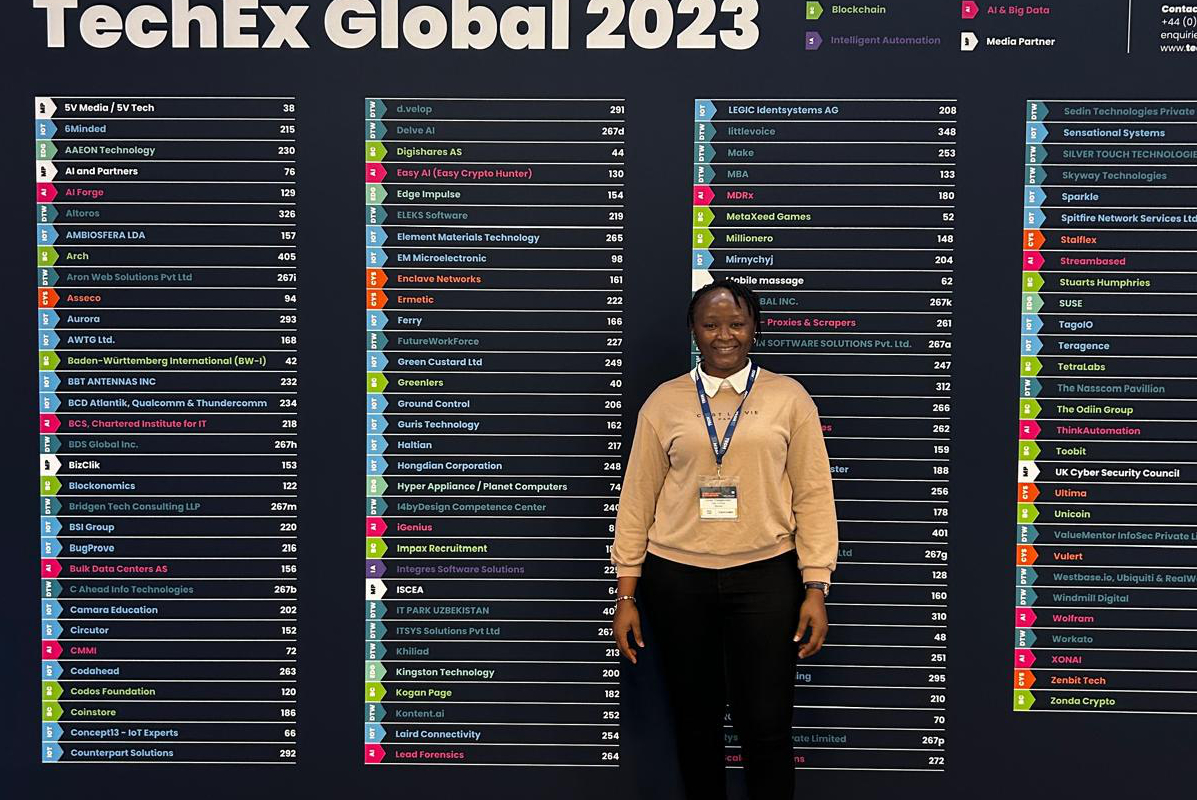
The cybersecurity industry speaks constantly of a talent shortage.
But what if the deeper problem is misalignment?
Recent 2024–2025 workforce studies estimate the global cybersecurity gap at roughly 4.7 to 4.8 million unfilled roles, against a workforce of about 5.4 to 5.5 million professionals. Alternative modelling by Boston Consulting Group places the shortfall closer to 2.8 million, depending on demand assumptions. The World Economic Forum’s Global Cybersecurity Outlook 2025 reinforces the strain: nearly two-thirds of organisations identify skills shortages as a material risk, and only around 14 percent believe they have the capabilities required to meet their security objectives.
In Africa, the numbers are proportionally acute. Fewer than 300,000 cybersecurity professionals currently serve a rapidly digitising continent, leaving an estimated 68,000 roles unfilled, approximately 23 percent of required capacity.
The figures are alarming. The instinctive response is simple. Train more people.
Governments fund bootcamps. Universities expand cyber programmes. Employers accelerate hiring pipelines. The logic is linear: teach technical skills, produce professionals, close the gap.
Yet attrition persists. Many entrants struggle to find traction or leave within a few years. The issue may not be volume. It may be fit.
Cybersecurity is not a single occupation. It is a network of distinct cognitive demands. Threat intelligence requires geopolitical awareness and pattern recognition. Digital forensics demands evidentiary precision. Governance and risk call for regulatory literacy and structured judgement. Security architecture depends on systems thinking. Culture and awareness programmes rely on behavioural insight.

Treating this landscape as a uniform technical ladder obscures how differently these roles operate. When career advice focuses only on certifications and coding, it ignores how individuals process information and where they naturally excel.
Research into AI-supported career advisory systems offers a different lens. Structured models can analyse interests, learning preferences and problem-solving styles, then match individuals to pathways that align with those traits. This is not automation deciding careers. It is decision support illuminating patterns that traditional guidance often misses.
Within cybersecurity, this thinking is gaining ground. Linda Oraegbunam, a data scientist working at the intersection of AI, cybersecurity and workforce development, has developed a career-mapping approach designed to align individuals with specific cyber pathways before technical training begins. Her contention is straightforward: the skills gap is exacerbated when people are funnelled into roles that do not match how they think.
The initiative currently supports African scholarship students, where formal career guidance structures are often limited. The next phase will make the application accessible to university and A-Level students across the UK and Europe, introducing alignment earlier, before academic choices become fixed.
The implication is uncomfortable. The shortage narrative may be masking a design problem.
Consider the consequences of misalignment. A psychology graduate retrains in software engineering while behavioural threat teams remain underdeveloped. A law graduate pursues coding roles instead of governance. A communications specialist is steered away from security culture work toward technical paths that do not fit. When alignment is weak, frustration grows and retention falls.
Cybersecurity does not only need more professionals. It needs better placement of the ones it already attracts.
For Nigeria, this distinction matters.
The country is expanding digital finance, e-government services, telecommunications infrastructure and AI experimentation at speed. Cyber resilience will underpin that growth. But scaling training without improving career direction risks replicating the same mismatch cycle observed globally.
If European institutions are embedding structured alignment into their talent pipelines, Nigeria should borrow a leaf. Universities, polytechnics and scholarship programmes must integrate career mapping alongside technical education. Not as a luxury, but as infrastructure.
The global conversation may continue to fixate on numbers.
Nigeria’s opportunity is to focus on precision.
Because sustainable cyber capability is not built by producing more certificates. It is built by placing the right minds in the right roles early enough for them to compound.

