 Follow Us on Google News
 Follow Us on Google Discover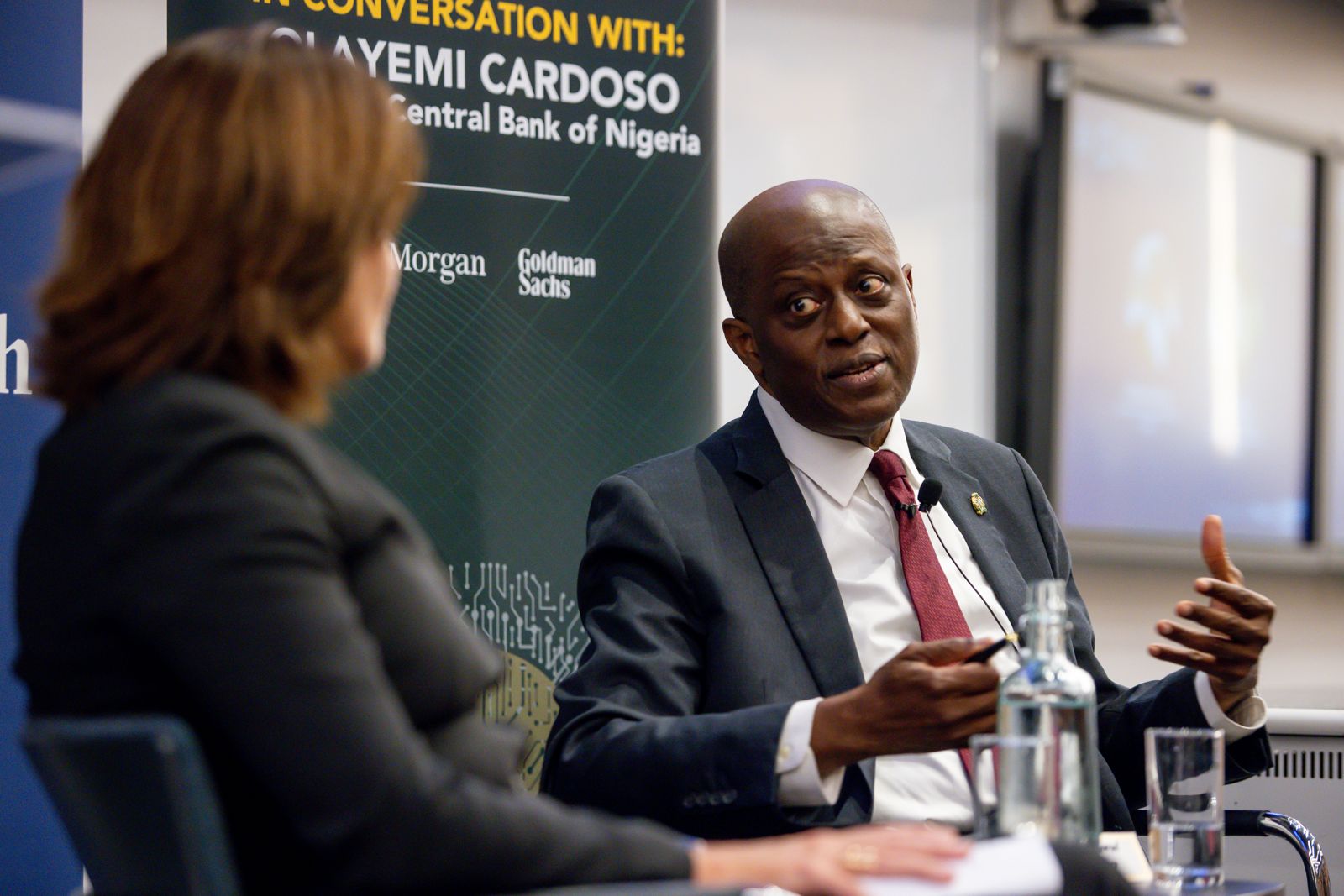
Nigeria’s current account surplus fell by 26 per cent year-on-year (YoY) to $14.04 billion in 2025, down from $19.03 billion in 2024, the Central Bank of Nigeria (CBN) has disclosed in its 2025 Balance of Payments (BoP) report.
The decline was largely driven by a fall in crude oil exports, increased crude oil imports by Dangote Refinery, higher non-oil imports and a rise in net out-payments for services.
According to the CBN, crude oil exports dropped 14.41 per cent to $31.54 billion from $36.85 billion in 2024, while Dangote Refinery imported $3.74 billion worth of crude oil. Non-oil imports increased by 13.6 per cent to $29.24 billion, and net out-payments for services rose 9.13 per cent to $14.58 billion.
Despite the overall decline, the goods account, the main component of the current account, remained in surplus, posting $14.51 billion in 2025, from $13.17 billion in 2024.
The financial account, however, recorded a net borrowing of $1.69 billion in 2025, a reversal from a net lending of $9.65 billion in 2024.
CBN noted that the increase in the services account deficit reflected higher net payments for transport, travel, insurance and government services.
Meanwhile, the primary income account deficit surged 60.9 per cent to $9.09 billion, largely due to higher dividend and interest payments to non-resident investors.
The secondary income account fell slightly to $23.20 billion from $24.88 billion in 2024, as both Official Development Assistance (ODA) and personal transfers decreased. However, workers’ remittances remained a key source of inflow, supporting the country’s foreign exchange reserves.
The report highlights ongoing pressures on Nigeria’s external accounts despite continued resilience in the goods sector, underscoring the impact of rising imports and service outflows on the nation’s current account balance.
Meanwhile, Nigeria’s banking sector is positioning itself as a major driver of the country’s ambition to grow into a $1 trillion economy, following the successful completion of a major recapitalisation exercise that strengthened the financial system.
Speaking at the inaugural Africa Capital Forum in London on Tuesday, Governor of the Central Bank of Nigeria (CBN), Olayemi Cardoso, said the recapitalisation transformed the country’s banking landscape and enhanced its capacity to mobilise capital for economic growth.
According to a statement yesterday, Cardoso said, “We are very proud of what the Nigerian banks have been able to accomplish. They play a dominant role on the African continent and in the United Kingdom. They are our ambassadors.”
The CBN governor disclosed that 32 banks met the new capital requirements, describing the outcome as a turning point for the financial system.
Cardoso made this known at the Africa Capital Forum held in London, on the sidelines of President Bola Tinubu’s state visit to the United Kingdom. He said the level of foreign participation signals renewed confidence in Nigeria’s financial system and broader economy.
He assured investors that the CBN would continue to prioritise stability, strengthen communication and reinforce institutional frameworks to avoid past policy inconsistencies.
Cardoso also highlighted a rise in Diaspora remittances, noting that the inflows were helping to diversify Nigeria’s foreign exchange reserves and make them more resilient to global volatility.
“Our focus going forward is to protect the hard-earned stability we have accomplished so investors and stakeholders can plan with confidence,” he said.
He stressed the importance of collaboration between monetary and fiscal authorities, adding that closer coordination would enhance the effectiveness of ongoing reforms and support sustainable growth.

