 Follow Us on Google News


 Follow Us on Google Discover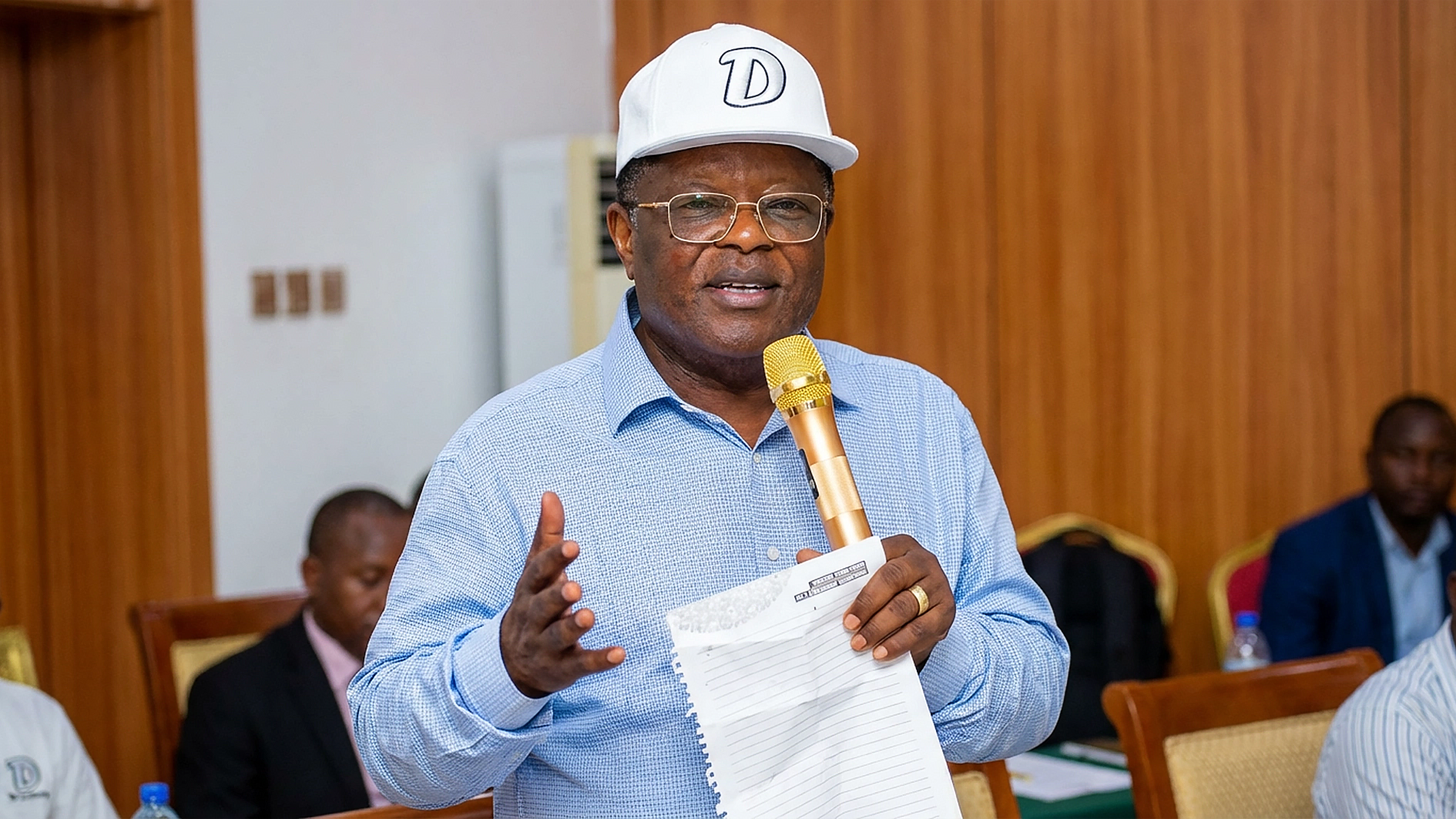
Says concrete roads to replace ‘failed asphalt’, urges citizens to protect infrastructure
The Minister of Works, David Umahi, has declared that Nigeria is stepping into a new era of durable road construction.He made the declaration during an extensive inspection of Federal Government projects in Rivers State—warning that public negligence and misuse could undermine massive investments.
Umahi, who toured the Eleme–Onne axis of the East-West Road, the Bodo–Bonny Road, and the Port Harcourt–Aba highway, on Saturday, said the country is deliberately shifting from asphalt to concrete technology to ensure longevity and value for money.
According to him, “This is a new era. Concrete roads are the answer to the nature of our soil. Asphalt roads cannot last 10 years in most cases.”
In a strong appeal, Umahi warned against the growing practice of parking heavy-duty trucks on completed road sections, describing it as a major threat to infrastructure durability.
“No road is designed to carry static loads,” he cautioned. “When trucks park on these roads, they destroy them. And if destroyed, it will not be easy for government to rebuild.”

He urged Nigerians to take ownership of public assets, stressing that safeguarding roads is a collective responsibility.
“The minister cannot be everywhere. We must protect our own,” he added.
At the 15-kilometre Eleme–Onne section, Umahi commended contractor Reynolds Construction Company for maintaining high standards despite funding disruptions.
He disclosed that the project, valued at over ₦230 billion, experienced delays after funding from the Nigerian National Petroleum Company (NNPC) was halted in August 2025. However, intervention by President Bola Tinubu restored financing and accelerated work.
Umahi explained that the seemingly slow pace is due to the technical nature of the job, which involves deep excavation, stone reinforcement, and concrete layering.
He said completion of the carriageway may extend slightly beyond May to June or July to accommodate added features such as solar lighting, landscaping, and retaining structures.
On the Bodo–Bonny Road, the minister described the project as a landmark achievement, noting that vehicles can now travel directly from the mainland to Bonny Island for the first time
Additional works, including solar streetlights and tree planting, have been approved, while plans are underway to dualise connecting routes and introduce tolling for maintenance.
Inspecting the Port Harcourt–Aba Road, Umahi blamed years of delay on poor funding and weak execution by contractor China Civil Engineering Construction Corporation.
He noted that only nine kilometres had been completed in eight years—and that section had already deteriorated due to asphalt failure.
The project has now been redesigned with concrete, achieving over 95 percent completion, with a target for commissioning by May 2026.
Umahi also highlighted the growing role of indigenous firms, singling out Julius Berger Road Builders for exceptional performance.
According to him, local contractors are demonstrating capacity and commitment, in some cases undertaking projects without upfront payment.
The minister stressed that road infrastructure is central to Nigeria’s economic transformation, noting that poor roads hinder trade and productivity.
“Even when other sectors are working, without good roads, development is limited,” he said.
He called on the media and the public to support the government’s efforts by showcasing progress and exposing acts that could damage infrastructure.
As Nigeria invests heavily in road development nationwide, Umahi’s message remains clear: the success of this new construction era will depend not only on government policy—but on whether citizens choose to protect or sabotage it.

