 Follow Us on Google News
 Follow Us on Google Discover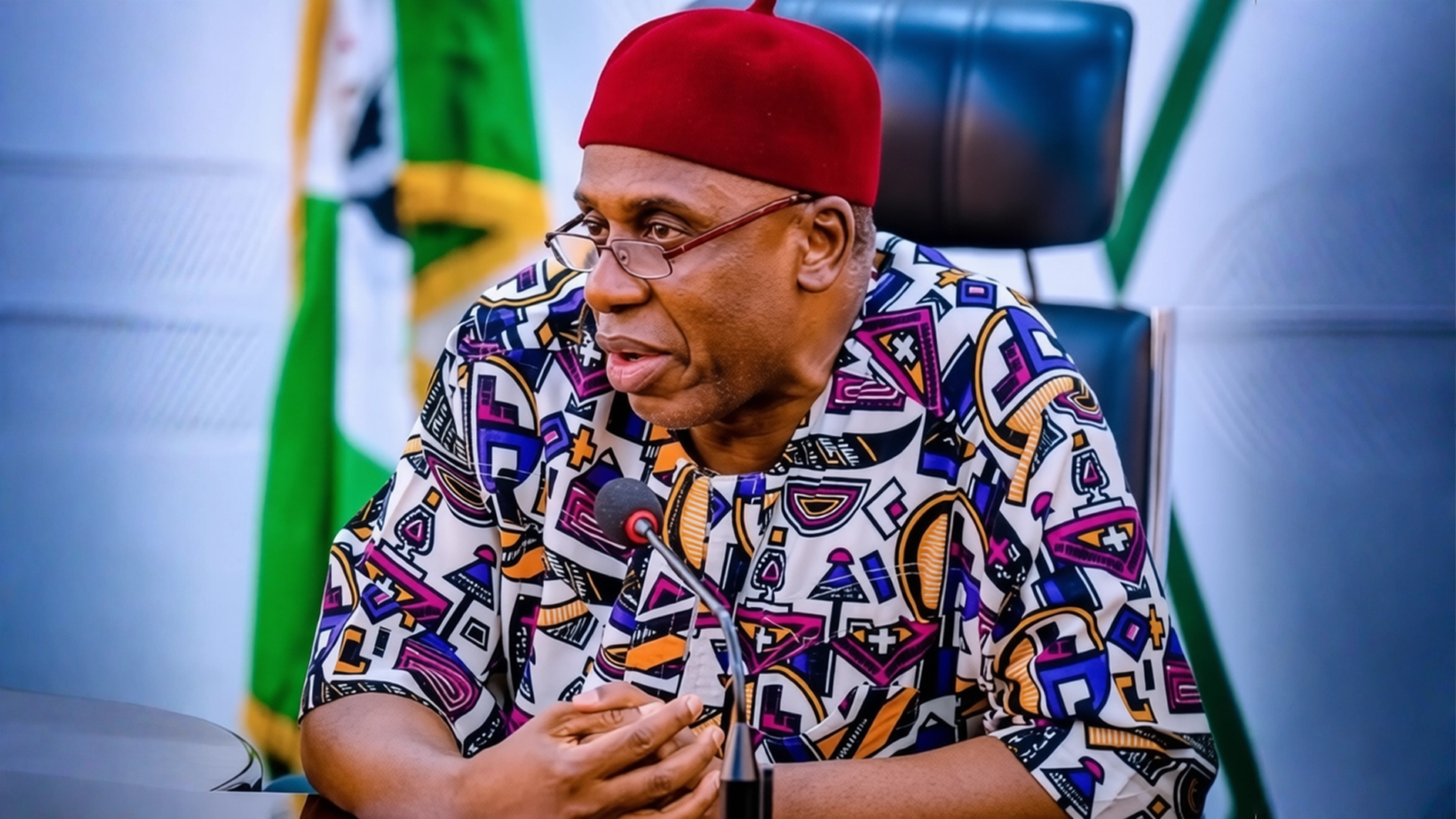
There was a surge of political messaging across Nigeria’s digital space on Wednesday, as thousands of users converged on X, formerly Twitter, to amplify calls for former Transport Minister, Rotimi Amaechi, to emerge as the African Democratic Congress, ADC, presidential candidate for 2027.
The hashtags gained significant traction across multiple time blocks, with coordinated posting patterns, influencer amplification, and sustained engagement pushing the conversation into Nigeria’s top trending topics for several hours.
Users consistently framed Amaechi as a tested administrator, referencing his tenure as Rivers State governor and later as minister of transportation, where they credited him with rail modernisation projects and institutional reforms.
A notable pattern in the trend was the use of before and after narratives tied to infrastructure, particularly rail corridors such as Abuja to Kaduna and Lagos to Ibadan, which supporters described as evidence of execution capacity.
Visual content, including project photos, archived speeches, and policy clips, was widely circulated to reinforce the #AmaechiBuilt messaging, creating a data driven advocacy tone rather than purely emotional mobilisation.
Digital campaign clusters also emerged, with diaspora Nigerians joining the conversation, amplifying reach beyond domestic timelines.
Posts adopted comparative framing, arguing that Nigeria’s next leadership phase requires administrative depth rather than populist appeal, a sentiment that repeatedly surfaced under #NigeriaDecides.
One widely shared post read, “Quiet results, visible impact, that is leadership Nigeria can measure, competence must lead the conversation in 2027.”
Another user wrote, “From Port Harcourt roads to national rail revival, the record is there for anyone who cares to verify, Nigeria needs builders, not talkers.”
Supporters also circulated quotes attributed to Amaechi during his time in office, including, “Leadership is about taking decisions that may be difficult today but beneficial tomorrow,” which they linked to long term infrastructure planning.
Supporters intensified pressure on the ADC leadership, urging the party to align its primaries with what they described as “clear grassroots digital consensus.”
Many posts directly addressed party stakeholders, warning against what users termed “elite imposition” and calling for a transparent, merit based selection process.
There was also a deliberate effort to position Amaechi above other prominent opposition figures, including Atiku Abubakar and Peter Obi, with arguments centred on executive experience, national spread, and perceived capacity to confront entrenched governance challenges.
Supporter narratives frequently highlighted Amaechi’s role in national politics over two decades, pointing to his emergence as Speaker of the Rivers State House of Assembly, where he was often credited with strengthening legislative independence and oversight culture.
One post stated, “As Speaker, he stabilised the Assembly and enforced legislative discipline, as Governor, he expanded infrastructure, as Minister, he delivered rail, that is a full cycle of governance experience.”
During his tenure as governor, supporters referenced large scale road construction, urban renewal projects in Port Harcourt, and investments in education, including model secondary schools, with one viral post noting, “Rivers witnessed aggressive road expansion and school development, governance was visible and measurable.”
As minister of transportation, users repeatedly cited the Abuja Kaduna railway, Lagos Ibadan standard gauge line, and the push for coastal rail development, with a widely shared comment reading, “Nigeria’s modern rail conversation did not start by accident, it was driven with clarity and execution.”
Another post added, “He took rail from paper proposals to moving trains, that transition is what Nigeria needs at scale.”
References to internal ADC dynamics also featured prominently, particularly earlier endorsements from South South stakeholders.
Mentions of the February consultative meeting, where an overwhelming affirmative response reportedly followed Amaechi’s introduction, were repeatedly cited as moral justification for his candidacy.
Three key narrative pillars dominated the trend, competence over sentiment, infrastructure legacy, and national electability.
The #AmaechiBuilt hashtag functioned as an evidence repository, aggregating claims of past achievements, while #NigeriaDecides served as a broader civic call, framing the 2027 election as a defining national moment.
This dual strategy allowed supporters to merge candidate specific promotion with a wider democratic appeal.
Engagement metrics suggested high interaction rates, with reposts, quote posts, and threaded arguments sustaining visibility.
Political commentators also pointed out that the trend successfully cut across typical partisan silos, drawing participation from undecided users and policy focused commentators.
Amaechi has maintained his intention to contest the ADC primaries without stepping down, reinforcing his positioning as a central contender within the opposition space.
The renewed social media surge builds on earlier mobilisation efforts, including his formal integration into the ADC structure and regional consultations.
While digital trends do not automatically translate into electoral outcomes, the scale and persistence of the #Amaechi2027 movement signal a growing attempt to shape party decision making from the outside.
The development reflects an evolving political communication landscape in Nigeria, where online sentiment increasingly intersects with internal party calculations.
As the ADC moves closer to its primaries, the sustained online pressure underscores a clear demand from a segment of Nigerians for a candidate they believe embodies administrative experience, infrastructure delivery, and national reach, placing Amaechi firmly at the centre of that conversation.

