 Follow Us on Google News
 Follow Us on Google Discover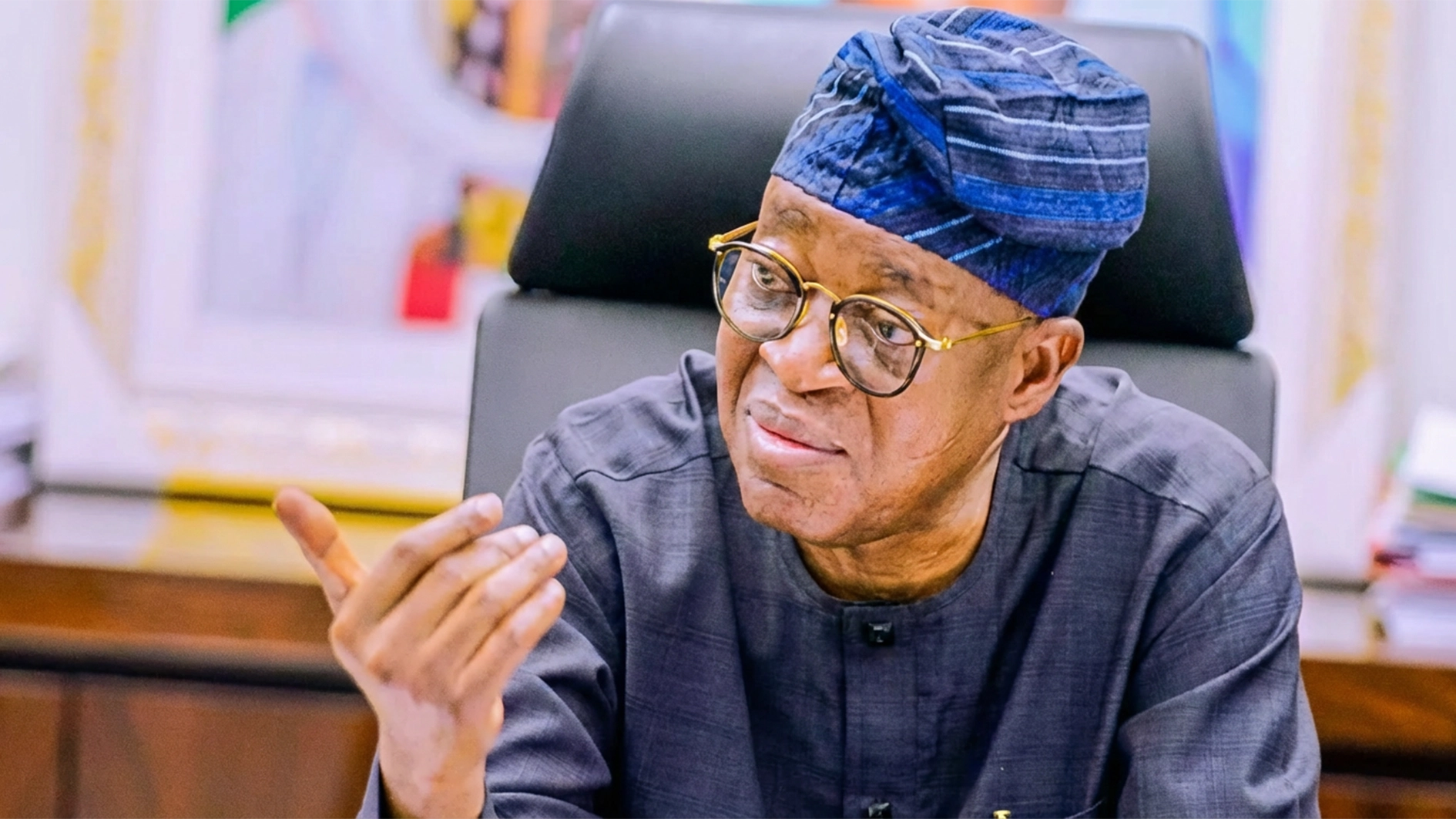
• Fragmented agencies stall sector coordination
• Nigeria handles approximately 60% of maritime trade in West Africa
Years after its establishment, Nigeria’s Ministry of Marine and Blue Economy is yet to deliver on its ambitious promise of transforming the country’s vast aquatic resources into a major driver of economic growth.
Despite Nigeria’s enviable geographical advantage over 420 nautical miles of coastline, rich marine biodiversity, and strategic access to Atlantic trade routes, stakeholders say the sector is being strangled by legislative inertia, institutional fragmentation, and lack of a clear strategic roadmap.
Nigeria’s vast maritime assets and strategic positioning placed it on course to become a continental leader in the emerging blue economy, according to a recent sectoral assessment, which highlighted the country’s natural endowments and market potential.
With a population of 228 million and a GDP of $362.2 billion, Nigeria is one of Africa’s five largest economies.
The country currently handles approximately 60 per cent of maritime trade in West Africa, a figure that experts say could grow significantly with improved infrastructure and investment.

“Nigeria’s natural marine wealth is enormous — both living and non-living resources,” said a senior official from the Federal Ministry of Marine and Blue Economy, who wished not to be mentioned because he’s not authorised to speak on behalf of the ministry. “This is our time to harness it sustainably and strategically.”
In addition to its physical assets, Nigeria’s strategic location in the Gulf of Guinea provides direct freight access to North America, Europe, Latin America, and Central Africa.
This gives the country a unique “freight advantage” in global shipping routes, making it a strong contender for a maritime logistics hub in Africa.
Besides, the nation is also witnessing a gradual expansion in maritime infrastructure, including port modernisation, inland port development, and shipbuilding initiatives.
However, experts pointed out that focused investment, private sector engagement, and capacity development are needed to fully realise the sector’s potential.
“We must move from potential to performance,” says maritime economist Victoria Ochapa. “The future of Nigeria’s economy could well be blue.”
At the core of the drawback is Nigeria’s outdated maritime legal framework. The Sea Fisheries Act of 1992, for instance, is woefully inadequate in addressing modern threats such as illegal, unreported, and unregulated (IUU) fishing.
It is projected that this practice has continued to rob the country of billions in lost revenue and sustainable fish stock.
According to the former president of the Nigerian Bar Association (NBA) and maritime law expert, Dr Olisa Agbakoba, Nigeria’s maritime sector has N7 trillion yearly revenue potential and could be a viable alternative to oil.
He stated that with a robust policy framework, legislative reforms, and significant investments in infrastructure, the shipping and maritime sector could become a major revenue driver for the country.
Unfortunately, crucial reform bills—such as the Nigerian Shipping and Port Economic Regulatory Agency Bill (2023), Ports and Harbour Bill, and proposed amendments to the Merchant Shipping Act and Fisheries Act remain stuck in the legislative pipeline.
Unfortunately, there is no aggressive campaign to push those essential bills before the national Assembly.
“Since the Ministry’s creation in August 2023, we have just developed a comprehensive policy roadmap,” a maritime policy expert told The Guardian.
“This is essential and the actionables drawn from this framework will guide the new ministry and agencies, which were operating in isolation before now.”
Lack of a unified strategy had exposed deep rifts among key maritime institutions. Agencies like the Nigerian Maritime Administration and Safety Agency (NIMASA), Nigerian Shipping Council (NSC), Nigerian Ports Authority (NPA), National Inland Waterways (NIWA), National Environmental Standards and Regulations Enforcement Agency (NESREA), and state-level bodies like Lagos State Waterways Agency (LASWA) and Lagos Ferry Services Company (LAGFERRY) have continued to function independently, often with overlapping mandates and minimal coordination.
This institutional fragmentation has not only slowed down development but has also discouraged private sector investment and donor engagement, industry observers told the Guardian.
Already, the Ministry’s underperformance is taking a financial toll on the government.
While it had projected revenue of N1 trillion in its first year, actual revenue stood at just N242 billion—only 24.2 per cent of the target.
Experts say this shortfall reflects both operational inefficiencies and the failure to enact enabling legislation that could unlock private investment and streamline regulatory frameworks.
One of the most glaring indicators of policy failure is in the fisheries sector.
Nigeria currently faces a yearly fish demand of 3.6 million metric tons, but local production is only 1.2 million metric tonnes—leaving a 2.4 million metric tonne deficit.
This gap is met through costly imports, which rose 68.8 per cent, despite Nigeria’s potential to become a net exporter through better regulation and investment in aquaculture and fisheries.
Interestingly, fish remains a crucial part of the Nigerian diet, with per capita consumption at 13.3 kg per year, contributing around 40 per cent of national protein intake.
Yet, without legislative support, the sector is failing to meet rising population demands.
With Nigeria meeting only about 30 per cent of its yearly fish demand through local production, the Minister of Marine and Blue Economy, Adegboyega Oyetola, has pledged to end the country’s dependence on fish importation by significantly boosting domestic output.
Speaking at a high-level consultative meeting with fisheries cooperative groups in Abuja, Oyetola said: “Nigeria must chart a new course toward self-sufficiency in fish production.”
He assured stakeholders of the federal government’s unwavering support through policy reforms, technical assistance, and financial inclusion.
“We will scale up domestic fish production, reduce import dependency, and reposition the sector for sustainable growth,” he affirmed.
Beyond fisheries, vast economic opportunities in offshore energy, marine biotechnology, coastal tourism, and seabed mining remain underexplored.
These sectors require a modern legal foundation and a coordinated national blueprint to attract foreign direct investment and drive innovation.
Development expert, Victor Idajili pointed out that new ministries like Marine and Blue Economy must be led by professionals with deep sectoral knowledge.
“When new institutions are created, the next step must be the development of a comprehensive policy framework to guide operations. Otherwise, the ministry becomes a sleeping giant,” Idajili said.
A recent policy paper from the ministry, as seen by The Guardian, highlighted deep-rooted structural and governance issues that continue to hinder Nigeria’s maritime sector.
Despite the policy’s comprehensive scope, execution is not reflective.
The paper identified the need for urgent legislative reforms that have stalled essential progress, chronic underinvestment that restricts infrastructure development, and overlapping mandates among government agencies that create confusion and inefficiency.
An industry observer, Paul Eze, said the dominance of foreign vessels owing to the lack of Nigerian-owned ships has continued to undermine economic opportunities, while persistent port congestion and low operational competitiveness further constrain growth.
He said the sector suffers from limited hydrographic capacity and enforcement of laws against illegal, unreported, and unregulated (IUU) fishing.
The national policy on marine and blue economy identified serious risks to the sector’s future, including insecurity on inland and coastal waterways, environmental pollution, the impacts of climate change, increasing cyber threats, and frequent shifts in government policy, all of which threaten to derail long-term development efforts.
In response, stakeholders are calling for urgent and coordinated reforms.
These include accelerating the passing of key maritime bills to unlock legal bottlenecks, improving inter-agency coordination and governance frameworks, and creating investment incentives through instruments like blue bonds and structured public-private partnerships.
There is also a strong push for modernising and dredging Nigeria’s ports, expanding domestic vessel ownership to reduce reliance on foreign carriers, enhancing hydrographic mapping and marine data systems, and enforcing stricter monitoring and penalties to combat illegal fishing activities.
According to Omale Ajonye, a lawyer, the most urgent task is to modernise maritime laws to reflect present-day realities.
“Many of our key statutes—such as the Shippers’ Council Act (1978), the Sea Fisheries Act (1992), and even the NIMASA Act—are outdated and no longer aligned with global best practices or the Ministry’s expanded vision for a sustainable blue economy.
“These laws must be overhauled to provide legal clarity, strengthen enforcement, and support investment,” he said.
He also noted the need to address overlapping mandates across maritime agencies.
Institutions like NIMASA, NPA, NIWA, and the Nigerian Shippers’ Council often operate in silos, leading to duplication, turf conflicts, and bureaucratic gridlock.
This fragmentation, he argued, undermines effective enforcement, weakens investor confidence, and limits the Ministry’s ability to coordinate a cohesive blue economy strategy.
He pointed out that instruments such as the Ports and Harbours Bill, the Maritime Zones Bill, and the proposed Coast Guard, as well as Blue Economy Commission Bills, will be crucial in redefining responsibilities, securing Nigeria’s waters, and promoting a more integrated and investment-friendly maritime environment.
Ajonye believes that unlocking the potential of Nigeria’s maritime sector depends not only on vision but also on aligning the legal and institutional frameworks to support that vision.
Also, Douglas Ogbankwa, a lawyer, agreed that the Maritime and Blue Economy sector is hugely underutilised, adding that it is dominated by foreign vessels and seafarers.
“Nigerians are dominated even in their own maritime sector. This dominance is reflected in all sectors as permitted by the regulators.
“Nigerian Ports have perhaps the highest number of agencies anywhere in the world. The best way of streamlining the operations of Institutions is first removing institutions that have no business in the Ports.
“Some Agencies have no business in Nigerian seaports, and their activities have been largely responsible for the high costs of imported goods and the high costs of manufacturing in Nigeria,” he argued.
The lawyer suggested a one-stop shop for all clearing activities at the ports to ensure that stakeholders do not go through unnecessary harassment and extortion.
“The Ports Authority should also be the final arbiter on any issue, subject to existing laws, while security Agencies are secondary regulators at the ports.
“Other government agencies should also not treat port activities as business or money-making ventures.
“This money-making mindset has destroyed the institutional frameworks at the Seaports.
It is important for there to be an institutional framework to curb the prevalence of corruption in Nigerian Seaports,” he emphasised.
According to Ogbankwa, there should be institutional reforms and legislation to allow state governments to have internal waterways agencies that will license operators.
This, he said, will ensure safety and greater economic activities in our internal waterways.
In addition, he called for urgent legislation to curb the invasion of foreign fishermen who operate in our Continental Shelf, largely unregulated.
“These foreign fishermen who collaborate with internal saboteurs rake in billions of naira monthly without revenue remitted to the federal government,” he declared.

