 Follow Us on Google News
 Follow Us on Google Discover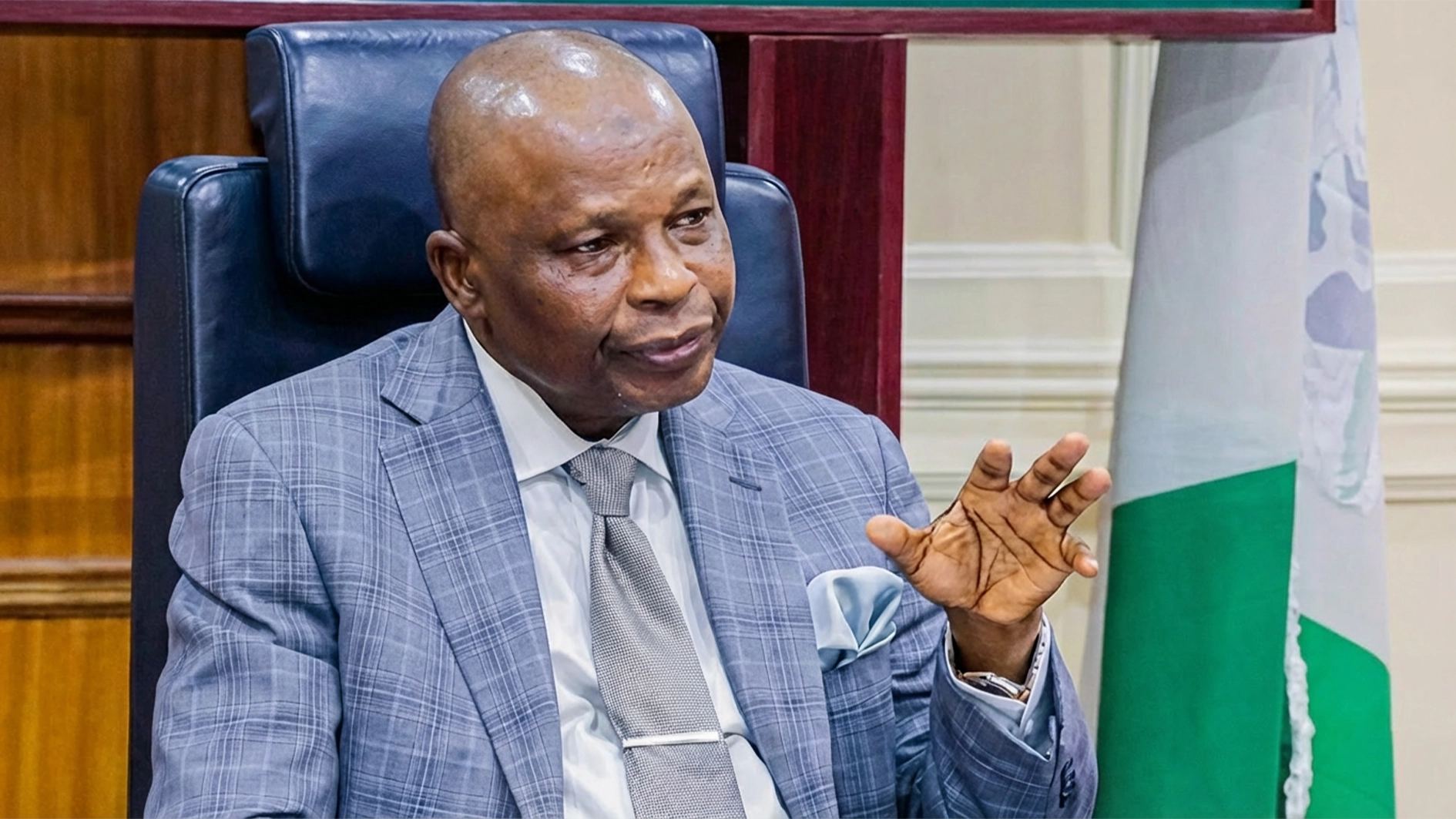
Despite the Supreme Court’s decision affirming local governments’ financial autonomy, state governors have continued to exert control over local councils to hobble the implementation of the judgment and frustrate efforts to decentralise power.
This comes even as local governments received over N6.33 trillion in allocations over the past two years, with little to show for it at the grassroots.
The funds, intended to drive development closest to the people, have been largely absorbed by executive and parliamentary conspiracy riddled with interference, mismanagement, and weak accountability.
State governors not only meddle with local government funds from the federal allocations but also emasculate state legislatures that ought to serve as checks on their excesses.
Across Nigeria, the local government system has been systematically crippled by the very state executives meant to provide oversight and coordination.
Since the removal of fuel subsidy, there has been a consistent upward trend in federally distributable revenue without a corresponding development.

The result is a deeply weakened local government system unable to deliver basic services, implement projects, or exercise its constitutionally guaranteed powers.
Most, if not all, council roads across the urban and rural areas are practically impassable.
This gets worse during the rainy seasons, when floods create craters and potholes, while wastewater from the drainage percolates into the roads and forms stagnant waters.
The Federation Account Allocation Committee (FAAC) shared N1.894 trillion among the federal, states and local governments as of March 2026.
From the details of the FAAC meeting, the money was distributed from a pool of N2.230 trillion.
The breakdown showed that the federal government received N675.088 billion, states got N651.525 billion, while local government councils received N456.467 billion.
In 2025, 18 elected council chairmen in Ondo State said they still lack direct access to their funds, as allocations from FAAC continue to be routed through the controversial state-local government joint accounts instead of council treasuries.
A council chairman alleged that councils are left with a paltry sum monthly to run their affairs, regardless of the billions disbursed to the state on their behalf.
One of the chairmen, who would not want to be mentioned for fear of victimisation, said none of the local governments received anything less than N400 million.
“After the deductions and directives regarding expenditures, we are left with just N4 million to run our Councils,” he said.
The Council bosses voiced their frustrations, lamenting that six months into their tenure, they have been unable to initiate any meaningful developmental projects owing to the financial restrictions.
One of the immediate former chairmen of a local government in the North Central state said state governors are still emasculating the councils financially.
According to him, local council chairmen are given paltry funds, inadequate for developmental projects.
“The special adviser to the governor on local government takes payment of the salary. A little amount is given to the chairman for running his office and that of the councillors,” he said.
A group in Imo, The Mazi Organisation (TMO), had also alleged that more than N330 billion accrued to local governments in the state since 2020 was missing.
The group alleged that the funds, which came from federal allocations, ecological funds and international interventions, have not translated into any visible projects in the 27 LGAs.
Cajetan Duke, spokesman of TMO, said: “Between 2020 and 2025, the 27 LGAs in Imo State collectively received over N330 billion in federal allocations.
“Mbaitoli alone received about N15.63 billion; Nkwerre, the lowest, received N10.75 billion. Yet across the state, schools, health centres, sports facilities and roads remain in scandalous decay.”
The National President of ALGON, Bello Lawal Yandaki, explained that opening a separate account for the Councils is essential for the total implementation of the Supreme Court’s decision regarding direct fund allocations.
He said the central bank is awaiting guidance from the federal government regarding the opening of the accounts.
Comrade Aliyu Haruna, National President of the National Union of Local Government Employees (NULGE), also lamented the continued misappropriation of local government funds by state governors.
According to him, the governors are primarily interested in maintaining absolute control over local government finances across the states, using the funds at their personal discretion rather than for the intended development of grassroots communities.
Comrade Haruna, who spoke with The Guardian, emphasised that Supreme Court rulings carry the force of law, and therefore, the President, as the nation’s leader, must ensure their enforcement.
He called for the direct disbursement of funds to local governments in line with court directives to guarantee genuine development at the grassroots level.
However, the Attorney-General of the Federation and Minister of Justice, Prince Lateef Fagbemi (SAN), has warned that there will be consequences for the continued violation of the Supreme Court judgment on local government autonomy by governors.
Worst still, many of the governors have not been accountable following the increased federal revenue allocations.
According to findings by The Guardian, many governors appeared to follow a shared template for looting public funds.
The Supreme Court, in its landmark ruling two years ago, granted financial autonomy to local governments, affirming their right to direct allocations from the Federation Account without state-level interference.
However, rather than comply with the judgment, several state governors have resorted to undermining its implementation.
Although all states in Nigeria have elected council chairmen, governors have continued to place their knees on the financial neck of those councils.
This action is not only unconstitutional but also a blatant disregard for the rule of law and fiscal transparency.
A human rights activist and Abuja-based constitutional lawyer, Okueyelegbe Maliki, maintained that the Supreme Court judgment has settled the issue of local government autonomy with finality.
“The act of using the state house of assembly to obstruct the financial autonomy is a culture of impunity which ought to be deprecated at all costs.
“There is no justification whatsoever for anybody to disobey a judgment of any court, not to talk of the highest court of the land.
“The legal remedy against violators lies in sanctions by way of impeachment. Any governor that is found wanting must be shown the way out,” he declared.
Another lawyer, Ajonye Omale, lamented non-compliance with the judgment.
“The Supreme Court in its 2024 judgment, explicitly outlawed the diversion of local government funds through joint allocation accounts,” he explained, adding that doing otherwise was unjustifiable and immoral.
According to the lawyer, the judgment ordered direct allocation of funds to local councils from the Federation Account.
He added that any attempt by governors or state assemblies to delay or obstruct the implementation, whether through new laws or control of joint accounts, violates the Constitution and the clear directive of the Supreme Court.
Legal remedies, he said, included contempt proceedings against non-compliant governors; enforcement actions by the federal government or affected parties; court orders compelling states to release funds, as well as public pressure and advocacy to uphold constitutional democracy at the grassroots level.
He warned that failure to comply with the binding judgment is not just a political offence, but a constitutional breach.
Another lawyer, Monday Ikpe, suggested that as the federal government continues its push for fiscal reforms and accountability, it must not only enforce the Supreme Court ruling but also ensure that governors who flout constitutional provisions are held accountable, even after their tenures.
He stressed that the survival of Nigeria’s democracy depends on empowering institutions at all levels, especially the third tier, where many citizens live and interact with the state.

