 Follow Us on Google News


 Follow Us on Google Discover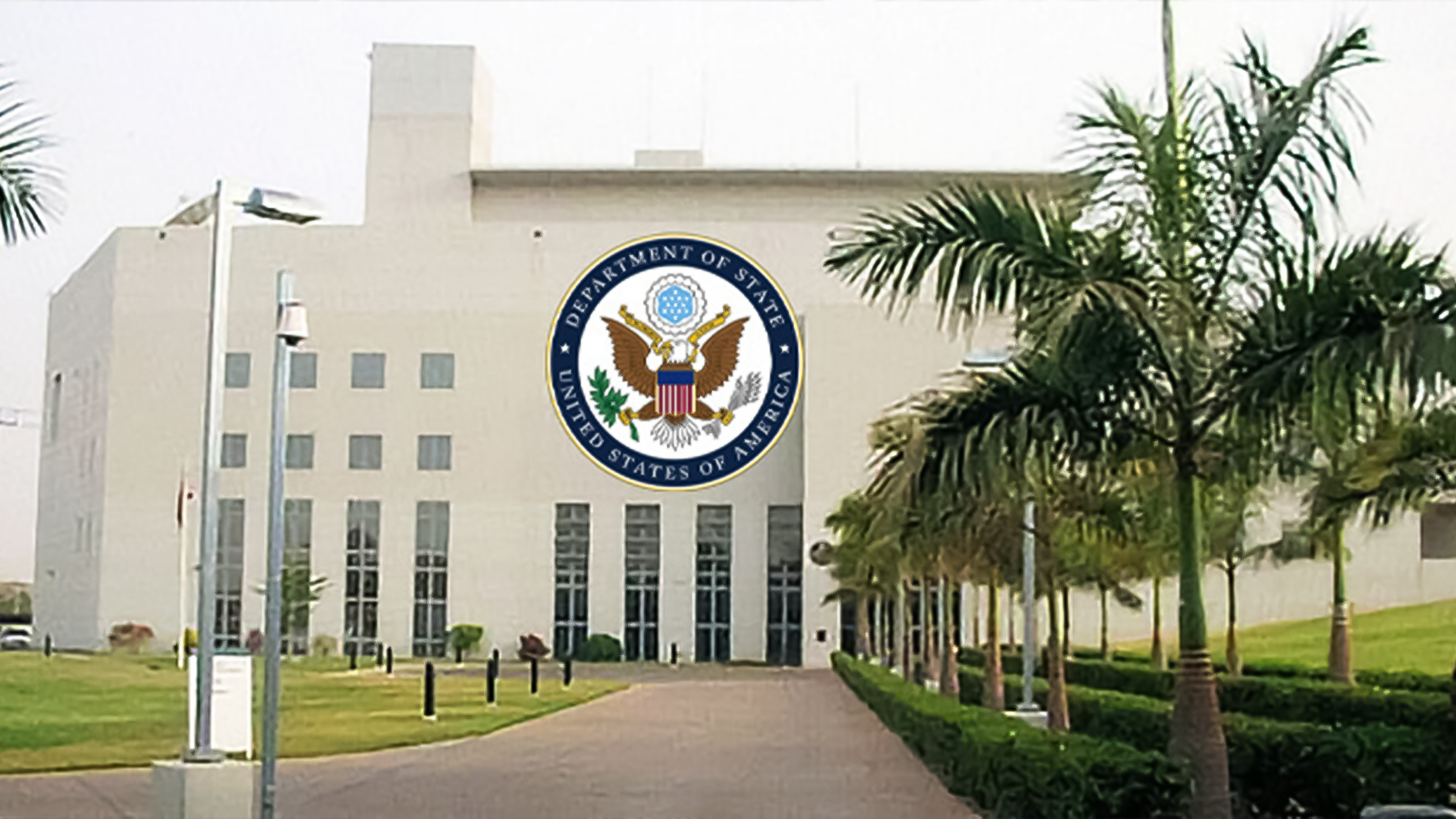
• U.S. suspends visa appointments in Abuja after security warnings
• FG: U.S. advisory is a routine precaution, not reflection of security situation
• Tinubu: Fallen soldiers are unforgettable heroes
• ‘10 minutes in Jos, zero in Lagos’ – Atiku faults Tinubu’s absentee governance
Like the dreaded Grim Reaper, Nigeria’s worsening insecurity has continued to pervade the landscape, leaving a trail of deaths, terror and gloom, just as political activities enter a frenzied pace ahead of the 2027 general elections.
The grim reality, hanging like the fabled Sword of Damocles, was accentuated yesterday when the United States Embassy in Abuja abruptly suspended its visa appointments in the nation’s capital, directing affected applicants to await further instructions. Though visa operations at the U.S. Consulate General in Lagos continue unhindered, the Abuja embassy urged affected applicants to check their emails for details on rescheduled appointments.
The development comes amid heightened security concerns flagged by the United States Department of State, which had earlier ordered the departure of non-essential staff and their family members from Abuja. In a travel advisory issued on Wednesday night, the department urged American citizens to reconsider travel to Nigeria from April 8, citing risks including crime, terrorism, kidnapping, civil unrest, and limited healthcare services.
Just yesterday, Brigadier General Oseni Braimah and at least 14 soldiers were killed when Boko Haram and Islamic State of West African Province (ISWAP) terrorists launched a coordinated assault on a military base in an overnight raid in Benisheikh earlier yesterday in the Kaga Local Government Area of Borno State, destroying armour tanks and several operational vehicles.
This is coming barely two weeks after Nigeria was ranked as the fourth most affected country by terrorism in the global terrorism index released on March 19, by the Institute for Economics & Peace, recording a 46 per cent increase in deaths from terrorism in 2025 under President Bola Tinubu.

While stopping short of a full travel ban, U.S. authorities in the advisory cited the presence of extremist groups such as Boko Haram and the Islamic State as a major concern and discouraged visits to most northern states and parts of the South-East and South-South regions.
Newly added to the Level 4 list are Plateau, Jigawa, Kwara, Niger, and Taraba states, alongside others in the North, such as Borno, Yobe, Kogi, and northern Adamawa, where terrorism and kidnapping risks remain high. Southern states, including Abia, Anambra, Bayelsa, Delta, Enugu, Imo, and Rivers (excluding Port Harcourt), were also flagged due to widespread crime and unrest.
The advisory warned that violent crimes—armed robbery, carjacking, and kidnapping for ransom—are prevalent, with U.S. citizens often targeted. It also noted that terrorist attacks could occur at markets, places of worship, hotels, and public gatherings, while healthcare services remain inconsistent and below international standards.
The development followed a similar move in December 2025, where the country placed Nigeria on a list of countries facing partial travel restrictions under a presidential proclamation aimed at tightening border controls. The decision was based on security assessments and immigration compliance data.
Tinubu: Fallen soldiers are unforgettable heroes
President Bola Tinubu has expressed deep sorrow over the killing of soldiers of the 29 Task Force Brigade, Operation HADIN KAI, in a coordinated terrorist attack on their camp in Benisheikh, Borno State.
The President, in a statement issued by Special Adviser on Information and Strategy, Bayo Onanuga, last night, conveyed his condolences to the Armed Forces and the families of the fallen troops, urging them to remain steadfast despite the painful loss.
Tinubu reaffirmed the Federal Government’s commitment to working with the state to restore lasting peace and security.
The Defence Headquarters confirmed that the attack occurred in the early hours of Thursday, April 9, 2026, resulting in multiple casualties.
Tinubu commended the courage and resilience of the soldiers, noting that they fought gallantly to repel the attackers and prevent Boko Haram insurgents from overrunning the communities under their protection.
While mourning the troops, the President urged military leadership and personnel across all theatres of operation not to be discouraged, but to draw strength from the nation’s appreciation of their sacrifices.
Tinubu extended condolences to the families of the fallen soldiers, led by Brigadier-General Oseni Omoh Braimah, who, he said, made the ultimate sacrifice in defence of the nation.
“The government will never forget their sacrifices, and they will not be in vain.
Because of the courage and dedication of our troops, our resolve to defeat terrorism and all forms of violence across Nigeria is stronger than ever,” the President added.
He urged troops on the frontlines to remain resolute and professional in the discharge of their duties.
FG downplays U.S. advisory threats
DOWNPLAYING the threats and allaying the fears of many citizens, the Federal Government described the U.S. travel advisory, which authorised the departure of non-emergency personnel from its embassy in Abuja, as a routine precaution that does not reflect Nigeria’s overall security situation. The government reassured citizens and international partners that public institutions across the country remain fully operational.
In a statement issued by the Federal Ministry of Information and National Orientation and signed by Rabiu Ibrahim, Special Assistant (Media) to the minister, Mohammed Idris, the ministry said that there had been no disruption to governance, economic activities, or daily life, despite the advisory.
The minister explained that the US decision was guided by its internal protocols and should not be interpreted as an indication of a general breakdown of law and order in Nigeria. “While we acknowledge isolated security challenges in some areas, there is no general breakdown of law and order, and the vast majority of the country remains stable,” he said.
He added that recent efforts had led to the disruption of criminal networks, reduced the activities of armed groups, and improved safety in vulnerable communities. “Our security agencies remain actively engaged in protecting lives and property, and the results of these efforts are increasingly evident,” the minister added.
Army general, 17 troops killed as terrorists invade military base
MILITARY sources stated that Braimah, the commander of 29 Brigade, was captured and killed after his bulletproof vehicle failed to start during an attempt to manoeuvre out of the base. The Brigade Imam and five other officers were also amongst those killed, while several others remain missing in action or sustained varying degrees of injuries.
Witnesses described a chaotic scene as terrorists stormed the base in large numbers, deploying explosives and heavy weaponry in an attack that lasted several hours. The insurgents reportedly opened fire on the commander’s vehicle as he attempted to lead his men through the advancing forces.
His death follows the killing of Brigadier General Musa Uba by ISWAP in November last year. He was the highest-ranking military official to die in the long-running conflict since 2021. “They overran the brigade,” one of the intelligence sources said, giving a death toll of “at least” 18.
This is as violence continues to surge across the North, with at least 90 people killed by gunmen in several remote villages, according to an AFP tally of tolls given by local, humanitarian and church sources.
The second intelligence source said that “the terrorists killed several troops” and “burnt vehicles and buildings before they withdrew,” without giving a toll.
The spate of attacks that have left 90 dead this week included an assault in Kebbi state that police blamed on a local jihadist group known as Mahmuda, which is affiliated with Al-Qaeda. Kebbi sits on Nigeria’s border with Benin and Niger and since 2025 has been targeted by a rising number of jihadist attacks.
Also, at least 60 people, including more than 40 security operatives, have been reportedly killed in coordinated attacks on communities in the Shiroro Local Government Area of Niger State, marking a violent end to weeks of relative peace in the area. Local and intelligence sources told newsmen that the assaults began on Monday in Lanta village and continued as of the time of filing this report.
Sources said on Tuesday, terrorists invaded Bagna village, killing 63 people. Among those reportedly killed were operatives of the State Security Services (SSS), vigilantes, and local hunters. They explained that the terrorists did not abduct anyone during the assault.
Conflict monitor ACLED says there has been a surge in violence in the area carried out by militants affiliated with Al-Qaeda and the Islamic State group. In nearby Kwara state, in October, fighters from the Al-Qaeda-affiliated JNIM claimed an attack after years of researchers warning that the jihadist conflict ravaging the Sahel risked spreading south towards coastal West African states.
In December, the United States, with Nigerian assistance, bombed northwest Sokoto state, targeting Islamic State Sahel Province (ISSP) fighters usually found in neighbouring Niger, along with Mali and Burkina Faso.
Military confirms casualties
THE military said that “insurgents attempted to breach the defensive perimeter of the military installation” but were “decisively engaged and forced to retreat in disarray”.
The statement, from Major General Michael Onoja, a Defence Headquarters spokesman, said that the attack “resulted in the loss of a few brave and gallant soldiers”, without disclosing a toll or who was killed.
The Defence Headquarters confirmed that military personnel were killed when insurgents launched a coordinated attack early Thursday morning on the 29 Task Force Brigade Headquarters in Benisheikh, Kaga Local Government Area of Borno State.
Onoja’s statement said the attack occurred at about 12:30 a.m. on April 9, when insurgents attempted to breach the defensive perimeter of the military installation. He said troops of Operation HADIN KAI, led by the brigade commander, responded with “exceptional courage, professionalism, and superior firepower,” forcing the attackers to retreat.
The Defence Headquarters described the attack as a sign of desperation by insurgents, who had suffered significant losses in recent military operations. The military acknowledged that the encounter resulted in casualties among troops; however, it did not confirm or debunk reports that the Commander of the 29 Brigade, Brig. Gen. Oseni Braimah was among those killed in the incident.
Atiku: Tinubu now hiding from Nigerians
MEANWHILE, spokesman of former Vice President Atiku Abubakar, Phrank Shuaibu, has criticised President Bola Tinubu over what he described as a lack of visible leadership in the face of worsening insecurity across Nigeria. Shuaibu conveyed the concerns in a statement issued on Thursday, accusing the president of exhibiting what he termed “absentee leadership.”
He said it was troubling that despite embarking on a two-day working visit to Lagos, Tinubu had failed to make significant public appearances at key state functions scheduled during the trip.
Atiku slammed President Tinubu for exhibiting what it called a “disturbing pattern of absentee leadership” following a series of brief public appearances and missed engagements in Lagos and Plateau States.
Senior Special Assistant on Public Communication to the former vice president, Shaibu, in a statement, described the president’s recent conduct as “troubling and unacceptable,” specifically noting a perceived lack of empathy following recent security breaches.
A primary point of contention in the statement was the president’s recent trip to Plateau State, which came on the heels of a devastating terrorist attack. Shaibu described the visit as “shockingly brief and perfunctory,” noting that the president “spent barely ten minutes at the Jos Airport before departing, an act widely perceived as dismissive of the gravity of the tragedy.”
The statement argued that the justification for the short visit, that the president needed to reach Lagos for official engagements, has been “rendered hollow” by subsequent events. According to Atiku, the president’s two-day working visit to Lagos State has been defined more by his absence than his participation.
Shaibu claimed that since arriving, the president has remained “largely confined to his private residence, with little to no visible engagement in the very activities meant to validate the so-called working visit.”
The statement specifically pointed to the commissioning of the Opebi–Mende–Ojota Link Bridge and the inauguration of a Multi-Agency Complex as events the president missed. Atiku noted that Tinubu “failed to personally attend, instead delegating these significant national duties to the Senate President, a close political ally.”
The statement linked Tinubu’s perceived detachment to broader concerns, including “recent precautionary actions taken by the United States Government regarding its personnel in Nigeria.”
“At a time when Nigeria is grappling with worsening insecurity, rising terrorist attacks, and growing international concern, such indifference at the highest level of leadership is both alarming and indefensible,” he stated.
He described the administration as “a presidency that appears detached, disengaged, and disturbingly casual about the weighty obligations of governance.”

