 Follow Us on Google News
 Follow Us on Google Discover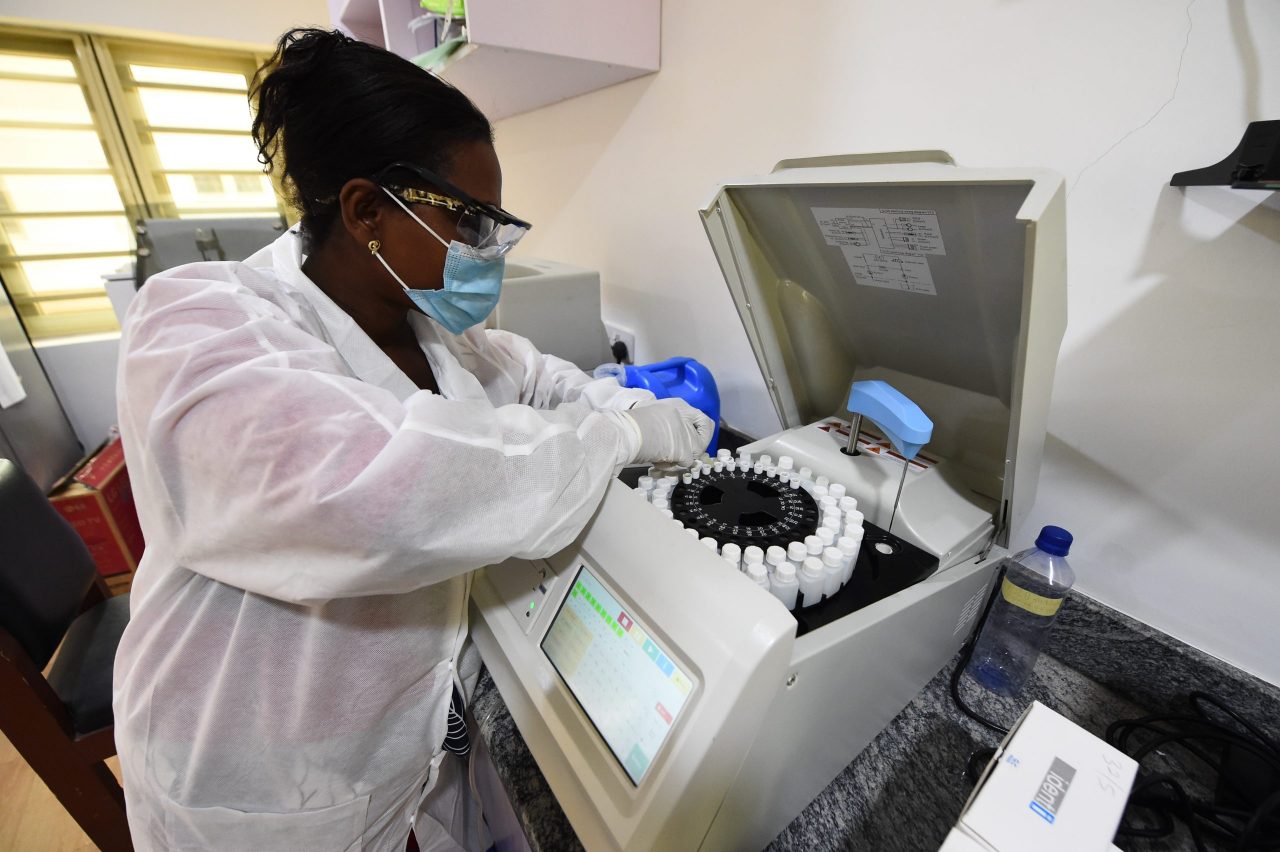
By Maroof Ayowale Adegoke
In 2010, the children of Zamfara State began dying. They convulsed without explanation. They were taken to clinics and treated for malaria and meningitis. They were tested for everything except what was actually killing them. By the time investigators from the CDC, WHO, and Médecins Sans Frontières arrived and ran the right tests, the numbers were devastating.
Blood and soil samples told a story no one had thought to read earlier. The lead concentrations in household dust and soil, from gold ore being processed inside family compounds, were catastrophic. In some of the worst-affected villages, one in four children under five had died in the preceding year. By the time the outbreak was formally controlled, at least 735 children had lost their lives. Thousands more were left with permanent neurological damage. The researchers said it remains the largest acute lead poisoning outbreak in recorded history.
The question that should haunt us is not just what happened. It is what could have prevented it. The answer, in large part, is chemistry, specifically, routine environmental testing, early-warning soil and water analysis, and the kind of systematic monitoring that trained laboratory scientists perform. It is the work nobody sees, until it stops happening.
In Nigeria, environmental crises are rarely accidents. They are mostly failures of early warning. And the people best positioned to sound that warning, such as chemists, analysts, and lab scientists working in relative obscurity, remain chronically undervalued and underappreciated.
This is why I believe environmental crises are mostly self-inflicted wounds.

Environmental chemistry is, at its core, a discipline of anticipation. A well-equipped lab scientist does not wait for illness to appear in a community before raising an alarm. They test water before people drink it. They analyse soil before children play in it. They measure air quality at industrial sites before workers develop respiratory illness. The entire logic of the profession is preventive. It is aimed at catching the contamination before it has a name, before it has a victim and before it becomes a headline-grabbing event.
In Nigeria, the conditions that allow environmental disasters to escalate, such as poor water sanitation, gas flaring in the Niger Delta, unregulated artisanal mining, industrial effluent discharge, are all, in principle, detectable before they turn lethal. The tools exist. Atomic absorption spectroscopy can detect heavy metals in water at concentrations far below the threshold at which symptoms appear. Continuous emissions monitoring systems can track volatile organic compounds from industrial stacks in real time. Gas chromatography can identify contaminants in soil with extraordinary precision. These are not exotic technologies. They are the standard toolkit of a trained chemist doing their job.
One fact stands: the scale of environmental burden in Nigeria is measurable, and it is alarming. National data shows that average annual particulate matter (PM2.5) levels across the country run nearly ten times higher than the World Health Organisation’s recommended safe limit of 5 micrograms per cubic metre. In Lagos alone, the World Bank estimated that ambient air pollution caused 11,200 premature deaths in 2018 — the highest toll in West Africa — and an economic loss of $2.1 billion, equivalent to 2.1 percent of Lagos State’s GDP. Today, with many houses and businesses in the state relying on generators to power their electricity needs, the problem is like more worrisome. Meanwhile, approximately 91 percent of Nigeria’s water supply carries E. coli contamination. This accounts for why many Nigerians spend thousands of naira on stomach ulcers.
These are not statistics about a distant, hypothetical risk. They describe the daily environment of over 200 million people. And they are numbers that environmental chemists, with proper funding, proper equipment, and proper regulatory authority, are trained to shift.
In the Niger Delta, where oil pollution since the 1950s is now estimated at the equivalent of more than 13 million barrels of crude, the analytical work of remediating hydrocarbon-contaminated soil is entirely chemical in nature. Bioremediation protocols, degradation rate monitoring, soil and water certification — all of it depends on laboratory science. And the 2011 UNEP report on Ogoniland, which described the region as requiring up to 40 years of cleanup, was itself the product of rigorous environmental sampling and chemical analysis. The report did not write itself. Scientists wrote it, with data.
Nigeria is not short of chemists. It trains them in significant numbers across its universities and polytechnics. The problem is where those chemists end up, and what they are given to work with when they get there. State environmental agencies, including those operating under the framework of the National Environmental Standards and Regulations Enforcement Agency (NESREA), are frequently under-resourced, their laboratories running on ageing equipment and thin budgets. Even more critically, NESREA’s mandate explicitly excludes enforcement authority over the oil and gas sector — the very industry responsible for the country’s most severe environmental contamination.
The result is a structural paradox: Nigeria has both the scientific knowledge and the statutory framework to monitor its environment far more effectively, but lacks the political will and the institutional investment to make it consistent. In 2024, heavy metal poisoning cases re-emerged in Sokoto State, with 847 suspected cases and 42 deaths reported within a single epidemiological week. Children again made up the majority of those affected. Fourteen years after Zamfara, the same crisis, in a different state, with the same preventable character.
It is easy to overlook a chemist. They work in rooms most people never enter, producing reports that most people never read, flagging numbers that — when everything goes right — trigger responses that the public never hears about. Their victories are invisible by definition: the contamination that was caught before it spread, the discharge that was corrected before it reached the river, the air sample that triggered a plant shutdown before the neighbourhood breathed poison.
But invisible victories are still victories. And a country that invests in them — that funds its environmental laboratories, empowers its regulatory scientists, and treats routine chemical monitoring as a genuine public health infrastructure rather than bureaucratic box-ticking — is a country that does not have to keep counting dead children and calling it a crisis.
Nigeria has the scientists. It needs to decide they are worth listening to before, not after, the damage is done.
Adegoke Ayowale is a results-driven Laboratory Technologist with over 20 years of progressive experience in crude oil and fuel certification, environmental compliance monitoring, chemical management, equipment stewardship, and water treatment processes within an NUPRC-accredited laboratory.

