 Follow Us on Google News


 Follow Us on Google Discover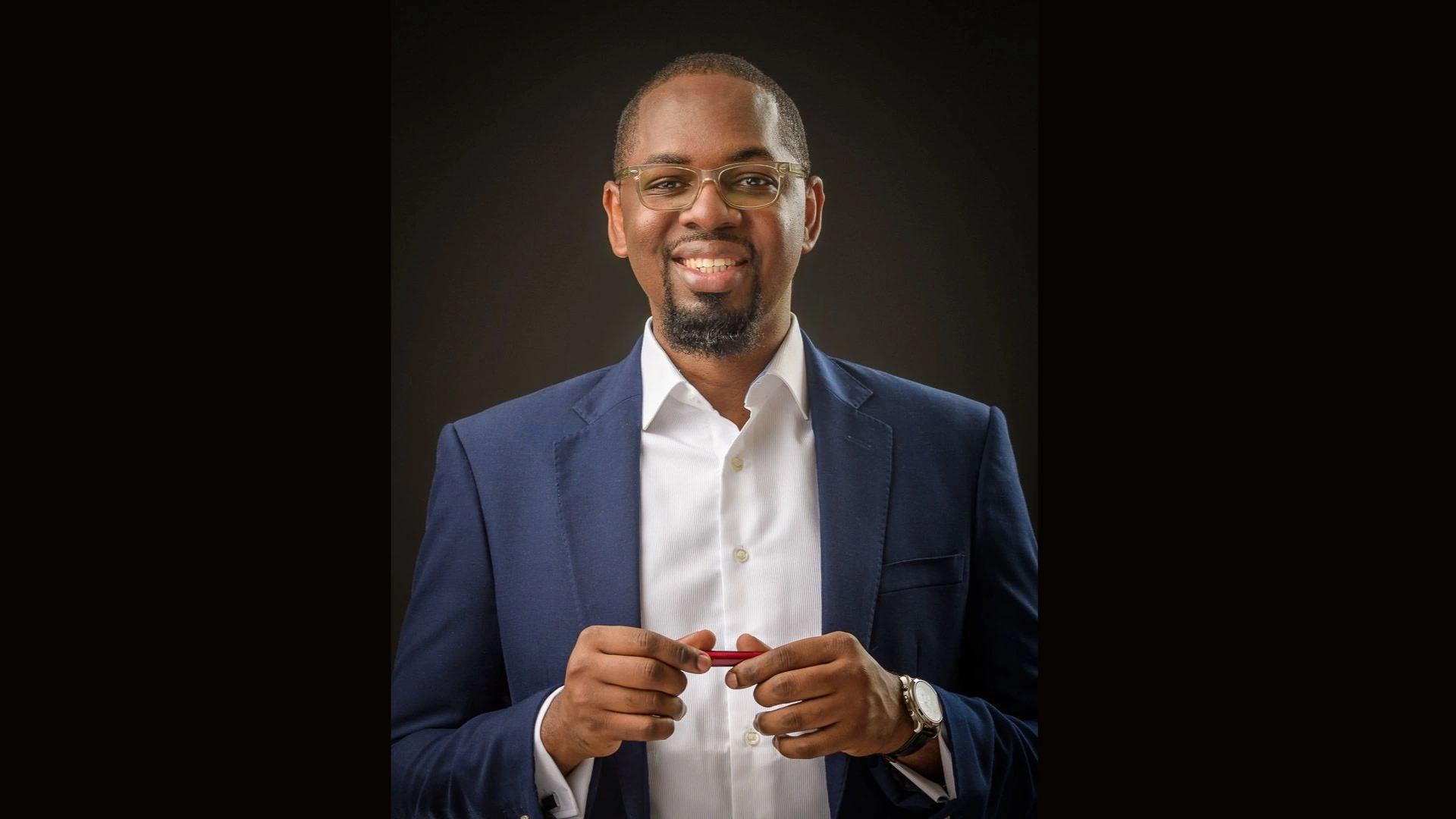
Femi Odewunmi is redefining strategic advisory leadership in Nigeria
Femi Odewunmi leads a career shaped by systems thinking, institutional depth, and a steady focus on how decisions move from paper to real outcomes. As Group Chief Executive of CI Group, he heads an integrated advisory practice built for leaders who operate at the centre of complex financial, policy, and reputational decisions.
His professional path did not begin in advisory work. He started as a systems analyst, working on structured technical environments where clarity, logic, and interdependence mattered. That early foundation shaped how he later approached strategy and leadership. He later moved into brand and media strategy, where he learned how narratives form, how perception spreads, and how decisions begin to take shape long before execution starts. The shift from technical systems to human systems defined his approach to leadership advisory work.
Over time, his focus moved toward larger institutional challenges. These included transactions, policy transitions, and high-stakes corporate decisions where multiple stakeholders pull in different directions. In those settings, he learned that strategy alone does not determine success. Execution depends on alignment, timing, and how each stakeholder interprets intent. He built a discipline around reading these dynamics early and guiding leaders through them before friction escalates.
At CI Group, he has shaped a model that treats advisory work as a single connected system rather than separate services. The firm operates through four integrated practice areas that combine strategy and intelligence, reputation and communications, brand and content, and government relations and public affairs. Under his leadership, these areas do not function independently. They work as one structure designed to support decisions from formation through execution. This structure reflects his belief that real leadership support must match the complexity of the environment in which decisions are made.
His experience spans major mandates across sectors. He has directed advisory roles on the ₦300M EKEDC divestment in Nigeria’s power sector, where regulatory pressure, investor expectations, and public sentiment all shaped the outcome. He has also worked closely with Flour Mills of Nigeria across long-term strategic engagements, including landmark transactions such as the Honeywell acquisition valued at ₦82B and the Sunti Sugar Estates investment valued at ₦150B. His work extends to communications strategy support for the Central Bank of Nigeria, along with advisory involvement with global organisations such as the World Bank, Olam International, Total Energies, and Caterpillar. These engagements reflect a consistent pattern of working in environments where decisions carry wide institutional consequences.

Across these roles, he emphasises a consistent principle. Risk often emerges not from the technical structure of a decision but from how it is interpreted. Stakeholders form judgments early, sometimes before full information is available. He has built CI Group around the idea that advisory work must anticipate interpretation, not react to it. This requires understanding regulatory systems, media influence, internal organisational dynamics, and informal networks that shape outcomes.
He also highlights a recurring challenge in the Nigerian business environment. Many organisations underestimate external pressure points. Internal planning often receives more attention than external interpretation. His approach addresses this gap by mapping stakeholders early and testing assumptions before execution begins. He places strong emphasis on staying involved through execution, where most strategies either hold or weaken under pressure.
Under his leadership, CI Group continues to evolve as a platform for integrated advisory services. The goal is not expansion for its own sake, but deeper capability in reading signals across markets, policy environments, and stakeholder networks. He views intelligence as a continuous process, not a static report. This informs how the firm supports leadership teams during sensitive transitions and high-value decisions.
Looking ahead, his focus remains on strengthening CI Group’s role in decisions where capital, policy, and reputation intersect. He sees increasing demand for advisory partners who can interpret complexity in real time and guide execution without fragmentation. Growth, in his view, depends less on size and more on relevance in decisive moments.
His advice to emerging entrepreneurs reflects the same grounded perspective. He encourages a clear understanding of the environment before building anything. He stresses the importance of solving real problems where there is a defined buyer and a clear reason to choose one solution over another. He also places strong emphasis on discipline, where progress is measured by outcomes rather than activity. Trust, he notes, becomes one of the strongest assets over time, shaping access to opportunities that cannot be planned.

