 Follow Us on Google News
 Follow Us on Google Discover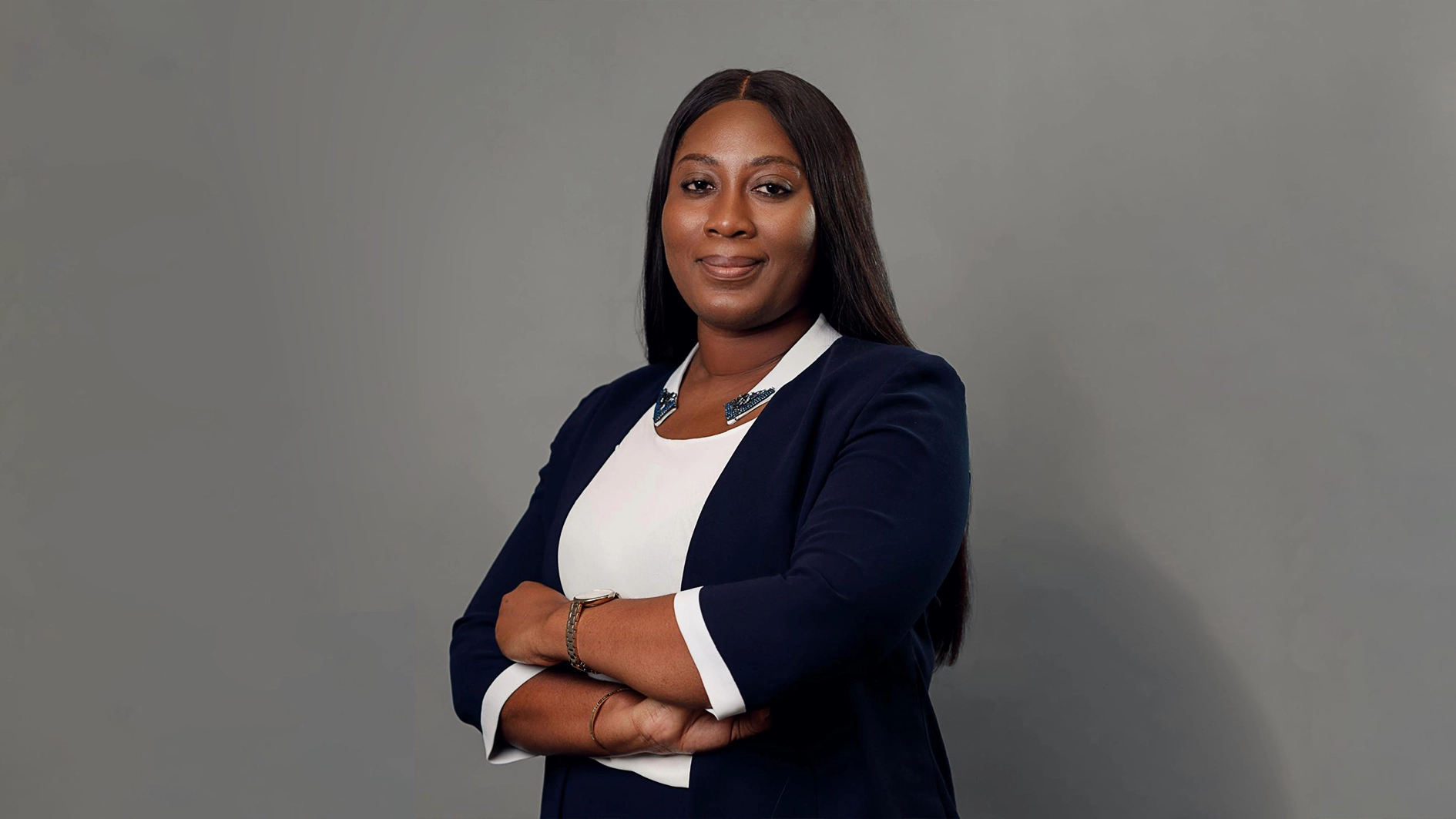
For many people, finance is often seen as a world of numbers, spreadsheets and transactions.
But for Priscilla Dziedzorm Ayebi, it has always been something more. It is a system that determines which ideas move forward, which projects come to life and ultimately, how economies grow.
Long before she began working on multi-million and billion-dollar transactions, Ayebi was already drawn to structure, precision and problem-solving. That early inclination would later shape both her academic path and her professional direction.
Graduating with First Class Honors in Business Administration from the University of Ghana, she stood out not just for her academic performance but for the discipline and clarity of thought that would come to define her career.
Her early experience at United Bank for Africa offered a first real glimpse into how financial systems operate within large institutions. It was here that she began to understand that efficiency in finance is not just about numbers adding up, but about systems working better. Leading a cost optimisation initiative early in her career, she saw firsthand how thoughtful financial decisions could create a measurable impact within an organisation. But it was her time at Standard Bank Group that truly expanded her perspective.
Working within one of Africa’s largest financial institutions, Ayebi found herself in environments where the stakes were significantly higher and the structures more complex.
Transactions were no longer isolated financial exercises. They involved governments, regulators, multinational corporations and entire sectors of the economy. Each deal required not just technical skill, but the ability to navigate uncertainty, align multiple interests, and think several steps ahead.

Over time, she became deeply involved in transactions that went beyond corporate finance into areas that directly influence economic development. Whether supporting telecommunications investments or contributing to infrastructure-related financing, she began to see a pattern: projects with strong economic potential often depended on how well their financing was structured. This realization stayed with her.
Rather than viewing finance as an end in itself, she saw it as a tool, one that could either unlock opportunities or quietly limit them. The difference, she observed, often came down to how capital was organised, risks, distributed, and how stakeholders were aligned.
Her later experience with the Africa Finance Corporation (AFC) reinforced this perspective. Working within a development finance environment, she was exposed to the broader strategic side of investment, where decisions are not only about returns but also about long-term impact and sector-wide growth. Contributing to investment analysis and strategy development, she gained insight into how large pools of capital are directed toward industries that shape economic futures.
At the same time, her academic journey at Columbia Business School provided a different kind of clarity. Immersed in a global environment and engaging with peers and faculty across diverse markets, she was able to connect her practical experience with broader financial theory and strategy. It was not just about learning new concepts, but about refining how she thought about capital, risk and long-term value creation.
What makes her journey particularly interesting is not just the scale of the transactions she has worked on, but the way she thinks about them.
She approaches finance with a systems mindset. Instead of focusing only on individual deals, she is interested in the structures behind them. Why do some projects attract investment easily while others struggle? What makes investors commit to long-term infrastructure assets? How can financial models be designed to work not just in theory, but in practice?
These are the kinds of questions that have shaped her career decisions and continue to influence her work.
Her background across investment banking and development finance places her in a unique position. She understands both the expectations of capital providers and the realities of projects that require funding.
This dual perspective allows her to operate at the intersection of finance and development, where decisions have both financial and economic consequences.
Beyond her technical expertise, there is also a clear sense of direction in her career. She is not simply building experience; she is building towards a specific understanding of how capital can be better utilised.
In an industry that often emphasises speed and execution, Ayebi’s approach is more reflective. She is interested in how things work beneath the surface, how systems can be improved and how finance can be used more effectively to support long-term outcomes.It is this combination of technical depth, practical experience and thoughtful perspective that makes her stand out.
Her journey is still evolving, but it already offers a clear narrative. It is the story of someone who moved from understanding finance as a discipline to seeing it as a powerful mechanism for shaping real-world outcomes. And in that shift lies the essence of her work.

