 Follow Us on Google News
 Follow Us on Google Discover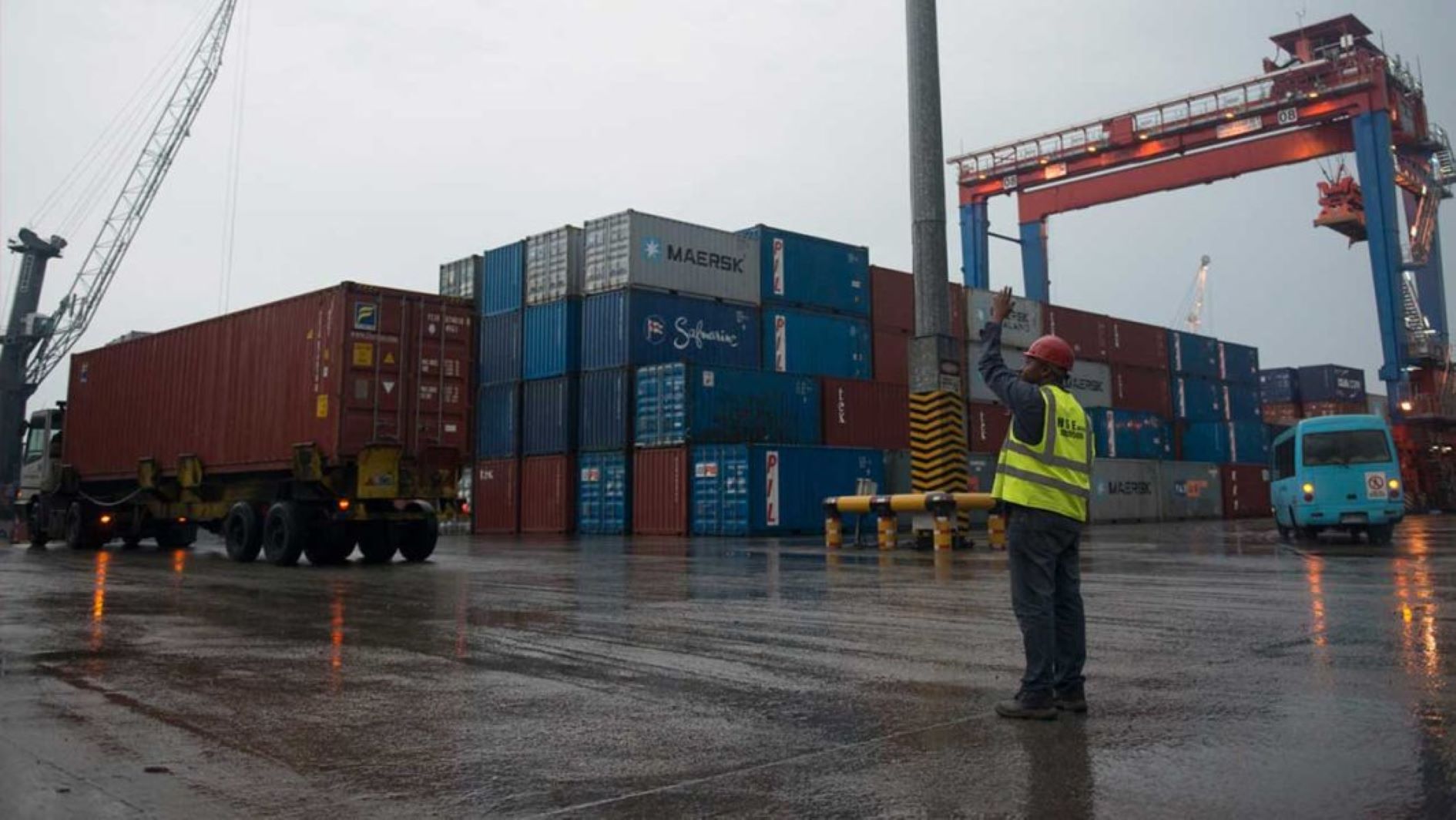
The Chief Executive Officer of APM Terminals Nigeria, Frederik Klinke, has urged Nigeria to prioritise consistent regulatory reforms, advance port modernisation, deepen channel drafts to accommodate larger vessels, accelerate the full integration of digital systems across the port ecosystem and improve multimodal transport networks and trade corridors to enable the country fully realise its export potential and establish itself as a leading maritime hub in West Africa.
Speaking at the Blue Economy Investment Summit in Abuja, Klinke said Nigeria’s maritime economy is at a critical juncture, where sustained alignment between policy, infrastructure investment and execution could unlock even greater export growth.
He said that, with East–West Africa trade volumes having risen by over 30 per cent in 2025 and now the fastest-growing container trade corridor globally, Nigeria is well positioned to capture a larger share of this growth if it continues to strengthen its maritime infrastructure and logistics systems.
According to him, reducing cargo dwell times and simplifying documentation processes will not only lower the cost of doing business but also enhance Nigeria’s credibility in international trade, further boosting export competitiveness.
Klinke said Nigeria’s maritime sector is demonstrating remarkable resilience and momentum, with a dramatic surge in export volumes positioning the country as an emerging force in global trade.
He highlighted a significant increase in export activity as evidence that Nigeria’s strategic reforms and investments are beginning to yield tangible results, even as the global maritime industry faces mounting uncertainty.

Klinke noted that while international shipping continues to grapple with disruptions driven by geopolitical tensions and shifting trade routes, Nigeria has maintained forward progress, particularly in its push to expand non-oil exports.
He cited data from the Nigerian Ports Authority’s third-quarter 2025 report, which showed that export-laden container volumes surged by 1,085 per cent.
Klinke attributed this growth to deliberate policy measures and operational improvements aimed at enhancing efficiency and reducing bottlenecks.
Despite persistent global challenges, including rising freight costs, longer shipping routes and increased insurance premiums, Klinke emphasised that Nigeria’s export expansion reflects a sector responding positively to reform.
He, however, warned that without sustained intervention and coordination, external pressures could still undermine the country’s diversification agenda.
APM Terminals Nigeria, he said, has aligned its operations to support and capitalise on the upward trend in exports.
According to him, the company has invested over $600 million in its Nigerian terminals, focusing on efficiency, sustainability and infrastructure upgrades to facilitate smoother cargo movement, which are already contributing to export growth.

