 Follow Us on Google News
 Follow Us on Google Discover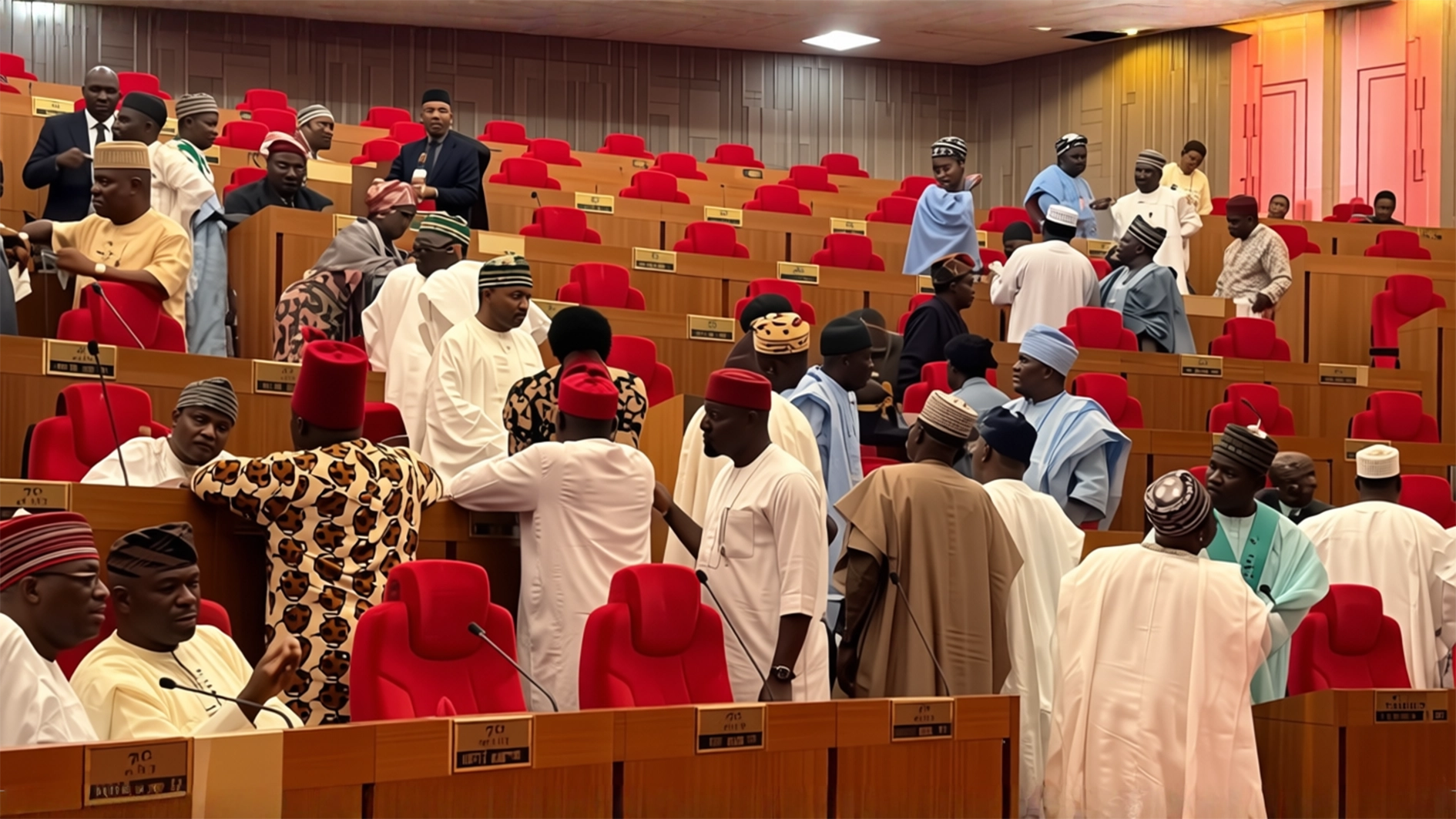
The House of Representatives has expanded its ongoing investigation into the N1.12 trillion Anchor Borrowers Programme (ABP), summoning key insurance firms and agencies over alleged gaps in the implementation of the agricultural intervention scheme.
Meanwhile, the Governor of Adamawa State, Ahmadu Fintiri, has called for a more realistic and democratic revenue-sharing formula to address developmental challenges at the state and local council levels.
Fintiri made the call while receiving a delegation of the Revenue Mobilisation, Allocation and Fiscal Commission (RMAFC) at Government House, Yola.
The House Committee on Nutrition and Food Security, chaired by Chike Okafor (APC, Imo), yesterday, said it would deepen its probe into the insurance framework underpinning the programme, particularly the role of the Nigerian Agricultural Insurance Corporation (NAIC) and private insurers engaged in the scheme.
The committee is investigating how funds under the ABP were disbursed through Ministries, Departments and Agencies (MDAs), as well as Participating Financial Institutions, amid allegations of diversion and weak oversight.
At the hearing, a representative of the Managing Director of NAIC, Dayo Babaronti, said the corporation only provided cover to 207,514 farmers to the tune of N109 billion under the scheme.
He told lawmakers that, contrary to the original policy that made NAIC the sole insurer for the programme, the Central Bank of Nigeria (CBN) engaged additional insurance firms, including Leadway Insurance and Veritas Kapital Insurance, for parts of the intervention.
The corporation, he noted, ultimately covered about 12 per cent of the programme, raising concerns over the extent of risk protection available to beneficiaries.
Okafor said preliminary findings suggest that many of the Federal Government’s agricultural interventions were designed without adequate input from farmers and commodity groups, a gap he said might have contributed to implementation challenges.
THE Adamawa governor stressed that the present revenue allocation system no longer reflects present-day realities, noting that state governments now shoulder increasing responsibilities, including infrastructure development, education, healthcare, and security.
He argued that a review of the formula was long overdue, urging the commission to recommend a fairer system that would better support states and local councils.
According to him, strengthening subnational governments would reduce pressure on the federal Government and improve service delivery.
Fintiri also expressed support for the ongoing review process, assuring the delegation of the state government’s cooperation in ensuring the exercise yields meaningful results.
Earlier, the leader of the delegation and RMAFC Commissioner representing Kwara State, Mohammed Ismail, said the visit was part of a nationwide exercise to verify and update data used in revenue allocation among the three tiers of government.
He explained that the exercise, backed by constitutional provisions, aims to ensure that the revenue sharing formula reflects current socio-economic realities, including population changes, infrastructure development, and emerging national challenges.

