 Follow Us on Google News
 Follow Us on Google Discover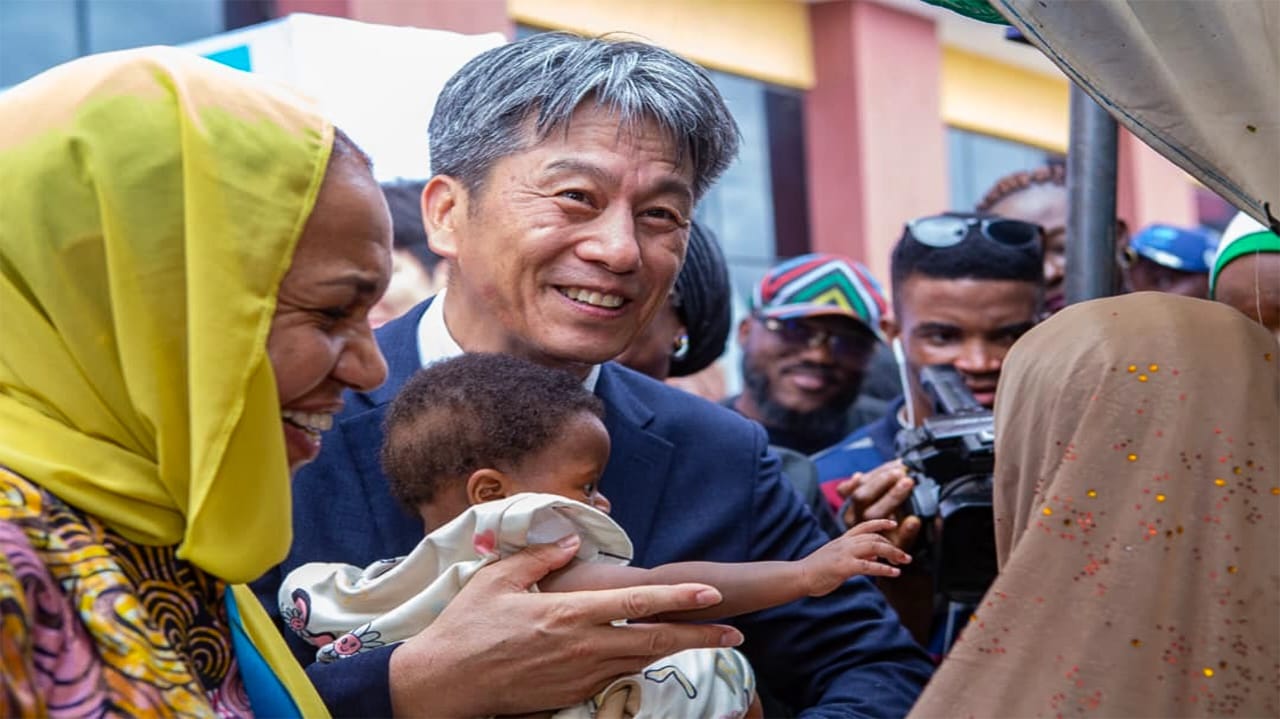
…Target six states, FCT
… Focus on urban slums, border communities, hard‑to‑reach rural areas, others.
The United Nations Children’s Fund (UNICEF) and the Republic of Korea have partnered with the Federal Government of Nigeria in an effort to reach the country’s unvaccinated children with life-saving vaccines, targeting an estimated 2.2 million children who have never received a single routine immunisation.
With Nigeria having the highest number of unvaccinated children in Africa and one of the highest in the world, the partnership was launched at a ceremony in Badagry, Lagos State, to identify and vaccinate zero-dose children and strengthen routine immunisation services across six states.
According to UNICEF, the zero-dose children live in urban slums, border communities, and hard-to-reach areas that fall largely outside the reach of existing health services.
The UNICEF-Republic of Korea partnership, operating under the Access to COVID-19 Tools Accelerator (ACT-A) framework, is now in its third consecutive phase, running from December 2025 to December 2026.

Speaking at the event, UNICEF Nigeria Country Representative Ms Wafaa Saeed disclosed that the programme will operate through Nigeria’s existing national and state health systems, supporting government efforts to improve vaccine delivery, rebuild community trust, and ensure no child is left behind.
Saeed emphasised that key interventions include community mobilisation, systematic tracking of children who miss their vaccinations, and integrated health service delivery, designed to find and reach unvaccinated children wherever they are.
She said, “This reality places a shared responsibility on all of us. And these are not just statistics; these are real children, often living in fragile urban settlements, border communities, conflict-affected settings, and hard-to-reach areas without access to essential services.
“This burden is not a failure of science. Vaccines work; rather, it reflects enduring challenges related to equity, access, and service reach, and this is why political leadership and strong partnerships are essential.
“UNICEF therefore commends the Federal Government of Nigeria, the National Primary Health Care Development Agency, and State Primary Health Care Boards for placing zero-dose children at the centre of national health priorities, particularly through targeted interventions in LGAs and communities with the highest burden of unreached children.
“UNICEF is deeply grateful to the Government of the Republic of Korea for its leadership and solidarity. Through this partnership, Korea has demonstrated a clear understanding that global health security begins by reaching those who are most excluded.
“Nigeria’s inclusion in this investment reflects both the scale of the need and the confidence in Nigeria’s systems and capacity to deliver results.”
On his part, the Consul General of the Republic of Korea, Lagos Office, Lee Sang Ho, emphasised that the danger of global health security is increasing in areas still experiencing post-pandemic challenges, particularly high-burdened African countries.
Sang Ho, who stressed that the call for global collaboration among all stakeholders is expedient and necessary, stated that the Republic of Korea’s investment to reduce cases of unvaccinated children in Nigeria is a symbolic goodwill gesture in response to the challenge to ensure that the trend of zero-dose and under-immunised children is adequately addressed.
“The purpose for funding this project is to ensure that cases of zero-dose vaccination in children are reduced in selected targeted areas comprising a total of 40 LGAs in five states: Lagos, Ogun, Niger, Bauchi, Adamawa and the F.C.T.
“The scope of this project covers targeted vaccination delivery campaigns; scaling up vaccination sessions in communities facing pandemic outbreaks; strengthening the immunisation systems in the targeted areas mentioned earlier and addressing social and behavioural determinants of immunisation,” the Consul General stated.
The Commissioner for Health, Lagos State, Prof. Akin Abayomi, said that “this partnership calls us to align our economic ambition with an equally bold commitment to the health and well-being of our children.
Meanwhile, Communication Officer, UNICEF Nigeria, Blessing Ejiofor disclosed that the programme builds on UNICEF’s extensive experience in reaching underserved communities across Nigeria and aligns with the country’s National Immunisation Strategy Agenda 2030.

