 Follow Us on Google News


 Follow Us on Google Discover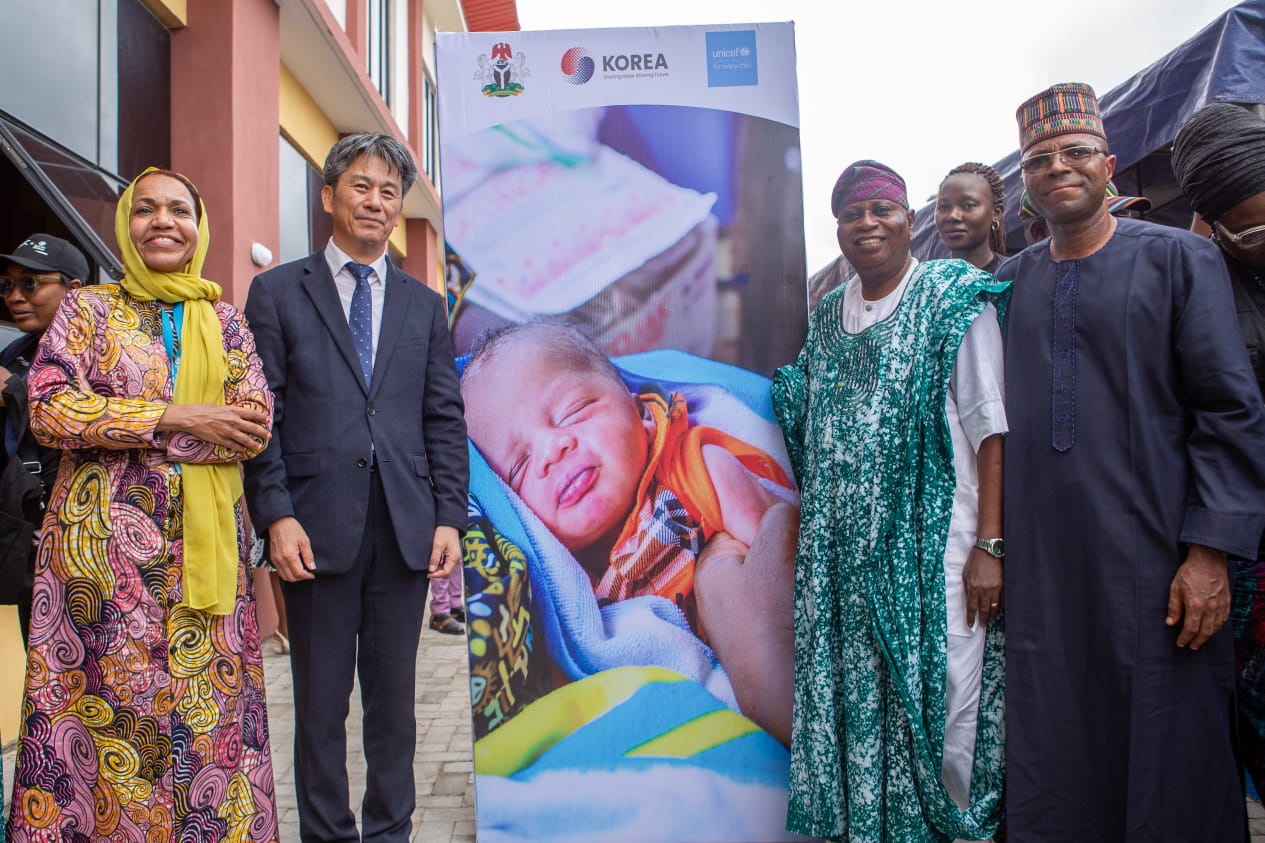
…As FG, Korea, UNICEF launch urgent immunisation push to reach zero-dose children
The United Nations Children’s Fund (UNICEF) has raised the alarm over Nigeria’s worsening immunisation gap, stressing that millions of unvaccinated children represent “real lives at risk..
It gave the warning at the flag-off of a new targeted routine immunisation programme in Badagry, Lagos State, designed to reach children who have never received a single dose of any vaccine.
The initiative is a joint effort between UNICEF, the Republic of Korea, and the Nigerian government. It forms part of a broader push to close persistent gaps in vaccine coverage across the country.
Speaking at the launch, UNICEF Nigeria Country Representative, Wafaa Saeed said the scale of the crisis requires immediate national action.
Saeed disclosed that Nigeria currently accounts for about 2.2 million ‘zero-dose’ children, — the highest number in Africa and among the highest in the world.

“These are not just statistics. These are real children, often living in fragile urban settlements, border communities, conflict-affected settings, and hard-to-reach areas without access to essential services,” Saeed said.
She noted that the continued presence of zero-dose children is a symptom of entrenched inequalities, not a failure of medical science.
“This burden is not a failure of science. Vaccines work. What we are seeing are challenges of equity, access, and service reach,” she stated.
Saeed described the Badagry intervention as a significant step that reflects a shared national and international commitment to child survival and development.
“Today’s event is more than a launch. It is a shared political and moral commitment to the right of every Nigerian child to lifesaving vaccines, regardless of where they are born or live,” she added.
The partnership, she noted, will focus on strengthening routine immunisation systems, enhancing frontline service delivery, rebuilding community trust, and ensuring that vaccines reach children who have historically been excluded from the health system.
“Reaching zero-dose children is not only a health intervention; it is a national development priority. Healthy children underpin human capital, productivity, and social cohesion,” Saeed said.
She emphasised that the long-term success of the programme will hinge on sustainability and institutional capacity.
“The true measure of success will be systems that continue to identify, reach, and protect every child well beyond this investment,” she said.
Reaffirming UNICEF’s stance, Saeed concluded: “We raise this flag to reaffirm a collective promise — that every child in Nigeria belongs in the national health system, and no child will be left behind.”
On his part, the Consul General of the Republic of Korea, Lee Sang Ho, noted that Nigeria’s high number of unvaccinated children poses a threat that extends beyond national borders.
He explained that the investment is aimed at reducing zero-dose and under-immunised children, while strengthening the healthcare system,” he said.
Lee disclosed that Nigeria is receiving approximately $5.6 million under the current phase of the Korea–UNICEF partnership.
The funding will target 40 local government areas across six states: Lagos, Ogun, Bauchi, Niger, Adamawa, and the Federal Capital Territory (FCT), Abuja.
The Lagos State Commissioner for Health, Prof Akin Abayomi, in his keynote address said the intervention is timely, given the pressure rapid urbanisation has placed on healthcare access.
Abayomi pointed out that one of the most pressing public health challenges is the persistence of zero-dose and under-immunised children, particularly in densely populated and underserved communities.
He explained that the programme will rely on data-driven strategies to locate missed children, equip frontline health workers, and expand equitable access to immunisation services.
“This partnership reflects our commitment to inclusive growth and an inclusive health system where no child is left behind,” he added.
Chairman of Badagry Local Government Area, Babatunde Hunpe, described the intervention as critical for communities that face severe geographical and logistical barriers.
“Our communities stretch across difficult terrains, from coastal settlements to remote border areas. This programme is vital to ensure every child receives life-saving vaccines,” Hunpe said.
He appealed to mothers, community leaders, traditional rulers, and health workers to actively support the campaign.
The programme will be implemented through Nigeria’s existing health structures in the six target states and the FCT.
It will prioritise community mobilisation, active tracking of missed children, and the expansion of routine immunisation services in underserved areas, with a specific focus on reaching children who have never been vaccinated.

