 Follow Us on Google News
 Follow Us on Google Discover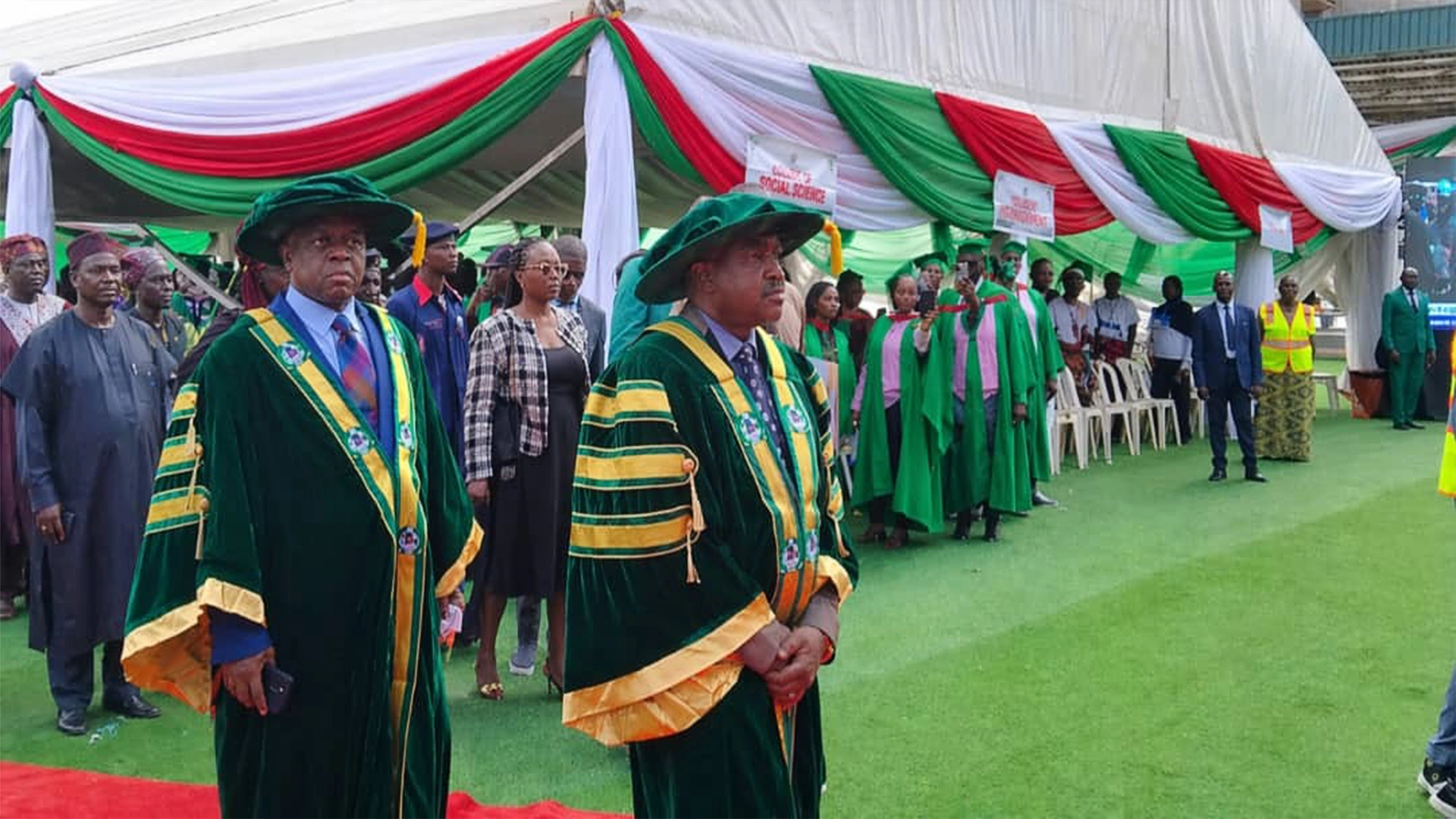
The recently concluded convocation ceremonies of the University of Abuja highlight the institution’s drive to reposition itself, blending academic excellence with social responsibility, innovation, and strategic leadership in response to an increasingly dynamic global landscape, OWEDE AGBAJILEKE reports.
The combined 29th and 30th convocation ceremonies of the University of Abuja (now Yakubu Gowon University),marked a defining moment in the institution’s recent history, driven not just by the scale of graduations but by the clear leadership direction of its Pro-Chancellor and Chairman of Governing Council, Dr Olanrewaju Tejuosho, as well as the Vice-Chancellor, Prof Hakeem Fawehinmi.
Coming as a combined convocation, the ceremonies signal underlying institutional realities, including backlog management, academic calendar adjustments and administrative restructuring. At the same time, the breadth of activities embedded in the week-long programme points to a deliberate shift toward a more holistic, globally aligned convocation culture.
Founded in 1988, the institution has expanded from fewer than 500 students to over 40,000 today (representing 7,900percentage increase), with a projected 50,000 students’ enrolment by 2030.
At the most basic level, the ceremony followed the traditional structure of Nigerian university convocations: award of first degrees, postgraduate degrees, and honorary doctorates. However, the University of Abuja expanded this structure into a multi-day intellectual and ceremonial festival. The programme began with religious observances, a Juma’at prayer and inter-denominational church service, reflecting the enduring role of spirituality in Nigerian public institutions. These opening events serve not merely as symbolic gestures but as cultural anchors, reinforcing the university’s connection to societal values and moral expectations placed on graduates.
The events had in attendance former Head of State, General Yakubu Gowon (rtd); Minister of Special Duties, Zaphania Jisalo; Chancellor of the institution, His Royal Highness, the Emir of Bauchi, Dr Rilwanu Adamu; members of the Diplomatic Corps and representatives of foreign missions; representatives of Traditional Institutions from across Nigeria; serving and former members of the National Assembly; Heads of government agencies and parastatals; Vice-Chancellors and leaders of sister universities and tertiary institutions among others.
A critical feature of the 2026 convocation was its deliberate integration of academic, professional, and societal themes. Beyond the formal award ceremonies of April 17 (first degrees) and April 18 (higher degrees and honorary awards), the university organised a series of intellectual engagements, including a convocation lecture, innovation showcase and thematic public discussions, reflecting a growing recognition within Nigerian higher education that convocations must evolve from purely ceremonial events into platforms for knowledge exchange and policy dialogue. It also witnessed the conferment of Honorary Doctorate Degrees (Honoris Causa), on distinguished Nigerians including Professor Yusuff Olaolu Ali (SAN), Paul Odili, and Emmanuel Iza, in recognition of their contributions to their respective fields and humanity.
Particularly noteworthy is the emphasis on innovation and research visibility. The Faculty Innovation Showcase, which featured student projects, patents, and community impact initiatives, highlights a strategic pivot toward applied research and entrepreneurship. In a country where universities are increasingly expected to contribute directly to economic development, such exhibitions signal an attempt by the University of Abuja to align itself with national priorities around innovation, job creation, and technological advancement.
The convocation lecture, titled “Graduating into an AI Powered Fintech World: Opportunities, Challenges and Responsibilities,” further underscores this shift. Delivered by Flutterwave Chief Executive Officer (CEO), Olugbenga Agboola, the lecture situates graduates within the context of a rapidly digitizing global economy. The choice of topic is significant. It reflects an awareness of the growing influence of Artificial Intelligence (AI) and financial technology on employment patterns, business models, and governance structures. By foregrounding these issues, the University is not only celebrating academic achievement but also attempting to prepare its graduates for the uncertainties of a technology-driven future.
Another dimension of the convocation worth examining is its incorporation of social responsibility themes. Events such as the drug awareness lecture featuring the Chairman/Chief Executive, National Drug Law Enforcement Agency (NDLEA), Brigadier-General Mohamed Buba Marwa (rtd) and the climate change lecture point to an expanded understanding of the university’s role.
Delivering a lecture titled “High Today, Low Tomorrow: The Real Cost of Drug Abuse on Campus,” the head of the anti-narcotics agency expressed deep concern over the increasing use of cannabis in Nigeria, disclosing that about 10.6 million people currently consume the drug nationwide. He cautioned that the surge in cannabis use presents serious threats to both public health and national security, urging swift and coordinated action to address the problem. Addressing a packed audience of students, the guest lecturer warned against drug abuse, stressing that a brief moment of euphoria could have lasting consequences on their future.
Interestingly, Universities are no longer seen solely as centres of knowledge production but as platforms for shaping civic consciousness and addressing national challenges. The inclusion of these topics at the convocation ceremonies suggests that the institution is positioning itself as a socially responsive institution, engaging with issues that affect both campus life and the wider society.
Equally symbolic is the tree-planting exercise by the best graduating students. While seemingly ceremonial, this act carries deeper implications. It connects academic excellence with environmental stewardship, reinforcing the idea that intellectual achievement must be accompanied by responsibility toward sustainability. In a broader sense, such initiatives help cultivate a culture of environmental awareness among graduates, which is increasingly important in the face of global climate challenges. The move also aligns with Sustainable Development Goals 13 (Climate Action) and SDG 15 (Life on Land) by protecting ecosystems, restoring forests, and halting biodiversity loss.
Over 7,158 students from the 2022/2023 academic session graduated during the 29th convocation, with 48 earning first-class honours, 2,048 obtaining second-class upper degrees, 4,418 second-class lower, and 644 third-class degrees. For the 30th convocation, which covered the 2023/2024 academic session, 5,466 students graduated. Of this number, 29 earned first class, 1,395 earned second-class upper, 3,091 second-class lower, and 951 graduated with third-class degrees.
Beyond numbers, the ceremonies revealed a deeper narrative, driven largely by leadership. The emergence of Professor Fawehinmi as substantive Vice-Chancellor in late 2025 marked a significant turning point. His appointment, approved by the Tejuosho-led Council, signaled a deliberate effort to stabilize and refocus the institution after a period of transition.
This leadership alignment between council and management became particularly evident during the convocation ceremonies, where both figures articulated complementary visions for the university’s future.
Professor Fawehinmi’s role during the convocation was not merely ceremonial; it was deeply ideological and forward-looking. His address to graduating students emphasized the primacy of character, resilience, and ethical grounding alongside academic excellence. He posited that while degrees may open doors, it is discipline, integrity, and perseverance that sustain long-term success. This framing is significant in the Nigerian context, where concerns about graduate employability and moral leadership persist. By centering character as a core outcome of university education, the Don has positioned UniAbuja as an institution seeking to produce not just skilled graduates but responsible citizens.
The “fireside chat” between the V-C and first-class graduates is another innovative element that deserves attention. This format departs from traditional hierarchical interactions and promotes dialogue, mentorship and knowledge transfer. It reflects a more student-centered approach to university governance, where top-performing students are engaged not just as recipients of awards but as contributors to institutional discourse. Analysts say this could have long-term implications for alumni engagement and the cultivation of leadership within the University’s graduate community.
Equally important is how his message aligns with global shifts in higher education. Universities worldwide are increasingly expected to balance technical competence with soft skills, adaptability, and ethical awareness. His emphasis on resilience speaks directly to a generation entering a volatile economic landscape shaped by technological disruption and uncertain labour markets. In this sense, the Vice-Chancellor’s convocation speech can be interpreted as both a moral appeal and a strategic recalibration of the University’s educational philosophy.
On the administrative front, the V-C’s leadership also reflects a continuity of academic excellence combined with reformist intent. His background as a Professor of Clinical Anatomy and Biomedical Anthropology and experienced university administrator provides a foundation for strengthening research output, curriculum relevance, and institutional governance. His cordial relationship with various unions, including the Academic Staff Union of Universities (ASUU), Senior Staff Association of Nigerian Universities (SSANU), Non-Academic Staff Union of Educational and Associated Institutions (NASU), National Association of Academic Technologists (NAAT), Congress of University Academics (CONUA) among others is a testament to his diplomatic approach and commitment to fostering a collaborative environment. Industry stakeholders say these partnerships have not only ensured smooth operations within the university since his assumption of office but also created an atmosphere conducive to academic growth and policy changes aimed at improving both teaching standards and student welfare.
The convocation, therefore, served as an early platform for him to communicate his priorities and establish credibility with stakeholders, including students, staff, alumni, policymakers, donor agencies and the media.
Complementing this academic leadership is the governance role played by the Pro-Chancellor, Dr Olanrewaju Tejuosho. As Chairman of Governing Council, Tejuosho occupies a strategic position that bridges policy direction, institutional oversight, and external engagement. His contributions during the convocation highlight the often-underappreciated role of governing councils in shaping university development.
Dr Tejuosho’s intervention at the ceremony focused on a critical challenge facing UniAbuja: infrastructure deficit, particularly in student accommodation. He pointed out that rapid growth in student enrolment has not been matched by corresponding expansion in hostel facilities, describing the situation as unsustainable.
This candid acknowledgment is significant for several reasons. First, it signals transparency and a willingness to confront institutional weaknesses publicly.
Second, it frames infrastructure not merely as a logistical issue but as a core component of educational quality and student welfare.
By calling for private sector participation in addressing accommodation shortages, Tejuosho also highlighted a broader shift toward public-private partnerships in Nigerian higher education. With government funding often insufficient to meet growing demands, Universities are increasingly looking to investors, corporate bodies, alumni networks, international donor agencies for support. The Pro-Chancellor’s appeal reflects an understanding that sustainable University development requires diversified funding sources and collaborative governance models.
Beyond infrastructure, his remarks point to a larger governance philosophy centered on aligning UniAbuja with global best practices. As a former lawmaker and seasoned administrator, he brings a policy-oriented perspective to University leadership. His emphasis on governance reform suggests an effort to strengthen institutional accountability, efficiency, and strategic planning.
The interplay between Tejuosho and Fawehinmi during the convocation illustrates a functional synergy between governance and management. While the Pro-Chancellor focuses on structural and policy frameworks, the Vice-Chancellor drives academic and operational execution. According to analysts, this alignment is crucial for institutional stability, particularly in a context where leadership conflicts have historically hindered progress in some Nigerian Universities.
In conclusion, the combined 29th and 30th convocation ceremonies of the University of Abuja represent a significant milestone in the institution’s development. They illustrate a transition from traditional, ceremony-focused convocations to more dynamic, multifaceted events that incorporate intellectual discourse, innovation, and social engagement. Without an iota of doubt, the overall execution of the event demonstrates a proactive effort to enhance its relevance and impact. In the final analysis, the ceremonies serve as both a celebration of academic achievement and a statement of intent that the University of Abuja is positioning itself to meet the demands of a rapidly changing world.

